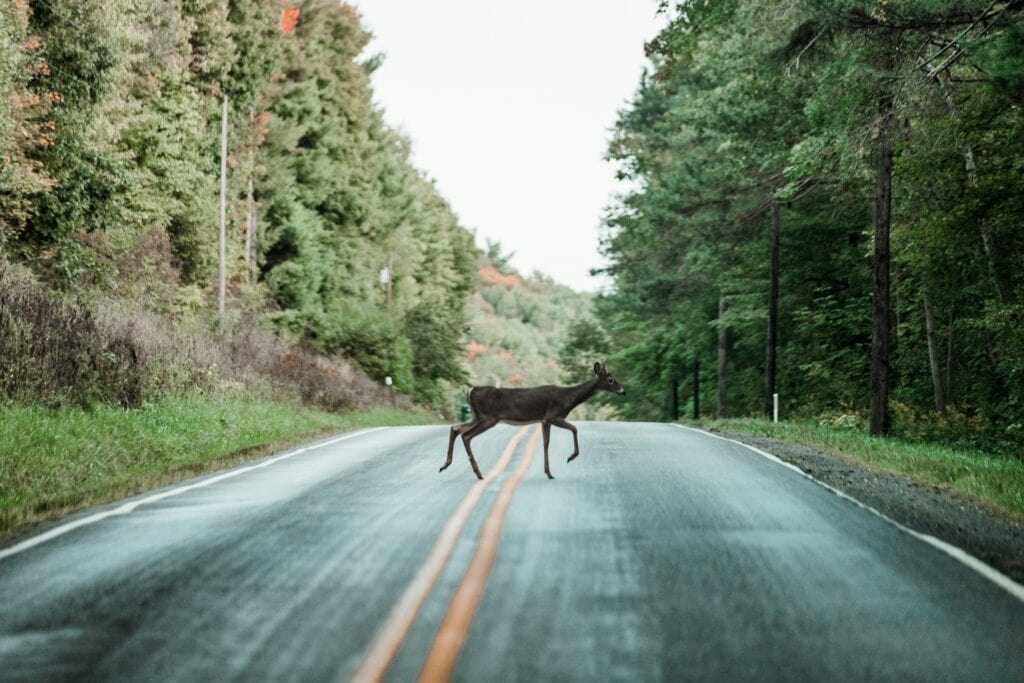
Michigan deer accident insurance can involve different coverage depending on whether you hit the animal or crash while avoiding it. If you are injured, your medical expenses raise a separate coverage question from the damage to your car.
Imagine a deer runs into your lane. You swerve, miss the animal, and hit a guardrail. Does insurance cover the repairs? What about your injuries?
With October approaching, these are timely questions. The Michigan State Police identifies October through December as a period of increased deer activity. It also warns that serious crashes can occur when drivers swerve into another vehicle or a fixed object, or roll over.
Does Insurance Cover Hitting a Deer in Michigan?
Comprehensive coverage generally pays for covered vehicle damage caused by direct contact with a deer, subject to your policy terms and deductible.
However, comprehensive coverage is different from collision coverage. Having an auto insurance policy does not necessarily mean you purchased both.
The Michigan Department of Insurance and Financial Services explains the distinction in its guidance on deer-related insurance claims.
For more background, read Keller & Keller Injury Lawyers’ guide to types of insurance coverage for accidents.
What If You Swerve to Avoid a Deer?
If you miss the deer but strike a guardrail, tree, or another vehicle, collision coverage generally applies to your vehicle damage instead.
That distinction makes an accurate description of the crash important. Tell your insurer what happened, including whether there was contact with the animal. If you are unsure about a detail, say so.
Ask the insurer to explain which coverage applies and how your deductible affects payment. Save its written explanation with your claim records.
Does Michigan Deer Accident Insurance Cover Injuries?
Vehicle repairs and injury benefits are separate issues.
Under Michigan’s no-fault law, MCL 500.3105, qualifying accidental bodily injuries arising from the use of a motor vehicle may be covered by personal protection insurance benefits regardless of fault, subject to statutory requirements and exclusions.
A qualifying single-vehicle crash can fall within that framework. Missing the deer does not automatically eliminate a possible no-fault injury claim.
However, coverage is not unlimited in every case. Michigan offers different PIP medical coverage selections, with exclusions or an opt-out available to eligible people. Your coverage and circumstances affect what benefits may be available. Review the state’s PIP medical coverage explanation for details.
What Should You Save After a Deer-Related Crash?
Prioritize safety and medical care. Then, when possible:
- Report the crash and describe the sequence accurately.
- Preserve photographs and original dashcam footage.
- Obtain witness contact information.
- Save the police report number and insurance correspondence.
- Keep treatment records, bills, and missed-work documentation.
Keller & Keller’s article on why medical care matters after an injury explains the importance of treatment and documentation.
If your injuries affect your ability to work or carry out daily activities, our discussion of compensation for serious accident injuries provides additional context.
How Can Drivers Reduce Deer-Crash Risks?
Michigan State Police advises drivers of cars and trucks against swerving when a deer collision is unavoidable. Brake firmly, hold the steering wheel, and stay in your lane.
Be especially alert around dawn and dusk. If you see one deer, watch for others nearby.
Get Help With a Michigan Deer-Crash Injury Claim
An injury claim can become confusing when you are also dealing with vehicle repairs and recovery.
If you face questions about injury coverage, delayed benefits, or a denial, Keller & Keller can review your situation and explain your options. Contact our Michigan personal injury team for a free case evaluation.