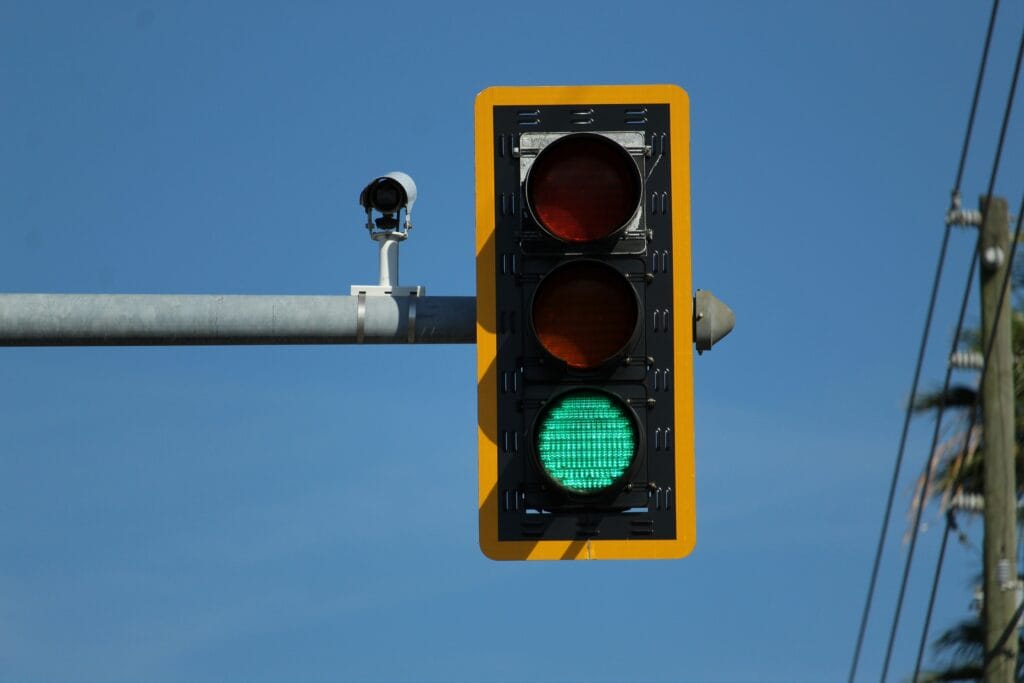
You’re driving straight through an intersection in St. Joseph when an oncoming car turns left across your lane. After the crash, the other driver says they had the green. You remember seeing green, too.
Both drivers can face a steady green light at the same time. What matters in a Michigan left-turn crash is which signal each driver faced, when each vehicle entered the intersection and whether oncoming traffic was close enough to make the turn unsafe.
Who has the right of way during a left turn?
Michigan Compiled Laws § 257.650 requires a driver turning left within an intersection to yield to oncoming vehicles already in the intersection or close enough to pose an immediate hazard. Once the driver has yielded and signaled as required, the driver may complete the turn. Other oncoming vehicles must then yield to the turning vehicle.
In practical terms, the sequence matters. If the turning driver started across your lane when you were already too close for the turn to be made safely, that may support a claim that the driver failed to yield. If the driver had already begun a lawful turn with enough room and another vehicle entered late, the evidence may point to a different conclusion.
What if the left-turning driver had a green arrow?
A steady green light can permit a left turn, subject to right-of-way rules. A green arrow permits movement in the direction of the arrow, with drivers still required to yield to pedestrians and bicyclists lawfully in an adjacent crosswalk and other traffic lawfully using the intersection. See Michigan Compiled Laws § 257.612.
When drivers remember different signals, independent footage can help show which signal was on and when each vehicle crossed the stop line. A witness waiting at the intersection may also remember whether the turn arrow came on or whether the through lanes were already moving. Ask where the witness was stopped or standing. That detail can explain which signal they could see.
What evidence helps show who was at fault?
- Dashcam or business video. Save original footage with the time intact. Look for the moments before impact, including the signal change and when each vehicle entered.
- Intersection photos. Photograph the signal heads, turn lanes, stop lines and any lane-use signs from a safe location. These details help explain what each driver could see.
- Independent witnesses. Get contact information for people who had a clear view. A driver behind the turning vehicle and a person waiting across the intersection may have seen different parts of the crash.
- The crash report and scene photos. Request the report and save your own photos. Vehicle damage and final positions can help investigators put the sequence together alongside video and witness accounts.
Some camera systems overwrite footage on a regular schedule. If you spot a camera that may have captured the crash, write down its location and ask the operator to preserve the relevant time window. See which Michigan car accident documents to keep.
Does the fault investigation affect no-fault benefits?
Michigan’s no-fault system can provide eligible people with personal injury protection benefits, which may include payment for covered medical expenses and certain wage losses under Michigan Compiled Laws § 500.3107. Who pays those benefits depends on the applicable insurance and eligibility rules. A separate claim against an at-fault driver is subject to its own requirements. Keep medical and work records while you gather evidence about the collision. See what to know about a Michigan passenger injury claim.
Talk to a Michigan car accident lawyer
If you were injured in a left-turn crash in St. Joseph, Benton Harbor or elsewhere in southwest Michigan, Keller & Keller can help you review the evidence and understand your claim options. Request a free case evaluation.