

Injured in a Motorcycle Accident?
Get started with a free case evaluation. No Fee Until We Win.
100% Free Evaluation
Provide a few details and our team will handle the rest.
"*" indicates required fields

“As a busy mom of three, I’m so grateful I didn’t have to face the legal battle alone. Thank you, Keller & Keller Injury Lawyers.”
Kelly


When you’ve been hurt in a motorcycle accident, you need more than just any lawyer. You need a battle-tested sword and shield fighting for your rights.
At Keller & Keller Injury Lawyers, we’ve been maximizing client settlements and delivering justice since 1936, and we’re not going anywhere. With over 90 years of experience taking on insurance companies that try to shortchange injured motorcyclists, we’ve recovered millions of dollars for our clients. That’s not just a number. That’s thousands of families we’ve helped get their lives back on track.
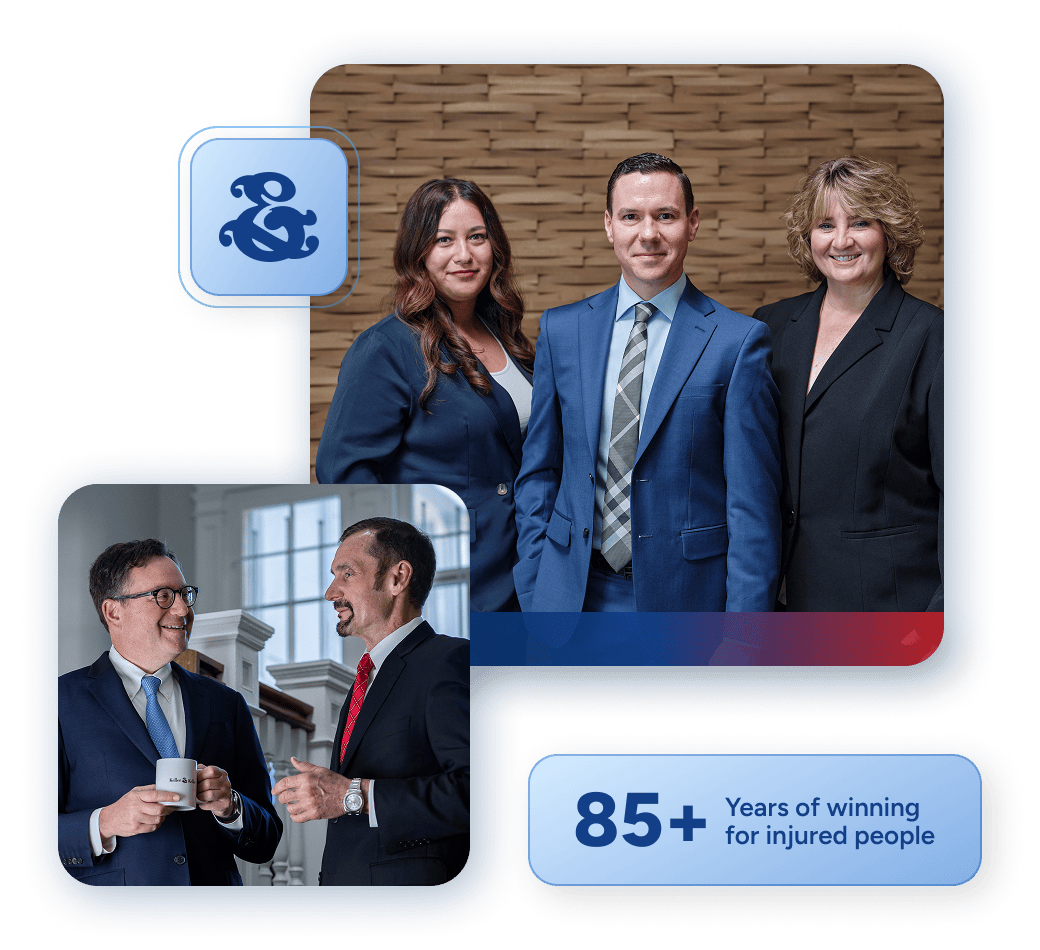
We’re a family-run firm, and we treat you like family because we understand that behind every case is a real person going through the toughest time of their life. We reach out and make sure our clients feel like they can have a cup of coffee with us. No fancy legal jargon, no runaround, just straight talk about what we’re going to do to win your case.
Why You Need a Michigan Motorcycle Accident Lawyer After a Crash
The aftermath of a motorcycle accident can turn your life upside down in an instant. Medical bills pile up, insurance companies pressure you to accept lowball offers, and you’re left wondering how to put your life back together while still recovering from serious injuries. But here’s the truth, the insurance companies are already working against you, and they’re betting on unfair stereotypes about motorcyclists to pay you less.

Navigating Complex Legal Claims

Understanding Insurance Company Tactics

Understanding Statute of Limitations
Navigating Complex
Legal Claims
Motorcycle accident cases aren’t like regular car crashes. These cases involve unique challenges because motorcyclists face unfair bias from insurance adjusters, police officers, and even juries who assume the rider was at fault. Without proper representation, you’re fighting not just the legal complexities but also deeply ingrained prejudices that can cost you thousands of dollars in compensation you deserve.

Understanding Insurance Company Tactics
Insurance companies operate on profit margins, and they know that motorcyclists often get blamed for accidents that weren’t their fault. They’ll use every trick in the book to minimize your settlement, from claiming you were speeding to suggesting you weren’t wearing proper safety gear. Our Michigan motorcycle accident lawyers have seen every tactic and know exactly how to counter them.

Understanding Statute of Limitations
In Michigan, you generally have three years from the date of your accident to file a lawsuit. Miss this deadline, and you lose your right to compensation forever, no matter how strong your case is or how badly you were injured.

What to Do After a Motorcycle Accident
The actions you take immediately after a motorcycle accident in Michigan can make or break your case.
See What Your Case Is WorthMove to a safe location away from traffic and check for injuries.
File an official police report. This is crucial for your case, especially since police may have their own biases about motorcycle accidents
See a doctor right away, as adrenaline can mask serious injuries.
Take photos & videos of injuries, vehicles, the scene, skid marks, road hazard, and collect witness information.
Collect contact and insurance details from all drivers and bystanders involved.
Notify your insurance company about the accident.
Keep your helmet, jacket, and other protective equipment as evidence of the impact and your safety-conscious approach
Save all medical bills, repair estimates, and accident-related documents.
Politely decline insurance adjuster requests for comment
Refrain from posting your accident on social accounts.
The sooner we start working, the better we can protect your interests and counter unfair stereotypes.

The Keller & Keller Injury Lawyers Approach:
Michigan Lawyers Who Fight to Win
From the moment you contact us, you’ll notice the difference in our approach. Our client-first philosophy means we take the time to understand not just the details of your accident but how it has affected your life, your work, your family, and your future in Michigan. We clearly communicate every step of the process in plain language you can understand, no confusing legal jargon. This approach has earned us countless 5-star reviews from real Michigan clients who’ve experienced the Keller & Keller difference firsthand.
We understand that being injured in an accident is stressful enough without having to chase down your lawyer for updates. That’s why we’ve built our practice around transparent, consistent communication.
When you hire us, you’ll have direct access to the Michigan-based attorney handling your case as well as a dedicated paralegal who monitors its daily status. We keep you informed throughout every stage of your claim, explaining what’s happening, what to expect next, and how it affects your case.
Our 90+ years of experience isn’t just about longevity. It’s about results. Our attorneys have successfully handled thousands of cases in Michigan and recovered thousands of millions of dollars for our clients. We’ve gone toe-to-toe with the biggest insurance companies and won. Our courtroom experience means we’re always prepared to take your case to trial if that’s what it takes to secure fair compensation. This willingness to fight, and our track record of success, often motivates insurance companies to offer better settlements to avoid facing us in court.
The Motorcycle Accident Claim Process with Keller & Keller Injury Lawyers
When you hire us, we don’t waste time. Our investigation starts immediately because evidence disappears fast and bias against motorcyclists starts immediately.
Michigan No-Fault Insurance System Explained
Michigan’s No-Fault auto insurance system, established in 1973, underwent dramatic reform in 2019 through Public Acts 21 and 22. Before this reform, Michigan was the only state requiring unlimited lifetime medical coverage for auto accident injuries, a primary factor behind the state’s historically high insurance premiums.

Types of Motorcycle Accidents We Handle
We handle all types of motorcycle accidents, and each one presents its own challenges in Michigan.
A left-turn accident happens when a driver cuts across oncoming traffic and into the path of a motorcycle, usually because the driver failed to see the rider coming. The crash may occur at an intersection, and the rider may have only a moment to brake. Michigan cases of this kind tend to start with one question: did the turning driver yield?
What the Turning Driver Owed You
Under MCL 257.650, a driver turning left within an intersection must yield to a vehicle coming from the opposite direction that is in the intersection or close enough to be an immediate hazard. A motorcycle counts as a vehicle coming the other way. Only after yielding and signaling may the driver proceed.
“I didn’t see the bike” describes what the driver noticed. It doesn’t tell you whether the driver yielded, so the facts matter: how far away you were, what the driver’s view looked like, and how long the driver looked before turning. A slim motorcycle can be hidden by a windshield pillar or a line of cars, and low sun can make it harder to pick out. Those points may explain the mistake without answering for it.
Will the Insurer Say You Were Going Too Fast?
Expect the question, because a rider’s speed is the usual reply to a failure-to-yield claim. Fault matters in a suit against the driver. Under MCL 500.3135, a party more than 50 percent at fault can’t recover noneconomic damages such as pain and suffering, and a smaller share generally reduces the award.
In a 2025 order, the Michigan Supreme Court said that bar did not apply where reasonable minds could differ on which driver was more at fault. That was a ruling on one record, not a promise about yours. Skid marks, the point of impact, bike damage, witness accounts and nearby video can all help test what an adjuster says about your speed.
Who Pays First When a Car Turns Into You?
Michigan’s no-fault chapter doesn’t treat a motorcycle as a “motor vehicle” (MCL 500.3101), so riders follow their own line of priority. When a car or truck is involved, a rider generally claims personal protection insurance (PIP) benefits in this order under MCL 500.3114(5):
- The insurer of the owner or registrant of the motor vehicle involved.
- The insurer of that vehicle’s operator.
- The motor vehicle insurer of the motorcycle’s operator.
- The motor vehicle insurer of the motorcycle’s owner or registrant.
If none of those applies, the claim can end at the state’s assigned claims plan. PIP is due without regard to fault, so the speed argument belongs mainly to the separate claim against the driver. That claim still has to meet the no-fault threshold for pain and suffering, which our Michigan no-fault law page explains. For more on how these collisions unfold, see our post on left-turn dangers for Michigan motorcyclists.
Lane change accidents happen when a car suddenly moves into a motorcyclist, often with the driver later claiming they “didn’t see” the bike. The car may clip the motorcycle, or it may crowd the rider toward a median or guardrail. On busy multilane stretches of I-94 or US-131, a rider can have very little room to get out of the way.
You Get the Whole Lane, Not Just a Slice of It
Michigan gives riders a specific protection here. MCL 257.660(2) entitles a motorcycle to full use of a lane and says a motor vehicle must not be driven so as to deprive it of that use. A driver sharing your lane because the bike looked small may be running into that rule. It doesn’t apply to motorcycles riding two abreast in one lane.
Two other statutes speak to the driver’s duties. MCL 257.642 requires a vehicle to stay as nearly as practicable within a single lane and not leave it until the driver has made sure the move is safe. MCL 257.648 requires a driver to determine that turning from a direct line can be done safely and to give the proper signal. A quick glance at a mirror may not satisfy either one, depending on the facts.
A Crash With No Contact at All
Some of the worst lane change crashes involve no contact at all. You swerve to avoid a drifting car, lose traction and go down while the driver keeps going or stops well ahead. The motorcycle PIP priority rule asks whether the accident “shows evidence of the involvement of a motor vehicle,” and whether a particular crash does is fact-specific.
So the proof tends to shift to people and video. A witness who saw the car move over, dash camera footage or a driver’s own statement to police may connect the car to your fall. Our guide to how priority works for motorcycle claims sets out where those benefits generally come from.
Your Own Riding Will Get a Close Look
An adjuster may look closely at what you were doing just before the car moved. These rules from MCL 257.660 tend to come up:
- Riding between lanes. A motorcycle operator may not pass between lines of traffic, and filtering can become a comparative fault issue.
- Passing. A rider may pass in an unoccupied lane on the left on a two-way street, or on either side on a one-way street.
- Group riding. Motorcycles may not ride more than two abreast, outside a path or roadway part set aside for them.
Riding in a driver’s blind spot isn’t on that list, but an insurer may raise it anyway. Any share of fault placed on you can reduce a damages award. A claim against the driver also has its own gate, the no-fault threshold for pain and suffering. If a commercial truck drifted into you, see our semi truck accident page.
Rear-end collisions can be devastating when cars strike stopped motorcycles at intersections, throwing riders into cross traffic. A bump that might dent a trunk can knock a bike out from under its rider. The legal questions follow two tracks here: proving the driver’s negligence, and showing the injury is serious enough for a claim beyond PIP benefits.
A Starting Presumption Against the Driver Behind You
Under MCL 257.402, a driver who overtakes and strikes the rear of a vehicle going the same way, or lawfully standing on the highway, is deemed prima facie negligent. Put another way, the law starts by treating that driver as negligent unless the driver can answer the point. The presumption is rebuttable, and a claimed sudden emergency is one answer a jury may have to weigh.
One detail matters to riders at night. The owner of a struck vehicle can’t rely on the presumption if the crash happened between one hour after sunset and one hour before sunrise and the vehicle had no lighted lamp visible from behind. A working taillight can therefore carry legal weight. MCL 257.643 separately bars following more closely than is reasonable and prudent for the speed, traffic and highway conditions.
Thrown Into the Next Lane of Traffic
A rider who is launched forward can be struck a second time by cross traffic, which brings another driver and another version of events into the case. Your medical records may need to separate what each impact did, because a fractured leg and a head injury can come from different moments. Rear damage to the bike, intersection video and the order of the 911 calls can help rebuild that timeline.
Is Your Injury Serious Enough for a Claim Against the Driver?
Winning the fault argument doesn’t settle what you can recover. PIP generally handles medical care and wage loss, while pain and suffering requires death, permanent serious disfigurement or a serious impairment of body function (MCL 500.3135). A serious impairment has three parts:
- Objectively manifested. Someone other than you can observe or perceive it from actual symptoms or conditions.
- An important body function. The function impaired must be one of great value, significance or consequence to you.
- A real effect on your life. It affects your general ability to lead your normal life.
No set period says how long an impairment must last, though timing may still be relevant. The comparison is your life before and after the crash. A judge can decide the question if the nature and extent of the injury aren’t in real dispute. For a closed-head injury, a jury question arises if a qualified physician testifies under oath that there may be a serious neurological injury.
Our posts on spinal cord injuries in Michigan and fair compensation after a serious injury cover the kinds of harm these claims often involve.
Intersection accidents are complex cases involving right-of-way violations and visibility issues specific to motorcycles. A rider going straight may be hit by a driver pulling out from a side street, rolling through a stop sign or misjudging a gap. A motorcycle’s narrow outline can be easy to lose behind a parked van, and a driver may simply misjudge how fast it is closing.
Which Rule Applied at That Corner?
The answer usually depends on how the intersection was controlled. MCL 257.649 sets out the main duties:
| Control | What the driver generally must do |
|---|---|
| Stop sign | Stop, then yield to a vehicle in the intersection or close enough to be an immediate hazard, through the whole time of crossing. |
| Yield sign | Slow to a speed reasonable for conditions, yield the same way, and stop if safety requires it. |
| No sign or signal | Yield to a vehicle already in the intersection. If two enter at about the same time, the driver on the left yields. |
Breaking one of these rules may help your case. Michigan courts have said evidence of violating a penal statute generally creates a rebuttable presumption of negligence, which the driver can answer with a legally sufficient excuse. Many traffic rules are civil infractions, so how far that reaches can vary, and you still have to connect the violation to your injuries.
Right of Way Can Cut Both Ways
Having the through road doesn’t always end the argument. MCL 257.649(7) says a driver traveling at an unlawful speed forfeits a right of way the driver might otherwise have under that section. A driver who pulled out from a stop sign may therefore claim you were speeding and lost your priority.
Hard data helps in that dispute. Many newer cars carry an event data recorder (EDR) that may hold speed and braking information from the other vehicle. Signal timing records, a neighboring store’s camera and a reconstruction from the marks on the pavement can also show who reached the intersection first.
Questions About Your License and Gear
Intersection disputes often turn personal. Michigan requires a motorcycle indorsement on your license (MCL 257.312a). In Klanseck v Anderson Sales & Service, Inc (1986), the Michigan Supreme Court treated a rider’s lack of one as relevant on that case’s facts. That doesn’t bar an unendorsed rider’s claim, but it can go to comparative negligence, and the other side still has to show it caused something.
Michigan also generally requires a crash helmet (MCL 257.658). A person 21 or older may ride without one if the two-year endorsement or safety course condition and the $20,000 first-party medical condition are met.
Fault findings here feed into the same no-fault structure as any other crash with a car or truck. PIP benefits come first, and a suit against the driver depends on the threshold described on our Michigan no-fault law page. If you were hurt at the wheel of a car instead, our Michigan car accident page covers those claims.
Road defect accidents happen when poor road conditions, construction zones or debris cause a motorcycle crash. A pothole, a broken pavement edge or a patch of gravel that a car rolls over can take away a bike’s traction in an instant. Because these cases often point at a government agency instead of another driver, they run under a different and much stricter set of rules.
Can a Road Agency Answer for a Pothole?
Sometimes. Under MCL 691.1402, an agency with jurisdiction over a highway must keep it in reasonable repair so it’s reasonably safe and convenient for public travel. That is an exception to governmental immunity, and it comes with real limits:
- Travel lanes only. The Michigan Supreme Court has held that the duty covers travel lanes, so a shoulder isn’t included.
- Repair, not design. The exception doesn’t impose a duty to design a road or fix defects from its original design or construction.
- Signs are generally out. The duty of the state and county road commissions doesn’t extend to traffic control devices.
- The agency’s knowledge. It generally must have known or should have known of the defect and had reasonable time to repair it. Knowledge is conclusively presumed if the defect was readily apparent for 30 days or longer.
- The right agency. A city, village or township has no duty on a portion of a county or state highway, so jurisdiction comes first.
Why the First 120 Days Matter So Much
Timing is the feature that sets these cases apart. An injured person generally must serve notice on the agency within 120 days of the injury, giving the exact location and nature of the defect, the injury and known witnesses (MCL 691.1404). The Michigan Supreme Court enforces that notice as written, without requiring the government to show it was harmed by a late one.
In a 2021 decision that involved a motorcyclist’s claim, the Court held the 120-day notice, not an older 60-day rule, controls suits against county road commissions. Claims against the state follow a filing route through the Court of Claims clerk, and the limitations period for a highway claim is generally 2 years. Pavement also gets patched, so photos and measurements taken early may be the only record of the defect.
Work Zones, Debris and Crashes With No Other Vehicle
In a construction zone, the party responsible for a raised plate or loose millings may be a private contractor. A contractor may owe others a duty of ordinary care in its work, separate from its contract, although simply failing to do what the contract promised may not be enough. Debris that fell from a passing vehicle raises different questions about that vehicle’s driver and about insurance.
Insurance can be the hardest part. The motorcycle PIP priority generally applies only where a crash shows evidence of a motor vehicle’s involvement, so a crash involving only the bike generally isn’t covered by it. The source may then be optional first-party medical coverage, which insurers must offer in $5,000 increments and owners may decline.
Our Michigan no-fault law page explains the wider system, and our post on which crash documents to keep can help you hold on to the records these claims need.
These are cases involving impaired drivers who strike motorcyclists, often with catastrophic results. Michigan bars operating a vehicle while under the influence of alcohol or a controlled substance, or with an alcohol content of 0.08 grams or more, in places open to the public (MCL 257.625). The criminal case and the injury claim then run on separate paths, and the claim may reach further than the driver.
A Conviction Helps Less Than You Might Expect
A prosecutor’s case punishes the driver. Your injury benefits still generally come through PIP, and a suit against the driver for pain and suffering generally must still meet the no-fault threshold.
A conviction can matter in one specific way. Liability is generally several only, meaning each defendant pays its own share, but MCL 600.6312 makes a defendant jointly and severally liable after conviction of listed crimes with alcohol or controlled substance use as an element. That can leave the defendant answerable beyond its own percentage. An arrest without a conviction doesn’t fit.
Don’t count on punitive damages. Michigan generally doesn’t allow them unless a statute expressly authorizes them, however reckless the conduct seems.
Could the Bar Share the Responsibility?
Possibly. Michigan’s dram shop law lets a person injured by a minor or a visibly intoxicated person sue a retail licensee whose unlawful sale of alcohol was a proximate cause of the harm (MCL 436.1801). The statute comes with demanding conditions:
- Visible intoxication. You need evidence of actual visible intoxication. Expert estimates of what the person would have shown may not be enough.
- The driver stays in the case. The minor or intoxicated person must be a named defendant until trial or settlement.
- The last server. Any licensee other than the last one to serve the person is presumed, rebuttably, not to be liable.
- Its own timing. Written notice generally goes to all defendants within 120 days after you hire a lawyer for the claim, and suit must start within 2 years of the injury.
A licensee may also raise the intoxicated person’s defenses and show it was following responsible business practices. Receipts, bar tabs, server testimony and video from the night of the crash may show what staff could actually see, and that footage may not be kept long.
If You Had Been Drinking Too
MCL 600.2955a creates an absolute defense where an injured person’s ability to function was impaired by alcohol or a controlled substance and, as a result, that person was 50 percent or more the cause of the accident. Note that the line is different from the more-than-50-percent rule in auto cases. Below 50 percent, damages are reduced by that percentage.
The driver’s vehicle may add another party. An owner is generally liable for negligent operation by someone driving with the owner’s consent or knowledge, and that claim remains subject to the no-fault rules on our Michigan no-fault law page. If a rider was killed, see our wrongful death page, and read about compensation after serious injuries for how these losses are generally measured.
A hit and run happens when a driver flees after striking a motorcyclist, which often means specialized investigation is needed to identify the responsible parties. The rider may be left on the pavement with no name, no plate and no insurance information. That leaves two jobs: finding the driver, and working out which insurance responds if nobody is ever found.
The Duties a Fleeing Driver Has Broken
A driver who knows or has reason to believe they were in an accident on property open to public travel must immediately stop and remain at the scene. They must give a name, address and registration, show a license and render reasonable assistance in securing medical aid (MCL 257.617, MCL 257.619).
The offense is a misdemeanor where the crash causes injury or vehicle damage, and it becomes a felony where it causes serious impairment of a body function or death. Those are criminal penalties. A driver’s prison exposure says nothing about who pays your medical bills, so the civil side needs its own plan.
How a Vanished Driver Gets Identified
Every clue fades quickly, so the search generally starts in the first days. These sources may lead to the vehicle:
- The motorcycle. Paint transfer, broken mirror or trim pieces can point to a color, make or model.
- The police file. The UD-10 crash report may list witnesses and partial plate numbers.
- Cameras. Business, doorbell, dash and traffic cameras may have recorded the vehicle before the footage is overwritten.
- Repair traces. A vehicle with fresh front damage may turn up at a body shop in the days after.
When Nobody Is Ever Found
With no identified vehicle to go after, the top of the motorcycle priority list is empty. A rider may then look to the rider’s own motor vehicle insurer under MCL 500.3114(5). If no PIP can be identified, the assigned claims plan may apply (MCL 500.3172). The accident must still show evidence of a motor vehicle’s involvement, and an owner who rode without the required motorcycle insurance generally isn’t entitled to PIP.
The plan has its own terms. Notice generally goes to the Michigan Automobile Insurance Placement Facility within 1 year after the accident, and allowable expenses through the plan are generally limited to $250,000. Our Michigan no-fault law page and our post on who pays your bills under the order of priority go further into both routes.
Damages from an unknown driver beyond those benefits generally depend on uninsured motorist (UM) coverage. Michigan doesn’t require it by statute, so the policy controls, and the wording on a motorcycle policy may differ from a car policy.
Many policies require contact with the hit-and-run vehicle. Such a term is enforceable, although Michigan’s Court of Appeals has read these terms to reach some indirect contact, such as an object tied to the unknown vehicle by a substantial physical connection. A pure near miss shouldn’t be assumed to qualify, and your policy may set its own, shorter time limit.
Multi-vehicle accidents are chain-reaction crashes where motorcyclists get caught in the middle of larger accidents. Traffic slows on I-94 or I-196, one car hits another, and a rider between them has nothing around them when the vehicles come together. Several drivers, several insurers and several accounts then have to be sorted out.
How the Blame Gets Split
Michigan generally allocates liability by each person’s percentage of fault (MCL 600.2957). In setting those percentages, the judge or jury looks at the nature of each person’s conduct and how closely it caused the damages. Liability is generally several only under MCL 600.6304, which means a defendant generally pays only its own share.
That rule has a hard edge for riders. If one driver has little insurance or no way to pay, you generally bear that shortfall, and the others don’t cover it. A defendant may also point to someone who isn’t in the case. A jury generally can’t assess that nonparty’s fault unless the defendant gives notice, usually within 91 days after its first responsive pleading, and you generally then have 91 days to move to add that person.
Employers are one exception worth checking, since several-only liability doesn’t abolish an employer’s vicarious liability for its employee. If a commercial truck started the chain, see our semi truck accident page.
When More Than One Insurer Could Owe PIP
A rider’s PIP claim generally starts with the insurer of the owner or registrant of the motor vehicle involved, and a pileup may involve several. Insurers may dispute which one is responsible, and the assigned claims plan is one route when they do. When several policies sit at the same priority, benefits are capped at the highest single limit. They don’t stack.
That limit varies, because since July 2020 buyers generally choose among set levels of $250,000, $500,000 or no limit, with a $50,000 option for those who meet the Medicaid conditions. A policy with certain elections or exclusions is skipped, and the claim moves down the line. Our post on the order of priority for motorcycle claims walks through the sequence.
If the Bills Run Past the PIP Limit
Pileups can produce injuries that outrun a policy. You may be able to pursue the at-fault party for allowable expenses, work loss and survivor’s loss above the PIP limits, including future amounts, without meeting the noneconomic threshold. Pain and suffering still requires that threshold. Work loss matters here because PIP generally covers only income from the first 3 years after the accident, subject to a monthly maximum.
Collecting is a separate question. Michigan auto policies must generally carry at least $250,000 per person and $500,000 per accident in bodily injury coverage, though a policyholder may choose lower limits by signed form, down to $50,000 and $100,000. Those are minimums, not promises of payment, and one per-accident limit may have to cover everyone hurt. Our Michigan no-fault law page explains how these pieces fit together.
Mechanical failure accidents happen when defective motorcycle parts or poor maintenance cause a crash. Brakes may fade, a tire may let go, or a steering or suspension component may fail at speed. Riders sometimes blame themselves at first, yet a crash like this may still support a claim, and the main questions shift from driving to how the machine was built, sold and serviced.
Was It the Part or the Person Who Worked on It?
Michigan’s product liability statute reaches claims for injury caused by the production of a product, and “production” runs from design and manufacture through warning, marketing and selling. The word “product” also includes component parts. A manufacturer has a duty to design its product to eliminate any unreasonable risk of foreseeable injury, though a product isn’t defective just because it could have been safer.
To prove the case, you generally must show the product wasn’t reasonably safe when it left the maker’s or seller’s control and that a practical, technically feasible alternative was available (MCL 600.2946). A dealer that didn’t make the part is treated differently. A non-manufacturing seller is generally liable only if it failed to use reasonable care, which includes breach of an implied warranty, or breached an express warranty, and that failure caused the harm.
Poor maintenance raises a separate question. A shop may owe others a duty of ordinary care in the work it undertakes, separate from its service contract, while simply failing to do what was promised may not be enough. Which party is on the hook may depend on whether the failed part was defective from the start or was installed or adjusted badly.
Modifications, Recalls and Safety Standards
- Aftermarket changes. A maker or seller isn’t liable for harm caused by an alteration unless it was reasonably foreseeable, and the court decides that. Alteration includes removing a safety feature and damage from skipped routine care.
- Recalls. A manufacturer that decides in good faith that a defect relates to safety must notify the National Highway Traffic Safety Administration (NHTSA) and owners, and generally must remedy it without charge. A recall isn’t proof of your case, and Michigan recognizes no continuing common-law duty to repair or recall a product.
- Government standards. If the aspect that caused the harm complied with relevant government standards, the maker or seller gets a rebuttable presumption of no liability.
Keep the Bike Exactly as It Is
These cases generally rest on the physical evidence. A failed brake line or cracked wheel may be the most important item in the file, and repairing, selling or scrapping the motorcycle can destroy it. Keep the bike and broken parts unchanged, along with service receipts, purchase papers and any recall letters, until an inspection can be arranged. Our post on which crash records to keep may help.
With no other vehicle involved, the motorcycle PIP priority generally doesn’t apply, so your first source of medical payment may be any optional coverage on the bike.
Fault works differently in product cases too. Your percentage of fault reduces damages, and if it exceeds everyone else’s combined, noneconomic damages aren’t awarded while economic damages are reduced. Product claims also carry a noneconomic cap that is adjusted each year. Our Michigan product liability page covers these claims in more depth, and our no-fault law page explains the benefits side.
The Hard Truth
Michigan Motorcycle Accident Statistics That Demand Action
The numbers don’t lie, Michigan motorcyclists face serious dangers on our roads, and here’s what gets us fired up.
In 2023, motorcyclists were nearly 20 times more likely to die in a crash than passenger car occupants, with a 5.5% fatal crash rate versus just 0.28% for cars. These aren’t just statistics. They’re Michigan families torn apart by preventable accidents.
Michigan recorded 3,056 motorcycle crashes in 2023 affecting 3,416 motorcyclists, with 165 deaths, proving that motorcyclists face devastating consequences when other drivers fail to pay attention.
Half of all motorcycle fatalities in Michigan involve riders who aren’t properly licensed, with 50% lacking proper licensing compared to the national average of 34%, showing how important proper training is for survival.
Leading Causes of Michigan Motorcycle Accidents
Most motorcycle accidents are preventable, which is what makes them so maddening. Understanding these causes helps us build stronger cases.
Motorcycle Accident Injuries We Represent
Motorcycle accidents don’t cause fender-benders. They cause life-changing injuries that turn families upside down.

Compensation Available for Michigan Motorcycle Accident Victims
If you’ve been injured in a motorcycle accident due to someone else’s negligence, you may be entitled to various types of compensation.
Economic Damages
These are quantifiable financial losses, including:
- Medical expenses (past, current, and future)
- Lost wages and reduced earning capacity
- Property damage to your motorcycle
- Rehabilitation and therapy costs
- Home modification expenses
- In-home care costs
Non-Economic Damages
These more subjective damages compensate for:
- Pain and suffering
- Emotional distress
- Loss of enjoyment of life
- Disfigurement and scarring
- Loss of consortium (impact on marital relationship)
Michigan’s No-Fault Insurance
Under Michigan’s no-fault insurance system, courts require clear and convincing evidence for exemplary damages, a higher standard than is typically required in other cases. Our experienced attorneys know when exemplary damages may be available and fight for maximum compensation as your courtroom advocates.
Wrongful Death Damages
When motorcycle accidents result in fatalities, surviving family members may recover compensation for funeral expenses, loss of financial support, loss of companionship, and the pain and suffering of their loved one before death.
How Keller & Keller Injury Lawyers Investigates Michigan Motorcycle Accident Cases
Our meticulous approach to evidence gathering builds the strongest possible foundation for your claim, especially important given the bias motorcyclists face.

Setting the Michigan Standard:
Cutting-Edge Investigation Technology
While other law firms rely on outdated methods, Keller & Keller leverages cutting-edge technology to build stronger cases and win bigger settlements for our Michigan motorcycle accident clients.
Professional drone documentation
Captures accident scenes from angles impossible with traditional methods, providing evidence like skid marks, vehicle positions, and road obstructions.
Advanced voice-over-IP networks
Enables real-time collaboration between attorneys, investigators, and expert witnesses, ensuring no detail is overlooked.
Forensic data extraction
Our technicians retrieve crucial pre-crash data from vehicles involved in motorcycle accidents, including speed, braking patterns, and steering inputs that often prove negligence.
Cloud-based case management
Provides you 24/7 access to your case information and status updates.
Rapid-response investigation
Allow us to conduct on-site evidence gathering within hours of a motorcycle accident.
Service Areas
Michigan
Cities We Serve
What Sets Keller & Keller Injury Lawyers Apart
With so many law firms advertising their services, why choose Keller & Keller? The differences are clear.
Zero Fee Guarantee
We believe everyone deserves quality legal representation, regardless of their financial situation. That’s why we work on a contingency basis. You pay absolutely nothing unless and until we win your case. No upfront costs, no hidden fees, no financial risk to you.
* Clients may owe court costs if they lose




No Fee Until We Win!
Get Started TodayDon’t Take Our Word For It!
See what our clients have to say about their experience with Keller & Keller.
View More Testimonials“I will refer and recommend Keller & Keller to any and everyone I know”
Charles
Not only will I choose Keller & Keller again, but I will refer and recommend Keller & Keller to any and everyone I know. If anyone comes to me and asks me for a law firm to represent their personal injury case, I will most definitely give you a five, no I’ll give you an eight-star. Yes, most definitely.
Take Action Now
Your Motorcycle Accident Claim Starts Here
Free Consultation
We’ll evaluate your case honestly and explain your options in plain English. We’ll come to you, whether you’re at home, in the hospital, or wherever is convenient.
We Fight
Our experienced team fights to investigate thoroughly, deal with insurance companies, and handle all the legal complexities while you focus on getting better.
You Recover
Focus on healing while we handle the rest. We’ll fight for you like we’d fight for our own family, because that’s exactly how we see you.
Zero Fee Guarantee
We believe everyone deserves quality legal representation, regardless of their financial situation. That’s why we work on a contingency basis. You pay absolutely nothing unless and until we win your case. No upfront costs, no hidden fees, no financial risk to you.
* Clients may owe court costs if they lose

The Keller Tradition
Nearly Nine Decades of Legal Excellence in Michigan
Frequently Asked Questions
Have Questions? We’re here to help.
Injured and not sure what to do next?
We’ll help guide you through everything you need to know