

Indiana Construction Site Accident Lawyers
Keller & Keller Injury Lawyers’ Winning Approach
Free Case EvaluationInjured in a Construction Site Accident?
Get started with a free case evaluation. No Fee Until We Win.
100% Free Evaluation
Provide a few details and our team will handle the rest.
"*" indicates required fields

“As a busy mom of three, I’m so grateful I didn’t have to face the legal battle alone. Thank you, Keller & Keller Injury Lawyers.”
Kelly
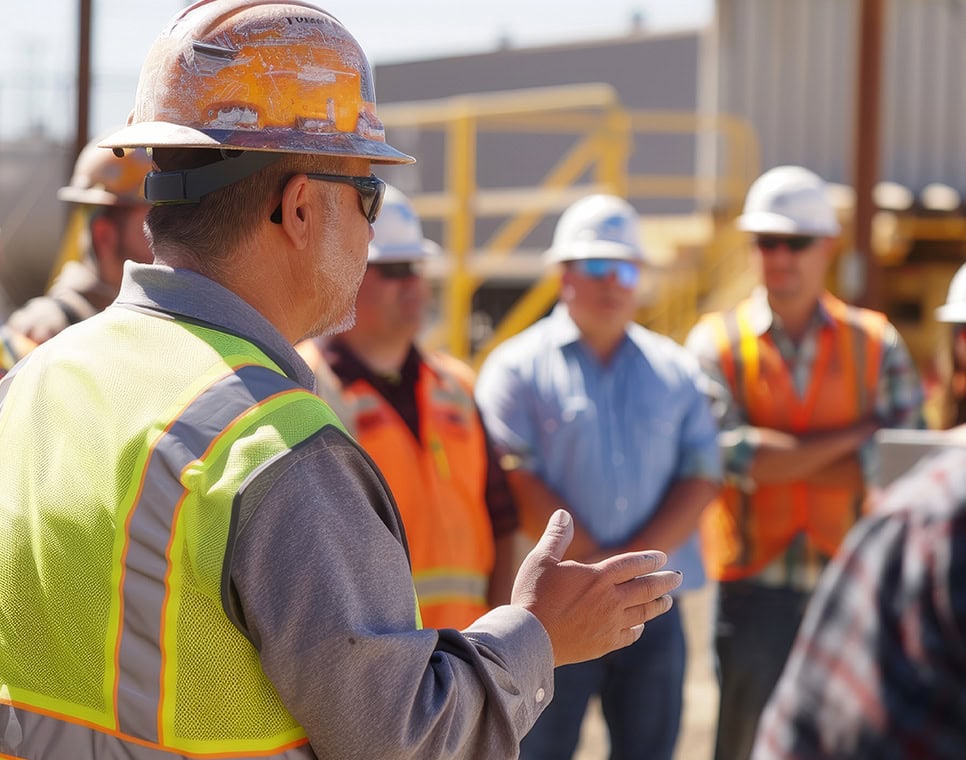

When you’ve been hurt in a construction site accident, you need more than just any lawyer. You need a battle-tested sword and shield fighting for your rights.
At Keller & Keller, we’ve been maximizing client settlements and delivering justice for Indiana construction workers since 1936. We’re a family-run firm, and we treat you like family because we understand that behind every case is a real person going through the toughest time of their life. We reach out and make sure our clients feel like they can have a cup of coffee with us. No fancy legal jargon, no runaround, just straight talk about what we’re going to do to win your case and get you the compensation you deserve.
Why You Need a Construction Site Accident Lawyer After an Injury
Construction site accidents in Indiana are different from regular workplace injuries. These cases are complex, often involving multiple parties, OSHA violations, and insurance companies that will do everything possible to deny your claim. Without proper legal representation, you’re fighting an uphill battle against corporate defendants with deep pockets and experienced legal teams.

Navigating Complex Legal Claims

Understanding Insurance Company Tactics

Understanding Statute of Limitations
Navigating Complex
Legal Claims
Indiana construction site accidents often involve multiple parties: general contractors, subcontractors, equipment manufacturers, property owners, and various insurance companies. Each party will try to shift blame to avoid liability. Without an experienced Indiana construction site accident lawyer, you’ll get lost in this maze of finger-pointing while your medical bills pile up and your family struggles financially

Understanding Insurance Company Tactics
A construction site injury involves workers’ compensation claims, but that’s often just the beginning. Third-party liability claims against negligent contractors, defective equipment manufacturers, or unsafe property conditions can provide significantly more compensation than workers’ comp alone. Insurance companies know this and will pressure you to accept a quick workers’ comp settlement before you understand your full legal rights.

Understanding Statute of Limitations
In Indiana, you typically have two years to file a personal injury lawsuit for construction site accidents. However, if government entities are involved or if you’re dealing with defective equipment claims, different deadlines may apply. Miss these deadlines, and you’re out of luck, no matter how strong your case is.

What to Do After a Construction Site Accident in Indiana
The actions you take immediately after a construction site accident can make or break your case.
See What Your Case Is WorthEven if you think you’re okay, construction site injuries can be severe and symptoms may not appear right away
Make sure your employer files an official incident report and get a copy for your records
If you’re able, take photos of the accident scene, your injuries, and any equipment involved
Get names and contact details from coworkers who saw what happened
Avoid signing statements or settlements without legal advice
Keep medical records, incident reports, and any communications with your employer or insurance companies
Report your injury to start the workers’ comp process, but remember this may not cover all your damages
The sooner we start investigating, the better we can preserve evidence and protect your rights

The Keller & Keller Injury Lawyers Approach:
Indiana Injury Lawyers Who Fight to Win
From the moment you contact us, you’ll notice the difference in our approach. Our client-first philosophy means we take the time to understand not just the details of your accident but how it has affected your life, your work, your family, and your future in Indiana. We clearly communicate every step of the process in plain language you can understand, no confusing legal jargon. This approach has earned us countless 5-star reviews from real Indiana clients who’ve experienced the Keller & Keller difference firsthand.
We understand that being injured in an accident is stressful enough without having to chase down your lawyer for updates. That’s why we’ve built our practice around transparent, consistent communication.
When you hire us, you’ll have direct access to the Indiana-based attorney handling your case as well as a dedicated paralegal who monitors its daily status. We keep you informed throughout every stage of your claim, explaining what’s happening, what to expect next, and how it affects your case.
Our 90+ years of experience isn’t just about longevity. It’s about results. Our attorneys have successfully handled thousands of cases in Indiana and recovered thousands of millions of dollars for our clients. We’ve gone toe-to-toe with the biggest insurance companies and won. Our courtroom experience means we’re always prepared to take your case to trial if that’s what it takes to secure fair compensation. This willingness to fight, and our track record of success, often motivates insurance companies to offer better settlements to avoid facing us in court.
The Construction Site Accident Claim Process with Keller & Keller Injury Lawyers
When you hire us, we don’t waste time. Our investigation starts immediately because evidence disappears fast and witnesses’ memories fade.
Types of Construction Site Accidents We Handle
We handle all types of construction site accidents throughout Indiana, and each one presents its own unique challenges.
These cases arise when improperly maintained or defectively designed scaffolding and ladders cause serious falls. A platform may collapse, a plank may give way, or a ladder may slip or buckle under a worker. Several companies often touch the same scaffold, so the first job is working out who built, inspected and controlled it.
What Safety Rules Cover Scaffolds and Ladders?
Indiana runs its own workplace safety program through the Indiana Occupational Safety and Health Administration (IOSHA), which adopts federal OSHA standards apart from its own excavations standard. Those standards include several specific requirements:
- Protection on scaffolds. Each employee on a scaffold more than 10 feet above a lower level must be protected from falling, and the type of protection varies by scaffold (29 CFR 1926.451(g)(1)).
- Load. With listed exceptions, a scaffold must support its own weight and at least 4 times the maximum intended load (29 CFR 1926.451(a)(1)).
- Ladder height. Portable ladder rails must extend at least 3 feet above an upper landing, or the ladder must be secured at the top with a grasping device (29 CFR 1926.1053(b)(1)).
- Access. A stairway or ladder is required at personnel access points with a break in elevation of 19 inches or more, unless a ramp or similar is provided (29 CFR 1926.1051(a)).
A broken rule doesn’t create a lawsuit by itself. The Indiana occupational safety chapter creates no private right of action (Ind. Code § 22-8-1.1-48.3). An IOSHA inspection file may still contain photographs, statements and names worth having. For ladders in particular, see our post on ladder compliance on construction sites.
Is the General Contractor Responsible for My Fall?
Not simply because it ran the job. A general contractor ordinarily owes no duty of care to a subcontractor’s employee, but it may assume one through a contract (Ryan v. TCI Architects/Engineers/Contractors, Inc., 72 N.E.3d 908 (Ind. 2017)). In plain terms, that means the answer usually sits in the paperwork, not in who seemed to be in charge.
Two Indiana Supreme Court decisions show how much the wording matters. Ryan found a duty assumed. Hunt Construction Group, Inc. v. Garrett, 964 N.E.2d 222 (Ind. 2012), found none for a construction manager on the Lucas Oil Stadium project. The prime contract, the subcontract and any safety plan they bring in may all need close reading.
Worker’s compensation is generally the exclusive remedy against your own employer (Ind. Code § 22-3-2-6). You may still sue someone else who is legally liable, such as a separate scaffold erector or the company that supplied a defective ladder (Ind. Code § 22-3-2-13).
Worn Out or Built Wrong?
Maintenance and design point to different companies. Cracked planks, missing cross braces or bent ladder rails may suggest poor upkeep by whoever had the equipment. A failure in equipment that was new and used as intended may point toward its maker, which brings in our product liability page. Inspection tags, erection drawings and rental agreements can help tell the two apart.
Crane and heavy equipment accidents happen around hoisted loads, booms, excavators, lifts and other large machines on a job site. They typically involve operator error, mechanical failure or inadequate safety protocols, and often a mix of the three. A dropped load or tip-over can hurt people well away from the machine.
Operator, Machine or Plan?
The construction crane standard covers power-operated hoisting equipment, with listed exclusions (29 CFR 1926.1400). Indiana’s safety agency, the Indiana Occupational Safety and Health Administration (IOSHA), adopts it along with other OSHA standards. It offers a useful way to sort out what went wrong:
- Operator error. The employer must ensure each operator is trained, certified or licensed, and evaluated, with some equipment excepted (29 CFR 1926.1427(a)). Training records may show whether this person was qualified for this machine.
- Mechanical failure. A competent person must make a visual inspection each shift (29 CFR 1926.1412(d)(1)). Logs may show a known problem, or an inspection that never took place.
- Inadequate safety protocols. Swing radius hazards have their own rule (29 CFR 1926.1424). Lift plans, load charts and signal arrangements may show whether anyone thought the work through.
So Many Companies on One Lift
A single lift may involve a crane owner, a rental company, an operator supplied by one of them, a rigging crew and a maintenance contractor. Each may be a separate business from your employer, which is what can open a claim against them (Ind. Code § 22-3-2-13). Whether a general contractor can be included is a different matter, since it ordinarily owes a subcontractor’s employee no duty unless it assumed one by contract. Our overview of common construction site accidents shows how often equipment is involved.
Newer machines may record load, angle and movement data. That information, and the rental paperwork, may help show who was responsible for what on the day.
How a Jury May Split Responsibility
With several defendants, the verdict is entered against each one for its own percentage of fault (Ind. Code § 34-51-2-8). There’s no right of contribution among them under the chapter, although indemnity rights aren’t affected (Ind. Code § 34-51-2-12). Equipment rental contracts sometimes contain indemnity terms, so companies may dispute these among themselves.
The harder point for injured workers involves people who aren’t in the suit. A jury must consider the fault of everyone who contributed, whether or not they could have been named, and it may not be told of any immunity a nonparty has (Ind. Code § 34-51-2-7). So a percentage can land on your own employer even though worker’s compensation protects it from suit.
That share generally can’t be collected from anyone. A defendant has to plead and prove this nonparty defense (Davidson v. State, 211 N.E.3d 914 (Ind. 2023)), so the evidence about what your employer did or didn’t do can become a central fight. Our post on Indiana construction accident claims touches on how a separate claim can sit alongside worker’s compensation.
Electrocution injuries on a job site come from contact with power lines, faulty wiring or improperly grounded equipment. Current doesn’t need bare skin on a wire to reach someone. A wet ladder, an aluminum screed or a raised boom can carry it to the person holding on.
Who Was Supposed to Keep the Power Away From You?
Two federal rules, adopted in Indiana through the Indiana Occupational Safety and Health Administration (IOSHA), set the basics. Employers on construction sites must use ground-fault circuit interrupters (GFCIs) or an assured equipment grounding conductor program (29 CFR 1926.404(b)(1)(i)). They also must not let employees work near a circuit they could contact unless they’re protected, which means de-energizing and grounding it or guarding it (29 CFR 1926.416(a)(1)).
The facts usually come down to who believed the power was off, and why. Temporary power panels, extension cords run through standing water and shared circuits between trades can blur the question. Records from the electrical subcontractor and any lockout paperwork may show who decided what. Our overview of common construction site accidents places this among the most serious job site hazards.
An Injury That Doesn’t Show on the Surface
A small entry mark may sit above deep damage to muscle, nerves and blood vessels along the current’s path. Heart rhythm problems can appear, and memory or concentration trouble may develop later. An electrocardiogram taken that day and later neurological testing may help tie a delayed symptom to the event. For a fatal shock, our wrongful death page explains what a family may do.
If a City or Other Public Body Owns the Line
Some lines belong to private utilities, and others to a municipality. Some jobs are built for a county, school corporation or state agency. Where a governmental entity may be at fault, the rules change sharply, as our guide to the Indiana Tort Claims Act explains:
- Notice comes first. A claim against a political subdivision is barred unless notice is filed within 180 days after the loss (Ind. Code § 34-13-3-8). State agencies generally have a 270-day window.
- The fault rule is harsher. The Comparative Fault Act doesn’t apply to government defendants, so even slight fault by the injured person can bar recovery (Funston v. School Town of Munster, 849 N.E.2d 595 (Ind. 2006)).
- Actual knowledge isn’t notice. The entity’s awareness of the accident, even with an investigation, doesn’t replace a notice (Collier v. Prater, 544 N.E.2d 497 (Ind. 1989)).
- Everyone belongs in one suit. A person suing both government and non-government defendants over one injury must sue them together, and a first judgment can bar a later suit against the others (Davidson v. State, 211 N.E.3d 914 (Ind. 2023)).
Those last two points catch people out on mixed projects, where a private contractor and a public owner are both involved. Your employer’s worker’s compensation carrier may know about the accident, but that doesn’t protect a claim against anyone else. Finding out who owned the line or the project is often one of the earliest questions.
These are cases in which workers are buried or crushed by collapsing trenches or unstable excavations. Soil is far heavier than it looks, and a wall can fail with little warning. A worker caught even partly in a collapse may be unable to breathe or to get out alone, and rescue efforts can put others at risk as well.
Indiana’s Rule May Not Be the One You Find Online
Most Indiana job site rules track federal OSHA, but trenching is the exception. The Indiana Occupational Safety and Health Administration (IOSHA) adopts OSHA standards except that it has a unique excavations standard. Depth limits and other figures you may read on a national website aren’t necessarily the ones that applied to an Indiana dig, so the rule in force on the day of the collapse has to be checked directly.
The practical questions are similar wherever the work takes place. These are the facts an investigation tends to focus on:
- Protection in the trench. Was there a shield, shoring or sloping, or were workers simply sent in?
- The soil. What kind was it, had it been disturbed before, and had rain or groundwater changed it?
- The edges. Were dirt piles, equipment or passing trucks loading the top of the wall?
- A way out. Was a ladder or ramp within reach of the people working below?
- Who looked at it. Did anyone with the knowledge and authority to stop the work check the trench that day?
My Employer Knew It Was Dangerous. Can I Sue?
Usually not, and this surprises many families. The Worker’s Compensation Act is generally the exclusive remedy for accidental workplace injuries (Ind. Code § 22-3-2-6). It doesn’t bar a tort suit for an injury the employer itself intended, but that standard is very high. The court required deliberate intent to inflict an injury, or actual knowledge that an injury is certain to occur (Baker v. Westinghouse Electric Corp., 637 N.E.2d 1271 (Ind. 1994)).
Even “substantially certain” isn’t enough under Baker. Sending a crew into an unprotected trench may be reckless and may break safety rules, and it can still fall short. A foreman’s or co-worker’s state of mind also isn’t automatically the employer’s, since the employer itself must have intended the injury.
Looking Beyond Your Own Employer
A claim may lie against another company whose work contributed. Depending on the job, that could be a separate excavation subcontractor, a utility locating contractor, or an engineer who assessed the ground. A general contractor generally has to have assumed a duty by contract, so its agreements matter. Our post on when you need an attorney after a workplace accident explains third-party claims in plain language, and our wrongful death page covers fatal collapses.
Evidence at a trench is short-lived, since a collapsed excavation is often dug out, filled in or rebuilt quickly. Photos, daily logs, soil reports and anything IOSHA gathered may be the only record of how it looked.
Struck-by accidents happen when workers are hit by falling objects, swinging equipment or moving machinery. A dropped wrench, a load that shifts, or a reversing truck can all do it. OSHA’s Construction Focus Four training, which covers falls, caught-in or -between, struck-by and electrocution hazards, treats this as one of the main dangers in the trade.
Hit by Another Company’s Crew
On a busy site, the object that hit you often came from a different trade. That matters legally. Worker’s compensation is generally your only remedy against your own employer, but the law allows a suit against someone who isn’t your employer and not in the same employ (Ind. Code § 22-3-2-13). Our post on when you need an attorney after a workplace accident gives a similar example: a flooring installer hurt when another contractor’s employee drops heavy machinery.
The picture is different if the person who caused it works alongside you. A co-employee is immune under the Act if the act causing the injury arose out of and in the course of both workers’ mutual employment (Wine-Settergren v. Lamey, 716 N.E.2d 381 (Ind. 1999)). So one early question is simple: whose payroll was the other person on? Hard hats, vests and company trucks don’t always answer that, and site sign-in sheets or subcontracts may be needed.
Not on the Crew at All
Struck-by cases also reach people with no connection to the job, such as a delivery driver, a site visitor or someone on a sidewalk beside a building going up. Worker’s compensation limits don’t stand in their way against the contractors involved, because the exclusive remedy rule applies to employees. An ordinary fault claim may then apply, and the Comparative Fault Act generally governs how responsibility is divided.
If you were hit by a vehicle in a roadway work zone, see our car accident page.
What Tends to Explain a Falling Object
- Unsecured tools and materials. Items left near an edge or stacked on scaffolding can move with vibration or wind.
- Overhead work without a barrier. Workers may be routed beneath active crews with no netting, toe boards or closed-off areas.
- Backing equipment. A dump truck or loader with a blocked view or no spotter can reach someone before anyone notices.
- Rigging failures. A sling, hook or load that wasn’t secured can swing or drop.
A Head Injury Under a Hard Hat
A hard hat reduces risk but doesn’t remove it. A person may stay on site after a blow and feel fine, then develop headaches, memory problems or mood changes in the days that follow. Our post on safety clothing on construction sites explains what this gear is meant to do. An early incident report and a same-day medical visit can help connect later symptoms to the blow.
Caught-in accidents happen when workers get trapped in or between equipment, machinery or structures. A sleeve can be drawn into a rotating shaft, an arm can be pinned by a machine that restarts, or a body can be squeezed between a moving vehicle and a wall. Crushing and amputation injuries are common results, and they often mean permanent loss.
Why Did the Machine Move?
These accidents usually come down to a missing barrier or energy that should have been cut. Workers clearing a jam may reach in while a machine is live, a guard may have been removed for speed, or a co-worker may restart equipment without realizing someone is inside. Lockout records, maintenance tickets and the machine’s own controls may show which of these happened, and our post on faulty safety features on construction equipment gives an Indiana example of a disabled emergency stop.
If You Came Through a Staffing Agency
Temporary labor is common on job sites, and it can change who you’re able to sue. In Walls v. Markley Enterprises, Inc., 116 N.E.3d 479 (Ind. Ct. App. 2018), a temporary worker was treated as an employee of both the staffing agency and the company where she was placed. The Act’s exclusive remedy therefore barred her negligence suit against that company.
The company running the machine, in other words, may not be a third party at all if it was also your employer in the eyes of the law. A placement agreement and day-to-day facts may need a close look. The Court of Appeals has also refused to apply a dual-capacity exception, which would let an employee sue an employer in a second role, in ProCare Rehab Services of Community Hospital v. Vitatoe, 888 N.E.2d 349 (Ind. Ct. App. 2008), so it would be unwise to assume that an employer who built or altered a machine can be sued as its maker.
What Happens to Your Benefits if a Third Party Pays?
Long recoveries from amputations and crush injuries make this question matter. Benefits and a third-party claim can run at the same time, but they’re tied together:
- The lien. If you took compensation, the employer or its carrier has a lien on any settlement or judgment from the third party (Ind. Code § 22-3-2-13).
- Sharing costs. Repayment is subject to the employer paying its pro rata share of costs and attorney’s fees, which the statute sets at 25 percent without suit and 33 1/3 percent with suit. The employer may also waive reimbursement.
- Consent. A release or settlement generally isn’t valid without written consent from both sides, with limited exceptions.
- Future benefits. Further compensation liability ends on recovery, so a settlement can affect care you’re counting on.
- Timing. The third-party suit generally must be filed within two years after the claim accrues, and the employer or carrier must be told within 30 days after filing.
The lien calculation can be complicated. A settlement that looks large may leave much less once these pieces are worked through. Our overview of Indiana construction site accidents lists the hazards that lead to these claims.
Chemical exposure injuries come from toxic substances, asbestos or hazardous materials without proper protection. The harm may be sudden, like a splash or a lungful of fumes in an enclosed space, or it may build for years before anyone gives it a name. Which of those happened can decide the legal path as well as the medical one.
A Sudden Exposure or a Slow Disease?
Indiana handles these under different laws. A one-time accident usually falls under the worker’s compensation provisions. A disease that develops from work conditions may fall under the occupational diseases law at IC 22-3-7, which has its own exclusive remedy (Ind. Code § 22-3-7-6).
The difference has real effects. A claim for occupational disease must generally be filed within two years after disablement (Ind. Code § 22-3-7-32), and timing can be hard to pin down for a condition that came on slowly. The narrow route for injuries an employer intended also doesn’t carry over. The Indiana Supreme Court held that the Occupational Diseases Act, unlike the compensation act, bars intentional tort actions (Baker v. Westinghouse, 637 N.E.2d 1271 (Ind. 1994)).
What Were You Told About the Product?
The Hazard Communication Standard requires manufacturers or importers to classify chemical hazards, and all employers to inform employees through a program, labels, safety data sheets and training (29 CFR 1910.1200(b)(1)). Indiana’s safety agency, the Indiana Occupational Safety and Health Administration (IOSHA), adopts OSHA standards other than its excavations rule. Gaps in that chain, such as an unlabeled drum or a data sheet nobody saw, can help explain how an exposure happened. Our post on safety clothing on construction sites covers the protective side.
Those duties sit mostly with employers, who are generally shielded from suit. The maker of the substance is a different matter. A product is defective if the seller fails to give reasonable warnings of danger or reasonably complete instructions when reasonable diligence could have made them available (Ind. Code § 34-20-4-2). For a warning claim, you generally must show a failure to use reasonable care (Ind. Code § 34-20-2-2).
Manufacturers may answer that professional users or an intermediary already knew the danger. The Indiana Supreme Court has said this is a defense whose merits can be a fact question, so it doesn’t end a case automatically (Brewer v. PACCAR, Inc., 124 N.E.3d 616 (Ind. 2019)). For more on these claims, see our product liability page.
Asbestos Has Rules of Its Own
Asbestos may still turn up during demolition and renovation of older buildings, and the disease it causes can appear long after the exposure. Indiana has a separate timing rule for actions against those who mined and sold commercial asbestos, and bankruptcy-related funds. Such an action must be brought within two years after accrual, and a personal injury claim accrues when the person knows of an asbestos related disease or injury (Ind. Code § 34-20-3-2).
The reach of these claims can extend past the job site. In Stegemoller v. ACandS, Inc., 767 N.E.2d 974 (Ind. 2002), a worker’s wife exposed through his clothing was able to sue as a bystander, because she would reasonably be expected near the product during its expected use.
Burn and explosion cases on a job site come from gas leaks, electrical hazards or improper handling of flammable materials. A blast takes fuel, oxygen and a spark, and a construction site can supply all three at once. The injuries range from flash burns to deep burns that need grafting, plus blast trauma and damage to the lungs from breathing hot gases or smoke.
Finding What Burned, and What Lit It
An investigation usually works back from where the fire began. The common sources tend to fall into a few groups:
- Gas lines. Digging can strike a buried line, and a poorly fitted temporary connection can leak into a closed space.
- Vapors from products. Solvents, adhesives and fuels can build up where ventilation is poor, then ignite from a heater or tool.
- Hot work. Welding and cutting near combustible material can start a fire well after the crew has moved on.
- Electrical faults. An arc can ignite clothing or dust, and it can cause burns with no flame at all.
Fire destroys much of its own evidence, so what remains deserves careful handling. Fire department reports, gas utility records, permits and photographs from the first hour may be all that survives. Our post on construction site burns describes the main types of burn accidents, and the burn injury resource center covers treatment.
A Blast Can Reach Past the Crew
One explosion may injure several trades, along with neighbors and passersby. Each person’s position differs. An employee of the company that caused it generally has only a worker’s compensation claim against that company, while someone working for a different contractor may have a claim against it as a third party (Ind. Code § 22-3-2-13). A neighbor with no tie to the job isn’t limited by either rule.
Gas suppliers, fuel distributors and equipment makers may also come into the case, depending on what failed. Where a defective heater, regulator or tank may be involved, our product liability page has more detail.
When Carelessness Goes Further
Some job site fires follow ignored warnings, and families often ask about punitive damages. They’re limited in ways people may not expect:
- Who they can reach. An employer is generally protected by the exclusive remedy unless it intended the injury, so a punitive claim would usually be aimed at third parties. They’re also unavailable against government.
- The proof required. All supporting facts must be shown by clear and convincing evidence (Ind. Code § 34-51-3-2).
- The cap. An award may not exceed the greater of three times compensatory damages or $50,000 (Ind. Code § 34-51-3-4).
- Where the money goes. Of a punitive award paid, 25 percent goes to the person awarded and 75 percent to the state’s violent crime victims compensation fund (Ind. Code § 34-51-3-6).
They also aren’t recoverable under the wrongful death statute, so a fatal explosion has its own limits. Our guide to Indiana punitive damages goes through what must be shown.
Roofing accidents are falls through roofs or from roof edges due to inadequate safety measures. A worker may step back off an unprotected edge, slip on a pitched surface or go through a weak deck or skylight. Roof work also leaves very little margin, since the same slope that makes a roof shed water can carry a person straight over the side.
What Protection Should Have Been Up There?
Under the general construction rule, an employee on a walking or working surface with an unprotected side or edge 6 feet or more above a lower level must be protected by guardrails, safety nets or personal fall arrest systems (29 CFR 1926.501(b)(1)). The Indiana Occupational Safety and Health Administration (IOSHA) adopts this standard. Six feet isn’t the rule for every construction fall, since scaffolds, ladders and some other work have their own subparts.
Fall arrest gear only works if it’s used properly. A harness needs a sound anchor, a lifeline of the right length and someone who was shown how to use it. Our post on a fatal Indiana radio tower fall reports how harnesses alone may not save a worker if what they’re tied to gives way. Inspection records, equipment receipts and training sign-offs may show what was actually provided.
Who Pays When the Roofing Crew Has No Coverage?
Roofing often runs through layers of small subcontractors, and some crews are paid as independent contractors. That raises a question many injured roofers face: does anyone owe compensation at all? An independent contractor who makes no election isn’t subject to the compensation provisions, and must file with the department of state revenue and obtain a certificate of exemption (Ind. Code § 22-3-2-14.5). The label on a pay stub may not settle the question.
Indiana law offers a backstop in some cases. A person who contracts for work over $1,000 by a contractor subject to the Act, without obtaining a board certificate of compliance, can be liable to the same extent as that contractor for compensation for its employees (Ind. Code § 22-3-2-14). In plain terms, that means the company higher up the chain may have to cover compensation that an uninsured roofer can’t pay.
That provision has limits. It doesn’t cover owners of owner-occupied residential property contracting for work on it, and whoever pays may recover from the party otherwise liable. A homeowner who hired a crew to reroof the family house is treated differently from a developer or a commercial general contractor.
What Records Show About a Roof Job
- The chain of contracts. Agreements show who hired whom, and whether certificates were requested.
- Pay records. Cash payments, 1099s and timesheets can help sort employee from contractor.
- Photos of the job. Listing images, drone shots or a neighbor’s phone may show whether any guardrails or anchors were in place.
- Weather and site conditions. Frost, rain and loose materials may help explain a slip, though not the absence of protection.
Falls are among the most common causes of serious construction injuries, as our post on construction site fall accidents discusses. If a fall involved a defective harness or other faulty gear, see our product liability page.
Equipment defect injuries happen when faulty tools, machinery or safety equipment causes harm on a job site. A saw guard may fail, a harness buckle may release, or a lift’s controls may stick. Your employer is generally protected from suit, so the maker of the equipment may be the main party who can be held responsible beyond worker’s compensation.
Which Kind of Defect Was It?
The Indiana Product Liability Act governs actions by a user or consumer against a manufacturer or seller for physical harm caused by a product, whatever the legal theory (Ind. Code § 34-20-1-1). A worker using a tool would generally count as a user, and a person standing nearby may qualify as a bystander if reasonably expected to be near it during expected use. What must be proved depends on the type of problem:
| Type of claim | Job site example | What it generally turns on |
|---|---|---|
| Something wrong with this unit | A cracked weld on one lift | Whether the product was in a defective condition unreasonably dangerous to the user (Ind. Code § 34-20-2-1) |
| Design defect | A table saw guard that can’t stay in place | Whether the manufacturer or seller failed to use reasonable care (Ind. Code § 34-20-2-2) |
| Failure to warn | No warning about a known tip-over risk | Whether reasonable warnings or instructions could have been given, and reasonable care wasn’t used (Ind. Code § 34-20-4-2) |
A manufacturer may point out that the product complied with applicable codes or standards. That creates a presumption of no defect and no negligence, which can be rebutted (Ind. Code § 34-20-5-1).
The Guard Was Removed. Now What?
Job sites change equipment. A safety switch may be bypassed, or a part replaced with a homemade fix. Defenses include misuse not reasonably expected by the seller and a modification that wasn’t reasonably expectable and was the proximate cause of the harm, and the party raising the defense bears the burden (Ind. Code § 34-20-6-3). Misuse can be a complete defense if it caused the injury and couldn’t reasonably have been expected (Campbell Hausfeld/Scott Fetzer Co. v. Johnson, 109 N.E.3d 953 (Ind. 2018)).
So it may matter whether the maker could have foreseen that crews would take off a guard, and whether a safer design would have kept them from doing it. Our post on faulty safety features on construction equipment reports an Indiana case where safety features had been rigged.
Rented, Old or Bought Secondhand
Who sold the equipment matters. A strict liability action generally can’t be brought against a seller unless it’s also a manufacturer of the product or the defective part (Ind. Code § 34-20-2-3), though “manufacturer” is defined broadly. Age matters too. An action generally has to be commenced within ten years after delivery to the initial user or consumer, with a limited extension in some cases (Ind. Code § 34-20-3-1). That can be a real problem for older machinery still in service, so serial numbers and purchase records are worth finding early.
Keeping the Machine From Going Back to Work
Often the most important evidence belongs to someone else and is back on the job the next week. Indiana doesn’t recognize a separate tort for a party’s own destruction of evidence, and the remedy lies within the case itself, such as an inference (Gribben v. Wal-Mart Stores, Inc., 824 N.E.2d 349 (Ind. 2005)). Claims against third parties for lost evidence are recognized only in narrow circumstances. A prompt written preservation request may help, and our product liability page has more on these claims.
The Hard Truth
Construction Site Accident Statistics That Demand Action
The numbers don’t lie, Indiana construction sites are dangerous places to work, and here’s what gets us fired up about fighting for injured workers.
Indiana construction fatalities surged to 28 deaths in 2023, representing a 33% increase from 21 deaths in 2021. Despite employing only 162,608 workers, construction accounts for 17.8% of all workplace deaths in Indiana, making it one of the most dangerous industries in the state.
With an injury rate of 2.1 injuries per 100 full-time workers, approximately 3,415 Indiana construction workers suffer injuries requiring medical treatment beyond first aid every year. Construction workers experience falls to lower levels at a rate of 13.9 per 10,000 workers versus just 4.6 for all private industry.
Construction accidents cost Indiana families and businesses hundreds of millions annually. The 28 construction fatalities in 2023 represent an estimated $42-56 million in lost lifetime earnings, while the approximately 3,415 annual construction injuries generate an estimated $166 million in direct workers’ compensation costs.
Leading Causes of Construction Site Accidents
Most construction site accidents are preventable, which is what makes these injuries so infuriating. Understanding these causes helps us build stronger cases and hold negligent parties accountable.
Construction Site Accident Injuries We Represent
Construction site accidents don’t cause minor cuts and bruises. They cause life-changing injuries that devastate families and end careers.

Compensation Available for Indiana Construction Site Accident Victims
If you’ve been injured in a construction site accident due to someone else’s negligence, you may be entitled to various types of compensation beyond workers’ compensation.
Economic Damages
These are quantifiable financial losses, including:
- Medical expenses (past, current, and future)
- Lost wages and reduced earning capacity
- Vocational rehabilitation and retraining costs
- Home modification expenses for accessibility
- In-home care and assistance costs
- Transportation costs for medical appointments
Non-Economic Damages
These more subjective damages compensate for:
- Pain and suffering
- Emotional distress and trauma
- Loss of enjoyment of life
- Disfigurement and scarring
- Loss of consortium (impact on marital relationship)
- Permanent disability and lifestyle changes
Punitive Damages
In cases involving extreme recklessness or willful safety violations, Indiana courts may award punitive damages designed to punish the wrongdoer and deter similar behavior by construction companies.
Wrongful Death Damages
When construction site accidents result in fatalities, surviving family members may recover compensation for funeral expenses, loss of financial support, loss of companionship, and the pain and suffering of their loved one before death.
How Keller & Keller Injury Lawyers Investigates Indiana Construction Site Accident Cases
Our approach to evidence gathering builds the strongest possible foundation for your claim:

Setting the Indiana Standard
Cutting-Edge Investigation Technology
While other law firms rely on outdated methods, Keller & Keller leverages cutting-edge technology to build stronger cases and win bigger settlements for our Indiana construction site accident clients.
Professional drone documentation
Captures construction sites from angles impossible with traditional methods, providing evidence of safety violations, equipment positioning, and hazardous conditions.
Advanced voice-over-IP networks
Enables real-time collaboration between attorneys, investigators, construction safety experts, and medical professionals, ensuring no detail is overlooked.
Equipment data extraction
Our technicians retrieve crucial operational data from construction machinery, including maintenance records, operator logs, and mechanical failure indicators that often prove negligence.
Cloud-based case management
Provides you 24/7 access to your case information, medical records, and status updates throughout your recovery.
Rapid-response investigation
Allow us to conduct on-site evidence gathering within hours of a construction accident, before crucial evidence disappears or gets altered.
Service Areas
Indiana Cities We Serve
What Sets Keller & Keller Injury Lawyers Apart
With so many law firms advertising their services, why choose Keller & Keller? The differences are clear.
Zero Fee Guarantee
We believe everyone deserves quality legal representation, regardless of their financial situation. That’s why we work on a contingency basis. You pay absolutely nothing unless and until we win your case. No upfront costs, no hidden fees, no financial risk to you.
* Clients may owe court costs if they lose





No Fee Until We Win!
Get Started TodayDon’t Take Our Word For It!
See what our clients have to say about their experience with Keller & Keller.
View More Testimonials“They truly left no rock unturned and for that I am grateful!”
Chris
Their first and foremost concern was my state of health and continued to check my health status regularly and if I needed anything! After battling the insurance company I received a substantial settlement to which I was delighted. Again they performed a job that nobody else wanted to even look at due to the other lady’s insurance company claiming that an “act of God is what made their client blackout causing the wreck”. They truly left no rock unturned and for that I am grateful! Thank you Keller and Keller, Aaron and Justin for all you did for me through this entire incident!
Take Action Now
Your Construction Site Accident Claim Starts Here
Free Consultation
We’ll evaluate your case honestly and explain your options in plain English. We’ll come to you, whether you’re at home, in the hospital, or wherever is convenient.
We Fight
Our experienced team fights to investigate thoroughly, deal with insurance companies, and handle all the legal complexities while you focus on getting better.
You Recover
Focus on healing while we handle the rest. We’ll fight for you like we’d fight for our own family, because that’s exactly how we see you.
Zero Fee Guarantee
We believe everyone deserves quality legal representation, regardless of their financial situation. That’s why we work on a contingency basis. You pay absolutely nothing unless and until we win your case. No upfront costs, no hidden fees, no financial risk to you.
* Clients may owe court costs if they lose

The Keller Tradition:
Three Generations of Fighting for Indiana Families
Frequently Asked Questions
Have Questions? We’re here to help.
Injured and not sure what to do next?
We’ll help guide you through everything you need to know