

Indiana Semi Truck Accident Lawyer
Keller & Keller Injury Lawyers’ Winning Approach
Free Case EvaluationInjured in a Semi Truck Accident?
Get started with a free case evaluation. No Fee Until We Win.
100% Free Evaluation
Provide a few details and our team will handle the rest.
"*" indicates required fields

“As a busy mom of three, I’m so grateful I didn’t have to face the legal battle alone. Thank you, Keller & Keller Injury Lawyers.”
Kelly
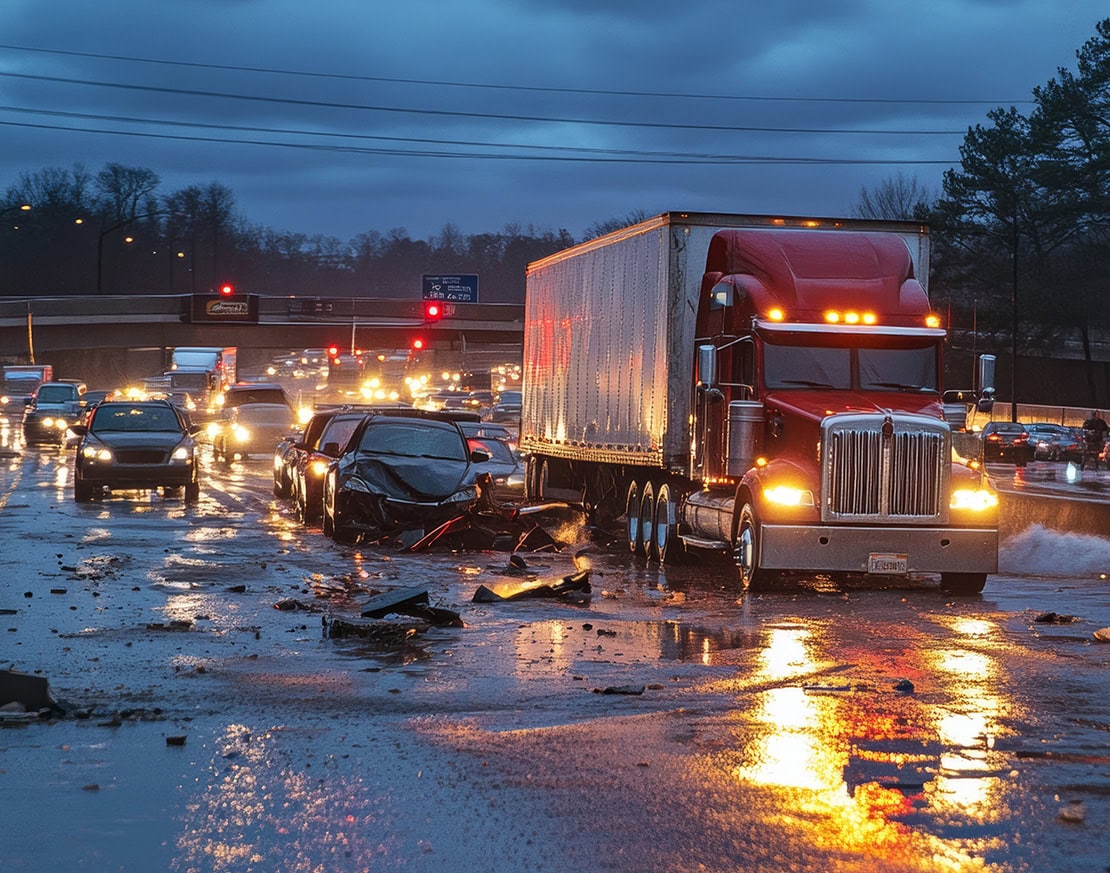

When you’ve been injured in a semi truck accident, you need more than just legal representation. You need a battle-tested sword and shield fighting for your rights.
Keller & Keller has been maximizing client settlements and delivering justice since 1936, establishing our firm as one of Indiana’s leading personal injury law firms.
Why You Need a Semi Truck Accident Lawyer After a Crash
The aftermath of any truck accident can turn your life upside down, leaving you overwhelmed. Meanwhile, the trucking company’s legal team is already working to minimize their liability.

Navigating Complex Legal Claims

Understanding Insurance Company Tactics

Understanding Statute of Limitations
Navigating Complex
Legal Claims
Truck accident claims involve complicated legal processes that most people aren’t equipped to handle. Without experienced representation, you’re fighting an uphill battle against companies that have lawyers working immediately to limit their liability.
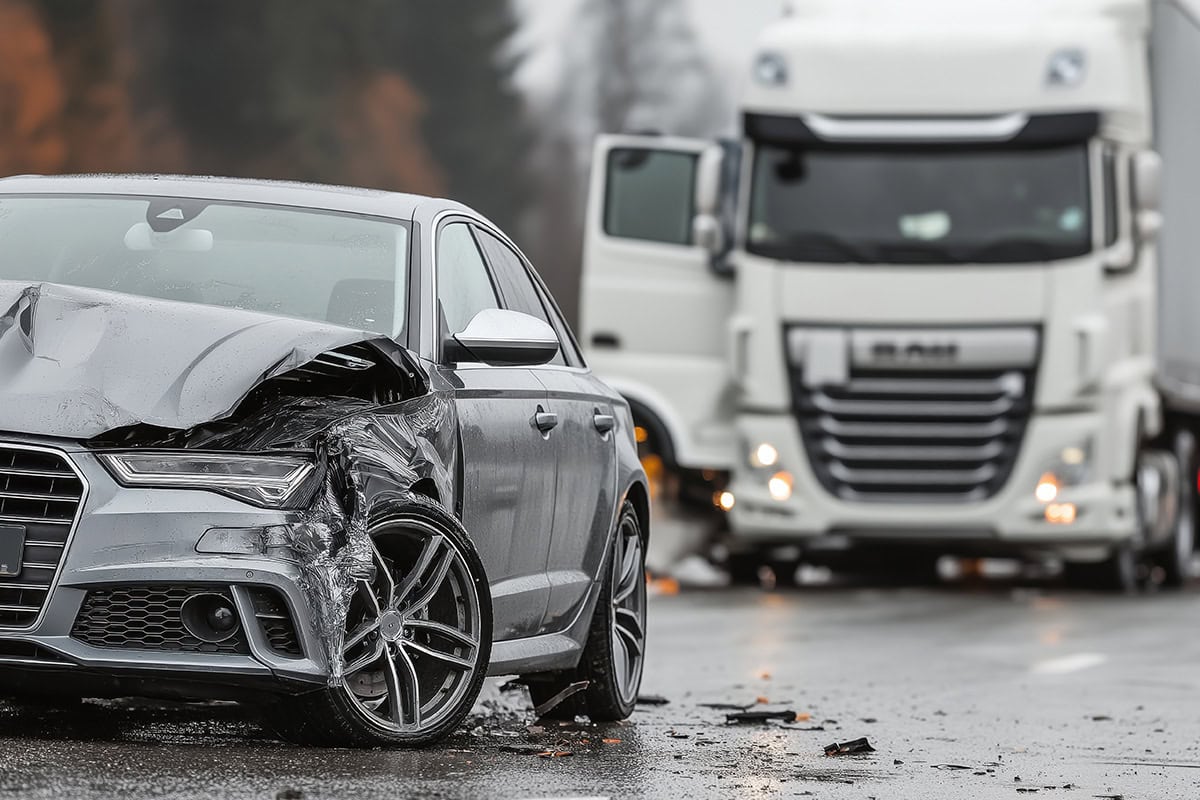
Understanding Insurance Company Tactics
Insurance companies employ tactics designed to minimize truck accident payouts, including pressuring you for recorded statements, offering quick lowball settlements, delaying claims processing, and disputing injury severity.

Understanding Statute of Limitations
Indiana gives you two years from the date of your accident to file a personal injury lawsuit. The sooner you contact us, the better we can protect your rights and preserve crucial evidence.

Steps to Take After a Semi Truck Accident in Indiana
Taking the right steps after a crash can protect both your health and your legal claim.
See What Your Case Is WorthMove to a safe location away from traffic and check for injuries.
Immediately file an official police report, even for minor accidents.
See a doctor right away, as adrenaline can mask serious injuries.
Take photos & videos of injuries, vehicles, the scene, skid marks, road hazard, and collect witness information.
Collect contact and insurance details from all drivers and parties involved: drivers, passengers, and witnesses.
Notify your insurance company about the accident.
Save all medical bills, repair estimates, and accident-related documents.
Politely decline insurance adjuster requests for comment.
Refrain from posting your accident on social accounts.
Early legal representation helps preserve evidence, meet deadlines, and prevent costly mistakes while dealing with insurance companies.

The Keller & Keller Injury Lawyers Approach:
Indiana Injury Lawyers Who Fight to Win
From the moment you contact us, you’ll notice the difference in our approach. Our client-first philosophy means we take the time to understand not just the details of your accident but how it has affected your life, your work, your family, and your future in Indiana. We clearly communicate every step of the process in plain language you can understand, no confusing legal jargon. This approach has earned us countless 5-star reviews from real Indiana clients who’ve experienced the Keller & Keller difference firsthand.
We understand that being injured in an accident is stressful enough without having to chase down your lawyer for updates. That’s why we’ve built our practice around transparent, consistent communication.
When you hire us, you’ll have direct access to the Indiana-based attorney handling your case as well as a dedicated paralegal who monitors its daily status. We keep you informed throughout every stage of your claim, explaining what’s happening, what to expect next, and how it affects your case.
Our 90+ years of experience isn’t just about longevity. It’s about results. Our attorneys have successfully handled thousands of cases in Indiana and recovered thousands of millions of dollars for our clients. We’ve gone toe-to-toe with the biggest insurance companies and won. Our courtroom experience means we’re always prepared to take your case to trial if that’s what it takes to secure fair compensation. This willingness to fight, and our track record of success, often motivates insurance companies to offer better settlements to avoid facing us in court.
The Semi Truck Accident Claim Process With Keller & Keller Injury Lawyers
When you hire us, we spring into action immediately. Time is critical in truck accident cases, and we don’t waste a moment.
Types of Semi Truck Accidents We Handle
We handle all types of truck accidents, and each one presents its own challenges.
A jackknife happens when a tractor-trailer’s trailer swings around and blocks multiple lanes, folding toward the cab like a pocketknife closing. It’s often caused by sudden braking or taking turns too fast. Once the swing starts, the driver may have little say in where the rear of the rig ends up.
What Makes a Trailer Swing Out of Line?
A tractor and trailer pivot at a single coupling point. If the tractor’s drive wheels slow or slide while the trailer keeps pushing forward, the trailer can overtake the cab and the angle between them closes. Our overview of types of Indiana semi-truck crashes puts this in context. A few conditions set it up:
- Hard braking. A panic stop for traffic the driver should have seen earlier can lock the wheels.
- Too much speed in a curve. Interchange ramps and exit lanes on routes like I-465 ask for far less speed than the mainline.
- A light or empty trailer. With less weight over the rear axles, the trailer’s tires may lose grip sooner.
- Uneven brakes. Brakes out of adjustment may grab harder on one axle than another.
Driver Mistake or Neglected Equipment?
Speed may answer the question on its own. Indiana bars driving faster than is reasonable and prudent under the conditions (Ind. Code § 9-21-5-1), and that rule doesn’t get looser for an 18-wheeler. But a jackknife can also start in the repair bay.
Carriers must systematically inspect, repair and maintain vehicles under their control, and keep the records for 1 year and for 6 months after a vehicle leaves their control (49 CFR 396.3). Indiana has incorporated this part of the federal rules for interstate and intrastate carriers, subject to stated exceptions (Ind. Code § 8-2.1-24-18). Work orders and inspection reports can show whether a brake problem was known and left alone.
A failed part raises a further question. If a valve or brake component broke, our post on the signs of a defective products case in a semi-truck accident explains how that may add another party.
The Truck’s Electronic Records Won’t Last Forever
Many heavy trucks have electronic systems that can log speed, throttle and hard braking. The federal Event Data Recorder (EDR) rule in 49 CFR Part 563 doesn’t reach tractor-trailers, so what’s stored depends on the equipment on that truck. Our article on what a truck’s black box can reveal goes through the data in detail.
That information may be overwritten once the truck goes back on the road. If a party loses or destroys evidence, Indiana doesn’t recognize a separate tort against that party; the remedy lies in the case itself, such as an inference (Gribben v. Wal-Mart Stores, Inc., 824 N.E.2d 349). The Indiana Supreme Court also hasn’t decided whether mere negligence justifies an adverse-inference instruction (Rosen v. Community Healthcare System, No. 25S-CT-217). In plain terms, that means a prompt written preservation request may be worth more than an argument about lost data later.
In an underride accident, a car slides under a truck trailer, and the crash is often fatal because the car gets trapped beneath the higher trailer. A trailer’s bed may ride above a car’s hood and crumple zones, so its first contact can be with the windshield. Seat belts and airbags may then do far less than they were designed to.
The Bar Across the Back of a Trailer
Federal rules generally require a rear impact guard on trailers and semitrailers of 10,000 pounds gross vehicle weight rating or more built on or after January 26, 1998 (49 CFR 393.86). The guard must meet Federal Motor Vehicle Safety Standard 223, and its bottom edge may sit no more than 22 inches above the ground. Older trailers fall under a 30-inch standard, and exceptions cover pole trailers along with certain low chassis, special purpose and wheels-back vehicles.
In 2022 the National Highway Traffic Safety Administration (NHTSA) upgraded the standard to protect people in compact and subcompact cars hitting a trailer’s rear at 35 mph, covering crashes into the center and those with 50 percent overlap. Compliance was required from July 15, 2024, so a trailer’s build date may decide which version applies. The Federal Motor Carrier Safety Administration (FMCSA) rescinded the guard certification label requirement in 2026, which means a missing label shouldn’t be treated as a federal violation. The stronger questions concern the guard’s height, strength and condition.
Why the Side of a Trailer Is a Different Story
NHTSA issued an advance notice of proposed rulemaking on side underride guards in 2023, and that notice isn’t a rule requiring them. A side underride claim therefore tends to focus on how the trailer came to be across the lane. Our article on Indiana semi-truck underride crashes describes how these collisions happen.
Typical settings include a truck backing into a loading dock from a county road, or crossing a dark highway from a truck stop. At night, a long trailer’s lights and reflective markings may decide whether an oncoming driver recognizes it in time. Dirty or missing reflectors can become an important fact.
Who Answers for a Trailer a Car Could Slide Under?
The tractor and trailer don’t always belong to the same company, so ownership records come first. The possible parties may include:
- The driver. Stopping, backing or turning across traffic without enough warning can be the root of the crash.
- The motor carrier. Inspection and repair history may show a bent or rusted guard that stayed in service.
- The trailer’s owner or lessor. Someone else may have been responsible for maintaining the equipment.
- The guard or trailer maker. A design question belongs with our product liability page.
Expect the defense to say your car hit the truck. That fact alone doesn’t settle fault, because Indiana looks at the share of everyone who contributed.
The trailer is often the key exhibit, so its guard may need to be photographed and measured before any repair. Crush height on the car can help show how far it traveled underneath. Because so many of these crashes are fatal, families may also want to read about Indiana wrongful death claims.
A rollover happens when a truck tips onto its side or roof due to improper cargo loading, speed, or mechanical failures. These crashes are especially dangerous given a semi’s high center of gravity. A trailer going over can crush a car alongside it, block an entire highway and spill whatever it’s carrying.
How a Shifting Load Tips a Truck
A trailer stacked high or loaded to one side carries its weight farther from the road. Unsecured freight can slide outward on a curve and pull the whole rig with it, and liquid in a partly filled tank can surge the same way. A tight interchange ramp is enough to start it, even at a speed that would be fine for a car. Our post on the size and weight of Indiana semi-trucks explains why mass changes the risk.
Federal rules require commercial motor vehicles to be loaded and secured to prevent cargo from leaking, spilling, blowing or falling, and to prevent shifting that affects stability or maneuverability (49 CFR 393.100). Indiana incorporates that part of the federal rules for interstate and intrastate carriers, subject to stated exceptions (Ind. Code § 8-2.1-24-18). Whether a violation establishes negligence in a given case depends on Indiana’s test for negligence per se.
Who Loaded It, Who Checked It, Who Drove It?
Rollover cases can spread well beyond the cab, because the driver may never have touched the freight. Each of these may hold a piece of the story:
- The shipper’s dock crew. A sealed trailer may leave a warehouse with the load already out of balance.
- A third-party loader. Some freight is loaded by a separate company hired for that job.
- The driver. Speed into a curve, and any check of the load along the way, are the driver’s part.
- The motor carrier. Dispatch decisions, training and maintenance sit with the company.
- A repair shop. Worn suspension or tires may contribute to a lean the driver can’t correct.
Bills of lading, weigh tickets, load photos and securement straps can show who did what. Each party may blame another, and a defendant under the Comparative Fault Act generally pays only its own percentage of fault (Davidson v. State, 211 N.E.3d 914). Leaving one of them out of the case can therefore mean losing that share.
Placards, Spills and Higher Insurance Minimums
A tanker or chemical hauler adds burns, fumes and fire to the mechanical danger. At a high level, vehicles and bulk packagings containing hazardous materials must be placarded on each side and each end as the regulations specify (49 CFR 172.504), with exceptions. The placards tell responders what they’re facing, and they may later help identify what you were exposed to.
Federal insurance minimums also rise with the cargo. A $1,000,000 minimum applies to carriers of listed oil, hazardous waste, hazardous materials and hazardous substances not covered by the higher entries, and a $5,000,000 minimum applies to bulk hazardous substances in cargo tanks, portable tanks or hopper-type vehicles and other listed bulk materials (49 CFR 387.9). These are floors, not a statement of what any company actually carries. Our summary of commercial truck driving laws in Indiana has more on the rules drivers operate under.
A rear-end collision involving a semi is devastating due to the massive force involved, whether trucks hit cars or cars rear-end trucks. Those two situations raise different questions. In the first, the focus is why the truck couldn’t stop; in the second, it’s why the car had no warning.
When the Truck Is the One Behind
A loaded rig needs far more room to stop than a passenger car, so a driver has to look further ahead and leave more space. Indiana’s general rule bars following more closely than is reasonable and prudent (Ind. Code § 9-21-8-14). There’s also a truck-specific rule, narrower than many people assume. Outside business or residence districts, or on interstates, a truck or tractor-trailer may not follow within 300 feet of another truck or tractor-trailer, except when overtaking and passing (Ind. Code § 9-21-8-15).
That 300-foot rule doesn’t cover a truck following a car, so a crash into a passenger vehicle usually falls under the general standard. Federal rules add a career consequence, since following too closely is listed as a serious traffic violation for commercial driver’s license disqualification purposes (49 CFR 383.51). A driver’s history of such violations may be worth a close look.
Distraction often sits behind a truck that never braked. Commercial drivers may not text while driving or use a hand-held mobile telephone, and carriers may not allow or require either, apart from emergency contacts (49 CFR 392.80; 49 CFR 392.82). Driving includes being temporarily stopped in traffic, so a red light or a backup doesn’t open a window for it. Our post on distracted truck drivers in Indiana goes further, and phone records, in-cab cameras and dispatch messages can show what was happening in the final seconds.
Your Car Struck the Trailer. Now What?
Hitting the back of a truck doesn’t end a claim. A semi may be parked on the shoulder of I-70 with no flashers, crawling up a grade with dead lights, or stopped in a travel lane at night. Each of those can leave a following driver far less time than the scene would suggest.
Fault in that setting is usually shared, and Indiana’s rule decides what’s left. Your share of fault generally reduces your compensatory damages in proportion (Ind. Code § 34-51-2-5). You’re barred only if your fault is greater than the fault of everyone else who contributed (Ind. Code § 34-51-2-6), which means more than 50 percent, so being the vehicle that struck the truck isn’t by itself fatal to a claim. Our article on Indiana’s comparative fault law explains the rule further.
Measuring What the Driver Had Time to Do
These cases often turn on seconds and feet. Useful sources may include:
- Forward-facing video. Many fleets use cameras that show the gap and the closing speed.
- Load weight. Bills of lading may show how heavy the truck was, which affects stopping distance.
- Brake condition. A post-crash inspection may show whether the brakes could do their job.
- Marks on the road. Skid marks, or their absence, can suggest when braking began.
A T-bone or side-impact collision with a semi usually happens at an intersection when a truck fails to yield. A car’s side offers little protection against that much force. A truck’s bumper and cab can also strike higher on a car than another passenger vehicle would, closer to the people inside.
Why a Semi Struggles to Get Through a Crossing
A tractor-trailer accelerates slowly and takes a long time to clear an intersection. A driver pulling out from a side road onto a state highway has to judge a far bigger gap than a car would need. A loaded truck also can’t stop quickly when a light turns, which tempts drivers to push through a late yellow.
Indiana’s ordinary rules apply to all of it. Traffic facing a steady red must stop, and a green indication still requires yielding to vehicles and pedestrians lawfully in the intersection (Ind. Code § 9-21-3-7). A truck turning left must yield to an opposing vehicle in the intersection or close enough to be an immediate hazard (Ind. Code § 9-21-8-30). Our post on Indiana truck driver error looks at how these mistakes happen.
Looking Past the Driver to the Company
A truck case often becomes a question about the business behind the wheel, which is part of what makes a semi-truck case different. Motor carriers must keep a qualification file for each driver as long as the driver is employed and for three years after, though some items may be removed three years after execution (49 CFR 391.51). A file may show earlier violations or medical issues that bear on why the driver was in that seat.
Indiana law places a limit here. If an employer admits its employee acted in the scope of employment, the plaintiff generally can’t also sue for negligent hiring (Sedam v. 2JR Pizza Enterprises, LLC, 84 N.E.3d 1174). In plain terms, a company may accept responsibility for the driver’s conduct, and that can narrow what’s left to argue about how the driver was hired.
The relationship itself can take some untangling. A driver may be an employee, or an owner-operator hauling under a carrier’s authority, and logos on the door don’t always tell you which. Lease agreements and dispatch records can help sort that out.
How Much Insurance Stands Behind the Truck?
Injuries from a side impact can be lifelong, so coverage matters. The federal minimum public liability for for-hire interstate carriers of nonhazardous property, with vehicles of 10,001 pounds gross vehicle weight rating or more, is $750,000 (49 CFR 387.9). That’s a floor and not a statement of what a given company carries.
It also doesn’t reach every truck. The entry is for for-hire carriers, so a private fleet or a local hauler may be in a different position. Figuring out who the carrier is, how it operates and what route the load was on may be the first step in learning what coverage applies:
- Who owned the tractor and the trailer. They may have been separate companies.
- Whose authority the load moved under. That carrier may differ from the name on the door.
- Where the load was going. An interstate trip can change which rules apply.
No-zone accidents happen in truck blind spots, where cars completely disappear from the driver’s view. Those areas include directly in front of the cab, behind the trailer for 200 feet, and along both sides. A car can sit in one of these spaces for miles without the driver ever knowing it’s there. Our post on the size and weight of Indiana semi-trucks gives more background on what those dimensions mean.
Where the Driver Can’t See You
| Zone | Where it sits | How crashes tend to happen |
|---|---|---|
| Front | Directly ahead of the cab | A car cuts in close and slows, and the truck can’t stop in the space left. |
| Rear | Behind the trailer for 200 feet | The truck backs or brakes while a car follows out of the driver’s sight. |
| Left side | Along the trailer, beside the cab | The driver drifts or moves left to pass, into a car alongside. |
| Right side | Along the trailer, often the larger gap | The driver moves right or swings wide for a turn and sweeps a car toward the curb. |
“I Never Saw You” Doesn’t End the Discussion
Blind spots are a known feature of the job, so a truck driver is expected to work around them. Indiana bars a person from slowing, stopping, turning from a direct course or changing lanes unless the movement can be made with reasonable safety, and notice by signal is required (Ind. Code § 9-21-8-24). A claim that the car was out of view doesn’t answer whether the move was reasonably safe in the first place.
Right turns deserve particular attention. A long trailer tracks inside the path of the cab, so drivers often swing left before going right, and that can open a gap a car moves into. Whether the signal was on, and for how long, may matter a great deal.
The equipment on the truck may be as useful as the testimony. Investigators may check:
- The mirrors. A cracked, loose or badly adjusted mirror can widen a blind spot.
- Side cameras and sensors. Some fleets add them, and a system that was installed but disabled may raise questions.
- Turn signal records. Electronic systems may log signal use in the seconds before impact.
- Training materials. A company’s instructions on lane changes and wide turns may show what it expected of the driver.
Will the Insurer Say You Were Lingering?
Probably. An insurer may argue that you stayed in a blind spot too long or pulled in too close ahead of the truck. That argument goes to comparative fault, which reduces a recovery by your percentage and bars it only when your share is more than 50 percent (Ind. Code § 34-51-2-6).
Physical evidence can cut through those arguments. The height and direction of scrape marks on your car can show whether the truck moved into you or the other way around, and a dash camera from any nearby vehicle may settle it. These points are a large part of what makes a semi-truck case different from a crash between two cars. Our guide to types of Indiana semi-truck crashes describes other patterns that can begin with a lane change.
Multi-vehicle truck accidents are chain-reaction crashes that escalate because of a semi’s size and the traffic disruption it causes. A truck that loses control can sweep across several lanes at once, leaving the cars behind it nowhere to go. A rig stopped across I-65 can set off second and third collisions well after the first.
Why Didn’t the Truck Slow Down for Stopped Traffic?
Fatigue is one of the first things to check. A property-carrying driver may generally drive 11 hours during a 14-hour period after 10 consecutive hours off duty (49 CFR 395.3). Driving isn’t permitted once more than 8 hours of driving time have passed without a 30-minute interruption, and weekly limits cap the on-duty total at 60 hours in 7 days or 70 hours in 8 days. Exceptions apply, so the exact operation counts.
Legal hours don’t settle it either. A driver may not operate while impaired by fatigue or illness so as to make operation unsafe, and a carrier may not require or permit it (49 CFR 392.3). That rule binds both the driver and the company.
Testing the Hours Against Other Records
Carriers subject to these rules generally must have drivers record duty status on an electronic logging device (ELD), with listed exceptions (49 CFR 395.8). Duty-status records and supporting documents generally must be kept for at least 6 months. Our post on why a driver’s log book matters explains the older paper version of the same idea. Logs mean more when compared with something else:
- Fuel and toll records. Purchases and Indiana Toll Road charges may show where the truck really was.
- Delivery schedules. A pickup and drop-off that couldn’t be met legally may point to pressure from dispatch.
- GPS and dispatch messages. These can fill in stops and timing the log leaves out.
- The hours before the shift. A driver’s time off duty may not have been real rest.
Several Drivers, One Truck, One Verdict Form
Once several cars are involved, a trucking company’s defense often shifts to the people around it. It may say a car cut in, a driver braked for no reason, or another motorist drove into the wreck too fast. Under Indiana’s Comparative Fault Act a defendant generally pays only its own percentage, so moving points onto someone else directly lowers what the carrier owes (Davidson v. State, 211 N.E.3d 914).
The jury considers everyone who contributed, whether or not that person is in the lawsuit (Ind. Code § 34-51-2-7). The defendant must plead and prove that a nonparty was at fault, and you generally can’t collect a nonparty’s share unless that person is sued. Attorney Randall Juergensen offers a plain explanation of comparative negligence.
Your own injuries may also need sorting. If you were hit by the truck and then again by a car that couldn’t stop, doctors and reconstruction experts may have to say which impact caused what. Whether the truck driver used hazard lights or other warnings after the first crash may also affect who answers for the later ones.
A truck hit and run happens when a truck driver flees the scene after causing an accident. Identifying the responsible parties takes a focused investigation, and the compensation options depend on what that search turns up. Some drivers run on purpose, while others may insist they never felt a thing.
Did the Driver Know?
A fully loaded rig can clip a small car or knock it off the road with little sensation in the cab. Indiana requires a driver in an accident to stop and stay until giving a name, address and registration and showing a license, and to help and call police or 911 if anyone is hurt (Ind. Code § 9-26-1-1.1). The offense for leaving is tied to knowing or intentional conduct, so “I didn’t feel it” may come up in a criminal case. It doesn’t answer whether the driver was careless in causing the crash.
Tracing a Truck That Never Stopped
A semi is harder to hide than a car, and it leaves more of a trail. A search may start with:
- What witnesses saw. A company name, trailer color or numbers on a cab door can narrow the list quickly.
- Roadside records. Toll Road and weigh station records, along with traffic cameras, may show which trucks passed at that time.
- Physical traces. Paint, a mud flap or a piece of trailer trim may be left at the scene.
- Carrier data. GPS and electronic logging device (ELD) records may place a particular truck at the location.
Time is a real factor. Carriers generally must keep duty-status records and supporting documents for at least 6 months (49 CFR 395.8), so a slow search may run past what the rule requires. Asking early for that data to be preserved may keep it from disappearing.
Fleeing can also affect sobriety evidence. After a qualifying crash, the employer must test a surviving driver for alcohol and controlled substances. That covers fatal crashes where the driver was performing safety-sensitive functions, and injury or tow-away crashes when the driver is cited (49 CFR 382.303).
If an alcohol test isn’t done within 8 hours or a drug test within 32 hours, the employer stops trying. A driver who surfaces two days later may simply have run out that clock, and the gap itself may become part of the story.
If the Truck Is Never Found
Your own uninsured motorist coverage may be the next place to look, but don’t assume it applies. Indiana insurers must make it available unless it’s rejected in writing (Ind. Code § 27-7-5-2), and how it treats an unknown driver depends on the policy. Where a policy’s hit-and-run definition requires the unknown vehicle to strike you or your vehicle, the Court of Appeals has enforced that requirement (Rice v. Meridian Insurance Co., 751 N.E.2d 685).
That wording creates a gap that fits truck cases closely. A truck that crowds you off I-69, or a tire tread or load dropped on the road, may leave you hurt with no direct contact between the truck and your car. Depending on the language of your policy, coverage for a crash like that may be disputed. Our guide to Indiana UM/UIM coverage explains how to read those terms, and our post on Indianapolis hit and run accidents covers the claim process.
A construction zone truck accident is a crash in one of Indiana’s work zones, often involving complex liability between construction companies and trucking firms. A semi already needs more room and more time than the road may offer there. When lanes narrow and traffic stacks up, the margin that remains can be very small.
Long Trailers in Tight Lanes
A work zone takes away the things a big rig relies on: wide lanes, long sight lines and a clear shoulder. Barriers can sit close on both sides, so a driver has almost no room to steer around trouble. Our post on Indiana construction zone accidents discusses how these zones change traffic flow.
The legal limits tighten too. Worksite speed limits generally must be at least 10 mph below the established maximum (Ind. Code § 9-21-5-11). A loaded truck coming upon a stopped queue at that lower speed may still be unable to stop if the driver was late to react. Recklessly operating a vehicle near a highway worksite when workers are present is a Class A misdemeanor, with felony levels if a worker is hurt or killed (Ind. Code § 9-21-8-56).
Trucking Company or Contractor: Whose Problem Was It?
Each side is likely to blame the other. The trucking firm may point to poor signs or a sudden lane shift, and the contractor may point to a driver who ignored them. Sorting that out can take records from both:
- From the carrier. Speed and braking data, driver logs and the driver’s training on work zones.
- From the contractor. The traffic control plan, daily logs and any changes made to the zone that week.
- From the road agency. Project inspections and earlier complaints about the setup.
- From the scene. Photos of signs, barrels and lane markings before crews move them.
The truck itself may belong to the project. Dump trucks and material haulers run through work zones constantly, and Indiana’s adoption of the federal rules includes hours-of-service exceptions for intrastate construction service (Ind. Code § 8-2.1-24-18). So the company behind a truck in a work zone, and the rules it runs under, may need to be confirmed before anyone assumes the usual limits apply.
Why a Public Road Agency Changes the Math
When government is involved, the rules shift. The Comparative Fault Act doesn’t apply to claims against governmental entities, so slight fault on your part can bar recovery from them (Ind. Code § 34-51-2-2; Murray v. Indianapolis Public Schools, 128 N.E.3d 450). A person suing government and private defendants over one injury must sue them in a single lawsuit (Davidson v. State, 211 N.E.3d 914), and early notice rules apply, as our Tort Claims Act guide explains.
A trucking company also has a tactical option. The jury may assign fault to a nonparty even if that party couldn’t be sued, and it may not be told about the immunity (Ind. Code § 34-51-2-7). That means a share placed on an immune agency may go uncollected.
If a truck struck a highway worker, the worker may have a worker’s compensation claim as well as a claim against the trucking company (Ind. Code § 22-3-2-13). Our construction site accident page covers that side of it.
The Hard Truth
Indiana Semi Truck Accident Statistics That Demand Attention
As the “Crossroads of America,” Indiana sees more than its share of truck accidents, and the numbers are sobering.
Indiana ranks 9th most dangerous in the nation for commercial truck accidents. According to FMCSA data, 173 large trucks were involved in fatal crashes in Indiana during 2022, resulting in 172 deaths.
Indiana’s truck fatality rate consistently exceeds national averages. Federal data shows Indiana failed to meet its safety performance targets for 2018-2022, with actual fatalities reaching 889.6 against a target of 876.0.
The economic impact on Indiana is staggering, based on NHTSA’s economic analysis, Indiana’s proportional share of national truck crash costs includes $48 million in fatality-related expenses alone, with each fatality representing $11.3 million in total societal cost when quality-of-life valuations are included.
Leading Causes of Semi Truck Accidents
Understanding the leading causes of commercial truck accidents in Indiana helps us establish liability and build stronger cases for our clients:
Semi Truck Accident Injuries We Represent
The massive size difference between trucks and passenger vehicles creates injuries that change lives forever.

Compensation Available for Indiana Truck Accident Victims
If you or a family member have been injured in a semi truck accident due to negligence, you may be entitled to various types of compensation:
Economic Damages
These are quantifiable financial losses, including:
- Medical expenses (past, current, and future)
- Lost wages and reduced earning capacity
- Property damage to your vehicle
- Rehabilitation and therapy costs
- Home modification expenses
- In-home care costs
Non-Economic Damages
These more subjective damages compensate for:
- Pain and suffering
- Emotional distress
- Loss of enjoyment of life
- Disfigurement and scarring
- Loss of consortium (impact on marital relationship)
Punitive Damages
In cases involving extreme recklessness or intentional misconduct, Indiana courts may award punitive damages designed to punish wrongdoers and deter similar behavior.
Wrongful Death Damages
When truck accidents result in fatalities, surviving family members may recover compensation for funeral expenses, loss of financial support, loss of companionship, and the pain and suffering of their loved one before death.
How Keller & Keller Injury Lawyers Investigates Indiana Semi Truck Accident Cases
Our meticulous approach to evidence gathering builds the strongest possible foundation for your claim

Setting the Indiana Standard
Cutting-Edge Investigation Technology
While other law firms rely on outdated methods, Keller & Keller leverages cutting-edge technology to build stronger cases and win bigger settlements for our Indiana semi truck accident clients.
Professional drone documentation
Captures accident scenes from angles impossible with traditional methods, providing comprehensive evidence of skid marks, vehicle positions, and road conditions on Indiana’s highways.
Advanced voice-over-IP networks
Enables real-time collaboration between our Indianapolis and South Bend offices, investigators, and expert witnesses, ensuring no detail is overlooked.
Forensic data extraction
Our technicians retrieve crucial pre-crash data including speed, braking patterns, and steering inputs that often prove negligence in Indiana truck accidents.
Cloud-based case management
Provides you 24/7 access to your case information and status updates from anywhere in Indiana.
Rapid-response investigation
Allow us to conduct on-site evidence gathering within hours of an accident anywhere across Indiana, from the Borman Expressway to rural highways.
Free Guide
Get Our Free Semi Truck Accident Guide
10 Critical Questions You Need Answered Before You Sign Anything After a Truck Accident
Service Areas
Indiana Cities We Serve
What Sets Keller & Keller Injury Lawyers Apart
With so many law firms advertising their services, why choose Keller & Keller? The differences are clear.
Zero Fee Guarantee
We believe everyone deserves quality legal representation, regardless of their financial situation. That’s why we work on a contingency basis. You pay absolutely nothing unless and until we win your case. No upfront costs, no hidden fees, no financial risk to you.
* Clients may owe court costs if they lose





No Fee Until We Win!
Get Started TodayDon’t Take Our Word For It!
See what our Indiana clients have to say about their experience with Keller & Keller.
View More Testimonials
Take Action Now
Your Indiana Semi Truck Accident Claim Starts Here
Free Consultation
We’ll evaluate your case honestly and explain your options in plain English. We’ll come to you, whether you’re at home, in the hospital, or wherever is convenient.
We Fight
Our experienced team fights to investigate thoroughly, deal with insurance companies, and handle all the legal complexities while you focus on getting better.
You Recover
Focus on healing while we handle the rest. We’ll fight for you like we’d fight for our own family, because that’s exactly how we see you.
Zero Fee Guarantee
We believe everyone deserves quality legal representation, regardless of their financial situation. That’s why we work on a contingency basis. You pay absolutely nothing unless and until we win your case. No upfront costs, no hidden fees, no financial risk to you.
* Clients may owe court costs if they lose

The Keller Tradition:
Three Generations of Fighting for Indiana Families
Frequently Asked Questions
Have questions about your Indiana truck accident case? We have answers.
Injured and not sure what to do next?
We’ll help guide you through everything you need to know