

Injured in a Car Accident?
Get started with a free case evaluation. No Fee Until We Win.
100% Free Evaluation
Provide a few details and our team will handle the rest.
"*" indicates required fields

“As a busy mom of three, I’m so grateful I didn’t have to face the legal battle alone. Thank you, Keller & Keller Injury Lawyers.”
Kelly


When you’ve been injured in a car accident, you need more than just legal representation. You need a battle-tested sword and shield fighting for your rights.
Keller & Keller has been maximizing client settlements and delivering justice since 1936, establishing our firm as one of Indiana’s leading personal injury law firms. With over 90 years of experience navigating complex motor vehicle accident claims, we’ve recovered millions of dollars for our clients, proving that results matter when you’re seeking an Indiana car accident lawyer.
Our Indianapolis car accident lawyers understand that suffering an injury can change your life in an instant. Medical bills pile up, insurance companies pressure you to accept lowball offers, and you’re left wondering how to put your life back together while still recovering from your injuries. This is when having an experienced Indiana car accident lawyer becomes necessary.
Why You Need a Car Accident Lawyer After a Crash
The aftermath of a car accident can turn your life upside down in an instant. Medical bills pile up, insurance companies pressure you to accept lowball offers, and you’re left wondering how to put your life back together while still recovering from your injuries.

Navigating Complex Legal Claims

Understanding Insurance Company Tactics

Understanding Statute of Limitations
Navigating Complex
Legal Claims
Car accident claims involve complicated legal processes that most people aren’t equipped to handle on their own. Determining fault, establishing negligence, calculating long-term damages, and interpreting insurance policies requires specialized knowledge. Without proper legal representation, you risk making costly mistakes that could reduce your compensation or result in your claim being denied entirely.
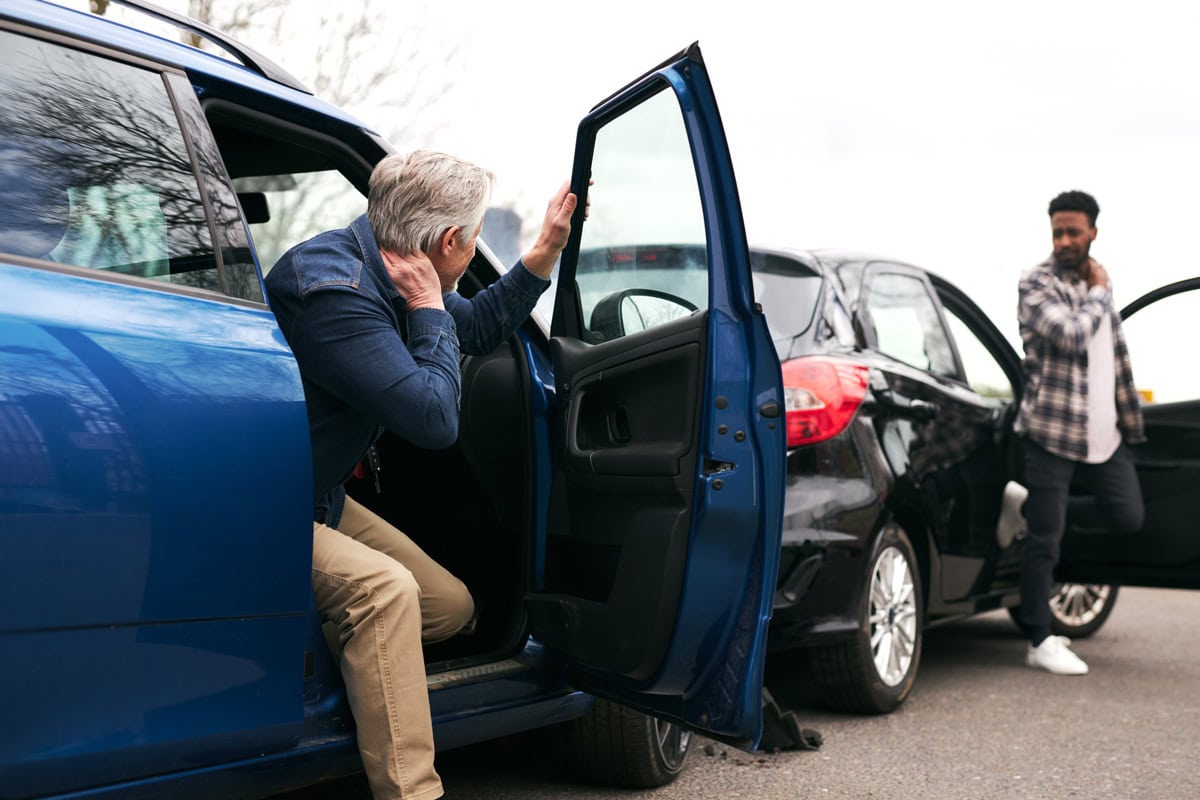
Understanding Insurance Company Tactics
Insurance companies operate as businesses with financial objectives that may not align with your recovery needs. Their adjusters are professionally trained to minimize payouts and may use tactics like pressuring you for recorded statements, offering quick settlements before you understand your injuries’ full extent, or disputing the severity of your damages.

Understanding Statute of Limitations
In Indiana, you generally have two years from the date of the accident to file a personal injury lawsuit. This deadline is strictly enforced, and missing it means permanently losing your right to compensation. Early legal representation helps preserve evidence, meet deadlines, and prevent costly mistakes while dealing with insurance companies.

Steps to Take After a Car Accident in Indiana
Taking the right steps after a crash can protect both your health and your legal claim.
See What Your Case Is WorthMove to a safe location away from traffic and check for injuries.
Immediately file an official police report, even for minor accidents.
See a doctor right away, as adrenaline can mask serious injuries.
Take photos & videos of injuries, vehicles, the scene, skid marks, road hazard, and collect witness information.
Collect contact and insurance details from all drivers and parties involved: drivers, passengers, and witnesses.
Notify your insurance company about the accident.
Save all medical bills, repair estimates, and accident-related documents.
Politely decline insurance adjuster requests for comment.
Refrain from posting your accident on social accounts.
Early legal representation helps preserve evidence, meet deadlines, and prevent costly mistakes while dealing with insurance companies.

The Keller & Keller Injury Lawyers Approach:
Indiana Injury Lawyers Who Fight to Win
From the moment you contact us, you’ll notice the difference in our approach. Our client-first philosophy means we take the time to understand not just the details of your accident but how it has affected your life, your work, your family, and your future in Indiana. We clearly communicate every step of the process in plain language you can understand, no confusing legal jargon. This approach has earned us countless 5-star reviews from real Indiana clients who’ve experienced the Keller & Keller difference firsthand.
We understand that being injured in an accident is stressful enough without having to chase down your lawyer for updates. That’s why we’ve built our practice around transparent, consistent communication.
When you hire us, you’ll have direct access to the Indiana-based attorney handling your case as well as a dedicated paralegal who monitors its daily status. We keep you informed throughout every stage of your claim, explaining what’s happening, what to expect next, and how it affects your case.
Our 90+ years of experience isn’t just about longevity. It’s about results. Our attorneys have successfully handled thousands of cases in Indiana and recovered thousands of millions of dollars for our clients. We’ve gone toe-to-toe with the biggest insurance companies and won. Our courtroom experience means we’re always prepared to take your case to trial if that’s what it takes to secure fair compensation. This willingness to fight, and our track record of success, often motivates insurance companies to offer better settlements to avoid facing us in court.
The Car Accident Claim Process with Keller & Keller Injury Lawyers
When you choose our firm to handle your Indiana car accident claim, you can expect a clear, structured process designed to maximize your compensation while minimizing your stress.
Types of Car Accidents We Handle
Our extensive experience covers all types of car accidents throughout Indiana, each with unique challenges and considerations.
A head-on collision happens when two vehicles traveling in opposite directions strike front to front. These crashes are devastating on Indiana roadways and often result in severe injuries or fatalities, since the speed of both vehicles feeds into the impact. Complex liability issues and substantial damages are common in these cases.
How Does a Driver End Up on the Wrong Side of the Road?
On a two-lane state road, it may be nothing more than a slow drift across the center line. On a divided highway such as I-65 or I-69, it usually means someone entered from an exit ramp going the wrong way. Our article on what causes deadly head-on collisions in Indiana looks at these patterns more closely, and a few explanations come up again and again:
- Impairment. Alcohol and drugs can dull the judgment a driver needs to stay in a lane or read a ramp sign.
- Sleep. A driver who nods off may cross the line with no braking and no steering correction at all.
- A bad pass. Pulling out on a hill or a curve can leave no room to get back in time.
- A medical event. A seizure or blackout raises different questions than carelessness does, so the driver’s medical history may become part of the case.
The central question is often where the vehicles met. Gouges in the pavement, the spread of debris and the resting positions of both cars can help place the point of impact on one side of the center line.
What If the Other Driver Had Been Drinking?
Operating a vehicle at 0.08 or more is a crime in Indiana (Ind. Code § 9-30-5-1), and causing serious bodily injury or death while impaired can be charged as a felony. If a bar or restaurant kept serving that driver, the dram shop statute may also apply, but its standard is narrow. A person who furnished the alcohol generally isn’t civilly liable unless they had actual knowledge the driver was visibly intoxicated at the time, and the intoxication was a proximate cause of the harm (Ind. Code § 7.1-5-10-15.5). Tabs, receipts and video from the bar can bear on that knowledge question.
Punitive damages may be possible in some of these cases, though the bar is high. The facts must be shown by clear and convincing evidence (Ind. Code § 34-51-3-2), an award is capped at the greater of three times compensatory damages or $50,000, and 75 percent of what’s paid goes to the state. If the crash was fatal, the case generally moves under Indiana’s wrongful death statutes, where punitive damages aren’t recoverable.
When the Policy Is Smaller Than the Injuries
Surgery, rehabilitation and lost income after a head-on crash can run well past a driver’s coverage. Indiana’s minimum liability limits are generally $25,000 for one person’s injury or death and $50,000 for two or more people in one accident (Ind. Code § 9-25-4-5).
Your own underinsured motorist coverage may help, but the test surprises people. A vehicle is generally underinsured only if its available bodily injury limits are less than your own underinsured limits (Ind. Code § 27-7-5-4). In plain terms, that means the comparison is policy against policy, not policy against the size of your losses.
A driver carrying $50,000 may not count as underinsured if your limit is also $50,000, even when your bills are far higher. Our guide to UM/UIM coverage in Indiana explains how that coverage works.
A rear-end accident happens when one vehicle runs into the back of another. While often dismissed as “minor” fender benders, rear-end collisions can cause serious injuries, particularly whiplash and other neck and back injuries that may not be immediately apparent. A scuffed bumper says very little about what happened to the person in the seat.
Why Can a Low-Speed Bump Still Cause an Injury?
When a car is struck from behind, the seat pushes the torso forward while the head lags for a moment. The neck can then snap back and forth faster than the muscles can react. Modern bumpers may absorb a hit and spring back, so a car can look fine while the energy passes through to the people inside.
Symptoms often build over the following days. Stiffness, headaches, numbness in an arm or pain between the shoulder blades may show up after the adrenaline wears off. Some people develop jaw trouble as well, such as TMJ disorder linked to whiplash.
The Small Repair Bill Argument
Expect the other side to hold up a modest repair estimate as proof that nobody could have been hurt. The second argument insurers tend to raise is the gap between the crash and your first doctor’s visit. Medical records connecting your symptoms to the collision, and a provider who can explain why they appeared later, may carry more weight than a photo of a bumper. Keeping the right evidence before repairs begin can help too.
Soft tissue injuries may not appear on an X-ray, so notes on range of motion, physical therapy progress and missed work can fill in the picture. Bills raise their own issue. They can be admitted as evidence that the charges were reasonable under Indiana Evidence Rule 413, and a defendant may answer with the discounted amounts your providers accepted, as long as insurance isn’t mentioned (Stanley v. Walker, 906 N.E.2d 852). The number on the bill may not be the only number a jury sees.
Is the Driver in Back Always at Fault?
Not automatically, though the facts often point that way. An Indiana driver may not follow more closely than is reasonable and prudent, given speed, the time interval and the condition of the highway (Ind. Code § 9-21-8-14). A driver looking at a phone has a second problem, since holding or using a device in a moving vehicle is generally prohibited outside hands-free use and 911 emergencies (Ind. Code § 9-21-8-59).
The rules cut the other way as well. A person may not slow, stop or change lanes unless the movement can be made with reasonable safety, and notice by signal is required (Ind. Code § 9-21-8-24). A few details tend to show which rule was broken:
- The gap before impact. Dash camera or nearby business video may show how closely the rear driver was following.
- The phone. Records may show whether the rear driver was texting or on a call in the moments before the crash, which fits a wider pattern of distracted driving in Indiana.
- The brake lights. An inspection may show whether the front vehicle’s lights were working.
- The reason for the stop. A driver who cut in and braked hard may share the blame for what followed.
These dangerous crashes occur when one vehicle strikes the side of another, often at intersections. With less structural protection on the sides of vehicles, occupants can suffer severe injuries even in moderate-speed collisions. The name comes from the T shape the two cars form at the moment of impact, and our post on side impact injuries and your rights in Indiana covers the crash type in more depth.
Your Seat in the Car Can Change Everything
A front-end crash has a long hood and crumple zones to absorb it. A door offers a few inches of metal, foam and glass. A person on the struck side, often called the near side, may take the intruding door directly against the ribs, pelvis and shoulder, and the head can hit the window or even the other vehicle.
Someone on the far side isn’t out of danger. The body can be thrown sideways across the cabin, and a belt may hold a person less well in that direction than in a frontal crash. Depending on the seat and the speed, injuries may include:
- Head and brain injuries. These can come from striking the glass, the door frame or another occupant.
- Chest and abdominal trauma. Broken ribs may come with damage to the spleen, liver or lungs.
- Pelvis and hip fractures. The door often lines up with this part of the body.
- Neck injuries. The neck bends sideways, a direction it’s poorly built to handle.
Dividing Fault When Both Drivers Claim the Right of Way
Side impact claims often end in percentages rather than a clean winner. Under Indiana’s Comparative Fault Act, your own share of fault generally reduces your compensatory damages in proportion (Ind. Code § 34-51-2-5). You’re barred from recovery if your fault is greater than the fault of everyone else whose conduct contributed (Ind. Code § 34-51-2-6). That line is more than 50 percent, so an even split doesn’t bar a claim.
As an illustration, take $100,000 in damages. If a jury put 20 percent of the fault on you for entering late on a yellow, the award would generally drop to $80,000. At 60 percent, you’d generally recover nothing.
Because a few points can matter so much, an insurer may look hard at your speed, your phone and your account of the signal. Attorney Randall Juergensen walks through how comparative negligence works, and claims against a government driver follow a separate, harsher rule.
Did the Car Itself Fail You?
Sometimes the injuries look worse than the crash should have caused. A door that collapsed, a seat that broke loose or a side airbag that never fired may raise a separate question about how the vehicle held up. In an Indiana crashworthiness case, a jury may hear how the driver caused the crash, but may assign fault for the enhanced injuries only if that conduct was a proximate cause of them (Green v. Ford Motor Co., 942 N.E.2d 791). Those claims belong on our product liability page, and the car itself may be important evidence.
A multi-vehicle accident is a crash involving three or more vehicles, often a chain reaction set off by a single impact. When multiple vehicles are involved, determining fault becomes far more complicated. These chain-reaction crashes require meticulous investigation and expert analysis, since each car may have been hit more than once and each driver may remember it differently.
Rebuilding the Sequence One Impact at a Time
Investigators usually work backward from where each vehicle stopped. Crush patterns, paint transfer and debris can show how many times a car was struck and from which direction. A reconstruction expert may then combine that with vehicle data, video and scene measurements to put the impacts in order.
The order matters because two drivers may have hurt you in two different ways. If you were shoved into the car ahead, that second impact may trace back to the driver who hit you, and not to any mistake of yours. Pileups in snow or fog, like the 15-vehicle crash on the US 20 Bypass near South Bend, can stretch over a long distance and a long minute, which makes the timeline harder to pin down.
Each Defendant Generally Pays Only Its Own Share
Joint and several liability no longer applies to cases under Indiana’s Comparative Fault Act, so a defendant generally pays only its own percentage of fault (Davidson v. State, 211 N.E.3d 914). The jury multiplies each defendant’s percentage by the total damages (Ind. Code § 34-51-2-8). There’s also no right of contribution among those at fault, so one driver generally can’t go after another for a share, though indemnity rights are unaffected. Here is how that could look with $100,000 in damages and two drivers sued:
| Who | Share of fault | Amount on the verdict |
|---|---|---|
| Driver A | 60 percent | $60,000 against Driver A |
| Driver B | 30 percent | $30,000 against Driver B |
| You | 10 percent | $10,000 you don’t recover |
The figures are only an example. If Driver B has no insurance, you generally can’t make up that $30,000 from Driver A, which is why Indiana’s comparative fault law changes how these claims are valued.
The Empty Chair at the Table
A defendant may also point at someone who isn’t in the lawsuit. The jury must consider the fault of everyone who contributed, whether or not that person was or could have been named as a party (Ind. Code § 34-51-2-7). The defendant has the burden of pleading and proving this nonparty defense (Ind. Code § 34-51-2-15). Even so, you generally can’t collect a nonparty’s share unless that person is actually sued.
In plain terms, that means a percentage assigned to a driver you never sued may simply be lost. Identifying every vehicle in the chain early, including any that drove away, can protect against that. Several injured people may also be looking to one driver’s limited policy. A tractor-trailer in the chain brings a different set of questions, covered on our semi truck accident page.
A hit and run happens when a driver involved in a crash leaves without stopping to exchange information or help. Few scenarios are more frustrating than being injured by a driver who flees the scene. You’re left with the injuries and the bills, and no name, plate or insurance company to call.
What the Law Requires a Driver to Do
An Indiana driver in an accident must stop and stay until giving a name, address and registration and showing a license. If anyone is hurt or killed, the driver must also give reasonable assistance and notify police or 911 (Ind. Code § 9-26-1-1.1). Knowingly or intentionally leaving can be a misdemeanor, and it can rise to a felony when someone suffers moderate or serious bodily injury or dies.
A conviction doesn’t pay your medical bills, though, and the criminal case moves on its own schedule. For the civil side, our page on Indianapolis hit and run accidents describes how these claims tend to unfold.
Tracking Down a Driver Who Vanished
The first days count, because a car with fresh damage may be repaired or hidden. Police lead any criminal search, but an injury claim can benefit from its own effort to gather:
- Parts left behind. A broken mirror housing or headlight piece may carry a part number that narrows the make and model.
- Paint transfer. Marks on your vehicle may point to the color of the other car.
- Video. Doorbell cameras, gas stations and traffic cameras may have caught the car, but footage is often overwritten quickly.
- Partial descriptions. Even two letters of a plate, or a dent in a certain spot, may help a witness statement lead somewhere.
- Repair shops. Fresh damage that matches your crash may surface at a body shop nearby.
When No One Is Ever Identified
The answer often lies in your own auto policy. Indiana insurers must make uninsured motorist coverage available in each auto liability policy unless it’s rejected in writing (Ind. Code § 27-7-5-2). A named insured’s rejection binds everyone else on the policy, so it’s worth checking whether someone waived it years ago. Our overview of Indiana car insurance basics explains the common coverages.
Don’t assume the coverage will fit, however. The statute defines an uninsured vehicle by its lack of insurance or financial responsibility, subject to your policy’s terms, so a lot depends on how your policy treats an unknown driver. Where a policy’s hit-and-run definition requires the unknown vehicle to strike you or your car, the Court of Appeals has enforced that requirement, even with independent evidence of a phantom driver (Von Hor v. Doe, 867 N.E.2d 276).
That wording can matter a great deal. Picture a car that swerves into your lane on I-70 and forces you off the road without ever touching you. Depending on your policy’s language, that crash could fall outside the coverage even though another driver plainly caused it. Reading the policy early, rather than assuming, can show what proof it calls for.
Intersection accidents happen where traffic paths cross, and they often involve failure to yield right-of-way, running red lights, or improper turns. Indiana’s busy intersections ask drivers to make quick decisions about gaps and signals, and one bad call can put two vehicles in the same spot. A claim usually turns on who had the legal right to be there.
Indiana’s Right-of-Way Rules in Everyday Terms
These are the general rules a claim is usually measured against. Each has exceptions, so the exact facts count.
| Situation | General rule | Source |
|---|---|---|
| Steady red signal | Traffic must stop. A right on red is allowed after a complete stop unless prohibited. | Ind. Code § 9-21-3-7 |
| Green signal | You may go, but must still yield to vehicles and pedestrians lawfully in the intersection. | Ind. Code § 9-21-3-7 |
| Turning left | Yield to an opposing vehicle in the intersection or close enough to be an immediate hazard. | Ind. Code § 9-21-8-30 |
| Two vehicles arriving from different roads at about the same time | The driver on the left yields to the vehicle on the right, unless signs say otherwise. | Ind. Code § 9-21-8-29 |
Left turn crashes show why the rule alone rarely ends the discussion. The turning driver carries the duty to yield, but the statute goes on. After yielding and signaling, the turn may be made, and other drivers must then yield to it.
So the fight is often over whether the oncoming car was close enough to be an immediate hazard. That can depend on its speed and how far back it was when the turn began. An oncoming driver who was well over the limit, or who ran a stale yellow, may share the blame.
What If Bushes or a Fence Blocked the View?
People often assume a landowner must answer for an overgrown hedge at the corner. Indiana’s rule is narrower. An adjoining landowner generally has no common-law duty about visual obstructions wholly on its own land, but it must not create hazards on the roadway, which includes traffic-control devices in the public right-of-way (Reece v. Tyson Fresh Meats, Inc., 173 N.E.3d 1031; Martinez v. Smith, No. 26S-CT-112). A hedge entirely on private land may lead nowhere, while something hiding a stop sign in the right-of-way may be a different matter, depending on the facts.
A dark signal or a missing sign may point toward a city, county or the state. Those claims run on separate rules, explained in our guide to the Indiana Tort Claims Act.
Proving Who Had the Signal
With no independent witness, an intersection claim can become one person’s word against another’s. These sources may break the tie:
- Signal timing records. The agency that runs the light may have data on how its phases were set.
- Nearby video. Business cameras and dash cameras may show the color of the light, not just the crash.
- Drivers stopped at the scene. A person waiting at a cross street may know which way had the green.
- Damage location. Where each car was struck can help show who entered first.
Our post on dangerous intersections in Marion County looks at the problem closer to home.
Highway accidents are crashes on interstates and other high-speed routes such as I-65, I-70 and I-465. High-speed crashes on Indiana’s interstates and highways often result in catastrophic injuries due to the forces involved. At those speeds a driver has little time to react, and a car that loses control may cross several lanes in seconds.
What Turns Fast Traffic Into a Collision
The causes are usually ordinary mistakes with very little margin for recovery. Our posts on driver error along I-70 and the reasons for crashes on the I-465 beltway go through local examples. These come up often:
- Too fast for the traffic. Indiana bars speed greater than is reasonable and prudent under the conditions, and a driver must restrict speed as needed to avoid a collision (Ind. Code § 9-21-5-1). A driver can stay under the posted limit and still break that rule when traffic ahead has slowed.
- Merges and lane changes. A person may not change lanes unless the move can be made with reasonable safety (Ind. Code § 9-21-8-24). Interchanges bring this up constantly.
- Stopped vehicles. Drivers approaching a stationary emergency vehicle with flashing lights must move to a non-adjacent lane if possible and safe, or slow to at least 10 mph below the limit (Ind. Code § 9-21-8-35). The rule also reaches recovery, road and construction vehicles with amber lights, and disabled vehicles showing hazards.
- Sudden backups. A wall of brake lights near an interchange can catch a following driver with nowhere to go.
What Did the Car Record Before Impact?
Speed is often the disputed fact in a highway case, and a car may hold the answer. Many newer vehicles carry an Event Data Recorder (EDR). Federal rules set uniform requirements for recorders in light vehicles that have one, though they don’t require a car to have one (49 CFR Part 563).
Where a recorder exists, it may show speed, braking and steering in the seconds around a crash, which can test a driver’s claim that they slowed down. Totaled cars can be sold or crushed quickly, so that data may be lost if nobody acts. Our article asks whether your vehicle has a black box and what it stores.
Could Not Wearing a Seat Belt Affect Your Claim?
It can, and this area of Indiana law changed recently. Each occupant must have a belt properly fastened when the vehicle is moving forward (Ind. Code § 9-19-10-2). Failing to do so still doesn’t count as fault under the Comparative Fault Act (Ind. Code § 9-19-10-7).
For a claim accruing after June 30, 2024, though, evidence that you weren’t belted may be admitted on mitigation of damages if you were 15 or older. The defendant has to prove you weren’t belted and that wearing one would have reduced your injuries. In plain terms, that means going without a belt doesn’t make you partly to blame for the crash, but it may shrink the damages tied to injuries a belt would have prevented.
That matters most at highway speed, where a person may be thrown around the cabin or out of the vehicle. Evidence on this point can include marks on the belt itself and the pattern of injuries.
A parking lot accident is a collision in a lot, garage or shopping center drive, usually between vehicles backing out, pulling in or cutting across rows. These crashes happen at low speeds, yet they can still cause significant injuries and property damage. People on foot share the same space, with nothing around them.
Injuries You Might Not Expect at Walking Speed
A driver backing out of a stall may never see a shopper loading a trunk or a child stepping from between two SUVs. Even a slow push can knock a person onto the pavement, and a fall like that can break a hip or wrist or cause a head injury. Older adults may take longer to recover from those fractures.
People inside a car can be hurt too. A driver turned to look over a shoulder may not be braced at all when another vehicle hits, and that twisted position can strain the neck and back. Lots also get hectic around big events, as our post on a March Madness parking lot accident shows.
Two Cars Backing Out at Once
Fault in a lot often comes down to who was moving, in which direction, and who could see what. Lots have fewer signals than streets, so the arguments are often about ordinary care. A few situations tend to repeat:
- One car backing, one in the lane. An insurer will usually look first at the driver in reverse, whose view was the most limited.
- Both backing. Two drivers leaving facing stalls may hit bumper to bumper, and blame is often shared.
- Cutting across empty spaces. A driver who ignores the lanes may arrive from a direction nobody expected.
- Lane versus feeder aisle. Cars leaving a main drive may meet traffic coming down a row at a blind corner.
Shared blame matters even in a small claim, since Indiana reduces what you can recover by your percentage of fault (Ind. Code § 34-51-2-5). An insurer may offer a 50/50 split early because it’s the easy answer, and that offer doesn’t have to be the last word.
When Nobody Saw It Happen
With no serious injury, police may not write a full report for a crash in a private lot, so the record may be thin. Store and garage cameras can fill that gap, but managers often keep footage for a limited time. Damage photos taken before anyone moves the cars can also show the angle of contact.
A parked car that gets hit presents a different problem. If the other driver left and can’t be found, uninsured motorist property damage coverage may not help, because that claim must identify the at-fault operator (Ind. Code § 27-7-5-3). Your own collision coverage, if you carry it, may be the fallback. Even after a good repair, a car with a crash on its history may lose value, which our guide to diminished value claims in Indiana explains.
If you fell because of a pothole, poor lighting or ice in the lot, see our slip and fall page.
A construction zone accident is a crash inside or just ahead of a stretch of road where work is under way. With ongoing construction projects across Indiana’s highways and roads, work zone accidents present unique challenges. Lanes narrow, traffic shifts and speeds drop quickly, and more parties than usual may have had a hand in how the road was set up.
The Speed Limit Drops, and So Does the Margin for Error
Worksite speed limits in Indiana must be at least 10 mph below the established maximum, and a first violation is a Class B infraction with a fine of at least $300 (Ind. Code § 9-21-5-11). Workers don’t have to be present in some cases. Recklessly operating a vehicle near a highway worksite when workers are present is a Class A misdemeanor, and it rises to a felony if a worker is hurt or killed (Ind. Code § 9-21-8-56).
Drivers and passengers get hurt in these zones as well as workers, and our post explains how the danger can start before the construction. Crashes tend to follow a few patterns:
- A sudden backup. Traffic stacks up well ahead of a lane closure, sometimes around a curve or over a hill.
- A late merge. A driver who waits too long may force a gap that isn’t there.
- A shifted lane. Old pavement markings can pull a tired driver toward a barrier or the wrong lane.
- An uneven surface. Edge drop-offs and milled pavement may unsettle a car or a steering input.
- Equipment in the path. Barrels, cones or materials left in a travel lane can cause a swerve into the next vehicle.
Was the Problem the Driver or the Setup?
Sometimes the other driver is the whole story. Other times the question is whether signs gave enough warning, a lane shift was too abrupt, or a closure was left in place after crews went home. Investigating that may call for the traffic control plan, daily work logs and photos from before and after the crash, because a work zone can look different within days.
Depending on the contract and the facts, a claim may look at a general contractor, a subcontractor handling signs, or the agency that owns the road. Any of them may point at the others, and at the driver.
When a Government Agency Is Part of the Claim
A claim involving a public road agency runs on a tighter clock. Notice to the state is generally due within 270 days after the loss (Ind. Code § 34-13-3-6), and notice to a political subdivision such as a county or city within 180 days (Ind. Code § 34-13-3-8). Our Indiana Tort Claims Act guide covers how notice works.
Two other rules set these cases apart. The duty to keep public highways reasonably safe continues, though there’s immunity for highway design if the loss occurs at least 20 years after design or substantial redesign (Ind. Code § 34-13-3-3). And if you’re suing both government and private defendants over one injury, the Indiana Supreme Court says all of them must be sued in one lawsuit (Davidson v. State, 211 N.E.3d 914). A first judgment can otherwise bar a later suit against the rest.
If you were on the road crew when you were hurt, see our construction site accident page.
The Hard Truth
Indiana Car Accident Statistics That Demand Action
When we talk about car accidents in Indiana, we’re addressing a crisis that touches thousands of Hoosier lives every year. As your advocates in the fight for justice, Keller & Keller believes you deserve to know the sobering facts behind our mission.
Indiana crashes result in a concerning fatality rate of 14.1 deaths per 100,000 population, significantly higher than the national average of 12.8. This represents hundreds of preventable deaths each year, with many more thousands of injuries that forever change families across the state. This higher-than-average fatality rate means Indiana drivers face greater risks on the road, making experienced legal representation even more critical when accidents occur.
Fatal crashes involving speeding increased to 253 in 2022 from 228 in 2021, despite speed-related collisions decreasing. This troubling trend shows that while fewer speed-related crashes occur, those that do happen are becoming more deadly, emphasizing the need for experienced legal representation when these preventable tragedies strike. Our attorneys have seen firsthand how speed-related crashes devastate families and require aggressive legal action to hold reckless drivers accountable.
Despite Indiana’s 2020 hands-free law, 85 distracted drivers were involved in fatal crashes in 2022, up from 68 in 2021. The increase in distracted driving fatalities shows that legal changes alone aren’t enough. We need strong legal advocates to hold negligent drivers accountable and secure justice for victims.
Leading Causes of Car Accidents in Indiana
Understanding the leading causes of accidents helps us establish liability in your case and build the strongest possible claim for maximum compensation.
Car Accident Injuries We Represent in Indiana
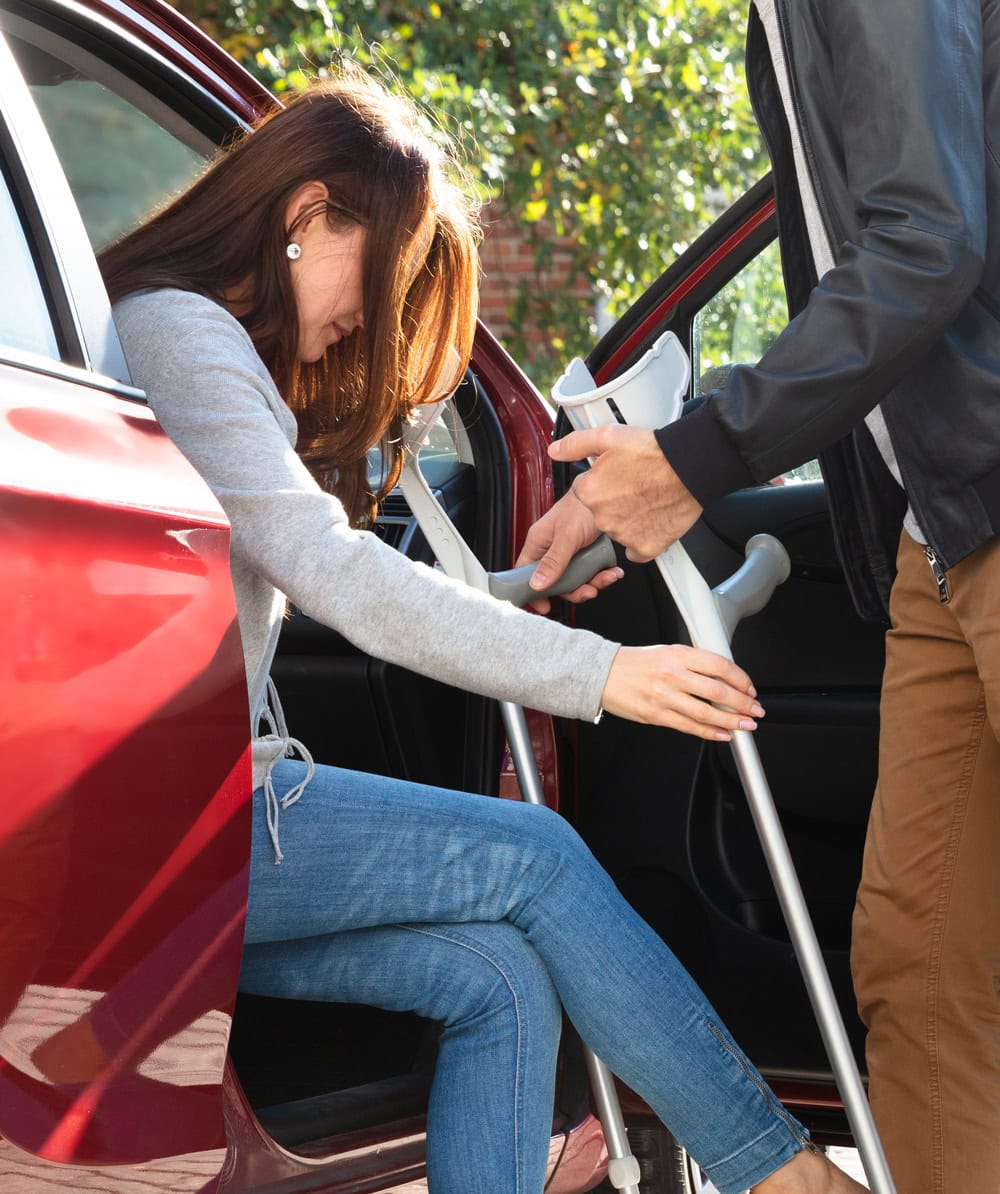
Car accidents can cause a wide range of injuries, from relatively minor to catastrophic. Understanding these injuries and their potential long-term impact is crucial for your claim
Compensation Available for Indiana Car Accident Victims
If you’ve been injured in a car accident due to someone else’s negligence, you may be entitled to various types of compensation:
Economic Damages
These are quantifiable financial losses, including:
- Medical expenses (past, current, and future)
- Lost wages and lost earning capacity
- Property damage
- Rehabilitation and therapy costs
- Home modification expenses
- In-home care costs
Non-Economic Damages
These more subjective damages compensate for:
- Pain and suffering
- Emotional distress
- Loss of enjoyment of life
- Disfigurement and scarring
- Loss of consortium (impact on marital relationship)
Punitive Damages
In rare cases involving extreme recklessness or intentional misconduct, Indiana courts may award punitive damages designed to punish the wrongdoer and deter similar behavior.
Wrongful Death Damages
Wrongful death claims in Indiana are governed by specific statutes and are handled separately from the decedent’s probate estate. Damages are meant to compensate surviving family members for their losses and can include things like lost future earnings, medical and funeral costs, loss of companionship, and even grief counseling. The type and amount of damages available depend on who the deceased was, whether a child, an adult with dependents, or an elderly person, as Indiana law treats each category differently.
How Keller & Keller Injury Lawyers Investigates Indiana Car Accident Cases
Our meticulous approach to evidence gathering builds the strongest possible foundation for your claim
- Sending spoliation letters to prevent destruction of evidence
- Obtaining dashcam or security camera footage before it’s deleted
- Documenting vehicle damage before repairs
- Preserving electronic data from vehicles, especially in commercial truck cases

Setting the Indiana Standard
Cutting-Edge Investigation Technology
While other law firms rely on outdated methods, Keller & Keller leverages cutting-edge technology to build stronger cases and win bigger settlements for our Indiana car accident clients.
Professional drone documentation
Capture accident scenes from angles impossible with traditional methods, revealing critical evidence like skid patterns, road defects, and sight line obstructions.
Advanced voice-over-IP networks
Enable real-time collaboration between our legal team, investigators, and expert witnesses, recording every detail.
Forensic data extraction
Retrieve critical pre-crash data that reveals precise speed, braking patterns, and steering inputs that often prove negligence.
Cloud-based case management
Provide real-time access to case developments, medical records, and insurance communications, 24/7.
Rapid-response investigation
Local experts mobilize to capture and preserve time-sensitive evidence throughout the scene of the accident.
Free Guide
Get Our Free Auto Accident Guide
Keller & Keller Injury Lawyers unpacks the common myths and real truths behind auto accident injury claims.
Service Areas
Indiana Cities We Serve
What Sets Keller & Keller Injury Lawyers Apart
With so many law firms advertising their services, why choose Keller & Keller? The differences are clear.
Zero Fee Guarantee
We believe everyone deserves quality legal representation, regardless of their financial situation. That’s why we work on a contingency basis. You pay absolutely nothing unless and until we win your case. No upfront costs, no hidden fees, no financial risk to you.
* Clients may owe court costs if they lose





No Fee Until We Win!
Get Started TodayDon’t Take Our Word For It!
We’ve helped thousands of people fight for compensation after a car crash. Hear how Keller & Keller helped with their case.
View More Testimonials
Take Action Now
Your Indiana Car Accident Claim Starts Here
Free Consultation
We’ll evaluate your case honestly and explain your options in plain English. We’ll come to you, whether you’re at home, in the hospital, or wherever is convenient.
We Fight
Our experienced team fights to investigate thoroughly, deal with insurance companies, and handle all the legal complexities while you focus on getting better.
You Recover
Focus on healing while we handle the rest. We’ll fight for you like we’d fight for our own family, because that’s exactly how we see you.
Zero Fee Guarantee
We believe everyone deserves quality legal representation, regardless of their financial situation. That’s why we work on a contingency basis. You pay absolutely nothing unless and until we win your case. No upfront costs, no hidden fees, no financial risk to you.
* Clients may owe court costs if they lose

The Keller Tradition:
Three Generations of Fighting for Indiana Families
Frequently Asked Questions
Have Questions? We’re here to help.
Injured and not sure what to do next?
We’ll help guide you through everything you need to know