Someone says you caused a car accident—but you remember it differently. Does being blamed mean you cannot pursue an injury claim?
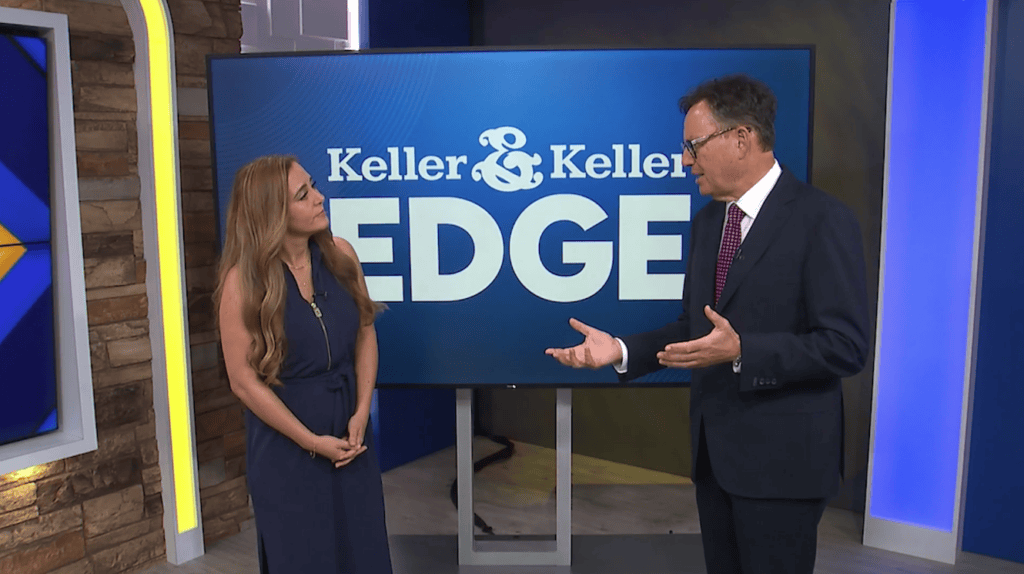
In this week’s Keller Edge Legal Minute on FOX59’s Indy Now, Jim Keller explains why understanding fault starts with examining what actually happened. Witness accounts, physical evidence, and the facts of your individual case all matter.
Watch Jim Keller’s Legal Minute: Understanding “Fault” in a Car Accident
What If Someone Says the Accident Was Your Fault?
After a crash, drivers may have different accounts of the same event. One person may believe the other was speeding, failed to yield, or changed lanes without warning. Those initial accounts do not necessarily resolve who was responsible.
Jim’s advice is to speak with a lawyer who can examine the evidence and help you understand your options. Investigating a claim—and, when necessary, working through litigation—can help clarify how the collision happened.
For more background, read Keller & Keller’s explanation of proving negligence in an Indiana car accident.
Evidence Helps Tell the Full Story
Jim points out that adrenaline runs high at the scene of a crash. You may be shaken or unsure about the sequence of events. That makes it important to distinguish what you remember from what you are guessing.
An attorney may review:
- Statements from drivers, passengers, and independent witnesses.
- Photographs of the vehicles and crash scene.
- Available dashcam or surveillance footage.
- Police reports and other records documenting the collision.
Keep the information you already have and discuss any disputed details with your attorney. Our post on evidence needed to support an Indiana car accident claim explains how these materials can help.
Can You Recover Compensation If You Share Some Fault?
Responsibility for a collision does not always fall entirely on one driver. In the segment, Jim describes a situation in which one driver is 10% at fault and the other is 90% at fault.
For most Indiana injury claims against private parties, comparative fault rules reduce compensation by the injured person’s percentage of responsibility. In a simplified example, if your damages total $100,000 and you are found 10% at fault, the recovery would be reduced to $90,000 before other applicable limits or deductions.
An injured person who is more than 50% at fault is generally barred from recovering under these rules. Different rules can apply to certain claims, including those involving government entities.
That is why being accused of causing a crash and understanding your actual share of responsibility are two different steps. The facts and the rules that apply to your case need careful review.
What Should You Do When Fault Is Disputed?
Be truthful when describing the crash, and avoid guessing about details you do not remember. Save photographs, witness contact information, and insurance correspondence.
If an insurance representative asks for a detailed account or recorded statement, get guidance about your obligations and options. Your own insurance policy may require reporting and cooperation.
For a related discussion, read last week’s Legal Minute on talking to insurance after a truck accident in Indiana.
Concerned about the cost of getting help? Jim also explains how to pay a personal injury lawyer in Indiana, including how contingency fees work.
Talk With Keller & Keller About Your Indiana Accident
If you were injured in an Indiana car accident and someone is blaming you, get help understanding what the evidence shows and how fault could affect your claim.
Call 1-800-2-KELLER for a free consultation. You can ask for Jim directly or visit Keller & Keller’s Indiana website.
This article provides general information and is not legal advice for a specific case.