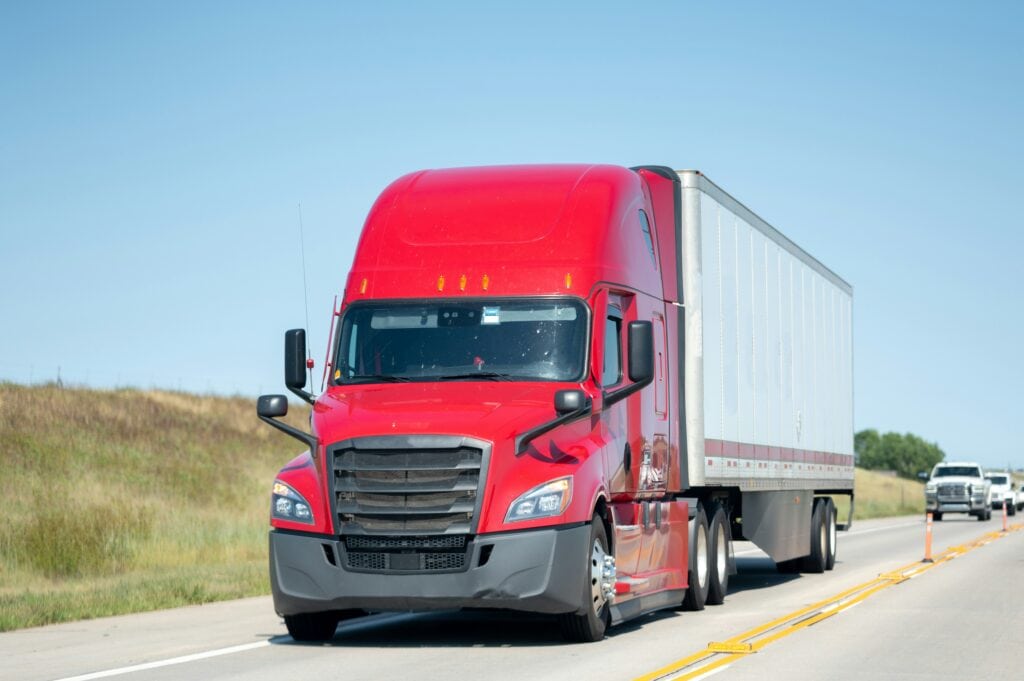
Indiana is now testing driverless semi trucks in Indiana, on I-70 between Indianapolis and Columbus, Ohio. If you’ve driven that stretch recently, you may have passed one without realizing it. The Ohio and Indiana Departments of Transportation have partnered with Ease Logistics and Kratos Defense & Security Solutions on the project. Together, they’re testing connected semis along what they call the I-70 Truck Automation Corridor.
What Is I-70 Truck Platooning?
Platooning links two semi tractor-trailers together, one following the other. Vehicle-to-vehicle communication connects the lead truck to the trailing truck. The lead driver controls speed and direction, and the trailing truck precisely copies those movements. During this testing phase, a qualified human driver sits behind the wheel of each truck, ready to take over if a problem occurs. Engineers originally built this technology for the defense industry, then adapted it for commercial trucking. Fleets can retrofit the equipment onto existing trucks.
How to Spot a Platooning Semi
Purple lights on the driver’s side of the cab, just behind the door, mark a platooning semi. These lights signal to motorists and law enforcement that the truck is running in platoon mode. Drivers should never cut between two platooning trucks. Platooning semis hold a fixed gap between vehicles, and cutting into that gap removes the safety margin the system depends on.
Why the Reaction-Time Difference Matters
The vehicle-to-vehicle connection exists to cut reaction time. A human driver typically needs 1.5 to 2 seconds just to react, before even touching the brake. An automated system reacts in roughly 0.3 seconds. At highway speed, that gap can decide whether a crash happens at all.
What Happens If a Platooning Truck Causes a Crash?
New technology raises new legal questions. Semi-truck cases already involve more complexity than an ordinary car accident. Platooning adds another layer. The trucking company, the technology vendor, and the equipment manufacturer could all share responsibility if a system fails. Our article on what makes an Indiana semi-truck case different covers how multiple parties, from drivers to maintenance crews, can carry liability in a truck crash. Automated systems simply add one more party to that list.
Truck Technology Is Changing Fast
Platooning is only one part of a bigger shift in the trucking industry. Our earlier coverage of the driver shortage affecting Indiana motorists noted that some proposed fixes, including autonomous technology, still carry unresolved safety questions. Crashes on Indiana’s interstates remain a real risk regardless of how a truck operates. Just last year, a semi-truck accident on I-70 in Indianapolis proved fatal. It’s a reminder that highway safety depends on more than new technology alone.
Talk to a Keller & Keller Attorney Today
This pilot program will help developers share insights, refine best practices, and build standard operating procedures for other states as the technology rolls out. In the meantime, if you drive the I-70 truck platooning corridor between Indianapolis and Columbus, know how to recognize one of these semis and give it room.
If a truck, automated or not, injures you or someone you love, Keller & Keller Injury Lawyers is ready to help. Call 1-800-2KELLER for a free consultation, or visit www.2keller.com to learn more.