
By Eric Farr, Social Security Disability Attorney at Keller & Keller Injury Lawyers
While attending a National Organization of Social Security Claimants’ Representatives (NOSSCR) conference in Salt Lake City, I found myself appreciating the public transportation.
I could plan a trip, find my stop, and get where I needed to go without driving. Audible announcements and visual notifications helped me follow the route without constantly checking my phone.
For me, those features were convenient. For someone with a disability, they could make the difference between completing a trip independently and needing help—or being unable to make the trip at all.
The experience made me think about transportation in Indianapolis and a question that comes up in Social Security disability cases: What does someone’s ability to take the bus actually tell us about their ability to work?
Through my work representing disability claimants at hearings and in federal court appeals, I have come to appreciate how much context matters. A statement such as “this person uses public transportation” can leave important questions unanswered.
Did someone else plan the route? Did a family member accompany them? Was it a familiar trip at a quiet time of day? What happened afterward?
Public transportation and Social Security disability intersect in those details. A completed trip tells us where someone went. Understanding their functioning requires a closer look at how they got there.
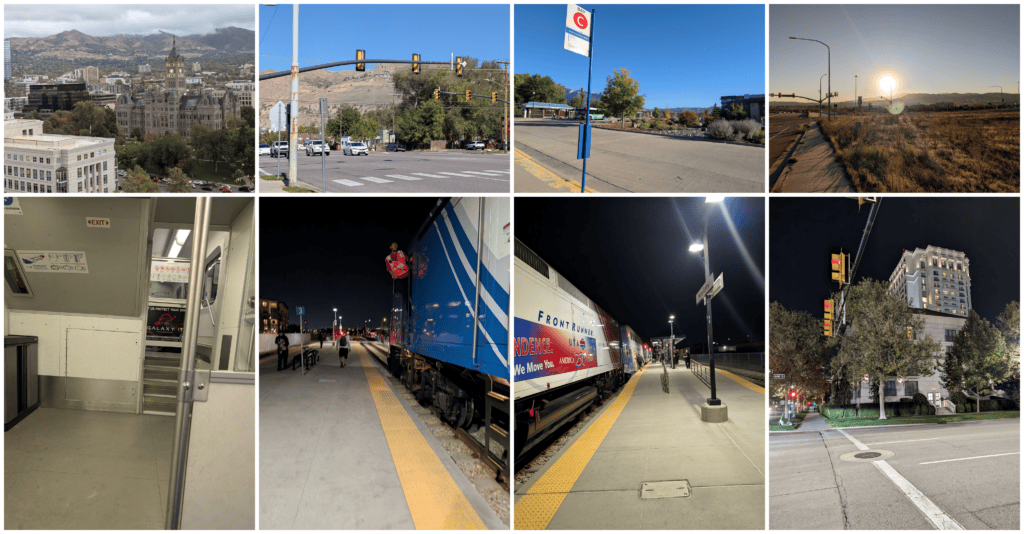
Here are some images I captured during my time out West in SLC:
Public Transportation Supports Independence
Accessible transportation connects people with healthcare, groceries, employment, and their communities. For people who cannot drive, it can be essential to everyday independence.
But accessibility involves more than being able to board a bus.
Can someone reach the stop? Read or hear the route information? Wait safely? Understand a transfer? Respond when service changes?
The announcements I appreciated in Salt Lake City are one part of that larger picture. Clear signs, accessible boarding areas, and dependable information can also make travel more manageable. Information available without a smartphone matters for people who lack a device, a data plan, or the ability to navigate changing directions on a screen.
For Indianapolis residents and people in surrounding communities, these are practical questions about access. In a disability case, they can also help identify limitations that deserve closer attention.
Does a Lack of Transportation Qualify Someone for Disability Benefits?
A lack of transportation generally does not, by itself, establish disability. Medical limitations that make transportation difficult, however, may be relevant to a claim.
Social Security’s work-availability rules look beyond whether a suitable job exists near your home or whether an employer would hire you. The rules for SSDI and SSI address work existing in the national economy.
That creates an important distinction.
A bus route that does not reach a workplace presents a transportation barrier. A medical condition that interferes with walking, understanding directions, or managing unfamiliar situations presents questions about functioning.
Both can seriously affect a person’s life. They play different roles in evaluating a disability claim.
Why Someone Cannot Use Public Transit Matters
The statement “I cannot take the bus” is a starting point. The explanation behind it is more useful.
Consider these hypothetical examples:
- A person with a physical impairment cannot walk to the stop or remain standing while waiting.
- A person with cognitive limitations becomes disoriented when a familiar route changes.
- A person with severe anxiety experiences panic when boarding a crowded bus.
- A person completes a trip only because a relative provides directions and stays with them.
These examples do not establish eligibility for benefits. They show why transportation difficulties should lead to specific questions about symptoms, assistance, and limitations.
Social Security’s residual functional capacity rules require consideration of relevant evidence about what someone can still do despite their impairments. That assessment includes physical and mental demands.
The useful question is: What happens when this person tries to travel, and what might that reveal about their ability to function in a work setting?
Can Anxiety About Public Transportation Matter in a Disability Claim?
Yes. Anxiety involving public transportation can be relevant evidence, depending on the condition and its effects.
Social Security’s Listing 12.06 for anxiety and obsessive-compulsive disorders identifies anxiety involving public transportation as one possible feature of agoraphobia. That symptom alone does not satisfy the listing. Additional medical and functional criteria apply.
Specific details help explain the problem. Does the person avoid travel entirely? Can they travel only with someone they trust? Do symptoms interrupt trips? How frequently does this happen?
Those details give a clearer picture than a broad statement that someone dislikes crowds or feels uncomfortable on a bus.
A Job Without Customer Contact May Not Address Every Limitation
A job that does not involve serving customers may address a particular difficulty with public interaction. Other limitations may still require evaluation.
For example, difficulty following a route could raise questions about understanding instructions. Becoming disoriented during a service change could raise questions about adapting to changes. Needing repeated reminders could raise questions about memory.
These are possible connections to investigate, rather than conclusions to assume.
Social Security considers mental abilities such as following instructions and responding appropriately to supervision, coworkers, and work pressures when assessing residual functional capacity.
The evidence needs to explain whether, and how, the difficulties experienced during travel also affect those work demands.
Does Riding the Bus Mean You Can Work?
Being able to ride the bus does not automatically establish an ability to sustain employment.
The circumstances of the trip matter.
Someone may use a familiar route, travel during quieter hours, receive help from a family member, or need substantial recovery afterward. An occasional appointment may also allow flexibility that a regular work schedule does not.
Social Security’s guidance on mental disorders recognizes that functioning in supportive settings may differ from functioning at work.
Under Social Security Ruling 96-8p, residual functional capacity ordinarily concerns sustained work activity across an eight-hour day, five-day week, or equivalent schedule.
A bus trip can provide relevant information. Its meaning depends on the support required, the symptoms involved, and whether the activity can be repeated consistently.
Six Details to Explain When Transportation Is Difficult
If a medical condition affects your ability to travel, give your healthcare providers and disability representative an accurate account of what happens.
1. What makes the trip difficult?
Describe the symptoms or limitations involved. Examples might include pain while walking, panic during crowded trips, difficulty reading signs, or confusion about transfers.
2. What assistance do you need?
Explain whether someone plans the route, accompanies you, gives reminders, or helps when something changes. Include assistance even when it has become a familiar part of your routine.
3. How often can you manage the trip?
Describe typical days and difficult days. Explain whether symptoms cause you to cancel trips, turn back, or rely on someone else.
4. What happens during and after travel?
Describe interruptions, symptoms, and recovery time. If you must stop and rest or cannot complete other activities afterward, explain that clearly.
5. Do similar problems occur elsewhere?
Tell your representative about related difficulties with appointments, instructions, unfamiliar places, or interactions. Concrete examples can help show whether the problem extends beyond transportation.
6. What evidence helps explain your experience?
Discuss relevant treatment records and observations from people familiar with your functioning. Social Security’s residual functional capacity rules provide for consideration of medical evidence and descriptions from people who know about your limitations.
Be clear about barriers unrelated to your condition as well, including unavailable routes or unaffordable fares. An accurate explanation helps everyone understand what is causing the difficulty.
Disability Decisions Need the Full Context
My experience using public transportation in Salt Lake City reminded me how much thoughtful accessibility can contribute to independence. It also left me thinking about the difficulties that can remain even when a transportation system is easy to use.
A clear announcement can help someone identify a stop. It cannot necessarily resolve the pain, panic, confusion, or fatigue that makes the trip difficult.
In a disability case, those experiences deserve careful attention. A successful trip should be understood alongside the help that made it possible. An unsuccessful trip should prompt questions about what prevented it.
Our responsibility as advocates is to help explain how those experiences connect to documented medical limitations and the demands of work. That requires more than checking a box about whether someone takes the bus.
If a medical condition affects your ability to work, Keller & Keller’s Social Security disability team can discuss your questions about SSDI, SSI, or an appeal. Contact the firm for a free consultation.
About Eric Farr
Eric Farr represents Social Security disability claimants before the Social Security Administration and in U.S. federal courts. His practice at Keller & Keller Injury Lawyers in Indianapolis, IN focuses predominantly on federal court appeals following hearing denials.
As of 2026, Eric has represented claimants in more than 500 Social Security disability hearings and more than 200 district court cases. He serves as Chairperson of the Indiana State Bar Association’s Social Security Disability Law Section for 2025–2027 and is a member of the National Organization of Social Security Claimants’ Representatives.
This article provides general information and does not constitute legal advice about an individual claim.