If you were hurt in an accident in Indiana, what you do next can affect both your recovery and your personal injury claim. We serve injured people throughout Indiana, with offices in Indianapolis, Granger, and Anderson, and we’re happy to meet clients wherever they may find themselves in need across the state.
Insurance companies often move quickly after a crash, but that does not mean you should answer every question or make every decision on the spot. Taking the right steps early can help protect your health, your records, and the value of your case.
What to do after an Indiana accident
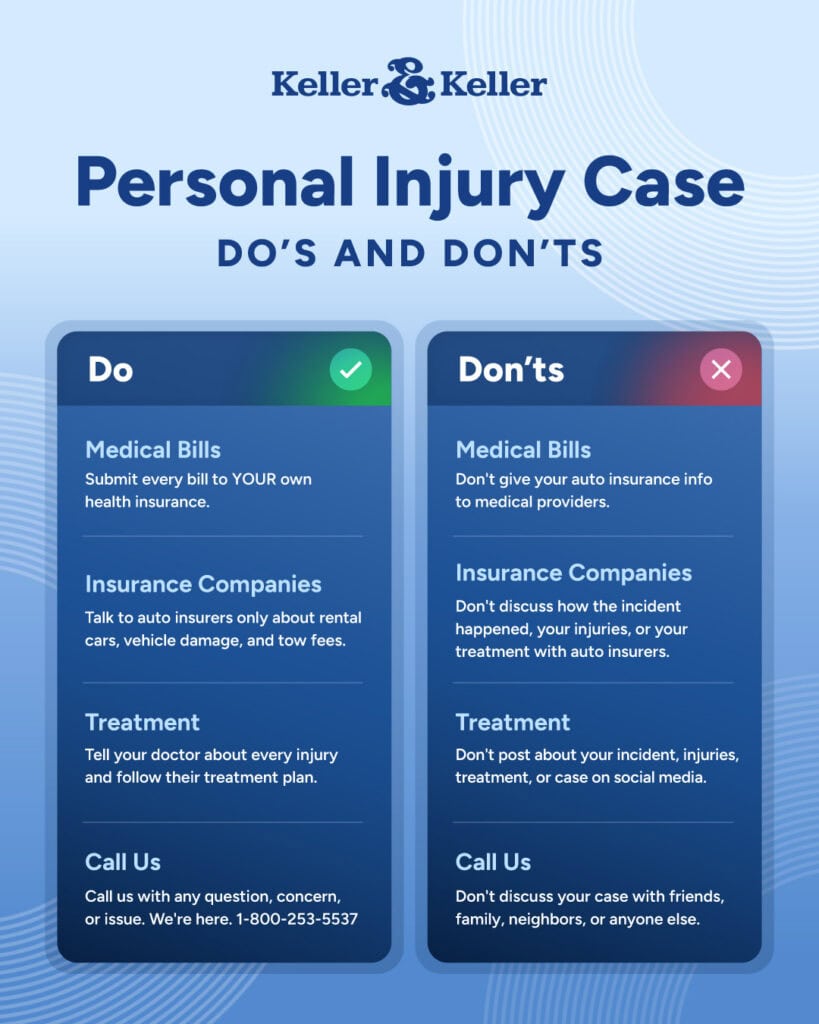
1. Do submit medical bills to your health insurance
After an accident, send your medical bills through your own health insurance when coverage is available. This is one of the clearest ways to keep treatment moving and avoid unnecessary payment delays while your injury claim is still pending.
2. Do talk to auto insurers only about vehicle issues
You may need to speak with an insurance company about practical issues like vehicle damage, towing, or a rental car. Keep those conversations short and limited to logistics instead of discussing fault, injuries, or medical treatment.
3. Do tell your doctor about every injury
Be thorough when describing symptoms to your doctor, including pain, stiffness, headaches, dizziness, or emotional distress after the accident. Consistent treatment records can become important evidence in an Indiana injury case because they help connect the accident to your injuries and show how serious the harm really is.
4. Do call your lawyer with questions
Keller & Keller’s contact pages emphasize that the team helps guide clients through the case process and answers questions while the claim is open. If you receive a bill, get a call from an adjuster, or are unsure what to do next, contacting your legal team is safer than guessing.
What not to do
1. Don’t give your auto insurance information to medical providers
Your providers usually need your health insurance information for billing, not a full discussion about the auto claim. Mixing up billing channels can create confusion and unnecessary delays while your case is ongoing.
2. Don’t discuss the accident or your injuries with insurance adjusters
Speak with an attorney before talking to the insurance company in many accident situations. Adjusters may ask questions that seem routine, but your answers can later be used to reduce or deny part of your claim.
3. Don’t post about the accident on social media
Posts about your accident, injuries, recovery, or daily activities can be taken out of context and used against you. Even a harmless-looking photo can be used to argue that your injuries are not as serious as you claim.
4. Don’t discuss your case with other people
Friends, neighbors, coworkers, and even well-meaning relatives do not need the details of your claim. The safest approach is to keep case details between you, your doctor, and your attorney.