

New Mexico Defective Drug and Device Lawyers
Keller & Keller Injury Lawyers’ Winning Approach
Free Case EvaluationInjured by a Defective Drug or Medical Device in New Mexico?
Get started with a free case evaluation. No Fee Until We Win.
100% Free Evaluation
Provide a few details and our team will handle the rest.
"*" indicates required fields

“As a busy mom of three, I’m so grateful I didn’t have to face the legal battle alone. Thank you, Keller & Keller Injury Lawyers.”
Kelly


When a medication or medical device you trusted harms you instead of helping, you need experienced legal warriors on your side, advocates ready to take on billion-dollar pharmaceutical giants. At Keller & Keller, we’ve been fighting for justice and maximizing settlements since 1936, building our reputation as one of New Mexico’s premier defective drug and device law firms. With over 90 years of experience battling the pharmaceutical and medical device industry’s most powerful players, we’ve secured millions of dollars for New Mexico clients injured by dangerous products. These aren’t just statistics. They represent families throughout New Mexico who received justice when corporations prioritized profits over patient safety.
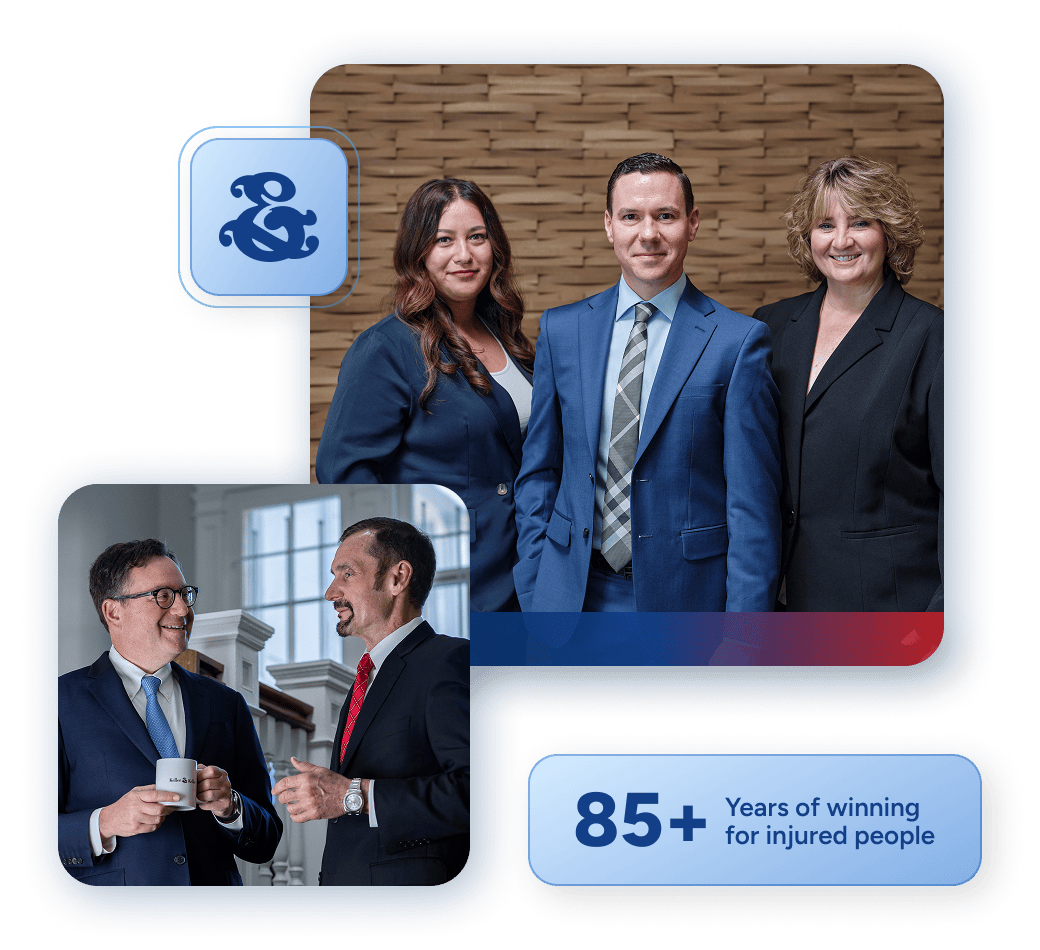
We’re a family-run firm, and we treat every client like family because we know that behind every case is a real person who placed their trust in a medication or medical device and suffered harm. We make ourselves accessible so clients feel comfortable sitting down with us over coffee. No confusing legal terminology, no delays, just honest conversation about how we’re going to hold these corporations accountable.
Why You Need a New Mexico Defective Drug And Device Lawyer
When a medication or medical device injures you rather than heals you, manufacturers have already begun protecting their interests. These are massive corporations, billion-dollar enterprises with entire legal departments dedicated to reducing payouts. You need a New Mexico defective drug and device lawyer in your corner who understands how to fight back effectively.

Navigating Complex Legal Claims

Understanding Insurance Company Tactics

Understanding Statute of Limitations
Navigating Complex
Legal Claims
Defective drug and device cases rank among the most challenging legal battles you can face in New Mexico. These claims involve FDA regulatory requirements, intricate medical evidence, pharmaceutical production processes, device engineering specifications, and corporate defendants who’ve been preparing their defense since before their products reached the New Mexico marketplace. Without an experienced New Mexico defective drug and device lawyer representing you, you’re going up against corporate legal teams with thousands of similar cases under their belts.
It’s a mistake to assume the drug or device manufacturer is your only potential defendant. Medical companies invest millions pushing a product to market, and multiple parties are typically involved in that process. Potentially liable parties can include component suppliers, vendors, distributors, and even the New Mexico physician who performed your surgery or wrote your prescription. This is why choosing a New Mexico defective drug and device lawyer with experience handling complex claims is essential.

Understanding Insurance Company Tactics
Pharmaceutical companies and device manufacturers generate billions annually, and sometimes those profits come at New Mexico patients’ expense. They maintain entire legal departments focused on defending injury claims, and they’ll deploy every available strategy to avoid paying fair compensation. They’ll challenge causation, point to pre-existing medical conditions, insist they provided sufficient warnings, and claim benefits exceeded risks, anything to safeguard their financial interests.
These cases frequently prove expensive and drawn-out, with medical companies hiring costly defense attorneys who will take whatever time necessary to protect corporate assets. That’s why selecting a New Mexico law firm with the stamina to handle appeals and delays plus the financial resources to investigate and present your claim is crucial.

Understanding Statute of Limitations
In New Mexico, you typically have three years from the date you discovered your injury to file a defective drug or device lawsuit. However, these cases take time to investigate and build properly. The sooner you contact our New Mexico defective drug and device lawyers, the better we can protect your rights and preserve crucial evidence before it disappears.

What to Do After a Drug or Device Injury in New Mexico
If you’ve been harmed by a defective drug or medical device, these steps can protect both your health and your legal claim.
See What Your Case Is WorthOnly after consulting with your New Mexico doctor about safe alternatives or next steps
Get evaluated for drug or device-related injuries even if symptoms seem minor
Keep the medication bottle, packaging, inserts, device components, and any documentation
Write down what you’re experiencing and when it started
Save all bills, test results, and doctor’s notes related to your injury
Manufacturers may contact you, don’t sign releases or settlements without legal advice
File an adverse event report to help protect others from similar harm
The sooner our New Mexico defective drug and device lawyers start investigating, the stronger your case becomes

The Keller & Keller Injury Lawyers Approach:
New Mexico Injury Lawyers Who Fight to Win
From the moment you contact us, you’ll notice the difference in our approach. Our client-first philosophy means we take the time to understand not just the details of your accident but how it has affected your life, your work, your family, and your future in New Mexico. We clearly communicate every step of the process in plain language you can understand, no confusing legal jargon. This approach has earned us countless 5-star reviews from real New Mexico clients who’ve experienced the Keller & Keller difference firsthand.
We understand that being injured in an accident is stressful enough without having to chase down your lawyer for updates. That’s why we’ve built our practice around transparent, consistent communication.
When you hire us, you’ll have direct access to the New Mexico-based attorney handling your case as well as a dedicated paralegal who monitors its daily status. We keep you informed throughout every stage of your claim, explaining what’s happening, what to expect next, and how it affects your case.
Our 90+ years of experience isn’t just about longevity. It’s about results. Our attorneys have successfully handled thousands of cases in New Mexico and recovered millions and millions of dollars for our clients. We’ve gone toe-to-toe with the biggest insurance companies and won. Our courtroom experience means we’re always prepared to take your case to trial if that’s what it takes to secure fair compensation. This willingness to fight, and our track record of success, often motivates insurance companies to offer better settlements to avoid facing us in court.
The New Mexico Defective Drug And Device Claim Process with Keller & Keller Injury Lawyers
When you hire our New Mexico defective drug and device lawyers, we immediately start building your case because time matters in pharmaceutical and medical device litigation.
Types of Defective Drug And Device Cases We Handle in New Mexico
We represent New Mexico clients harmed by all types of dangerous and defective prescription medications and medical devices.
A metal-on-metal hip replacement has metal parts on both sides of the joint, so metal moves against metal each time you take a step. The Food and Drug Administration (FDA) says metal debris can cause damage to bone or tissue around some implants. If your doctor has found metallosis or tissue damage, or says the hip needs revision surgery, a claim would ask whether the implant caused that harm.
What Did the FDA Actually Do About These Hips?
In February 2016, the FDA published a final order requiring premarket approval for metal-on-metal total hip implants, and the requirement took effect that May (81 FR 8146). Premarket approval (PMA) is the agency’s most stringent device marketing application, used for Class III devices and based on valid scientific evidence of safety and effectiveness.
The order was a call for those applications on preamendments Class III devices, not a reclassification. In 2019, the FDA’s page said no approved metal-on-metal total hip replacement was marketed for use in the US, while two resurfacing devices were approved. In plain terms, the agency raised the bar for these hips going forward. It did not decide whether any one patient’s implant was defective.
Why the Route to Market Can Decide Which Claims Survive
Federal device law can block state claims, and the result often depends on how the product reached the market. Two US Supreme Court decisions mark out the ground:
Riegel v. Medtronic (2008) held that federal law bars common-law claims challenging the safety or effectiveness of a device marketed in a form that received PMA. The opinion also said states may still provide a damages remedy for claims premised on a violation of FDA regulations.
A 510(k) is a different route, a submission showing a device is substantially equivalent to one already legally on the market. The FDA calls such a device cleared, not approved. In Medtronic v. Lohr (1996), negligent design claims about a 510(k) device were not pre-empted.
That is why the exact model, and the date it went in, matter so much in a hip case. Your operative report and hospital implant records may identify the maker, model and lot number. Those details can show which pathway applies before anyone argues about the design.
Who May Answer for a Failed Implant?
Where a claim survives pre-emption, New Mexico allows a design-defect claim in either negligence or strict liability (Brooks v. Beech Aircraft Corp., 1995-NMSC-043). Meeting regulations or industry standards is relevant to that claim, but it is not conclusive. Our overview of New Mexico product liability claims explains how those theories fit together.
A second hip operation can mean a longer recovery than the first, along with lost work and limits on daily life. Those losses may feed into pain and suffering damages in New Mexico, depending on the facts.
Transvaginal mesh is surgical mesh implanted through the vagina to repair pelvic organ prolapse (POP), where pelvic organs drop out of their normal position. On April 16, 2019, the Food and Drug Administration (FDA) ordered all manufacturers of mesh intended for that repair to stop selling and distributing their products immediately. If you live with chronic pain, an organ perforation or another permanent complication after a mesh repair, the legal question is whether the mesh caused it.
Does the 2019 Order Reach Your Mesh?
The order is narrower than many people assume, so the first step is working out which product you have and how it was placed.
- Covered. Mesh intended for transvaginal repair of POP. The FDA named Boston Scientific’s Uphold Lite and Xenform and Coloplast’s Direct Fix Anterior.
- Not covered. Mesh placed through the abdomen to treat POP.
- Not covered. Slings used for stress urinary incontinence, even though they are also mesh products.
A surgeon’s operative report usually answers this. It may list the brand, the route and the reason for the surgery, and a label or sticker from the package is sometimes kept in the hospital chart.
What the FDA Found, and What It Did Not
The agency reclassified POP mesh to Class III in 2016 (81 FR 354, 81 FR 364). Its 2019 order rested on a finding that the manufacturers had not demonstrated a reasonable assurance of safety and effectiveness. That is a finding about what the companies showed the agency, not a ruling that a given woman’s mesh injured her.
Your own claim still has to connect the product to your injury, and the order alone generally won’t do that. If the mesh went in years before 2019, the focus may turn to what the maker knew at the time. A supplier must use ordinary care to warn of a risk it knows or should know of, and a product without an adequate warning of an avoidable risk can be defective (UJI 13-1415 NMRA).
When Mesh Comes Out, Keep Track of It
Removal surgery may produce the most important evidence in the case. A pathology report can describe what was found, and the removed material may itself be tested. Hospitals often handle removed tissue and devices under routine procedures, so that material can be lost unless someone asks about it before the operation.
A claim against the maker focuses on the mesh and its warnings, and our page on product liability law in New Mexico explains how those theories work. If your concern is how a surgery was performed, see our medical malpractice page.
Hernia mesh is an implanted material surgeons use to reinforce a weak spot in the muscle wall during hernia repair. These cases involve infections and painful complications after surgery, and the hard part is telling a product problem apart from the ordinary risks of the operation. The Food and Drug Administration (FDA) record offers a useful starting point.
What the FDA Says About Hernia Repair Risks
The FDA reports that the most common adverse events for all hernia repair, with or without mesh, include pain, infection, recurrence and adhesion. For repairs using mesh, it says additional adverse events include migration of the mesh or shrinkage, also called contraction.
The same FDA page cuts the other way too. It says published literature shows a reduced likelihood of the hernia coming back when mesh is used. A defense lawyer can be expected to raise that point, so an honest look at any claim has to account for it.
How a New Mexico Jury Would Weigh a Mesh Design
In a design-defect case, a New Mexico jury weighs the risks of a product against its benefits, and the question is whether it posed an unreasonable risk of injury (UJI 13-1407 NMRA). A product doesn’t have to adopt the ultimate in safety. For hernia mesh, that means a lower chance of recurrence sits on one side of the scale and the harm from a particular design on the other.
Infection and pain alone rarely settle that comparison, since both can follow any repair. Evidence that may help includes:
- Imaging. Scans taken before and after symptoms began may show whether the mesh moved or shrank.
- Operative notes. Any later surgery may record how the mesh looked and what it had attached to.
- Product identity. The brand and lot number can connect your mesh to a specific design.
- Surgical technique. If technique is the concern, see our medical malpractice page.
What Does the Record Show About Physiomesh?
Physiomesh draws many questions, and the FDA record is narrower than people expect. The recall database has a Class 2 record, initiated February 11, 2015, for Physiomesh products handled by a third party, EXP Pharmaceutical Services (Z-2242-2015). The stated problem was that EXP had not registered as a medical device establishment.
That entry is not about a mesh safety defect, and it says nothing about how the product performed in patients. So we don’t treat that record as proof of anything about your implant. If you received Physiomesh, the claim would rest on your medical records and the design evidence, as it would for any other defective product in New Mexico.
Pacemakers and implantable cardioverter defibrillators (ICDs) are implanted devices that monitor the heart and step in when its rhythm goes wrong. These cases involve electrical failures or other malfunctions in a device you can’t simply stop using. The Food and Drug Administration (FDA) record shows that those problems differ widely from one product to the next, and so does what they mean for a patient.
Three Records, Three Very Different Problems
| When | Device | What the FDA record describes |
|---|---|---|
| 2017 | Abbott (formerly St. Jude Medical) pacemakers | A firmware update for cybersecurity vulnerabilities, described as a corrective action. Listed as Class 2. |
| 2021 | Medtronic Evera and Visia ICDs | A Class 1 recall for a shortened time between the replacement alert and end of service. The record says a small percentage of devices from a well-defined subset. |
| 2023 | Medtronic ICDs and cardiac resynchronization therapy defibrillators (CRT-Ds) with a glassed feedthrough | A Class I recall. The FDA says these devices may deliver low or no energy output when high voltage therapy is needed. |
The FDA calls Class I “the most serious type of recall.” Even so, the 2023 action was programming guidance, and the notice says not to replace devices prophylactically for this issue. Decisions about your own device belong with your cardiologist.
Does a Recall Mean Your Device Failed?
Not necessarily. A recall notice describes a risk across a group of devices, and yours may fall outside that group or may never show the problem. In plain terms, a claim generally needs proof about your device and your injury, rather than the notice alone.
The serial number is the place to start, since it can show whether your implant falls within a recalled group. Device interrogation reports, which your cardiology office may keep, can show battery status, alerts and therapy delivered. A device that has been removed may hold data of its own, so what happens to it after surgery can matter.
When Surgery Follows a Warning
Replacing a heart device is an operation with its own risks, and that can complicate a claim when the original was only under a recall. Questions may include why the replacement was recommended, what the notice advised at that time, and whether the new surgery caused any harm.
Which rules apply may also depend on how the device reached the market, a point our New Mexico product liability page discusses. If a heart device failure may have contributed to a death, see our wrongful death page.
This category covers Zimmer and Biomet knee, shoulder and hip implants that appear to have failed sooner than they should. When a joint gives out early, the cause may lie in the product, the instructions that came with it, the surgery, or some mix of the three. One Food and Drug Administration (FDA) record shows why that distinction matters.
The Durom Cup: A Recall About Instructions
In July 2008, Zimmer began a recall of its Durom Cup, a hip component, which the FDA’s database lists as Class 2 (Z-2415-2008 and related entries). The stated reason was that “Instructions for use/surgical technique instructions are inadequate,” and the listed cause was “Labeling False and Misleading.” Zimmer suspended US marketing pending user training and revised instructions.
That reason concerns the instructions. It is not a finding that the cup itself was defective, and it doesn’t describe other Zimmer products. Nor does it speak to Biomet, whose records we are not relying on here. Any knee, shoulder or hip claim has to be built on the specific implant in your body.
Hardware, Instructions or Technique?
A product claim has to separate those possible causes. A maker may say the implant was placed poorly, which is why the instructions that came with it can matter so much. Records that can help sort that out include:
- Implant log. The sticker sheet from surgery can identify each component.
- X-rays. Images taken after surgery may show position and any change over time.
- Revision operative report. The next surgeon may describe what was found on the way in.
- The maker’s instructions. The version in use on your surgery date can show what guidance came with the implant.
Why It Matters Who Is in the Case
In most comparative fault cases, each defendant pays only the share matching its own percentage of fault, and fault can be assigned to someone who isn’t even a party (NMSA 1978 § 41-3A-1). There is an exception for those strictly liable for making and selling a defective product, who remain jointly and severally liable as to the portion attributed to them. In other words, leaving out a responsible company can leave a share of your losses with no one to collect it from.
Instruction problems fit New Mexico’s warning rules, since a product without an adequate warning of an avoidable risk can be defective. A design claim asks a different question about the implant itself, so a case may involve one theory or both, as our page on New Mexico product liability explains. If your concern is how the surgery was performed, see our medical malpractice page.
Insulin pumps and pain pumps both deliver medicine into the body over time, without a person giving each dose. These cases involve a pump that may have delivered the wrong amount, or delivered a drug somewhere it should not have gone. The two devices share little beyond that, and the Food and Drug Administration (FDA) record on each is very different.
Insulin Pumps and a Wireless Security Risk
On June 27, 2019, the FDA warned that certain Medtronic MiniMed insulin pumps have potential cybersecurity risks. It said an unauthorized person could potentially connect wirelessly to change the pump’s settings, and that Medtronic was recalling affected pumps and providing alternatives (recall Z-1581-2020, Class 2).
That warning describes a potential risk, not reported harm. Someone with diabetes who has a bad reaction on one of these pumps would not have a claim because of the warning alone. The first step would be finding out what the pump actually did. A pump’s history, along with glucose readings and hospital records, can help show what dose was delivered and when.
Pain Pumps Placed Inside a Joint
Some surgeons used pain pumps to infuse a local anesthetic directly into a joint after surgery. In November 2009, the FDA reported reviewing cases of chondrolysis, a loss of joint cartilage, following continuous infusions of that kind. It required label warnings and said neither the local anesthetics nor the infusion devices were approved for that use.
The FDA also said it was “not known which specific factor or combination of factors contributed.” A 2022 bupivacaine label later said such infusions “may cause chondrolysis.” Both statements belong in any honest review of a pain pump claim, since one supports a connection and the other shows how uncertain the cause was.
Two Products, Two Sets of Questions
A pain pump case can involve two separate products, the pump and the anesthetic, and often two separate companies. Each raises its own questions.
- The pump maker. Questions may focus on the design and on what the company told surgeons.
- The drug maker. Labeling questions depend on what was known at the time, and generic and brand drugs can be treated differently.
- Others who sold them. Strict liability can reach suppliers in the chain of distribution, so it can help to trace how the product reached the hospital.
A claim about the pump or the drug itself generally runs under New Mexico product liability law. If your concern is the decision to use the pump, see our medical malpractice page.
Dialysis filters a patient’s blood when the kidneys can no longer do that work, and it depends on equipment and solutions that must be correct at every session. These cases involve treatment complications that may trace back to a device or to a product used with it. The best-known example in the Food and Drug Administration (FDA) record is not an infection problem but a chemistry problem.
What Happened With GranuFlo?
GranuFlo is a powder acid concentrate used in dialysis. The FDA classified its March 29, 2012 firm-initiated recall as Class 1, citing a “Risk of Alkalosis with acetate containing dialysis acid” (Z-1827-2012). A companion record covers NaturaLyte liquid (Z-1826-2012). Alkalosis means the blood has become too alkaline, the opposite of too acidic.
The word recall can mislead here. The firm’s action was a prescribing information letter, so it did not mean all of the product was pulled from clinics. The FDA record shows the recall was posted June 25, 2012 and terminated July 20, 2017. In plain terms, the fix was information for prescribers, which makes it important to learn what your clinic knew and when.
Why the Clinic’s Paperwork May Tell the Story
A claim of this kind often comes down to dates and doses, more than to the look of a machine. Records worth requesting include:
- Treatment run sheets. These may show which concentrate was used at each session and what the prescription called for.
- Lab work. Bicarbonate and other values drawn around treatment may show a pattern.
- Clinic communications. A copy of any manufacturer letter, along with the date it arrived, could show what changed afterward.
- Emergency records. A hospital chart from a sudden event may record blood chemistry and the working diagnosis.
Was the Letter Enough?
Because the action here was a letter, a claim against the maker may turn on what that letter said and how it compared with what the company knew. A supplier must use ordinary care to warn of a risk it knows or should know of, and a product without an adequate warning of an avoidable risk can be defective. The product’s labeling from before the letter may matter as much as the letter itself.
Dialysis usually involves a manufacturer, a prescribing nephrologist and a clinic, so the same records can point in more than one direction. A claim about the concentrate itself falls under New Mexico product liability. If your concern is the care a clinic or doctor gave, see our medical malpractice page.
If a patient died after a dialysis session, see our wrongful death page.
Bone graft products are used in spine and neck surgery to help bones grow together. Some use recombinant human bone morphogenetic protein (rhBMP), a lab-made protein, instead of bone taken from the patient. These cases usually arise when serious complications follow surgery and the question becomes what product was used, where it was used, and what the patient was told.
The FDA’s 2008 Notice on Neck Surgery
On July 1, 2008, the Food and Drug Administration (FDA) issued a public health notification on reports of life-threatening complications with rhBMP used in the cervical spine, which is the neck. The agency said “these products are not approved by FDA for this use.” The notice concerns rhBMP products generally, and it names rhBMP-2 contained in InFuse Bone Graft when describing approved uses.
The FDA also said the “mechanism of action is unknown.” So the notice records reports of harm in an unapproved use. It doesn’t say the product itself was defective, and it doesn’t explain why the complications occurred.
What Were Surgeons Told About the Neck?
This question often separates a bone graft case from other device claims. Because the neck wasn’t an approved use, a claim against a maker may ask what the company told surgeons about that use, and when. A supplier must use ordinary care to warn of a risk it knows or should know of, so the date of your surgery compared with the July 2008 notice may matter.
Surgery before the notice raises different questions from surgery after it. The product labeling in force that day is the first document to find. If your concern is what your own surgeon told you, see our medical malpractice page.
Proving the Graft Was the Cause
Neck and spine surgery carries its own risks, so a bad outcome doesn’t by itself point to the graft. Because the FDA called the mechanism unknown, medical testimony is likely to matter, and a physician may need to explain why the graft, rather than the surgery or the spine condition, caused the harm.
Useful records may include:
- The implant log. It may identify the graft product and how much was used.
- The operative report. It should show the location and approach, which tells you whether this was the cervical spine.
- Post-surgical imaging and records. These can show when swelling, breathing trouble or other problems began.
A claim against a maker would follow New Mexico product liability rules, and the 2008 notice would be one piece of that evidence rather than the whole case.
SGLT2 inhibitors are type 2 diabetes drugs that lower blood sugar by working through the kidneys. Claims involving them have focused on kidney injury and amputations, but the Food and Drug Administration (FDA) record on those risks is specific, and it doesn’t apply evenly across the class. Invokana’s active ingredient, canagliflozin, has the most detailed history.
Which Warning Applied to Which Drug, and When?
Timing and drug name both matter, because the record kept changing.
- December 2015, the class. The FDA said a safety review resulted in adding warnings to SGLT2 inhibitor labels about too much acid in the blood and serious urinary tract infections.
- June 2016, two drugs. The FDA strengthened the existing warning on acute kidney injury for canagliflozin and dapagliflozin, not for the whole class.
- May 2017, canagliflozin. The FDA concluded it causes an increased risk of leg and foot amputations and required a Boxed Warning.
- August 2020, canagliflozin. The FDA removed that Boxed Warning, saying the risk was still increased but lower than previously described.
So a blanket claim that these drugs cause kidney damage and amputations would go further than the record does. Amputation findings here concern canagliflozin, and the kidney warning concerns two named drugs.
Why the Warning Went to Your Doctor, Not to You
New Mexico courts have said a drug manufacturer has a duty to warn the medical profession of the dangers of its drugs, and that it is liable to a patient injured when it breaches that duty (Richards v. Upjohn Co., 1980-NMCA-062). In plain terms, the fight is usually about what your prescriber was told, rather than about the leaflet from the pharmacy.
That duty has limits. In Serna v. Roche Laboratories (1984-NMCA-078), the maker won summary judgment because its warnings to physicians were adequate. A claim therefore depends on comparing the label in force on the day you were prescribed the drug with what the maker knew or should have known then.
A warning added in 2017 may not help someone whose amputation came in 2015, and it may raise different questions for someone prescribed the drug after it appeared.
Separating the Drug From the Disease
Diabetes can itself harm the kidneys and feet, which is the first thing a defense lawyer may argue. Lab results before and after you started the drug can help show a change. Podiatry and vascular records may matter in an amputation claim, and pharmacy records can fix the drug and dates.
Our glossary of kidney injury and class action terms explains some of the language you may see in these records. For the broader rules, see our page on defective products in New Mexico.
Low testosterone drugs are prescription testosterone products, sold as gels, injections and other forms, used to raise low hormone levels. Older descriptions tie them to heart attacks and strokes, but the Food and Drug Administration (FDA) position has changed since then. Anyone reviewing a claim today needs the full sequence, because the 2015 language isn’t the current word.
From a 2015 Caution to a 2025 Reversal
On March 3, 2015, the FDA cautioned that the benefit and safety of testosterone had not been established for treating low testosterone due to aging. It also required labeling about a possible increased risk of heart attack and stroke.
Ten years later the agency moved in a different direction. On February 28, 2025, it recommended removing Boxed Warning language on increased adverse cardiovascular outcomes for all testosterone products, following the TRAVERSE trial and blood pressure studies. It also required warnings about blood pressure, saying results “confirmed an increase in blood pressure with use of all” the tested products.
If the Warning Changed, What Did the Maker Have to Say Back Then?
A failure-to-warn claim looks at risks a supplier knew or should have known of, so the time of your treatment matters a great deal. Someone treated long before 2015 stands in a different place from someone treated after 2025.
- Before 2015. The question may be what the maker knew about any cardiovascular risk then, and whether doctors heard about it.
- 2015 to 2025. The label already carried language on possible heart attack and stroke risk, so adequacy of that warning would be the issue.
- After the 2025 change. Blood pressure warnings are the live question, and a claim would need to fit that specific risk.
A defense lawyer can be expected to rely on the 2025 action, and an honest review has to take it seriously.
Why Were You Prescribed It?
The reason on your chart may be important. The 2015 caution was aimed at low testosterone due to aging, so a chart showing that as the reason for treatment reads differently from one with a diagnosed hormone condition. Your prescriber’s notes, lab values and any blood pressure readings can all help show what you were told and how your body responded.
Heart attack and stroke also have many other causes, so your history will be examined closely. An injury journal can help you keep track of symptoms and appointments in the meantime. If a loved one died, New Mexico wrongful death law may apply, and the broader rules appear on our New Mexico product liability page.
Prilosec, Prevacid and Nexium are proton pump inhibitors (PPIs), drugs that reduce stomach acid. Claims about them often mention chronic kidney disease, but the labels we reviewed warn of a different condition, which is sudden kidney inflammation. Anyone looking at a claim should start with what those labels actually say.
What Do the Labels Warn About?
The 2022 Prilosec label warns of acute tubulointerstitial nephritis, an inflammation of the kidney tissue. It says the condition “has been observed in patients taking PPIs and may occur at any point during PPI therapy.” A 2014 Nexium label added Acute Interstitial Nephritis. Newer versions may exist, and Prevacid’s own label would need to be read separately.
Acute and chronic are not the same thing in medicine. Acute means something that develops quickly, and chronic means a long-term loss of function. A chronic kidney disease diagnosis is therefore not the condition those label sections describe, and a claim built on it can’t rest on them alone.
A Warning That Calls for Action
The Prilosec label says to discontinue the drug and evaluate suspected cases. That gives this category a question many drug claims lack: did someone act on the warning? Consider three possibilities, each of which can lead in a different direction.
- Nobody connected the symptoms to the drug. If a provider missed the signs, see our medical malpractice page.
- The warning came too late. Someone who took the drug before the label changed may need to look at what the maker knew at the time.
- The diagnosis came from another cause. Kidney disease has many sources, and your full history will be examined.
Prescription Bottle or Store Shelf?
Some of these drugs have been sold both by prescription and over the counter, and that can change who was supposed to receive a warning. For prescription products, the maker’s duty to warn generally runs to the prescribing physician. Someone who bought a box at a store never had a doctor standing between the maker and the shelf, so the printed package becomes more important.
Keep whatever shows your use, including pharmacy records and receipts. How long you took the drug, at what dose, and whether you moved between brands can all affect what a reviewer concludes.
Kidney biopsy results, if any, may show which kind of damage you have. They can also help a doctor tell an acute problem from a chronic one. For the wider legal picture, see our page on New Mexico product liability.
Zantac is a brand of ranitidine, a heartburn and stomach acid drug once sold by prescription and over the counter. On April 1, 2020, the Food and Drug Administration (FDA) requested that manufacturers withdraw all ranitidine drugs from the market immediately because of a contaminant called NDMA. The FDA calls NDMA “a probable human carcinogen.”
What the FDA Did Not Say
It helps to be precise here, since this topic gets overstated. The FDA requested a withdrawal, which isn’t the same as a ban. It also did not say that Zantac causes cancer. The agency said it “didn’t observe unacceptable levels of NDMA in many of the samples,” even as it asked for all ranitidine to come off the market.
A person with a cancer diagnosis who took ranitidine would therefore still have to prove a connection. The FDA’s action doesn’t supply it. That proof usually depends on the type of cancer, how long and how much you took, and what else in your history could explain it.
How Could Storage Make a Drug More Dangerous?
The FDA says NDMA levels increase with storage, which sets this case apart from most drug claims. The concern isn’t only how the pill was designed or labeled. It also reaches how long a product sat before you took it, and under what conditions. That widens the group of companies who may matter.
- Manufacturers. Brand and generic makers may be treated differently, particularly on warning claims.
- Distributors and wholesalers. New Mexico’s strict liability rule reaches suppliers in the chain of distribution (UJI 13-1406 NMRA).
- Retailers. A store or pharmacy in the business of selling a product may be in that chain, though a seller that didn’t make it ordinarily has no duty to inspect it in negligence.
What If You Stopped Taking It Years Ago?
Cancer may take years to appear, which makes timing unusual in this category. When an injury from a defective product doesn’t show up right away, the three-year period generally starts when you know, or reasonably should know through diligent inquiry, that you have been injured (Martinez v. Showa Denko, K.K., 1998-NMCA-111, as annotated under NMSA 1978 § 37-1-8). How that applies depends on the facts, including when your doctor raised a concern.
Proof of use can be hard for a drug bought over the counter long ago. Pharmacy records, store loyalty accounts and medical charts listing your medications may fill the gap. Our page on New Mexico product liability explains the wider rules. If a family has lost someone, New Mexico wrongful death law may also apply.
Lipitor and other statins are cholesterol-lowering drugs taken by many people for years at a time. If you’ve been told you have muscle damage or diabetes while taking one, the question is whether the drug is responsible and whether you and your doctor were properly warned. The Food and Drug Administration (FDA) record on file gives only part of that answer.
What Changed on Statin Labels in 2012
On February 28, 2012, the FDA approved statin label changes on two points. One added information about generally non-serious and reversible cognitive effects. The other added information about increased blood sugar and HbA1c levels, a measure of average blood sugar.
The FDA said it “continues to believe that the cardiovascular benefits of statins outweigh these small” risks. A label note about higher blood sugar is also not the same as a finding that a statin gave a particular person diabetes. Any claim has to deal with that gap, as well as with the health reasons you were put on the drug.
Brand or Generic: Why the Pill in Your Bottle Matters
Many people start on Lipitor and later get a generic atorvastatin at the pharmacy, sometimes without much notice. That switch can matter more than most patients would guess, because federal law treats the two groups of manufacturers differently.
| Brand-name drug | Generic drug | |
|---|---|---|
| Failure-to-warn claim | Not pre-empted in Wyeth v. Levine (2009), since the maker could have strengthened its label | Pre-empted in PLIVA v. Mensing (2011), since generic labels must match the brand |
| Design claim based on warnings | Depends on the facts | Pre-empted in Mutual Pharmaceutical v. Bartlett (2013) |
In plain terms, two people with the same injury from the same chemical may have very different claims, depending on which manufacturer’s pill they took. Federal pre-emption means federal law overrides the state claim. Your pharmacy’s dispensing records can show which product you received on each fill, so they are often the first thing to request.
Could a Brand-Name Maker Still Have a Defense?
Yes. In Wyeth, the limit was clear evidence that the FDA would not have approved the stronger warning. Merck Sharp & Dohme v. Albrecht (2019) added that a judge, not a jury, decides that question.
The maker must show it fully informed the FDA of the justifications and that the FDA said it would not approve the warning.
None of this means every warning claim is viable. Muscle symptoms and blood sugar changes also have other explanations, so your records matter. Our overview of New Mexico product liability covers the wider rules. If your concern is how a prescriber monitored you, see our medical malpractice page.
Zofran is the brand name for ondansetron, an anti-nausea drug. Its label lists prevention of nausea and vomiting from chemotherapy, radiotherapy and surgery as its indications, and those indications don’t include morning sickness. Claims in this area usually come from families whose child was born with a birth defect after the mother was prescribed the drug during pregnancy, and they raise the question of whether the drug played a part.
What Does the Label Say About Pregnancy?
The label revised in October 2021 is measured, and a newer version may exist.
- Conclusions. It says available studies have “important methodological limitations that preclude conclusions about the safety of ondansetron use in pregnancy.”
- Findings. It calls the study results inconsistent, and it reports one Medicaid cohort finding on oral clefts with oral use.
- Other outcomes. It says postmarketing data have not identified a drug-associated risk of miscarriage or adverse maternal outcomes.
This is label text, not a Food and Drug Administration (FDA) finding of harm. So a statement that Zofran causes birth defects would go beyond what the record shows, and a claim would need its own medical proof connecting the drug to your child’s condition.
What Did the Maker Tell Prescribers?
A doctor who prescribed Zofran for morning sickness was making a choice about a use outside the label’s listed indications. A drug maker’s duty to warn generally runs to the prescribing physician, so a claim would look at what the company told doctors about pregnancy, and when. Wording that says studies preclude conclusions may itself become the center of that dispute.
Which maker’s pill you took matters here too, because federal law treats brand and generic warning claims differently. Pharmacy records may show the manufacturer, the dose and the weeks of pregnancy involved, and those dates should line up with what your prenatal chart records.
What Happens When the Child Is the One Injured?
A birth defect claim involves a child, and that can make the timing different from many adult cases. Under the general limitations chapter, minors have one year after the incapacity ends to bring a claim (NMSA 1978 § 37-1-10). Other rules can apply, including for claims against government bodies. If your concern is the prescribing decision, see our medical malpractice page.
Your prenatal records, the child’s diagnosis and the pharmacy history will all need to line up on dates. For how a claim against the maker would run, see New Mexico product liability.
Talcum powder is a cosmetic and personal-care product made from talc, a mined mineral. These cases rest on two related worries: that some talc may contain asbestos, and that long-term use may be connected to cancer. The Food and Drug Administration (FDA) record on both is more cautious than most headlines, so it pays to read it closely.
Where Does the FDA Stand on Talc?
FDA’s talc page says asbestos “is a known carcinogen when inhaled.” It also says studies “have not conclusively demonstrated” a link between genital talc use and ovarian cancer. Those are two separate statements, and neither says that any particular product harmed any particular person.
Testing rules are unsettled too. Under the Modernization of Cosmetics Regulation Act (MoCRA), the FDA proposed a rule on asbestos testing for talc-containing cosmetics in December 2024 (89 FR 105490). It withdrew that rule on November 28, 2025, saying it will issue a new proposed rule (90 FR 54603). We found no final FDA talc rule.
Can You Prove What Was in Your Bottle?
This is often the central difficulty. A claim about asbestos has to deal with what was in the product you used, and most people threw away those containers long ago. It may help to gather:
- Product and brand names. Family photos, old receipts or a relative’s memory may identify what was in the house.
- Years of use. A rough timeline can matter as much as the brand, since formulas and suppliers may have changed.
- Any remaining containers. A leftover bottle can be tested, so don’t throw it out or use it up.
- Pathology. Tissue reports may address what was found and where.
Nothing Stood Between the Shelf and You
Talcum powder comes off a store shelf, so no doctor stands between the maker and the user. A claim would look at the warning printed on the container. Under New Mexico law, a supplier must use ordinary care to warn of a risk it knows or should know of, though there is generally no duty to warn of risks that are obvious or known to foreseeable users.
Strict liability also reaches beyond the maker to those in the business of selling a product, including retailers (Stang v. Hertz Corp., 1972-NMSC-031). For a product sold for decades, some companies may have changed or closed, so it can help to know every seller in the chain.
Our overview of New Mexico product liability explains those theories. A cancer diagnosis also brings long treatment and heavy costs, and a journal of your symptoms and care can help you track them.
Opioids such as OxyContin are prescription pain medicines with serious risks of misuse and abuse. Cases here involve people who were prescribed these drugs and developed addiction or suffered an overdose, and they ask whether the warnings, the prescribing or both fell short. Many New Mexico families have been touched by that harm, and the legal questions can be painful as well as hard.
How the FDA’s Warnings Built Up Over Time
The Food and Drug Administration (FDA) timeline shows warnings that grew over two decades:
- 2001. A Boxed Warning was added to OxyContin.
- 2010. The FDA approved a new OxyContin formulation.
- 2016. The FDA required a new class boxed warning on immediate-release opioids about the serious risks of misuse and abuse.
- 2025. On July 31, the FDA issued safety labeling changes emphasizing the risks of long-term use, and it approved the label updates on December 22.
The FDA also maintains a Risk Evaluation and Mitigation Strategy (REMS) for outpatient opioid analgesics. That program’s page says it does “not require that prescribers” take REMS education. So you can’t assume your prescriber took it. The date of your prescription and the warning then in effect can shape the whole claim.
Does Your Own Use Count Against You?
It can, but it generally doesn’t end the case. Comparative fault principles apply to any theory of liability for a product-related injury, according to the committee commentary to UJI 13-1427 NMRA. A person’s own negligence may reduce recovery, even in strict liability. Under New Mexico’s comparative negligence rule, it doesn’t bar recovery outright, whatever the percentage.
Expect the other side to look closely at how the drug was used, whether it was taken as prescribed, and what else was in the person’s system. Pharmacy records, the prescription monitoring history and treatment notes may help show the path from a first prescription to addiction.
When Conduct Goes Beyond Carelessness
Some claims ask about more than negligence. Punitive damages require a culpable mental state, and a company can be liable for them through a managerial-level agent, through authorizing or ratifying conduct, or where employees’ conduct as a whole shows a culpable corporate mental state (Clay v. Ferrellgas, Inc., 1994-NMSC-080).
Mere employee fault isn’t enough. Our post on punitive damages in New Mexico gives a plain overview.
Each of these questions depends on the facts of the prescribing and the warnings given. If an overdose took a life, see our wrongful death page.
If the drug or device that injured you isn’t listed above, call our Albuquerque office with the product name. We can quickly determine whether it’s a potential claim our network can handle.
The Hard Truth
New Mexico Defective Drug And Device Statistics That Demand Action
The pharmaceutical and medical device industries’ track records show why New Mexico residents need experienced legal advocates to hold them accountable.
Studies show 6.7% of hospitalized patients suffer serious adverse drug reactions. This makes ADRs the 4th leading cause of death, ahead of diabetes, pneumonia, and car accidents.
This means the true number of injuries is far higher than reported. Even though serious adverse event reports doubled from 2006 to 2014, most victims never report their injuries, leaving dangerous products on the market and putting more lives at risk.
These activities occurred between 2003 and 2016, totaling $33 billion. From 1991 to 2021, drug makers paid $62.3 billion in penalties across 482 cases. Despite these massive fines, many companies treat penalties as just another business expense and continue putting profits over safety.
Common Causes of Drug And Device Injuries
Understanding how drugs and devices become defective helps our New Mexico defective drug and device lawyers establish liability in your case.
Drug And Device Injuries We Represent in New Mexico
Defective medications and medical devices can cause devastating injuries that change New Mexico families’ lives forever.

Compensation Available for New Mexico Defective Drug and Device Victims
If you’ve been injured by a defective drug or medical device due to a manufacturer’s negligence, you may be entitled to various types of compensation under New Mexico law.
Economic Damages
These are quantifiable financial losses, including:
- Medical expenses (past, current, and future treatment costs)
- Lost wages and reduced earning capacity
- Costs of revision surgeries or device removal procedures
- Rehabilitation and therapy costs
- Home modification expenses for permanent disabilities
- In-home care costs
- Travel expenses for specialized medical treatment
Non-Economic Damages
These more subjective damages compensate for:
- Pain and suffering from the defective product
- Emotional distress and mental anguish
- Loss of enjoyment of life
- Disfigurement and scarring from failed devices
- Loss of consortium (impact on marital relationship)
Punitive Damages
In cases involving extreme recklessness, fraud, or intentional concealment of known dangers, New Mexico courts may award punitive damages designed to punish the pharmaceutical company or device manufacturer and deter similar behavior across the industry.
Wrongful Death Damages
When defective drugs or devices result in fatalities, surviving New Mexico family members may recover compensation for funeral and burial expenses, loss of financial support, loss of companionship and guidance, and the pain and suffering of their loved one before death.
How Keller & Keller Injury Lawyers Investigates New Mexico Defective Drug and Device Cases
Our meticulous approach to evidence gathering builds the strongest possible foundation for your New Mexico claim:

Setting the New Mexico Standard
Cutting-Edge Investigation Technology
While other law firms rely on outdated methods, Keller & Keller leverages cutting-edge technology to build stronger cases and win bigger settlements for our New Mexico defective drug and device clients.
Advanced medical imaging analysis
We work with specialists who use the latest imaging technology to document internal damage caused by defective devices, providing visual evidence juries can understand
Voice-over-IP communication systems
Enables real-time collaboration between our New Mexico attorneys, medical experts, and national legal network, ensuring no detail is overlooked in your pharmaceutical case
Secure document management platforms
Allows safe sharing of sensitive medical records and FDA documentation with expert witnesses across the country while maintaining HIPAA compliance
Cloud-based case management
Provides you 24/7 access to your case information and status updates, keeping you informed throughout the litigation process
Digital evidence repositories
We maintain comprehensive databases of pharmaceutical company documents, recall notices, and adverse event reports that strengthen New Mexico defective drug and device claims
Service Areas
New Mexico
Cities We Serve
What Sets Keller & Keller Injury Lawyers Apart
With so many law firms advertising their services, why choose Keller & Keller? The differences are clear.
Zero Fee Guarantee
We believe everyone deserves quality legal representation, regardless of their financial situation. That’s why we work on a contingency basis. You pay absolutely nothing unless and until we win your case. No upfront costs, no hidden fees, no financial risk to you.
* Clients may owe court costs if they lose




No Fee Until We Win!
Get Started TodayDon’t Take Our Word For It!
See what our clients have to say about their experience with Keller & Keller.
View More Testimonials“Jim Keller is the real deal.”
Gerry
One of the more impressive things about Jim Keller, the personal injury lawyer, besides the outstanding results he obtains for his clients, is his dedication to his clients and their causes. I judge a man’s qualities by how I see him act, not by what he tells me he does. I judge by how he operates over time. Jim Keller is the real deal.
Take Action Now
Your New Mexico Defective Drug And Device Claim Starts Here
Free Consultation
We’ll evaluate your case honestly and explain your options in plain English. We’ll come to you, whether you’re at home, in the hospital, or wherever is convenient.
We Fight
Our experienced team fights to investigate thoroughly, deal with insurance companies, and handle all the legal complexities while you focus on getting better.
You Recover
Focus on healing while we handle the rest. We’ll fight for you like we’d fight for our own family, because that’s exactly how we see you.
Zero Fee Guarantee
We believe everyone deserves quality legal representation, regardless of their financial situation. That’s why we work on a contingency basis. You pay absolutely nothing unless and until we win your case. No upfront costs, no hidden fees, no financial risk to you.
* Clients may owe court costs if they lose

The Keller Tradition:
Bringing Nearly a Century of Excellence to New Mexico
Frequently Asked Questions
Have Questions? We’re here to help.
Injured and not sure what to do next?
We’ll help guide you through everything you need to know
Albuquerque, NM Office
6301 Indian School Rd NE #920 Albuquerque, NM 87110
(505) 938-2300