Yes, you can recover pain and suffering as non-economic damages in New Mexico, and most private injury claims carry no statutory cap on that recovery. Medical malpractice and claims against government bodies are the two major exceptions, each with statutory caps on damages. Because deadlines and notice rules can cut off a claim quickly, preserving your medical records and speaking with an attorney early protects your options.
TL;DR:
- Medical malpractice claims in New Mexico are limited by statutory caps, which are adjusted through 2027, while regular injury claims generally have no damage limits.
- Success in obtaining higher pain and suffering awards largely depends on documentary evidence like expert testimony, medical records, and witnesses, given the lack of a fixed valuation formula.
- Deadlines are strict: personal injury lawsuits must be filed within three years, and claims against government entities require notice within 90 days, or they may be barred.
- The amount awarded is reduced by the plaintiff’s percentage of fault, and failing to follow medical advice or mitigate damages can lower the final recovery.
- Prompt legal review helps preserve evidence, meet deadlines, and determine the best strategy for maximizing settlement or trial outcomes.
Table of Contents
- What “pain and suffering” means under New Mexico law
- How courts and lawyers value pain and suffering in practice
- Statutory caps and special rules that limit pain-and-suffering awards
- Deadlines and procedural requirements you must meet
- What raises or reduces a pain-and-suffering award
- How to document and prove pain and suffering
- When to contact a New Mexico personal injury lawyer
- Practical perspective: realistic expectations for awards and next steps
- How 2keller can help with your New Mexico claim
- Sources
- FAQ
What “pain and suffering” means under New Mexico law
Pain and suffering falls under a legal category called non-economic damages, which compensates for harm that doesn’t come with a receipt. That includes physical pain, mental anguish, loss of enjoyment of life, and loss of consortium between spouses or family members. It stands apart from economic damages like medical bills, lost wages, and property repair costs, which are calculated from documents rather than judgment calls.
New Mexico’s Uniform Jury Instructions tell jurors there is no fixed standard for valuing this kind of harm. According to the state’s pattern instructions, jurors are told to use their own judgment and conscience when deciding how much pain and suffering is worth, based on the pain experienced and reasonably certain to be experienced in the future.
That lack of a formula cuts both ways. It means a severely injured person with compelling evidence can receive a substantial award, but it also means two similar injuries can result in very different verdicts depending on how well each case is documented and told. For readers building a claim, this is the single most important fact to understand: the burden falls on you and your attorney to make an intangible injury concrete enough for a jury or an insurance adjuster to put a number on it.
How courts and lawyers value pain and suffering in practice
Because no statute tells a jury what pain and suffering is worth, attorneys and insurance adjusters rely on informal valuation methods to estimate a reasonable settlement range, much like those outlined for Minnesota’s PIP coverage claims. These are negotiating tools, not legal requirements, and a judge or jury is free to land anywhere a conscience and the evidence allow.
- Multiplier method: Economic damages (medical bills and lost wages) are multiplied by a factor, often between 1.5 and 5, depending on injury severity.
- Per diem method: A daily dollar value is assigned to pain and suffering and multiplied by the number of days the injury is expected to affect the person.
- Severity-based adjustment: Permanent impairment, disfigurement, or chronic pain generally pushes any estimate toward the higher end of either method.
Because New Mexico courts leave the final number to jury discretion rather than a set formula, the strength of your documentary evidence tends to matter more than it does in states with rigid damage schedules. Attorneys build that evidence with expert testimony from treating physicians, life-care plans for permanent injuries, and therapy or counseling records that show the emotional toll in writing rather than in a plaintiff’s own description alone.
Pro Tip: Ask your attorney early whether a life-care plan or expert medical opinion is worth commissioning. For injuries with long-term consequences, that documentation often does more to move a settlement number than any other single piece of evidence.
Statutory caps and special rules that limit pain-and-suffering awards
Most personal injury claims in New Mexico, including car accidents, slip and falls, and dog bites, have no statutory ceiling on non-economic damages. Two categories break from that rule.
- Medical malpractice: Under HB0107, amendments to the Medical Malpractice Act set per-occurrence caps on aggregate recovery, with phased adjustments running through 2027, and they change how the patient compensation fund pays its share as expenses are incurred rather than in a lump sum.
- Claims against government bodies: Under the Tort Claims Act, New Mexico law caps damages recoverable from public entities, with separate limits applied to past and future medical expenses, and punitive damages are typically unavailable against a government defendant at all.
The malpractice reforms matter because they change how a large settlement actually gets paid out, not just how much is owed. When part of an award comes from the patient compensation fund and part from the provider’s own liability, the timing and structure of that payment can affect what a plaintiff nets after fees and costs, a detail worth asking your attorney about if your case involves a hospital or physician.
Deadlines and procedural requirements you must meet
Missing a filing deadline can end a valid claim before it’s ever heard, regardless of how strong the evidence is.
- Three-year statute of limitations: Most personal injury lawsuits in New Mexico must be filed within three years of the date the injury occurred or was discovered.
- 90-day notice for government claims: Claims against a public body generally require written notice stating the time, place, and circumstances of the injury within 90 days, well before the three-year suit deadline even becomes relevant.
- Wrongful death and malpractice timing: Separate accrual and filing rules can apply to wrongful death suits and medical malpractice claims, which is why an early consult matters even when a case feels straightforward.
Missing the 90-day notice window on a government claim can bar the case entirely, even if the three-year clock hasn’t run out. An attorney consult in the first weeks after an injury costs nothing and often decides whether these deadlines are met at all.
What raises or reduces a pain-and-suffering award
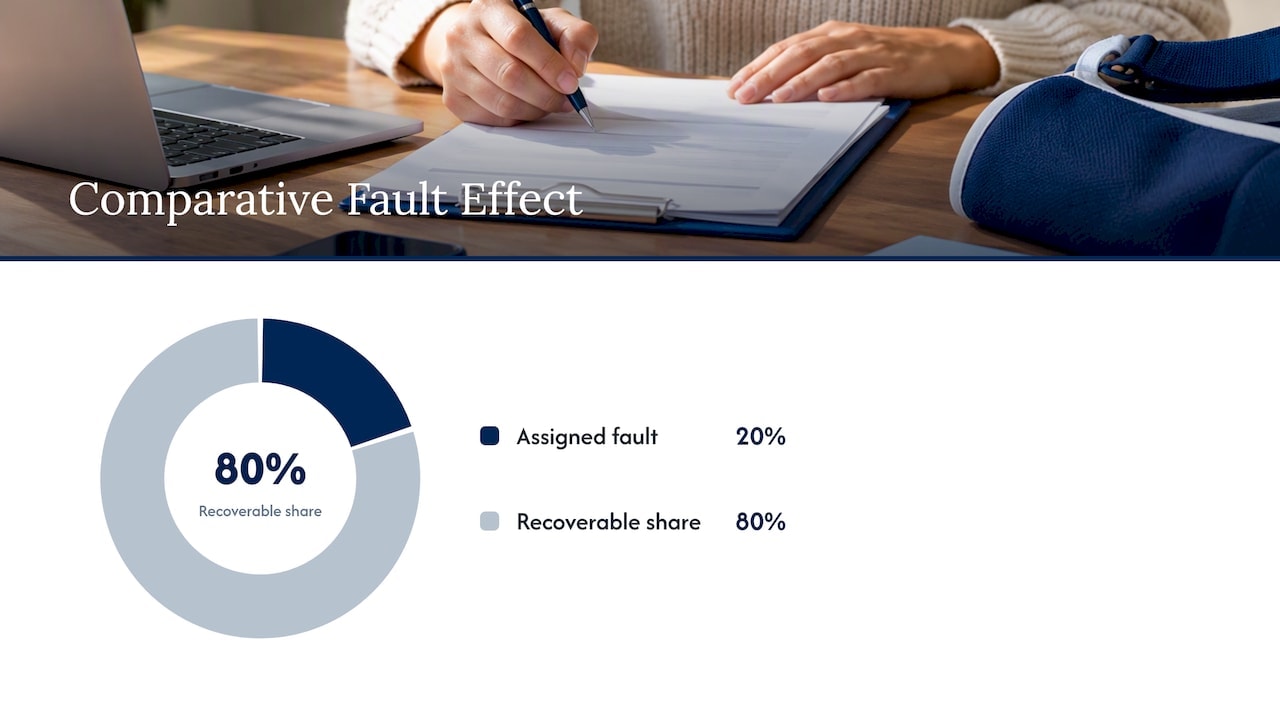
New Mexico follows a pure comparative fault rule, established in Scott v. Rizzo and still applied today, meaning your recovery is reduced by your own percentage of fault, no matter how large that percentage is. If a jury finds your damages total $100,000 but assigns you 20% of the fault for the accident, your recoverable amount drops to $80,000.
Jurors are also instructed on the mitigation doctrine: a plaintiff has a duty to use ordinary care to reduce the harm, and failing to follow medical advice or seek reasonable treatment can reduce the recoverable amount.
On the other side, certain facts tend to push awards upward:
- Permanent impairment or disfigurement that alters daily life long-term.
- Documented loss of enjoyment of activities the person previously valued.
- Corroborating testimony from family, coworkers, or treating providers who witnessed the change firsthand.
How to document and prove pain and suffering
Jurors and insurance adjusters respond to specifics, not general claims of discomfort. Strong cases pair subjective experience with objective proof.
- Keep every medical record, including imaging, specialist referrals, and physical therapy notes.
- Maintain a daily pain journal noting symptoms, limitations, and emotional impact in your own words, written close to the time you experience them.
- Save mental health and counseling records if the injury affected your mood, sleep, or relationships.
- Track employment and earnings impact, even partial, since reduced work capacity often reflects broader life disruption.
- Photograph visible injuries at multiple stages of recovery, and collect written statements from witnesses while memories are fresh.
Pro Tip: Start your pain journal the same week as the injury, not months later. Contemporaneous notes carry far more weight with adjusters and juries than a reconstructed memory does.
Objective corroboration, imaging results, prescription records, and expert reports, tends to matter more to a skeptical adjuster or juror than personal testimony alone, because it turns a subjective claim into something that can be checked against a medical file.
When to contact a New Mexico personal injury lawyer
The earlier an attorney reviews your case, the more options you preserve. A quick consult in the days after an injury confirms whether a government notice deadline applies, flags the three-year filing window, and starts the process of locking down evidence before it disappears.
From there, an attorney typically handles the valuation work few injured people have the time or expertise to do alone: gathering medical records, retaining expert witnesses when needed, calculating a realistic settlement range, and building a negotiation strategy that accounts for comparative fault or statutory caps where they apply. If a fair settlement doesn’t materialize, that same preparation carries directly into trial representation. None of this requires an upfront payment under a contingency arrangement, which is how most personal injury representation in New Mexico works.
Practical perspective: realistic expectations for awards and next steps
Because New Mexico leaves pain-and-suffering valuation to jury judgment rather than a formula, two people with similar injuries can walk away with very different outcomes. The deciding factor is rarely the injury itself, it’s the quality of the documentation and the timing of the legal response. Prioritize your medical follow-up, start a written record immediately, and get a lawyer’s eyes on your deadlines before you assume you have time to spare. Settlement is faster, trial sometimes pays more, and knowing which path fits your case early saves months of uncertainty later.
— Adam
How 2keller can help with your New Mexico claim

If you’re weighing whether to handle a pain-and-suffering claim on your own or bring in help, the practical risk is usually the deadlines and documentation gaps that quietly reduce what a case is worth. Legal representation for personal injury claims in New Mexico is often available on a contingency basis, meaning there is no fee unless the case is won, and many firms offer free case evaluations to start.
- A deadline check against the three-year statute and any applicable government notice window.
- A review of your medical records and injury documentation to spot gaps early.
- Clear next steps on evidence to gather and how your claim is likely to be valued.
Contact 2keller for a free case evaluation and find out where your claim stands before any deadline closes in.
This article is general information, not a substitute for advice from a qualified lawyer. Consult a qualified legal professional about your own circumstances before acting on anything here.
Sources
- Statutes of limitations — New Mexico (Holland & Hart resource)
- HB0107 — New Mexico Legislature (2026 session bill text)
- UJI 13-1811 – Mitigation and related jury instruction (New Mexico Supreme Court)
- Pain and Suffering Damages in New Mexico — FindLaw
- New Mexico personal injury laws and deadlines — Nolo
FAQ
What is covered under pain and suffering?
Pain and suffering covers physical pain, mental anguish, loss of enjoyment of life, and loss of consortium, all treated as non-economic damages under New Mexico law. It’s distinct from economic damages like medical bills or lost wages, which are calculated from receipts and pay records rather than jury judgment.
How does comparative fault affect a pain-and-suffering award?
New Mexico applies pure comparative fault, so your award is reduced by your own percentage of responsibility for the accident, even if that percentage is high. Established in Scott v. Rizzo, this rule applies to non-economic damages the same way it applies to medical bills and lost wages.
How do New Mexico’s medical malpractice caps work?
Under HB0107, medical malpractice claims are subject to per-occurrence caps on aggregate recovery, with phased changes to how the patient compensation fund pays its share through 2027. These caps don’t apply to ordinary personal injury claims like car accidents or slip and falls.
What is the hardest injury to prove for pain and suffering?
Injuries without clear objective markers, such as chronic pain, post-traumatic stress, or soft tissue damage that doesn’t show on imaging, tend to be hardest to prove because they rely heavily on self-reporting. Strong contemporaneous records, consistent treatment history, and corroborating witness or expert testimony help convert these harder cases into something a jury or adjuster can evaluate.
What are the negligence laws in New Mexico?
New Mexico uses pure comparative fault, meaning a plaintiff can still recover damages even if found mostly at fault, with the award reduced by their percentage of responsibility. Jurors are also instructed on the duty to mitigate damages, meaning a failure to seek reasonable treatment can reduce what’s recoverable.