

New Mexico Slip and Fall Accident Lawyer
Keller & Keller Injury Lawyers’ Winning Approach
Free Case EvaluationInjured in a Slip and Fall Accident?
Get started with a free case evaluation. No Fee Until We Win.
100% Free Evaluation
Provide a few details and our team will handle the rest.
"*" indicates required fields

“As a busy mom of three, I’m so grateful I didn’t have to face the legal battle alone. Thank you, Keller & Keller Injury Lawyers.”
Kelly


When you’ve been hurt in a slip and fall accident, you need more than just any lawyer. You need a battle-tested sword and shield fighting for your rights.
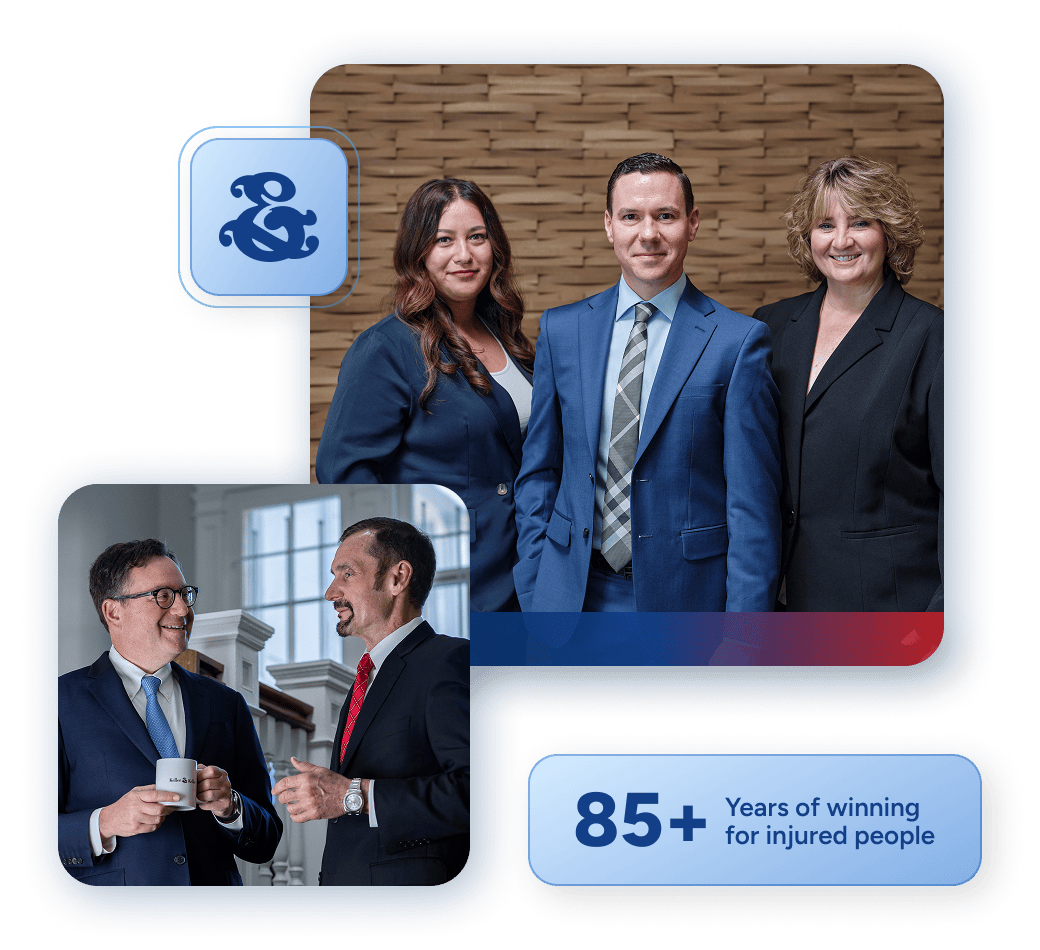
At Keller & Keller, we’ve been maximizing client settlements and delivering justice since 1936, establishing our firm as one of New Mexico’s leading premises liability law firms. With over 90 years of experience taking on negligent property owners and their insurance companies, we’ve recovered over a billion dollars for our clients. That’s not just a number. That’s thousands of families we’ve helped get back on their feet after life-changing accidents.
We’re a family-run firm, and we treat you like family because we understand that behind every case is a real person dealing with mounting medical bills, lost wages, and pain that shouldn’t have happened in the first place. We reach out and make sure our clients feel like they can have a cup of coffee with us. No fancy legal jargon, no runaround, just straight talk about what we’re going to do to win your case.
Why You Need a New Mexico Slip and Fall Accident Lawyer
The aftermath of a serious slip and fall can turn your life upside down in an instant. Medical bills pile up, insurance companies pressure you to accept lowball offers or deny your claim entirely, and you’re left wondering how to put your life back together while still recovering from your injuries. But here’s the truth, property owners and their insurance companies are already working against you.

Navigating Complex Legal Claims

Understanding Insurance Company Tactics

Understanding Statute of Limitations
Navigating Complex
Legal Claims
Slip and fall cases in New Mexico aren’t straightforward. These cases involve complex premises liability laws, comparative negligence rules, and property owners who often have deep pockets and experienced legal teams defending them. Without proper representation, you’re bringing a knife to a gunfight. We’ve seen too many good people get taken advantage of because they tried to handle these complex cases on their own.

Understanding Insurance Company Tactics
Property owners carry various types of insurance, general liability, homeowners, business liability, and umbrella policies. Each insurer is going to try to minimize what they pay or deny the claim entirely. They’ll argue that you should have seen the hazard, that it was “open and obvious,” or that your own actions caused the fall. Without experienced representation, you’ll get lost fighting these well-funded insurance companies while you’re trying to recover from your injuries.

Understanding Statute of Limitations
Time limits are crucial in New Mexico. You have three years from the date of your slip and fall accident to file a lawsuit. Miss this deadline, and you’re out of luck, no matter how strong your case is. There are rare exceptions for minors or incapacitated individuals, but for most people, that three-year clock starts ticking the moment you hit the ground.

What to Do After a Slip and Fall Accident in New Mexico
The actions you take immediately after a slip and fall accident can make or break your case.
See What Your Case Is WorthEven if you feel okay, adrenaline can mask serious injuries, see a doctor right away
Notify the property owner or manager immediately and request a written incident report
If you’re able, take photos of the hazard that caused your fall, the accident scene, and any visible injuries
Get names and contact details from anyone who saw what happened
Avoid giving detailed statements to property owners or insurance companies without legal advice
Keep any clothing or shoes you were wearing, and don’t let anyone clean up or repair the hazard
Keep all medical records, bills, and accident-related documents
The sooner we start working, the better we can protect your interests and preserve evidence

The Keller & Keller Injury Lawyers Approach:
New Mexico Injury Lawyers Who Fight to Win
From the moment you contact us, you’ll notice the difference in our approach. Our client-first philosophy means we take the time to understand not just the details of your accident but how it has affected your life, your work, your family, and your future in New Mexico. We clearly communicate every step of the process in plain language you can understand, no confusing legal jargon. This approach has earned us countless 5-star reviews from real New Mexico clients who’ve experienced the Keller & Keller difference firsthand.
We understand that being injured in an accident is stressful enough without having to chase down your lawyer for updates. That’s why we’ve built our practice around transparent, consistent communication.
When you hire us, you’ll have direct access to the New Mexico-based attorney handling your case as well as a dedicated paralegal who monitors its daily status. We keep you informed throughout every stage of your claim, explaining what’s happening, what to expect next, and how it affects your case.
Our 90+ years of experience isn’t just about longevity. It’s about results. Our attorneys have successfully handled thousands of cases in New Mexico and recovered millions and millions of dollars for our clients. We’ve gone toe-to-toe with the biggest insurance companies and won. Our courtroom experience means we’re always prepared to take your case to trial if that’s what it takes to secure fair compensation. This willingness to fight, and our track record of success, often motivates insurance companies to offer better settlements to avoid facing us in court.
The Slip and Fall Claim Process with Keller & Keller Injury Lawyers
When you hire us, we don’t waste time. Our investigation starts immediately because evidence disappears fast in these cases.
Types of Slip and Fall Accidents We Handle
We handle all types of premises liability cases throughout New Mexico, and each one presents its own challenges.
A wet floor accident is a fall caused by spills, cleaning solutions or leaking pipes that weren’t cleaned up or properly marked with warning signs. It can happen in a grocery aisle, a hotel lobby or an office restroom. The case usually depends less on the puddle than on what the people running the building did about it.
What Does a Property Owner Owe You?
New Mexico asks one basic question of those who own or occupy property: did they use ordinary care to keep it reasonably safe for people there with consent? That single standard replaced the older labels that once sorted visitors into categories (Ford v. Board of County Commissioners, 1994-NMSC-077). Why you were there may still be weighed as a factor. Trespassers remain a separate group.
That duty doesn’t make an owner an insurer of every visitor. A fall alone doesn’t show a lack of care. Our guide to premises liability in New Mexico explains how the standard works across different kinds of property.
How Long Was the Liquid There?
Time is often the center of the dispute. A spill that happened seconds before you arrived is a different case from a leak staff had been stepping around all morning. When employees mopped the floor themselves, the question changes again, because they knew exactly what they had just done. These details can help fill in the timeline:
- The look of the spill. Cart tracks, footprints or dried edges may suggest it had been there for a while.
- Inspection and sweep logs. Records may show when anyone last checked the area, or that the checks were filled in later.
- Surveillance video. Cameras may show the spill happening and who walked past it, though footage can be recorded over quickly.
- Repair history. Earlier work orders for a dripping pipe, cooler or roof may show a repeat problem in the same spot.
Does a Yellow Sign End the Case?
Not necessarily. A warning sign may help an owner, and its placement matters: a cone at the far end of an aisle does little for someone turning a corner. New Mexico’s Supreme Court has said an obvious hazard doesn’t by itself relieve an occupier of the duty of ordinary care to business visitors (Klopp v. Wackenhut Corp., 1992-NMSC-008). Depending on the facts, the question may be whether the floor should have been dried or blocked off instead.
Several businesses may share one floor. A store, its landlord and an outside cleaning company may each point at the others, and in most negligence cases each pays only its own percentage of fault (NMSA 1978 § 41-3A-1). It helps to learn early who held the cleaning contract and who was responsible for the plumbing. Anyone hurt in a metro-area business may find more local detail on Albuquerque personal injury claims.
An icy sidewalk or parking lot accident is a fall on snow or ice that built up on a walkway, ramp or lot. Property owners in New Mexico owe visitors ordinary care, and that can include how they respond to hazardous weather conditions on their premises. Whether a particular owner did enough usually depends on the timing and the circumstances.
Does an Owner Have to Clear Every Patch of Ice?
No single rule answers that here. The standard is reasonable care under the circumstances (Ford v. Board of County Commissioners, 1994-NMSC-077), so the facts carry most of the weight. How long had the storm been over, and did the business keep inviting customers through that entrance? Was salt or sand on hand, and had anyone used it?
A store that opened its doors on an ungritted walkway two days after a storm may be viewed differently from a property caught in the middle of one. That doesn’t make an owner responsible for every slick spot. It does mean the owner’s choices are worth examining.
Why Ice Forms in the Same Places
New Mexico’s bright days and cold nights can create a repeating cycle, especially at higher elevations around Santa Fe, Taos and Ruidoso. Snow melts in the afternoon sun, runs across pavement and freezes again after dark. The ice may then appear on a walkway that looked clear hours earlier.
That cycle can raise questions about the property itself. A downspout emptying across a sidewalk, a low spot that holds water, or a shaded north-facing entry may produce ice again and again. A recurring problem can look quite different from a one-time storm. Common trouble spots include:
- Roof runoff. Water from gutters and canopies may refreeze directly below on the walkway.
- Plowed piles. Snow pushed against a curb can melt across the lot and freeze overnight.
- Ramps and steps. Sloped or raised surfaces may ice over faster and be harder to walk safely.
- Shaded lanes. A building’s shadow can keep a strip of a parking lot frozen long after the rest has cleared.
City Sidewalks and Public Lots
Who controls the pavement can change the whole claim. Immunity under the Tort Claims Act is waived for negligence in constructing and later maintaining sidewalks and parking areas, but not for defects in plan or design (NMSA 1978 § 41-4-11). A public body generally must also receive written notice within 90 days (NMSA 1978 § 41-4-16). Our overview of the New Mexico Tort Claims Act explains how these claims differ, and a fall on a college campus may raise the same issue.
Proof can vanish by lunchtime, since the sun may melt the ice that caused your fall. Photos taken right away, weather records for that location, and logs from any snow-removal contractor can help show what the surface looked like. Our page on Santa Fe personal injury claims has more local detail.
Uneven or damaged flooring means broken tiles, loose carpeting, warped floorboards or cracked concrete that creates tripping hazards. The danger is often a small one: a raised edge or a rumpled seam that catches the toe of a shoe. Unlike a spill, this kind of hazard usually develops slowly, which can give an owner time to find and fix it.
Small Defects, Serious Falls
A trip works differently from a slip. Your foot stops while your body keeps moving, so you tend to fall forward onto your hands, knees or face. Wrist, shoulder and hip fractures can result, and a fall onto concrete may cause a head injury. Older adults can face a long recovery from what looks like a minor lip in the floor.
The size of a defect can be easy to dismiss after the fact. An adjuster may look at a photo of a small crack and wonder how anyone could trip on it. Measuring the height change with a ruler in the picture, and photographing the area from a walker’s eye level, can give a truer sense of it.
“You Should Have Watched Where You Were Going”
Property owners often argue that the defect was plain to see. New Mexico doesn’t treat that as the end of the matter. In Klopp v. Wackenhut Corp., a case involving a trip over the base of a metal detector stanchion, the Supreme Court said a risk isn’t made reasonable simply because it is open and obvious (1992-NMSC-008). A visitor’s foreseeable carelessness is handled by comparing fault instead.
That comparison follows New Mexico’s pure comparative fault rule (Scott v. Rizzo, 1981-NMSC-021). You can generally recover even if you were partly to blame for not looking down, though your recovery is reduced by your percentage of fault. Our guide to comparative negligence in New Mexico walks through how that reduction works. Distractions matter on both sides, since a store display or a busy entrance may have drawn your eyes away from the floor.
Landlord, Tenant or Someone Else?
A cracked slab outside a shop may be the landlord’s responsibility, while the torn carpet inside may be the tenant’s, depending on the lease and who actually controlled the area. For hallways, stairs and other spaces tenants share, a landlord owes reasonable care to keep them safe (Castillo v. County of Santa Fe, 1988-NMSC-037). What the landlord knew or should have known, and the means it had to act, can shape that question.
Because these defects tend to grow over time, the paper trail can be strong. Evidence that often matters includes:
- Maintenance requests. Earlier complaints may show someone reported the problem.
- Prior falls. Incident reports from the same spot can suggest the owner had reason to act.
- Repair estimates. A quote that was never acted on may show the problem was known.
- Older photos. Listing photos or online images may show how long a defect has been there.
For more on owners’ duties generally, see our guide to your rights after a New Mexico property injury.
A poor lighting accident is a fall in a dark stairwell, parking garage or walkway where inadequate lighting prevents visitors from seeing hazards. Darkness is rarely the only problem. It usually hides something else, such as a curb, a step or an object left on the path, and turns an ordinary defect into a fall.
The Hazard You Couldn’t See
Poor lighting can undercut an argument owners often make, which is that a visitor should have seen the danger. If the area was too dim to make out a change in level, that claim gets harder to sustain. A property owner’s ordinary care (Ford v. Board of County Commissioners, 1994-NMSC-077) can reach how a place is lit when people are expected to use it at night.
The other side may ask why you walked into a dark area at all. In some cases there was no other route, as with the only stairway from a garage level or the single path from a parking lot to a door. How a person was expected to get from one place to another can matter a great deal.
Proving How Dark It Was
Lighting is hard to prove afterward, because a burned-out fixture may be replaced the next day. Evidence often has to recreate the conditions at the time of the fall:
- Photos at the same hour. Pictures taken at a similar time of night may show the area as you experienced it, though cameras can make a scene look brighter or darker than it was.
- Light readings. A meter reading can replace a vague description with a measured level.
- Maintenance tickets. Records of bulb or ballast replacements may show how long a fixture had been out.
- Timers and sensors. Settings on a lighting control may explain why lights were off when people were still using the space.
- Tenant complaints. Residents or employees may have reported the dark area before.
Don’t overlook the small details of the night itself, such as the phone flashlight you used or a witness who had trouble seeing the same step. If your fall happened near a business, staff may remember how long the lights had been out.
Whose Job Was It to Keep the Lights On?
Control of the fixture usually points to the right party. In an apartment complex, a landlord must use reasonable care to keep shared common areas safe, and liability turns on what it knew or should have known. A statute also requires residential landlords to keep common areas safe, though it says those obligations aren’t meant to change existing tort law (NMSA 1978 § 47-8-20).
A commercial garage may be run by an operator separate from the building’s owner, so a management contract can decide who answers for a dead light. Public buildings and parking areas follow the Tort Claims Act (NMSA 1978 §§ 41-4-6, 41-4-11), and our guide to New Mexico premises claims explains why those claims differ. If you were attacked in a dark area instead of falling, see our negligent security page.
A construction zone fall happens when someone is hurt by construction materials, unmarked holes or a failure to secure work areas from the public. That might be a sidewalk torn up beside a building project, or a store that stayed open during a remodel. The person hurt is usually someone passing through, with no connection to the job.
Hazards That Catch the Public Off Guard
People walking past a job site aren’t looking for the things workers are trained to expect. A pedestrian route may have changed overnight, and signs meant for crews may not make sense to someone on the way to an appointment. Common causes of falls include:
- Open holes and trenches. An excavation with no barrier or cover may be hard to see, particularly at dusk.
- Stored materials. Pipe, lumber or rebar left across a walkway can create a trip point.
- Cords and hoses. Lines stretched across a store aisle during a remodel may lie right at foot level.
- Temporary ramps and plywood. A loose sheet over a gap can shift underfoot.
- Dust and debris. Fine grit or plaster dust can make a smooth floor slick.
Who Controlled the Site?
Several parties may share a project, so the first task is often sorting out who controlled the area where you fell. An owner, a general contractor and a subcontractor may have different roles, and an open business may also owe its customers ordinary care during a remodel (Ford v. Board of County Commissioners, 1994-NMSC-077). In most negligence cases, each one generally pays only for its own share of the fault (NMSA 1978 § 41-3A-1).
Hiring out the work may not end an owner’s involvement. One who hires an independent contractor for work creating a peculiar risk of harm to others has a nondelegable duty, and is directly liable if reasonable precautions aren’t taken (Saiz v. Belen School District, 1992-NMSC-018). In everyday language, some dangerous work can’t simply be handed off along with responsibility for the public’s safety. Whether a given job qualifies is a legal question, and this isn’t absolute liability.
Site records can help show who was in charge that day, including daily logs, subcontracts and photographs of the barricades. If you were injured while working on the project, see our construction site accident page.
What If You Stepped Past the Barrier?
An owner may say you had no business being there. Trespassers are a separate category in New Mexico, and an owner generally owes them no duty to make land safe, subject to limited duties covering artificial conditions, the owner’s activities and trespassing children. Even a person with permission can become a trespasser by going outside the expected area.
So the details of the barrier matter. A fence with a wide gap or a walkway that looked open may support the view that you were where the public was expected to go. Our overview of premises liability in New Mexico covers how a visitor’s status can affect these claims.
A stairway accident is a fall caused by missing or broken handrails, uneven steps or inadequate lighting on staircases. Falling on stairs can mean dropping several feet onto hard edges, so the injuries may be worse than a fall on level ground. The stair itself is usually the best evidence, which is why these cases often start with a tape measure.
A Step That Breaks the Rhythm
People climb stairs by habit. After the first few steps, your feet expect each one to match the last, and you stop looking. One taller riser, a shallower tread or a worn edge can break that pattern and catch a foot in mid-stride.
That’s why a single step can matter so much. Differences that seem too small to notice can throw off a person’s footing, and they can be measured. Worn nosing, a loose tread cover or a slanted landing may be just as important. An inspection may compare the stairs with the building code in effect, which gives an objective reference point for how far they departed from accepted construction.
What a Handrail Is For
A handrail is the last chance to stop a fall once you’ve lost your footing. A rail that’s missing, wobbly or broken takes that chance away. It also matters whether the rail ran the full length of the stairs and whether you could get a real grip on it.
Questions that often arise include:
- Was the rail loose before your fall? Other residents or employees may remember it moving, and repair requests may confirm this.
- Did it pull out of the wall? Failed anchors or rotted wood can show how long the problem had been developing.
- Were you using it? An owner may ask, and any share of fault could reduce a recovery.
- Was your hand free? Someone carrying groceries or a child up a stair is doing something the owner should expect.
Apartment Stairs, Public Buildings and Older Construction
Who answers for a stairway depends on who controls it. A landlord must use reasonable care to keep common stairways reserved for tenants’ shared use safe, as with other shared areas (Castillo v. County of Santa Fe, 1988-NMSC-037). Inside a single rented unit, the analysis may be different.
Stairs in a public building raise separate issues. Immunity is waived for negligent operation or maintenance of a building (NMSA 1978 § 41-4-6), and that waiver can reach negligent operation that creates a dangerous condition for the people who use it (Upton v. Clovis Municipal School District, 2006-NMSC-040). Our overview of the New Mexico Tort Claims Act explains how those claims work.
If the problem lies in how the stair was built, timing can be unusual. Claims over a defective or unsafe improvement against those who built or designed it generally can’t be brought more than ten years after substantial completion (NMSA 1978 § 37-1-27). Our New Mexico premises liability guide puts these questions in context, and the value of a head injury claim may be relevant after a serious fall.
Restaurant and bar accidents are falls caused by kitchen spills, broken glasses or food debris that creates slippery conditions. Floors in these places change by the minute, with servers crossing tile while carrying trays and customers moving between tables in low light. A hazard may appear and cause a fall long before anyone sweeps it up.
Why a Busy Dining Room Is Different
Restaurants create many of their own hazards. Grease can be tracked from the kitchen on the soles of staff shoes, ice falls near a bar well, and a dropped glass leaves shards and liquid across a walkway. Because employees are on the floor constantly, an operator may have a harder time saying nobody could have noticed.
The layout can add to the risk. A mat that curls at the kitchen door, a step down to a patio or a narrow path past a crowded bar may all play a part. Closing time brings its own danger when mop water goes down while customers are still leaving. Some areas tend to deserve a closer look:
- Kitchen doors. Liquid and grease may collect where staff pass in and out.
- Drink stations. Ice and spilled drinks can gather near soda machines and service bars.
- Buffets and salad bars. Food dropped by customers may sit on the floor until someone sees it.
- Restroom hallways. Leaks and mopped tile can meet dim lighting in these narrow spaces.
What If You Had Been Drinking?
Expect the question. If you’d had a drink or two, the other side may blame your balance rather than the floor. New Mexico’s comparative fault rules generally reduce a recovery by your share of fault instead of barring it, and a broken glass on the floor is a hazard whether or not you’d been drinking. Our guide to premises liability in New Mexico covers how shared fault fits into these claims.
A claim that a bar over-served you is a separate and harder matter. A licensed seller can be civilly liable only if the person was intoxicated, it was reasonably apparent, and the licensee knew it from the circumstances, and an intoxicated patron must also show gross negligence and reckless disregard (NMSA 1978 § 41-11-1). Most floor-hazard cases won’t depend on that statute.
Records a Restaurant May Have
Your receipt can matter more than you’d think. A time-stamped ticket helps pin down when you arrived, what you ordered and when you fell. Other sources can fill in the rest. Staff schedules may identify who was working your section, and an incident report may record what the manager saw.
Video may be the most useful item, since many restaurants have cameras over the registers or the bar. Those recordings may not last long, so a prompt request can matter. Coworkers’ accounts of how long a spill sat, or whether a broken glass had been reported, can also fill in what a camera missed. If you were hurt by another customer rather than a fall, see our negligent security page.
A nursing home fall is an injury to an elderly resident that may result from neglect or inadequate supervision. These falls can cause serious injuries, including broken bones and head trauma. Understanding one usually means asking what was on the floor, what the resident needed, and whether help was there.
How Falls Happen in a Care Setting
A fall in a nursing home often has less to do with a single spill than with a person’s daily routine. A resident may try to reach the bathroom alone after a call light went unanswered, or stand up from a wheelchair whose brakes weren’t set. Others may be dropped or lose their balance during a transfer from a bed. Our post on broken bones in nursing homes lists many of the common causes.
The physical setting can play a part too, just as it would in any other building:
- Floors. Wet tile in a bathroom, a broken surface or an object left in a hallway may trip someone who walks slowly.
- Lighting. Dim halls and rooms can be a particular problem for people with poor eyesight, especially at night.
- Furniture and equipment. A chair that rolls, a bed set too high or a faulty walker may give way when a resident leans on it.
- Grab bars. A missing or loose bar in a bathroom can remove the support a resident was counting on.
Was This Fall Preventable?
Not every fall in a care facility means someone did wrong. Older adults can fall even with good care. The question families usually face is what the facility knew about this resident and what it did with that knowledge.
A resident who had fallen before, was newly medicated or needed help to walk raises a different set of questions from one who was fully independent. Sensors, low beds, non-slip footwear and regular toileting help are some of the precautions that may have been available. If none were used, or a plan on paper wasn’t followed, that gap can become the center of the case.
What Families Can Notice and Keep
Families often learn about a fall hours later, or only from a bruise that nobody can explain. Those details matter. Take note of when you were told, who told you and how the explanation changed. Pictures of injuries and of the room may also help, particularly a bed height or a walker left out of reach.
Records can add more, including charts, incident reports and notes on how often a resident was checked. Injuries that didn’t surface for days may raise their own questions, since a fracture can go unnoticed in someone who can’t describe their pain.
The rules that govern facilities, including staffing and supervision, are a separate subject. For that detail, see our nursing home abuse page.
A pool deck accident is a fall on the slippery surfaces around a swimming pool that lack proper non-slip materials or adequate drainage. These decks are found at hotels, apartment complexes, gyms and community centers. Water around a pool is expected, so the claim usually focuses on the surface and whether it was built and kept to handle that water.
Everyone Expects a Pool Deck to Be Wet
An owner may say that a wet pool deck is simply part of swimming. That point has limits. An owner can’t prevent splashing, but the deck’s surface, slope and drainage are choices that someone made and has to maintain.
A smooth tile that looks attractive in a brochure may turn slick the moment it gets wet, especially under bare feet. Sealers and paint can fill in the texture of concrete over time. Pooling water, algae in shaded corners and chemical residue may make the problem worse. Even a hazard everyone can see doesn’t automatically relieve an owner of the duty of ordinary care to business visitors, and any carelessness on your part is generally handled by comparing fault.
What Can Actually Be Measured
Pool deck claims can rest on measurements more than on opinions. An inspection may look at the following:
- Slip resistance. A tester can measure the traction of the surface when wet, then compare it with dry areas.
- Slope. A deck that tilts away from drains may hold water where people walk.
- Drains. Clogged or poorly placed drains can leave standing water in the same spots.
- Coatings. Fresh paint or sealer on a deck may have removed its grip.
- Cleaning records. Logs may show how often the deck was scrubbed, and whether algae had been noted.
Timing can matter, since a deck may be resurfaced after a fall, particularly before the next swim season. Photos of the surface, the shoes or bare feet involved, and any standing water can help preserve what was there that day.
Hotels, Apartments and City Pools
The kind of property can change the legal path. A hotel or gym generally owes guests ordinary care to keep the premises reasonably safe. At an apartment complex, the pool may be a common area reserved for tenants’ shared use, and a landlord must use reasonable care to keep it safe. Our guide to premises liability in New Mexico covers these basics.
A municipal pool raises different questions. Immunity is waived for negligence in operating or maintaining a building or public park (NMSA 1978 § 41-4-6), and a claim against a public body follows its own notice rules, as our overview of the Tort Claims Act explains.
Children deserve a separate word, since they run on decks and don’t read warning signs. Our post on the dangers swimming pools pose to children in Albuquerque discusses pool safety for families.
The Hard Truth
Slip and Fall Statistics That Demand Action
The numbers tell a story that gets us fired up about fighting for justice in New Mexico.
Each year, there are about 3 million emergency department visits due to older people falls. Falls don’t discriminate. They affect people of all ages and backgrounds, turning ordinary days into medical emergencies that shouldn’t have happened.
The age-adjusted rate of initial injury-related emergency department visits for unintentional falls was 340.2 per 10,000 people for females and 280.4 for males in 2017-2018. Women are disproportionately affected, especially as they age.
Falls, slips, and trips resulted in 885 fatal work-related injuries across all sectors in 2023. What should have been safe workplaces became scenes of preventable tragedies.
Leading Causes of New Mexico Slip and Fall Accidents
Most slip and fall accidents are preventable, which is what makes them so infuriating. Understanding these causes helps us build stronger cases.
Slip and Fall Injuries We Represent
Slip and fall accidents don’t cause minor bumps and bruises. They cause life-changing injuries that turn families upside down.

Compensation Available for New Mexico Slip and Fall Accident Victims
If you’ve been injured in a slip and fall accident due to someone else’s negligence, you may be entitled to various types of compensation.
Economic Damages
These are quantifiable financial losses, including:
- Medical expenses (past, current, and future)
- Lost wages and reduced earning capacity
- Property damage (damaged clothing, personal items)
- Rehabilitation and physical therapy costs
- Home modification expenses for accessibility
- In-home care costs
Non-Economic Damages
These more subjective damages compensate for:
- Pain and suffering
- Emotional distress and trauma
- Loss of enjoyment of life
- Disfigurement and scarring
- Loss of consortium (impact on marital relationship)
Punitive Damages
In rare cases involving extreme recklessness or intentional misconduct by property owners, New Mexico courts may award punitive damages designed to punish the wrongdoer and deter similar negligent behavior.
Wrongful Death Damages
When slip and fall accidents result in fatalities, surviving family members may recover compensation for funeral expenses, loss of financial support, loss of companionship, and the pain and suffering of their loved one before death.
How Keller & Keller Injury Lawyers Investigates New Mexico Slip and Fall Accident Cases
Our meticulous approach to evidence gathering builds the strongest possible foundation for your premises liability claim:

Setting the New Mexico Standard
Cutting-Edge Investigation Technology
While other law firms rely on outdated methods, Keller & Keller leverages cutting-edge technology to build stronger cases and win bigger settlements for our New Mexico slip and fall accident clients.
Professional drone documentation
Captures property conditions from angles impossible with traditional methods, providing evidence of hazardous conditions, inadequate lighting, and property maintenance issues
Advanced voice-over-IP networks
Enables real-time collaboration between attorneys, investigators, and expert witnesses, ensuring no detail about the dangerous condition is overlooked
Modern documentation tools
Local experts mobilize to capture detailed measurements, lighting levels, and surface conditions that often prove property owner negligence
Cloud-based case management
Provides you 24/7 access to your case information and status updates through secure client portals
Expert witness network
Allow us to conduct thorough property inspections within hours of an accident, before conditions are altered or repaired
Service Areas
New Mexico
Cities We Serve
What Sets Keller & Keller Injury Lawyers Apart
With so many law firms advertising their services, why choose Keller & Keller? The differences are clear.
Zero Fee Guarantee
We believe everyone deserves quality legal representation, regardless of their financial situation. That’s why we work on a contingency basis. You pay absolutely nothing unless and until we win your case. No upfront costs, no hidden fees, no financial risk to you.
* Clients may owe court costs if they lose




No Fee Until We Win!
Get Started TodayDon’t Take Our Word For It!
See what our clients have to say about their experience with Keller & Keller.
View More Testimonials“I was very pleased with the end result. It was more than what I expected.”
Chali
When I called Keller & Keller, they were very understanding. They set up a consultation. I came in with my family and, you know, we sat down and talked. They’re very nice people, very understanding, helped me through the whole thing, and made sure that, you know, we kept on fighting until we got what we wanted
Take Action Now
Your Slip and Fall Accident Claim Starts Here
Free Consultation
We’ll evaluate your case honestly and explain your options in plain English. We’ll come to you, whether you’re at home, in the hospital, or wherever is convenient.
We Fight
Our experienced team fights to investigate thoroughly, deal with insurance companies, and handle all the legal complexities while you focus on getting better.
You Recover
Focus on healing while we handle the rest. We’ll fight for you like we’d fight for our own family, because that’s exactly how we see you.
Zero Fee Guarantee
We believe everyone deserves quality legal representation, regardless of their financial situation. That’s why we work on a contingency basis. You pay absolutely nothing unless and until we win your case. No upfront costs, no hidden fees, no financial risk to you.
* Clients may owe court costs if they lose

The Keller Tradition:
Bringing Nearly a Century of Excellence to New Mexico
Frequently Asked Questions
Have Questions? We’re here to help.
Injured and not sure what to do next?
We’ll help guide you through everything you need to know
Albuquerque, NM Office
6301 Indian School Rd NE #920 Albuquerque, NM 87110
(505) 938-2300