

Injured in a Permian Basin Truck Accident?
Keller & Keller Injury Lawyers’ Winning Approach
Free Case EvaluationInjured in a Permian Basin Truck Accident?
Get started with a free case evaluation. No Fee Until We Win.
100% Free Evaluation
Provide a few details and our team will handle the rest.
"*" indicates required fields

“As a busy mom of three, I’m so grateful I didn’t have to face the legal battle alone. Thank you, Keller & Keller Injury Lawyers.”
Kelly


When you’ve been hurt in a truck accident in the Permian Basin, you need more than just any lawyer. You need a battle-tested sword and shield fighting for your rights.
At Keller & Keller, we’ve been maximizing client settlements and delivering justice since 1936, and we’re not going anywhere. With decades of experience taking on the biggest trucking companies operating in one of America’s busiest oil and gas regions, we’ve recovered millions of dollars for our clients. That’s not just a number. That’s thousands of families we’ve helped get their lives back on track. The Permian Basin sees thousands of commercial trucks daily, hauling oil field equipment, fracking sand, crude oil, and water across some of the most dangerous roads in America. With offices serving clients throughout New Mexico, our Permian Basin truck accident lawyers bring the same dedication and expertise to every case we handle.
Why You Need a Lawyer After a Permian Basin Truck Crash
The aftermath of a truck accident in the Permian Basin can turn your life upside down in an instant. Medical bills pile up, insurance companies pressure you to accept lowball offers, and you’re left wondering how to put your life back together. But here’s the truth, the trucking companies, oil field service companies, and their insurers are already working against you.

Navigating Complex Legal Claims

Understanding Insurance Company Tactics

Understanding Statute of Limitations
Navigating Complex
Legal Claims
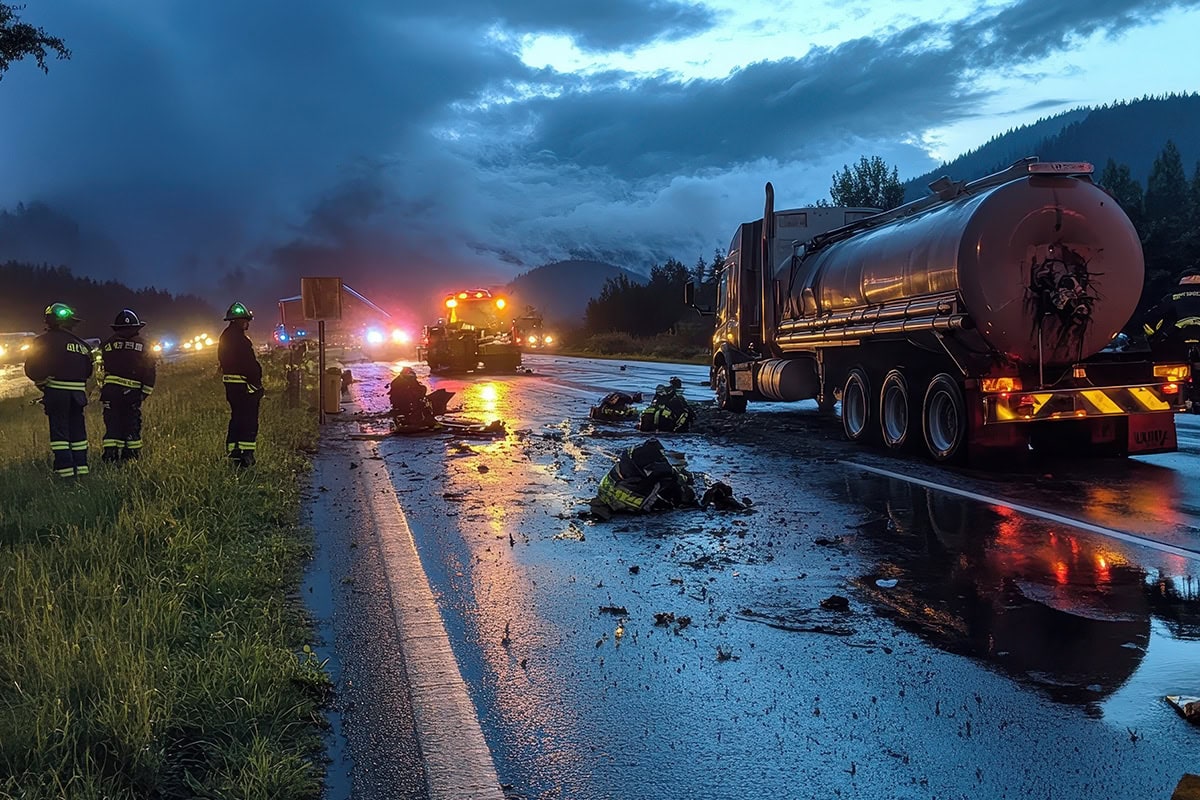
Permian Basin truck accidents aren’t like regular car crashes. These cases involve federal trucking regulations, oil field safety standards, multiple insurance policies, and corporate defendants with experienced legal teams. You might be dealing with out-of-state trucking companies, equipment leasing companies, and oil and gas operators all pointing fingers at each other. Without proper representation, you’re bringing a knife to a gunfight.
Understanding Insurance Company Tactics
Unlike typical car accidents, Permian Basin truck accidents often involve the truck driver’s personal coverage, the trucking company’s commercial policy, cargo insurance, oil field operator liability policies, and additional umbrella policies that can reach into the millions. Each insurer points fingers at the others and tries to minimize what they pay. At Keller & Keller, we’ve seen every trick in the insurance company playbook and know how to counter these tactics to protect your interests.

Understanding Statute of Limitations
Time is not on your side after a truck accident. In New Mexico, you generally have three years to file a personal injury lawsuit from the date of the accident. However, if government entities are involved, such as accidents on state highways or involving government contractors, you may have as little as 90 days to provide notice of your claim. Missing these deadlines means forfeiting your right to compensation permanently. Our Permian Basin truck accident lawyers ensure all paperwork is filed correctly and on time.

Steps to Take After a Permian Basin Truck Accident
The actions you take immediately after a truck accident in the Permian Basin can make or break your case.
See What Your Case Is WorthEven if you feel okay, adrenaline can mask serious injuries, see a doctor right away.
Official documentation is crucial for establishing what happened.
If you’re able, take photos of both vehicles, the accident scene, road conditions, and any visible injuries.
Get names and contact details from anyone who saw what happened, including other drivers and oil field workers.
Obtain the truck driver’s license, insurance, DOT number, and employer details.
Permian Basin roads have unique hazards, document dust storms, oil field traffic, or poor road conditions.
Avoid giving detailed statements to anyone except the police.
Keep all medical records, repair estimates, and accident-related documents
The sooner we start working, the better we can protect your interests and preserve crucial evidence.

The Keller & Keller Injury Lawyers Approach:
New Mexico Injury Lawyers Who Fight to Win
From the moment you contact us, you’ll notice the difference in our approach. Our client-first philosophy means we take the time to understand not just the details of your accident but how it has affected your life, your work, your family, and your future in New Mexico. We clearly communicate every step of the process in plain language you can understand, no confusing legal jargon. This approach has earned us countless 5-star reviews from real New Mexico clients who’ve experienced the Keller & Keller difference firsthand.
We understand that being injured in an accident is stressful enough without having to chase down your lawyer for updates. That’s why we’ve built our practice around transparent, consistent communication.
When you hire us, you’ll have direct access to the New Mexico-based attorney handling your case as well as a dedicated paralegal who monitors its daily status. We keep you informed throughout every stage of your claim, explaining what’s happening, what to expect next, and how it affects your case.
Our 90+ years of experience isn’t just about longevity. It’s about results. Our attorneys have successfully handled thousands of cases in New Mexico and recovered millions and millions of dollars for our clients. We’ve gone toe-to-toe with the biggest insurance companies and won. Our courtroom experience means we’re always prepared to take your case to trial if that’s what it takes to secure fair compensation. This willingness to fight, and our track record of success, often motivates insurance companies to offer better settlements to avoid facing us in court.
The Permian Basin Truck Accident Claim Process with Keller & Keller Injury Lawyers
When you hire us, we don’t waste time. Our investigation starts immediately because evidence disappears fast in the Permian Basin, especially when oil field operations continue 24/7.
Types of Permian Basin Truck Accidents We Handle
The Permian Basin presents unique trucking hazards that we handle with specialized expertise.
Oil field service vehicle accidents are crashes involving water trucks, sand haulers, and equipment transport vehicles servicing drilling operations. These trucks shuttle between yards and well sites all day, and they share roads like US 285 with commuters and families. Many of them run under a contract for someone else, which shapes who may answer for a crash.
Whose Truck Was It, Really?
The logo on the door may not tell you who is responsible. A single haul can involve a well operator, a service company, a trucking contractor, and an owner-operator driving his own rig. Someone has to work out who employed the driver, who dispatched the load, and who owned the tractor and the trailer.
Paperwork usually answers that better than a crash report does. These records tend to matter most:
- Haul tickets and dispatch records. They can show who ordered the load, where it was headed, and when the driver was sent.
- Well site sign-in logs. Many locations track which trucks come and go, which can place a driver and a company at a specific time.
- Service contracts. Agreements between companies may show who controlled the work and who agreed to carry insurance.
- Carrier markings. The name and federal number on a truck can lead to the company operating it, which may differ from the company that owns it.
Federal safety rules generally cover commercial vehicles in interstate commerce (49 CFR 390.3). That makes a truck’s routes and cargo worth checking, since a water truck that stays in one county may raise different questions than a sand hauler coming over from West Texas.
Can the Company That Hired the Hauler Share Responsibility?
In a crash governed by New Mexico law, it may. A company that hires an independent contractor for work creating a peculiar risk of harm to others has a nondelegable duty, and it can be directly responsible if reasonable precautions aren’t taken (Saiz v. Belen School District, 1992-NMSC-018). Put simply, some dangers can’t be contracted away.
That is no automatic path to the oil company. Whether particular work qualifies is a legal question, and not every oil field job has been treated that way. Our post on sand hauler crashes in the New Mexico Permian Basin describes this traffic in more detail, and our New Mexico semi-truck accident page covers trucking claims more broadly.
These points describe crashes governed by New Mexico law, and a crash on the Texas side of the basin may be governed by different rules. If you were hurt on the job, see our construction site accident page.
Tanker truck accidents are collisions with trucks hauling crude oil, produced water, or chemicals, often involving hazardous materials. Beyond the force of the crash, the load itself can burn, spill, or give off fumes. That means people who never touched the truck, including other drivers and first responders, may be hurt too.
Why a Liquid Load Behaves Differently
A partly filled tank is a moving weight. When a driver brakes or swerves, the liquid can surge forward or sideways and push the truck in that direction, which makes these rigs harder to control than a van trailer. Baffled tanks reduce this, but they don’t remove it.
Injuries can also look different from those in an ordinary truck crash. Burns, lung irritation from fumes, and skin or eye contact with chemicals may appear alongside fractures and head trauma. Produced water, the salty fluid that comes up with oil and gas, may carry its own contaminants, so knowing exactly what was in the tank can matter for your care as well as your claim. Our post on hazmat truck crashes in the Permian Basin looks at the materials moving through this region.
What Placards and Tank Records Can Reveal
- Placards. As a general matter, vehicles and bulk packagings containing hazardous materials must be placarded on each side and each end, with exceptions (49 CFR 172.504). A photo of the placard can help establish what the truck was carrying.
- Tank test history. A DOT specification cargo tank with a required test or inspection overdue generally can’t be filled and offered for transport, or transported, until that work is completed (49 CFR 180.407). Exceptions exist, including for some tanks filled before the due date.
- Shipping papers and load tickets. These can identify the product, the shipper, and the company that loaded the tank.
- Spill and fire response reports. Records from responding crews may describe what was released and how far it spread.
How Much Insurance Must a Tanker Carry?
Federal rules set minimum public liability levels based on the cargo (49 CFR 387.9). These figures apply at 10,001 pounds gross vehicle weight rating or more and carry conditions of their own:
| Cargo and operation | Federal minimum |
|---|---|
| For-hire interstate carriers of nonhazardous property | $750,000 |
| Listed oil, hazardous waste, hazardous materials and hazardous substances not covered by the higher entries | $1,000,000 |
| Hazardous substances in bulk in cargo tanks, portable tanks or hopper-type vehicles, and other listed bulk materials | $5,000,000 |
Don’t assume which line fits a given tanker. The table doesn’t itself classify crude oil or produced water, so the level may depend on the product, the quantity, and the trip. These are also floors, and they say nothing about what a particular company actually carries. If you were hurt near Carlsbad or elsewhere in Eddy County, the carrier’s filings and policy are among the first things worth requesting.
A jackknife happens when a truck’s trailer swings around and blocks multiple lanes, folding toward the cab like a pocketknife. These crashes are particularly dangerous on two-lane Permian Basin highways, where one swinging trailer can close both directions of travel. A driver coming over a rise at night may have only seconds to react to a wall of steel across the road.
What Makes a Trailer Swing Out?
A jackknife usually starts when the tractor slows faster than the trailer behind it, or when the trailer’s wheels lose grip. The trailer keeps coming and pivots at the hitch. Several conditions can set that off:
- Hard braking at speed. A driver who is going too fast or following too closely may have to brake abruptly, and that sudden load can break the trailer loose.
- A light trailer. An empty sand or water trailer heading back to load has less weight on its wheels, so it may lose traction more easily.
- Slick or loose surfaces. Rain, ice, and dust on pavement can all reduce grip, and so can gravel at the edge of a rural highway.
- Uneven brakes. Poorly adjusted brakes may lock some wheels before others and pull the trailer out of line.
Bad Weather Is No Excuse for Keeping the Same Speed
Trucking companies sometimes point to the weather, but federal rules put that burden on the driver. When conditions such as rain, ice, fog, or dust affect visibility or traction, a commercial driver must use extreme caution and reduce speed, and must stop if conditions become dangerous enough (49 CFR 392.14). Dust can matter in southeast New Mexico, and our account of a dust storm crash on I-10 shows how quickly visibility problems can turn deadly.
For crashes on the New Mexico side of the line, state law adds a similar point. Whatever the posted limit, drivers must control their speed as needed to avoid colliding with anyone on or entering the highway (NMSA 1978 § 66-7-301). So a truck traveling at the limit could still have been going too fast for the conditions, depending on the facts.
Reading the Scene After the Road Reopens
Jackknifes leave a distinct physical record: curved tire marks, gouges from the trailer, and the angle where the rig came to rest. Highway crews may clear all of it within hours, so photographs from the first day can be valuable. Maintenance files can then show the condition of the brakes. Carriers must keep inspection and repair records for 1 year, and for 6 months after a vehicle leaves their control (49 CFR 396.3).
A truck’s engine computer may also hold speed and braking data. The federal event data recorder rule in 49 CFR Part 563 covers light vehicles and doesn’t reach heavy trucks, so what a given rig stored depends on its equipment. Our comparison of truck and car black boxes explains the differences.
An underride accident is a horrific type of crash in which a car slides under a truck trailer. These crashes are often fatal because the higher trailer height allows cars to become trapped. The trailer bed can pass over the hood and strike at windshield level, above the parts of a car designed to absorb a collision.
What the Rear Guard Rule Requires
Trailers and semitrailers of 10,000 pounds gross vehicle weight rating or more made on or after January 26, 1998 must generally have a rear impact guard meeting Federal Motor Vehicle Safety Standard 223 (49 CFR 393.86). The bottom edge of that guard may be no more than 22 inches above the ground. Older trailers fall under a 30-inch standard, and exceptions include pole, pulpwood, low chassis, special purpose and wheels-back vehicles.
Those exceptions deserve a close look around the oil patch, where specialized equipment is common. The National Highway Traffic Safety Administration also upgraded its guard standards in 2022, with compliance required from July 15, 2024, to protect occupants of compact and subcompact cars striking a trailer’s rear at 35 mph. A trailer’s build date can therefore decide which standard applies. One older argument has gone away: since 2026, a missing certification label on a guard is no longer a federal violation.
Is There a Rule for the Side of a Trailer?
Not one we have found. The agency published an advance notice of proposed rulemaking on side underride guards in 2023, which is an early step and doesn’t require anyone to install them. Our Federal Register searches through October 2026 turned up no final rule, although a search isn’t proof that none exists.
A side underride claim therefore tends to focus on conduct. A truck pulling slowly across a dark highway from a lease road, for example, may leave an oncoming driver little chance of seeing the trailer in time. Why the truck was there, and whether its lights and reflective markings could be seen, may become the main questions.
Evidence That Can Leave With the Trailer
A damaged trailer may be repaired and back on the road quickly, so it helps to know what to look for before that happens.
- The guard itself. Its height, width, condition and any bending or detachment from the crash.
- The trailer’s identification plate. The manufacture date can point to the rule that applied.
- Repair history. Earlier damage or a homemade fix may matter as much as the crash.
- Your vehicle. Its crush pattern can show how far it traveled under the trailer.
If a guard failed because of how it was built, see our product liability page. If a crash took a life, see our New Mexico wrongful death page.
A rollover happens when a truck tips onto its side or roof, often taking out whatever is next to it. These crashes are common in the Permian Basin due to high winds, poor road conditions, and overloaded trucks hauling oil field equipment. Each of those causes can point to a different responsible party, so the first question is what actually tipped the truck.
Wind, Road or Load?
- High winds. Tall or empty trailers catch crosswinds on open stretches of desert highway. A gust may explain the crash without excusing it if a careful driver would have slowed down or parked.
- Poor road conditions. Broken pavement, soft shoulders and sharp drop-offs can pull a wheel off the road. Heavy truck traffic can wear rural roads down faster than they are repaired.
- Overloaded trucks. Extra weight raises stopping distances and strains brakes and tires. Weight carried high makes a truck more likely to tip in a curve or on a ramp.
These causes often work together. A top-heavy rig with a shifted load may stay upright in calm weather and go over the moment one wheel drops onto a soft shoulder. Our post on the causes of New Mexico rollover crashes covers more of the possibilities.
When Oil Field Equipment Is Loaded Wrong
Pipe, pumps, tanks and other oil field equipment are heavy and awkwardly shaped. Federal rules require that cargo be loaded and secured to prevent it from leaking, spilling, blowing or falling, and to prevent shifting that affects a truck’s stability or maneuverability (49 CFR 393.100). A load that slid sideways on a curve may therefore be a safety violation as well as a cause.
The driver may not be the only person involved. A yard crew or supplier may have loaded the truck, while a dispatcher set the weight and the schedule. Scale tickets, bills of lading and photos from the loading yard can help show who decided what, and how the load sat before it left.
When the Road Is Part of the Problem
A crumbling shoulder may raise a claim against the agency responsible for the road, but the rules are narrow. In New Mexico, immunity is waived for negligence in constructing and later maintaining roads, though not for defects in plan or design or for failing to rebuild them (NMSA 1978 § 41-4-11). A pothole left unrepaired and a curve that was badly designed may be treated very differently.
Timing is also unusually short for these claims. A claim against the state or a local public body generally calls for written notice within 90 days of the occurrence (NMSA 1978 § 41-4-16), and our overview of the New Mexico Tort Claims Act gives more background. Those rules apply to New Mexico public bodies. A road on the Texas side, or a private lease road, raises separate questions that this page doesn’t answer.
Rear-end collisions with trucks can be devastating due to the massive weight involved, especially when loaded oil field trucks cannot stop in time. A car hit from behind by a loaded rig may be driven forward or crushed against whatever is ahead of it. On the Permian Basin’s busier corridors, these crashes often happen where highway traffic slows for a town, a signal or a turning truck.
Why a Loaded Truck Needs So Much Room
A fully loaded sand hauler or tanker needs far more distance to stop than the pickup in front of it. Its brakes do more work and heat up faster, and the time a driver spends noticing the hazard is added on top. If the gap was too small before the car ahead slowed, a collision may already have been unavoidable.
Following distance is its own legal issue. In New Mexico, drivers may not follow more closely than is reasonable and prudent, and outside a business or residence district a truck generally can’t follow another truck within 300 feet except when overtaking (NMSA 1978 § 66-7-318). That second rule fits oil field traffic well, because trucks often run nose to tail between the same yard and well site. Federal rules also list following too closely as a serious traffic violation for commercial driver’s license disqualification purposes (49 CFR 383.51).
A Glance at a Phone at Highway Speed
Distraction is a frequent question in these cases, since a rear-end hit often means the driver reacted late. Federal rules bar commercial drivers from texting or using a hand-held mobile phone while driving, including while temporarily stopped in traffic, and carriers may not allow or require it (49 CFR 392.80 and 392.82). Exceptions cover contacting law enforcement or emergency services. Our post on distracted truckers in New Mexico goes further.
Useful records include phone logs, dispatch messages and forward-facing camera video. If the driver was cited after an injury or tow-away crash, the employer generally must also arrange alcohol and drug testing, and it must do so in every fatal crash where the driver was performing safety-sensitive functions (49 CFR 382.303). Those results, or the reason a test wasn’t done, may be worth requesting.
What If Your Car Struck the Back of a Truck?
The crash can also run the other way. A truck crawling onto a highway from a lease road, or stopped on the shoulder partly in the lane, can catch a driver by surprise, and an insurer may say you were simply going too fast.
In a New Mexico case, that argument doesn’t end the claim. Under pure comparative fault (Scott v. Rizzo, 1981-NMSC-021), your own share of fault generally reduces what you can recover but doesn’t bar it, whatever the percentage. You can read more in our guide to New Mexico comparative negligence.
A truck that was slow, dark or badly placed may still carry much of the responsibility, depending on the facts. A crash in Texas may be handled differently, so don’t assume this rule travels across the state line.
Multi-vehicle accidents are chain-reaction crashes involving multiple vehicles when truck accidents escalate on busy Permian Basin corridors. A heavy truck that blocks a highway can bring traffic to a stop with little warning, and the vehicles arriving behind may include more loaded trucks. In oil field traffic, one mistake can pull in several companies at once.
Several things can start the chain:
- Spilled cargo. Pipe, sand or fluid on the road can send drivers swerving into each other. Federal rules require loads to be secured so they don’t spill or fall (49 CFR 393.100).
- A rig stopped across the lanes. A disabled or wrecked truck on a two-lane road leaves following traffic nowhere to go.
- Trucks running close together. When several haulers travel in a line, a sudden stop at the front can move quickly down the row.
- A crash scene that grows. Tow trucks, deputies and passing drivers crowd a narrow shoulder. New Mexico requires drivers passing a stationary emergency, recovery or repair vehicle with flashing lights to change lanes if safe, or slow down and be prepared to stop (NMSA 1978 § 66-7-332).
The Truck That Kept Going
Sometimes the truck that started everything never touched anyone. A driver may not realize a load fell off, or may keep rolling after forcing another vehicle off the road. In New Mexico, a driver in a crash causing injury or death must stop and stay at the scene (NMSA 1978 § 66-7-201), although a missing truck leaves a practical problem whatever the law requires.
Identifying that truck can take real work. Dash cameras from other rigs, gate logs at nearby well sites, and witnesses who noticed a company name may all help. Fault can generally be assigned to someone who isn’t a party to the case, so an unidentified truck may reduce what the remaining defendants pay. Our guide to hit and run claims in New Mexico covers what may be available when a driver can’t be found.
Two Carriers, Two Sets of Records
When more than one commercial truck is involved, each carrier may have its own insurer, its own lawyers, and its own version of what happened. Each also holds separate records, and those records don’t last forever. Duty-status records, for example, need only be kept for at least 6 months (49 CFR 395.8). A request sent to one company does nothing to preserve what another company holds.
Our post on multi-vehicle crash compensation in New Mexico explains more about how these claims come together.
Crashes Near the Texas Line
The Permian Basin doesn’t stop at the state line, and neither does its truck traffic. Federal trucking rules follow interstate carriers into both states, but the injury rules described on this page are New Mexico’s. We don’t assume they carry over to a crash on the Texas side. Where the crash happened should be pinned down early, because the answer may affect which state’s law applies.
Blind spot accidents occur in truck “no-zones” where cars completely disappear from the driver’s view. Mirrors help, but a tall cab and a long trailer leave large areas a driver simply can’t see. When a truck changes lanes or merges into one of those areas, a car can be pushed off the road or pulled under the trailer.
Where Are the No-Zones?
- Directly in front. A small car close to the bumper can sit below the driver’s line of sight, especially from a high cab.
- Directly behind. Without a window to look through, the driver can’t see a vehicle following closely behind the trailer.
- Along the left side. The area just behind the cab door can hide a car that is passing.
- Along the right side. This is usually the largest blind area, and it can span more than one lane.
Our post on driving near semi-trucks was written for new Albuquerque drivers, but its advice on no-zones applies on any highway.
Trucks working the Permian Basin don’t always look like highway freight rigs. Tanks, racks, wide equipment loads and oversized trailers can block or narrow what the mirrors show. Dust kicked up on rural roads can hide a smaller vehicle, and so can low sun on an east-west stretch.
Compact cars are particularly easy to miss, as are crew pickups moving in and out of traffic near well sites. If you were riding a motorcycle, see our New Mexico motorcycle accident page.
Can the Driver Blame You for Being in a No-Zone?
A trucking insurer may say you lingered where nobody could see you. For a crash in New Mexico, the statute puts the first obligation elsewhere: a driver can’t leave a lane until first making sure the move is safe (NMSA 1978 § 66-7-317). Not being able to see the next lane doesn’t satisfy that rule on its face. In plain terms, “I didn’t see you” may be an admission as much as a defense, depending on the facts.
What Shows Whether the Driver Checked?
These crashes often come down to one driver’s word against another’s, so outside records matter. Helpful sources may include:
- Video. Forward, side or driver-facing cameras on the truck, along with dash cameras in nearby vehicles.
- Truck safety systems. Some rigs have blind spot sensors or alerts that may log warnings.
- Mirror condition. A cracked, missing or badly set mirror is best documented before the truck is repaired.
- Paint transfer and contact marks. The angle and length of the damage can show who moved into whom.
Wide turn accidents happen when trucks making turns strike vehicles in adjacent lanes, and they are common at Permian Basin intersections. A long rig often has to swing out before it turns so the trailer can clear the corner. That swing can open what looks like a gap, and a car that moves into it may be caught between the trailer and the curb.
The Squeeze at the Corner
A trailer’s rear wheels follow a tighter path than the cab, a behavior known as off-tracking. On a right turn, the driver may move left first, then cut back across the space where a car has pulled alongside. Truck crash lawyers call this a squeeze play, and the car’s driver may never see the trailer closing in until it makes contact.
A left turn creates a different risk. The tractor can swing wide into a neighboring lane or across the center line, and the trailer may sweep over the opposite corner. Either way, the truck’s position just before the turn is usually the point in dispute.
Crossing Traffic at Rural Junctions and Lease Roads
Much of the turning in the oil patch happens away from any signal. A loaded truck leaving a highway for a lease road may need the full width of the pavement and a long time to clear it, often on a road where oncoming traffic moves at highway speed. Gravel entrances and narrow shoulders add to the problem, and a tired or rushed driver may misjudge the gap.
For crashes in New Mexico, the rules of the road apply to trucks as they do to everyone else. A driver turning left must yield to oncoming vehicles in the intersection or close enough to be an immediate hazard (NMSA 1978 § 66-7-329). A long trailer doesn’t change that duty, although it does change how much room a safe turn takes. Our post on truck traffic in Gallup, Grants, and Hobbs offers some local context, and our Roswell truck accident page covers that part of the state.
Was the Driver Ready for This Rig?
Turning an oversized load through a tight junction takes skill, so the driver’s background can matter. Motor carriers must keep a qualification file for each driver for as long as the driver is employed and for three years after, though some items may be removed three years after they are created (49 CFR 391.51). That file may show the driver’s record and how the company evaluated that person before putting them behind the wheel.
Scene evidence then fills in the rest. Helpful items can include:
- The intersection’s layout. Lane widths, curb radius and sight lines show how much room the truck had.
- Turn signal data and video. Either can show when the driver signaled and where the truck sat before moving.
- Damage location. Scrapes along your car’s side can show whether the trailer closed on you or you drove into it.
Reconstructing a turn can call for outside help, and our post on expert witnesses in truck accident claims explains the role those witnesses may play.
Fatigued driver accidents are crashes caused by drivers working excessive hours in oil field operations. Drilling and fracking don’t keep office hours, and a hauler may be paid by the load, which can reward pushing through a long shift. A tired driver may drift, brake late, or miss a stopped car entirely.
The Federal Limits on Driving Time
The Federal Motor Carrier Safety Administration (FMCSA) sets hours-of-service limits for property-carrying commercial drivers (49 CFR 395.3). Section 395.1 contains exceptions, so these are the baseline:
| Limit | What it says |
|---|---|
| 11-hour driving limit | A driver may drive a total of 11 hours during the 14-hour period, after 10 consecutive hours off duty. |
| 14-hour window | No driving after 14 consecutive hours from coming on duty. Other work after that point isn’t barred. |
| 30-minute interruption | No driving once more than 8 hours of driving time have passed without a consecutive 30-minute interruption. |
| 60/70-hour limit | No driving after 60 on-duty hours in 7 consecutive days, or 70 in 8 if the carrier operates every day of the week. |
Do Oil Field Drivers Follow Different Rules?
In some respects, yes, and carriers may raise these exceptions. For vehicles used exclusively in oilfield transportation and servicing, an 8-day period may end with any off-duty stretch of 24 or more successive hours, a shorter restart than the 34 hours other drivers use (49 CFR 395.1). That restart doesn’t change the 11-hour, 14-hour or 30-minute limits.
A second exception is narrower. Specially trained drivers of vehicles specially constructed to service oil wells can record waiting time at a well site as off duty. FMCSA’s 2012 guidance said haulers of supplies such as sand and water don’t qualify for that waiting-time exception, though they can use the restart if they meet its terms. So a sand hauler sitting in line at a pad may be in a different position from a well service crew, and it’s worth asking which rule the carrier claims.
When the Company Keeps the Truck Rolling
A driver may not operate a commercial vehicle while impaired by fatigue, illness or any other cause that makes it unsafe, and a carrier may not require or permit it, apart from a grave-emergency exception (49 CFR 392.3). That rule binds both of them, so a dispatcher’s pressure can matter as much as the driver’s choice. Our post on overworked Permian Basin truck drivers looks at how those pressures build.
Most carriers must use an electronic logging device (ELD) to record duty status, and they generally need to keep those records and supporting documents for at least 6 months (49 CFR 395.8). Comparing logs with fuel receipts, load tickets and gate times can expose hours that don’t add up.
Some New Mexico cases may also support punitive damages. A corporation can face them through a managerial agent, by authorizing or ratifying the conduct, or where its employees’ conduct as a whole shows a culpable mental state (Clay v. Ferrellgas, Inc., 1994-NMSC-080). Ordinary employee fault isn’t enough. This is New Mexico law, and a crash in Texas may be treated differently.
The Hard Truth
Permian Basin Truck Accident Statistics That Demand Action
The numbers don’t lie, the Permian Basin has a serious truck accident problem, and here’s what gets us fired up.
Each new oil well in the Permian Basin generates between 4,000 to 7,000 truck trips during development, and each existing well generates 30-50 trips monthly across over 7,000 oil and gas fields. This massive truck traffic overwhelms rural roads never designed for heavy commercial vehicles, creating one of America’s most dangerous driving environments.
Nationwide, 5,904 large trucks and buses were involved in fatal crashes in 2021, representing an 18% increase from 2020. The Permian Basin’s oil boom has intensified this crisis with drivers working excessive hours on dangerous roads while trucking companies prioritize speed over safety.
TxDOT committed $1.3 billion directly to the Permian Basin region for safety and maintenance improvements, acknowledging the infrastructure crisis created by exploding truck traffic. Despite this massive investment, families continue to pay the price while oil field operators prioritize profits over the safety of everyone sharing these deadly roads.
Leading Causes of Permian Basin Truck Accidents
Most Permian Basin truck accidents are preventable, which is what makes them so maddening. Understanding these causes helps us build stronger cases and hold negligent parties accountable
Permian Basin Truck Accident Injuries We Represent
Truck accidents don’t cause fender-benders. They cause life-changing injuries that turn families upside down.

Compensation Available for Permian Basin Truck Accident Victims
If you’ve been injured in a Permian Basin truck accident due to someone else’s negligence, you may be entitled to various types of compensation.
Economic Damages
These are quantifiable financial losses, including:
- Medical expenses (past, current, and future)
- Lost wages and reduced earning capacity
- Property damage to your vehicle
- Rehabilitation and therapy costs
- Home modification expenses
- In-home care costs
Non-Economic Damages
These more subjective damages compensate for:
- Pain and suffering
- Emotional distress
- Loss of enjoyment of life
- Disfigurement and scarring
- Loss of consortium (impact on marital relationship)
Punitive Damages
In rare cases involving extreme recklessness or intentional misconduct, New Mexico courts may award punitive damages designed to punish the wrongdoer and deter similar behavior.
Wrongful Death Damages
When Permian Basin truck accidents result in fatalities, surviving family members may recover compensation for funeral expenses, loss of financial support, loss of companionship, and the pain and suffering of their loved one before death.
How Keller & Keller Injury Lawyers Investigates Permian Basin Truck Accident Cases
Our meticulous approach to evidence gathering builds the strongest possible foundation for your claim:
Setting the New Mexico Standard
Cutting-Edge Investigation Technology
While other law firms rely on outdated methods, Keller & Keller leverages cutting-edge technology to build stronger cases and win bigger settlements for our Permian Basin truck accident clients.
Professional drone documentation
Captures accident scenes from angles impossible with traditional methods, providing comprehensive evidence of Permian Basin road conditions, skid marks, vehicle positions, and environmental factors like dust or visibility issues.
Advanced voice-over-IP networks
Enables real-time collaboration between attorneys, investigators, and expert witnesses throughout the Permian Basin region, ensuring no detail is overlooked.
Forensic data extraction
Our technicians retrieve crucial pre-crash data including speed, braking patterns, hours-of-service violations, and steering inputs that often prove negligence in oil field truck operations.
Cloud-based case management
Provides you 24/7 access to your case information and status updates, no matter where you are in the Permian Basin.
Rapid-response investigation
Allow us to conduct on-site evidence gathering within hours of an accident, critical in the Permian Basin where evidence can disappear quickly due to ongoing oil field operations.
Service Areas
New Mexico
Cities We Serve
What Sets Keller & Keller Injury Lawyers Apart
With so many law firms advertising their services, why choose Keller & Keller? The differences are clear.
Zero Fee Guarantee
We believe everyone deserves quality legal representation, regardless of their financial situation. That’s why we work on a contingency basis. You pay absolutely nothing unless and until we win your case. No upfront costs, no hidden fees, no financial risk to you.
* Clients may owe court costs if they lose





No Fee Until We Win!
Get Started TodayDon’t Take Our Word For It!
See what our clients have to say about their experience with Keller & Keller
View More Testimonials“Keller & Keller are a very professional, understanding team.”
Elenita
They kept in touch with me every step of the way. I felt they did the very best they could do for me. I highly recommend them.
“Keller and Keller was a godsend to me.”
Amber
In September 2018 I was almost killed by a semi truck and was injured badly. The firm I hired didn’t do their job. After a few days of negotiations, they told me to take the money offered or find a new law firm…
Take Action Now
Your Permian Basin Truck Accident Claim Starts Here
Free Consultation
We’ll evaluate your case honestly and explain your options in plain English. We’ll come to you, whether you’re at home, in the hospital, or wherever is convenient.
We Fight
Our experienced team fights to investigate thoroughly, deal with insurance companies, and handle all the legal complexities while you focus on getting better.
You Recover
Focus on healing while we handle the rest. We’ll fight for you like we’d fight for our own family, because that’s exactly how we see you.
Zero Fee Guarantee
We believe everyone deserves quality legal representation, regardless of their financial situation. That’s why we work on a contingency basis. You pay absolutely nothing unless and until we win your case. No upfront costs, no hidden fees, no financial risk to you.
* Clients may owe court costs if they lose

The Keller Tradition:
Bringing Nearly a Century of Excellence to New Mexico
Frequently Asked Questions
Have Questions? We’re here to help.
Injured and not sure what to do next?
We’ll help guide you through everything you need to know
Albuquerque, NM Office
6301 Indian School Rd NE #920 Albuquerque, NM 87110
(505) 938-2300