

New Mexico Motorcycle Accident Lawyer
Keller & Keller Injury Lawyers’ Winning Approach
Free Case EvaluationInjured in a Motorcycle Accident?
Get started with a free case evaluation. No Fee Until We Win.
100% Free Evaluation
Provide a few details and our team will handle the rest.
"*" indicates required fields

“As a busy mom of three, I’m so grateful I didn’t have to face the legal battle alone. Thank you, Keller & Keller Injury Lawyers.”
Kelly


When you’ve been hurt in a motorcycle accident, you need more than just any lawyer. You need a battle-tested sword and shield fighting for your rights.
At Keller & Keller, we’ve been maximizing client settlements and delivering justice since 1936, and we’re not going anywhere. As your New Mexico motorcycle accident lawyer, we’ve spent over 90 years taking on insurance companies that try to stereotype and shortchange injured riders. We’ve recovered millions of dollars for our clients across New Mexico, Indiana, and Michigan. That’s not just a number. That’s thousands of families we’ve helped get their lives back on track after devastating motorcycle crashes.
Why You Need a New Mexico Motorcycle Accident Lawyer After a Crash
The aftermath of a motorcycle accident can turn your life upside down in an instant. Medical bills pile up, insurance companies pressure you to accept lowball offers based on unfair stereotypes about riders, and you’re left wondering how to put your life back together while still recovering from serious injuries. But here’s the truth, the insurance companies are already working against you, and they’re counting on you not having experienced legal representation.

Navigating Complex Legal Claims

Understanding Insurance Company Tactics

Understanding Statute of Limitations
Navigating Complex
Legal Claims
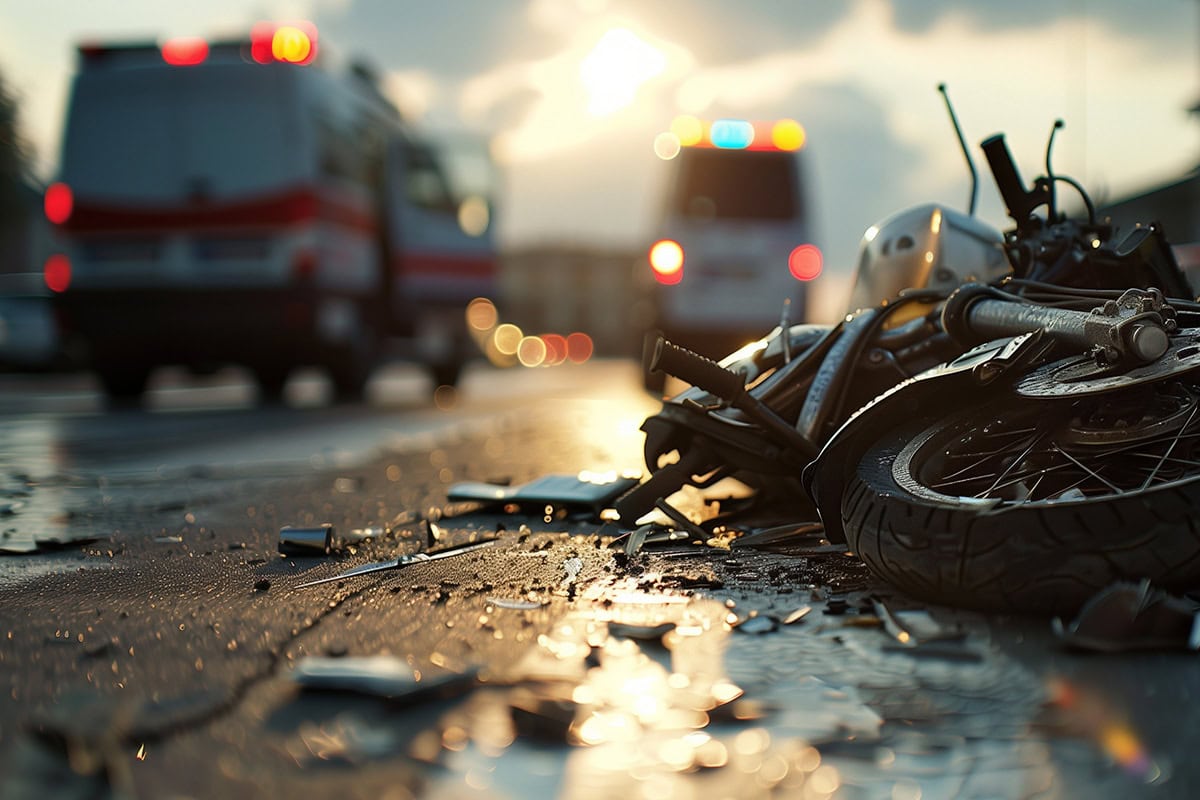
Motorcycle accidents aren’t like regular fender-benders. These cases involve severe injuries, complex liability issues, and insurance companies that often harbor unfair biases against motorcyclists. Without proper representation, you’re fighting an uphill battle against adjusters who assume riders are reckless risk-takers. Our New Mexico motorcycle accident lawyers know how to counter these prejudices and build cases that focus on the facts, not stereotypes.
Understanding Insurance Company Tactics
Insurance companies operate with one goal: paying as little as possible. When it comes to motorcycle accidents, they often try to blame the rider regardless of the actual facts. They’ll point to speed, inexperience, or reckless driving even when the evidence clearly shows another driver caused the crash. As your New Mexico motorcycle accident lawyer, we’ve seen every trick in their playbook and know how to fight back.

Understanding Statute of Limitations
In New Mexico, you generally have three years from the date of your accident to file a personal injury lawsuit. However, if government entities are involved, such as poorly maintained roads or defective traffic signals, you may have much shorter notice requirements. Miss these deadlines, and you lose your right to compensation forever, no matter how strong your case is.
What to Do After a Motorcycle Accident in New Mexico
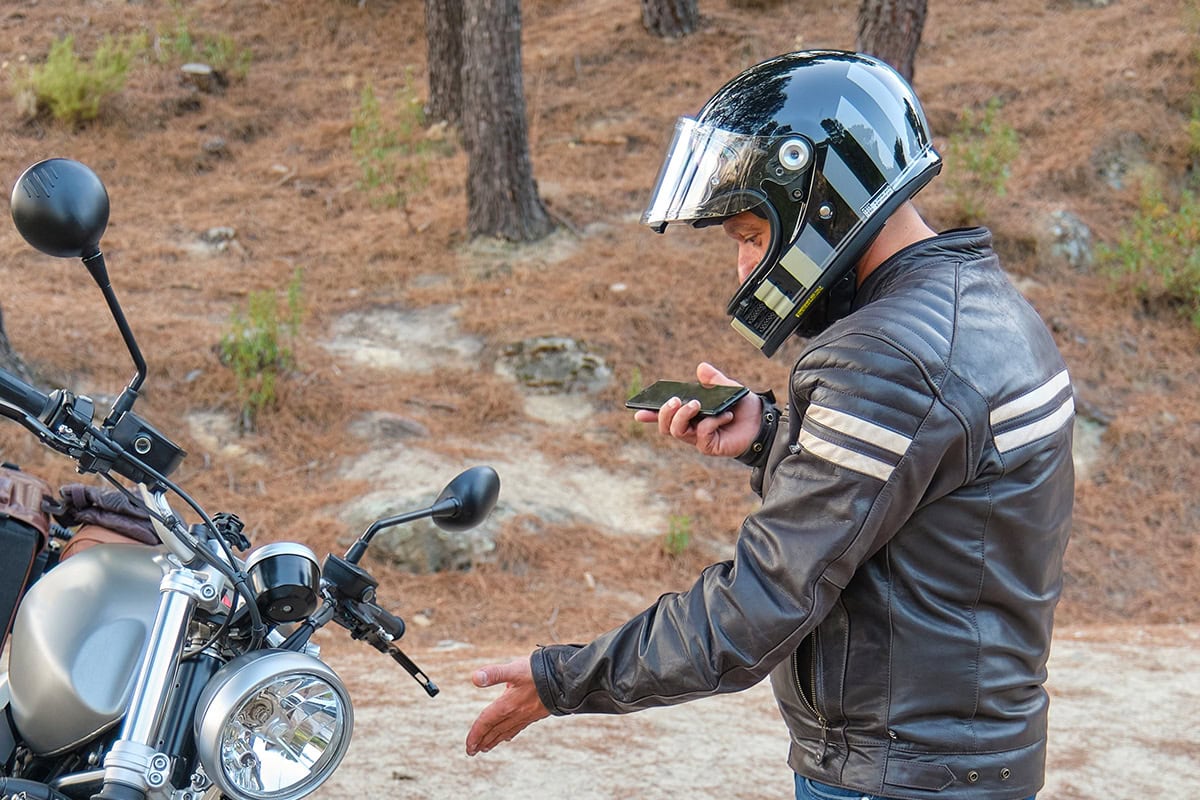
The actions you take immediately after a motorcycle accident can make or break your case.
See What Your Case Is WorthMove to a safe location away from traffic and check for injuries.
File an official police report. This is crucial for your case, especially since police may have their own biases about motorcycle accidents
See a doctor right away, as adrenaline can mask serious injuries.
Take photos & videos of injuries, vehicles, the scene, skid marks, road hazard, and collect witness information.
Collect contact and insurance details from all drivers and bystanders involved.
Notify your insurance company about the accident.
Keep your helmet, jacket, and other protective equipment as evidence of the impact and your safety-conscious approach
Save all medical bills, repair estimates, and accident-related documents.
Politely decline insurance adjuster requests for comment.
Refrain from posting your accident on social accounts.
The sooner we start working, the better we can protect your interests and counter unfair stereotypes

The Keller & Keller Injury Lawyers Approach:
New Mexico Injury Lawyers Who Fight to Win
From the moment you contact us, you’ll notice the difference in our approach. Our client-first philosophy means we take the time to understand not just the details of your accident but how it has affected your life, your work, your family, and your future in New Mexico. We clearly communicate every step of the process in plain language you can understand, no confusing legal jargon. This approach has earned us countless 5-star reviews from real New Mexico clients who’ve experienced the Keller & Keller difference firsthand.
We understand that being injured in an accident is stressful enough without having to chase down your lawyer for updates. That’s why we’ve built our practice around transparent, consistent communication.
When you hire us, you’ll have direct access to the New Mexico-based attorney handling your case as well as a dedicated paralegal who monitors its daily status. We keep you informed throughout every stage of your claim, explaining what’s happening, what to expect next, and how it affects your case.
Our 90+ years of experience isn’t just about longevity. It’s about results. Our attorneys have successfully handled thousands of cases in New Mexico and recovered millions and millions of dollars for our clients. We’ve gone toe-to-toe with the biggest insurance companies and won. Our courtroom experience means we’re always prepared to take your case to trial if that’s what it takes to secure fair compensation. This willingness to fight, and our track record of success, often motivates insurance companies to offer better settlements to avoid facing us in court.
The Motorcycle Accident Claim Process with Keller & Keller Injury Lawyers
When you hire us as your New Mexico motorcycle accident lawyer, we don’t waste time. Our investigation starts immediately because evidence disappears fast.
Types of Motorcycle Accidents We Handle in New Mexico
We handle all types of motorcycle accidents, and each one presents its own challenges.
A left-turn accident happens when a driver fails to see an oncoming motorcycle and turns directly into its path. The rider may have only a moment to brake or swerve, and the result can be deadly. The legal dispute often begins with a single sentence from the driver: “I never saw the bike.”
Does “I Never Saw Him” Excuse the Driver?
Generally, no. A driver turning left must yield to oncoming vehicles that are in the intersection or close enough to be an immediate hazard (NMSA 1978 § 66-7-329). The duty doesn’t shrink because the oncoming vehicle is narrow. A driver who glanced up the road and still missed a visible rider may have a hard time explaining what that glance was worth.
A single headlight can be harder to judge than a pair, and a slim profile may give a driver little sense of how quickly a bike is closing. That may explain the mistake, but an explanation is not the same as an excuse. Our overview of how New Mexico motorcycle accidents happen puts this error alongside other common driver failures.
Expect an Argument About the Rider’s Speed
Because the yield rule depends on how close the bike was, an insurer’s next move is often to say the rider was going too fast. The argument runs that the gap looked safe and the rider closed it by speeding. Whatever the posted limit, everyone on the road must control speed as needed to avoid a collision (NMSA 1978 § 66-7-301), so this claim needs a real answer.
If the argument partly succeeds, New Mexico’s pure comparative fault rule applies (Scott v. Rizzo, 1981-NMSC-021). A rider who carries some share of the blame generally isn’t shut out of a recovery, whatever the percentage. The award is reduced by that share instead. Our guide to recovering in New Mexico when you share the fault explains how that reduction works.
Rebuilding a Few Seconds at the Intersection
A rider’s actual speed is worth proving rather than leaving to an adjuster’s estimate. The turn itself can also be measured. Useful sources may include:
- Sight lines. Measurements from the turning driver’s position can show how far up the road the bike was visible, and whether a vehicle in the opposite turn lane, a hill crest or low sun blocked the view.
- Tire and scrape marks. Braking marks and the path of a sliding bike can help estimate speed before impact.
- Point of contact. Whether the bike struck the front fender or a rear door can suggest how far into the turn the driver had gone.
- Business video. Nearby cameras may show how long the car waited and when it began to move.
- Phone records. Activity at the moment of the turn may show where the driver’s attention was.
Physical proof carries extra weight in these cases, since a badly hurt rider may not remember the last seconds before impact.
A lane-change accident happens when a car suddenly moves over without checking its blind spots and strikes an unsuspecting rider who had the right-of-way. The motorcycle may be sitting just behind the driver’s door, in a space the mirrors alone can miss. A nudge that would only scuff another car’s paint can put a bike on the pavement.
What the Law Asks Before a Driver Moves Over
A vehicle must stay as nearly as practicable within one lane, and the driver can’t leave it without first making sure the move is safe (NMSA 1978 § 66-7-317). Put simply, the check comes before the move. A turn signal may help a rider see what’s coming, but the statute’s wording points to confirming that the move is safe, not merely announcing it.
Many of these crashes come down to a look that never happened. Our post on why mirror checks matter around motorcycles describes how a skipped glance can turn into a sideswipe. If a commercial truck moved into your lane, see our semi-truck accident page.
When the Car Never Touches the Bike
Some riders go down without any contact at all. A car drifts over, the rider brakes hard or swerves toward the shoulder, and the bike slides out while the car carries on. The driver may not even know what happened behind them.
That leaves a harder proof problem, because there is no dent or paint transfer to link the car to the crash. Witnesses and video matter more here than in almost any other motorcycle case. A driver in the next lane, or a dash camera in the vehicle behind, may be the only record of why the rider left the lane.
Could Your Lane Position Be Used Against You?
Riders often shift within a lane to avoid debris, gusts or a driver’s blind spot. An insurer may describe that as weaving, or claim the bike came out of nowhere. If you were moving between lines of traffic at the time, expect that to come up as well, and how much it matters may depend on the facts. These details can help show where the bike really was:
- Scrape height. Marks on a saddlebag, foot peg or fairing can be compared with marks on the car’s door or quarter panel.
- Direction of the marks. Scrapes can suggest which vehicle was moving toward the other at contact.
- Helmet camera footage. Many riders record their trips, and that video may show the car’s movement and whether a signal was on.
- Resting positions. Where the bike and rider stopped can help show which lane the contact occurred in.
Early photographs of both vehicles are worth having, since a car with light damage may be repaired long before anyone compares it with the bike.
A motorcycle rear-end collision happens when a driver doesn’t see a stopped bike at an intersection and runs into it from behind. The impact can throw the rider into cross traffic, often with devastating results. For a rider, the first hit may be only the start of the injury.
Stopped at a Light With Nowhere to Go
A rider waiting at a red light has very little around them. There is no rear bumper or trunk to absorb a hit, and a single brake light is a small thing for an inattentive driver to notice. A driver rolling toward the line may simply read the lane as empty.
New Mexico drivers may not follow more closely than is reasonable and prudent (NMSA 1978 § 66-7-318). The state’s texting ban also applies while a driver is temporarily stopped in traffic, apart from summoning emergency help (NMSA 1978 § 66-7-374). That detail can matter at a light, where a driver may look down, then creep forward without looking up. Our post on distracted driving accidents in New Mexico covers the habits behind this kind of crash.
Two Impacts and Two Drivers
When a rider lands in the cross street, a second vehicle may be the one that does the most harm. That can leave two drivers with very different stories. One didn’t stop in time, and the other may have had a green light and no chance to avoid a person suddenly in the road.
In most negligence cases, each defendant generally pays only the share of damages matching its own percentage of fault, and fault can be assigned to people who aren’t in the lawsuit (NMSA 1978 § 41-3A-1). In a rider’s case, that makes it important to know what each impact did. A claim aimed at only one driver may leave part of the loss unaccounted for, depending on how a jury divides responsibility.
Matching Each Injury to the Right Impact
Doctors treat the whole person, not each collision, so the link between an injury and a particular impact often has to be built from several sources:
- Riding gear. Scuffs and tears on a helmet, jacket or boots can show how the rider landed and where a second vehicle made contact. The gear is worth keeping as it is, without cleaning or repair.
- Emergency records. Early notes from paramedics and the emergency room may describe what the rider reported before memory faded.
- Resting positions. The distance between the bike and the rider can suggest how far the first impact carried each of them.
- Cross-street video. Footage from a nearby business may show the second impact, which nobody at the back of the line would have seen.
The injuries riders can suffer in New Mexico crashes often involve several parts of the body at once, which is one more reason to document the sequence early.
A motorcycle head-on collision happens when a driver crosses the center line or enters the roadway improperly and meets a rider coming the other way. These can be catastrophic accidents, since nothing stands between the rider and the force of both vehicles’ speed. There may be no time to do anything but brake.
How a Driver Ends Up in a Rider’s Path
The mountain and desert routes that draw riders across New Mexico are often two-lane roads with long curves. A driver may cut a bend, drift wide coming out of one, or misjudge a pass on a straight stretch of US 285. Others pull out of a side road or driveway into the rider’s lane.
Divided highways have their own version of this problem. Our post on wrong-way crashes on I-25 describes what can happen when a driver enters a ramp in the wrong direction, and a rider has less margin than anyone in that situation.
Will Not Wearing a Helmet Hurt My Claim?
New Mexico requires riders and passengers under 18 to wear an approved helmet. Failing to wear one as that section requires is not contributory negligence (NMSA 1978 § 66-7-356). In plain terms, that means the law doesn’t treat it as the young rider’s own carelessness in the case.
Adult riders are a different question. The statute speaks only to the helmet it requires, so it doesn’t settle how an adult’s choice would be treated, and an insurer may still raise the issue. Our guide to New Mexico’s motorcycle helmet law explains who the requirement covers.
When helmet use is raised, medical evidence often becomes the focus, because a helmet protects only part of the body. A broken pelvis or chest injury has little to do with what the rider had on their head.
Proving Which Side of the Line
A driver who survives a head-on crash may say the rider drifted over. Physical evidence often settles that better than either account:
- Point of impact. Pavement scars and fluid marks may show where the vehicles met in relation to the center line.
- Bike and rider paths. Because a motorcycle carries so little weight compared with a car, it may be thrown back along its own path, and the direction can help confirm the angle.
- Curve geometry. Lane width, sight distance and the marks through a bend can show which vehicle ran wide.
If a rider didn’t survive, see our wrongful death page.
A motorcycle side-impact accident typically happens at an intersection, when a driver runs a red light or stop sign and strikes a rider crossing their path. A motorcycle gives little protection from side impacts, since there is no door or frame between the vehicle and the rider’s leg. The bike may also come down on top of the person riding it.
Why the Legs and Hips Often Take the Force
A car’s bumper tends to meet a rider at about knee or thigh height. Injuries may include crushed lower legs, broken knees and hips, and pelvic fractures. Being pinned under a hot bike or dragged along the road can add burns and deep abrasions.
Recovery from these injuries can take a long time, with surgeries that aren’t known at the start. That matters because an early offer may come before anyone can say whether a rider will walk normally or return to physical work. Our post on questions to ask before settling a motorcycle claim looks at that timing, and keeping an injury journal can help record what a long recovery costs you.
Finding Out Who Really Had the Right to Go
A rider knocked unconscious can’t answer the driver who says the light was green or that they came to a full stop. Other sources may have to speak for the rider:
- Vehicle data. Many passenger vehicles carry an Event Data Recorder (EDR), though federal rules set standards for those recorders without requiring one (49 CFR 563). Where one exists, it may show whether the driver braked before impact.
- Signal records. Timing information for a signal can be compared with a witness’s account of what each direction was showing.
- A rural stop sign. On an open road, the questions may be whether the sign was visible and whether anything suggests the driver slowed at all.
- Other riders. People riding in a group may have seen the car enter the intersection, and some of them may have been recording.
Our post on how black box data can help in a serious crash case explains more about that evidence. Data can be lost if the car is repaired or sold, so timing can matter.
“You Laid the Bike Down on Your Own”
Sometimes a rider sees the car coming, brakes hard and goes down before any contact, or slides into the vehicle on the bike’s side. An insurer may argue that the rider lost control and the driver had little to do with the crash.
The answer usually lies in the timing. A car pulling across a rider’s path can leave only a moment to react, and hard braking may be a normal response, depending on the facts. Tire marks and the location of the slide can help show that the rider was reacting to the car, not to a mistake of their own.
Highway motorcycle accidents are high-speed crashes on New Mexico’s interstates and highways, often involving multiple vehicles and catastrophic injuries. A rider who loses the bike at those speeds has no shell around them and may end up in a live lane. With a statewide maximum of 75 mph (NMSA 1978 § 66-7-301), traffic behind may reach that spot within seconds.
Road Debris and the Sudden Loss of Control
Something a car can straddle may take down a motorcycle. A strip of blown tire, a ladder or a loose bumper on I-40 can hit the front wheel with no warning, and a rider has less room to dodge it at speed. The first question is often where the object came from.
Tracing it can be hard, because the vehicle that dropped it may be long gone. Video from the vehicles nearby, a witness who saw something fall, and the object itself may all point to a source. If a commercial truck lost the load, see our semi-truck accident page.
When the Following Traffic Hits a Downed Rider
A rider’s worst injuries on a highway may come after the first impact. A rider who is down in the lane can be struck by a vehicle that had seconds to respond. Drivers must keep a reasonable and prudent distance from the vehicle ahead (NMSA 1978 § 66-7-318), and that rule can be central when a car had no room to stop or swerve.
These crashes also tend to scatter. Several drivers may stop, leave or never realize they were involved. Some useful questions are:
- How long was the rider in the lane? Calls to 911 and vehicle positions may help answer this.
- Which vehicle touched the rider? Marks on a car’s undercarriage or bumper can sometimes confirm contact.
- Was there any warning? Hazard lights from stopped drivers or slowing traffic may show that a later driver had time to react.
- Who left the scene? A vehicle missing from the crash report may still appear on nearby traffic video.
Merges, Ramps and Heavy Traffic
Not every highway crash happens on an open stretch. Merging traffic can be especially risky for a rider, who may sit in a blind spot while cars jostle for position. Our post on the stacked interchanges at Albuquerque’s Big I describes how heavily that junction of I-25 and I-40 is traveled.
Speed is often part of these claims from every direction. Our post on speed-related accidents in New Mexico explains why reaction time shrinks as speed climbs. An insurer may try to apply that point to the rider as well, so an accurate estimate of everyone’s speed can matter.
Travelers add another complication on these routes. The driver at fault may live in another state and carry an out-of-state policy, which can make the first steps of identifying coverage slower.
Construction zones are particularly dangerous for motorcyclists, because reduced visibility and changing traffic patterns create hazards a car may barely notice. A patch of loose gravel or a sudden pavement edge can take a two-wheeled vehicle down. That often makes the road surface, and not only another driver, the center of the claim.
Surfaces That Can Throw a Bike
Our post on the dangers motorcyclists face in New Mexico construction zones describes how even minor obstacles can cost a rider traction. Conditions that may matter include:
- Loose gravel and millings. Stones left on a travel lane or across a curve can make the front tire slide.
- Lane-edge drop-offs. A ridge running along the lane can catch a tire and steer the bike off line.
- Grooved pavement. Milled surfaces can make a motorcycle wander.
- Steel plates. Plates over a trench may be slick, and the edges can be raised.
- Temporary markings. Old lines left beside new ones can send a rider toward the wrong path, particularly after dark.
Was There Enough Warning for a Rider?
Road users must obey signs, signals and flaggers in construction zones, and the authority closing or narrowing a road must post warnings (NMSA 1978 § 66-7-303.1). A generic “road work ahead” sign may not tell a rider that the pavement a few hundred yards on is gone. The sign’s placement and wording, and how much distance it gave, can all be examined.
Drivers remain a major part of the picture. Traffic bunched up by a lane closure can stop suddenly, and on a shifting route such as the I-25 corridor construction near Albuquerque, the layout on the day of the crash may be different from the one a regular rider remembers.
Contractor, Public Agency or Both?
A claim involving the road itself may look at both the company doing the work and the public body that owns the road. Fault can be divided among them and any driver who played a part, including people who aren’t in the lawsuit (NMSA 1978 § 41-3A-1).
Public bodies are treated differently. The Tort Claims Act waives immunity for negligent road construction and later maintenance, though not for a defect in plan or design (NMSA 1978 § 41-4-11). So a ridge left unmarked by a crew may stand on different footing from an argument that the road should have been laid out another way. Written notice to the public body is also generally due within 90 days (NMSA 1978 § 41-4-16), which can come quickly during a hard recovery.
Road surfaces in a work zone can change overnight, so a photo taken a week later may show a different road. Pictures from the day of the crash, along with the bike’s tires and any gravel marks on the gear, can be especially valuable.
A motorcycle hit-and-run happens when a driver flees after striking a rider, and it can require specialized investigation to identify the responsible party. A rider left in the road usually can’t read a plate or take a photo. The person with the most reason to remember the car may be the one least able to.
Clues a Motorcycle Can Hold
New Mexico law requires a driver to stop and remain at the scene of a crash causing injury or death (NMSA 1978 § 66-7-201). When one doesn’t, the search often starts with the bike. Unlike a car with a large painted surface, a motorcycle carries its clues in small places, and those can be lost once it is towed or repaired:
- Fairings, tank and saddlebags. Paint transfer on these parts may suggest the color of the other vehicle.
- Riding gear. A helmet, jacket or boot may carry paint or scrape marks too.
- Helmet or handlebar cameras. Footage may capture a car’s shape, or part of a plate, in the seconds before impact.
- Others in the group. Riding partners may have seen the car leave, and sometimes followed it for a distance.
- Items left at the scene. Broken pieces of a mirror or light can sometimes be tied to a model.
The bike is worth keeping unrepaired until someone has looked at it closely. Our post on the Albuquerque hit-and-run process covers where a local search may lead.
Which Policy Responds When the Driver Is Gone?
With no driver to claim against, uninsured motorist (UM) coverage is often the main route. Riders may assume that coverage is the same across their vehicles, but each policy needs its own look. A motorcycle may be insured separately from the household cars, with limits or options chosen when the bike was bought.
Under New Mexico law, liability policies for vehicles here must include UM coverage unless the named insured rejects it (NMSA 1978 § 66-5-301). A rejection generally has to be in writing and made part of the policy delivered to you. Our post on the steps insurers must follow when UM coverage is rejected sets out what can go wrong, and a defect may mean coverage equal to the liability limits, depending on the facts.
Separate premiums can matter here too. Someone paying a separate full UM premium for each vehicle may be able to stack those coverages, though that turns on the evidence and the disclosures the insurer made. Our guide to common motorcycle insurance myths clears up other assumptions riders tend to make.
Forced Off the Road, but Never Touched
Riders are especially exposed to a driver who cuts them off and keeps going. New Mexico public policy doesn’t allow UM coverage to be conditioned on physical contact with an unknown vehicle. The rider must still prove that an unknown driver caused the crash, so a witness or video can make all the difference.
A mechanical failure accident happens when defective parts or poor maintenance cause a crash, potentially involving manufacturer liability claims. A brake that fades, a tire that comes apart or a steering part that lets go can leave a rider with no warning. In these cases, the main witness may be the motorcycle itself.
Bad Part or Bad Repair?
The first question is why the part failed, because that decides who may be responsible. A flaw built into a part points toward the companies that made and sold it. A brake line installed wrong, a wheel not torqued properly or a chain adjusted badly points toward whoever last worked on the bike.
New Mexico adopted strict products liability, which reaches those in the business of selling or leasing a product, including manufacturers, retailers and commercial lessors (Stang v. Hertz Corp., 1972-NMSC-031). That can matter for a rented motorcycle as well as a new one. Our New Mexico product liability page explains those claims in more detail.
Those who could be involved in a motorcycle case may include:
- The bike’s manufacturer. Questions may center on brakes, wheels, forks, or electronic controls.
- A parts or tire maker. An aftermarket component can fail on its own, apart from the bike.
- A dealer. Dealers may be involved through a sale, or through service work done in the shop.
- An independent mechanic. A shop’s repair and inspection records may show what was done, and when.
- A rental business. Companies that rent motorcycles may be asked how the bike was maintained.
A private sale is different, since strict liability doesn’t reach a casual seller. An insurer may also point to the rider’s own upkeep, and a rider’s negligence can reduce a product recovery, so service records matter on both sides. Our spring maintenance guide for Albuquerque riders lists the checks that usually come up.
Do Recalls Help Prove the Case?
A manufacturer that learns of a safety-related defect, and decides so in good faith, must notify the National Highway Traffic Safety Administration (NHTSA) along with owners, purchasers and dealers (49 USC 30118). Remedies are generally free of charge, subject to limits based on the age of the vehicle or tire (49 USC 30120).
A recall for the same part may be useful, but it doesn’t prove that this failure caused this crash. The lack of a recall doesn’t end the inquiry either. Tires carry a 13-symbol identification number, which can help trace a failed tire to its maker and production.
Why the Motorcycle Has to Be Saved
A wrecked bike is often sold for salvage quickly once an insurer totals it. If that happens, the failed part may go with it. Keeping the motorcycle, the broken pieces and the service paperwork intact lets an engineer examine them, and testing that could alter a part generally needs to be handled with care for everyone involved.
The Hard Truth
New Mexico Motorcycle Accident Statistics That Demand Action
The numbers don’t lie, New Mexico has a serious motorcycle safety problem, and here’s what gets us fired up as your motorcycle accident lawyer.
New Mexico recorded 54 motorcycle fatalities in 2022, representing a 17% increase from 2020’s 46 deaths. With a motorcycle fatality rate of 95 deaths per 100,000 registered motorcycles, New Mexico substantially exceeds the national average of approximately 65 per 100,000. These aren’t just statistics. They represent riders and families whose lives were cut short by preventable accidents.
Per vehicle mile traveled, motorcyclists are 28 times more likely to die and 4 times more likely to be injured than passenger car occupants. In New Mexico, 61.1% of fatally injured motorcyclists weren’t wearing helmets (33 of 54 deaths in 2022), directly contributing to the severity of injuries and deaths that could have been prevented.
New Mexico ranks 7th worst nationwide for traffic deaths at 20.7 per 100,000 population, compared to the national average of 12.2. The state ranks 2nd highest nationally for per capita fatal injury costs at $11,274, with motor vehicle crashes, including motorcycle accidents, resulting in more than $4 billion in annual costs to New Mexico.
Leading Causes of New Mexico Motorcycle Accidents
Most motorcycle accidents are preventable, which is what makes them so maddening. Understanding these causes helps us build stronger cases as your New Mexico motorcycle accident lawyer.
Motorcycle Accident Injuries We Represent
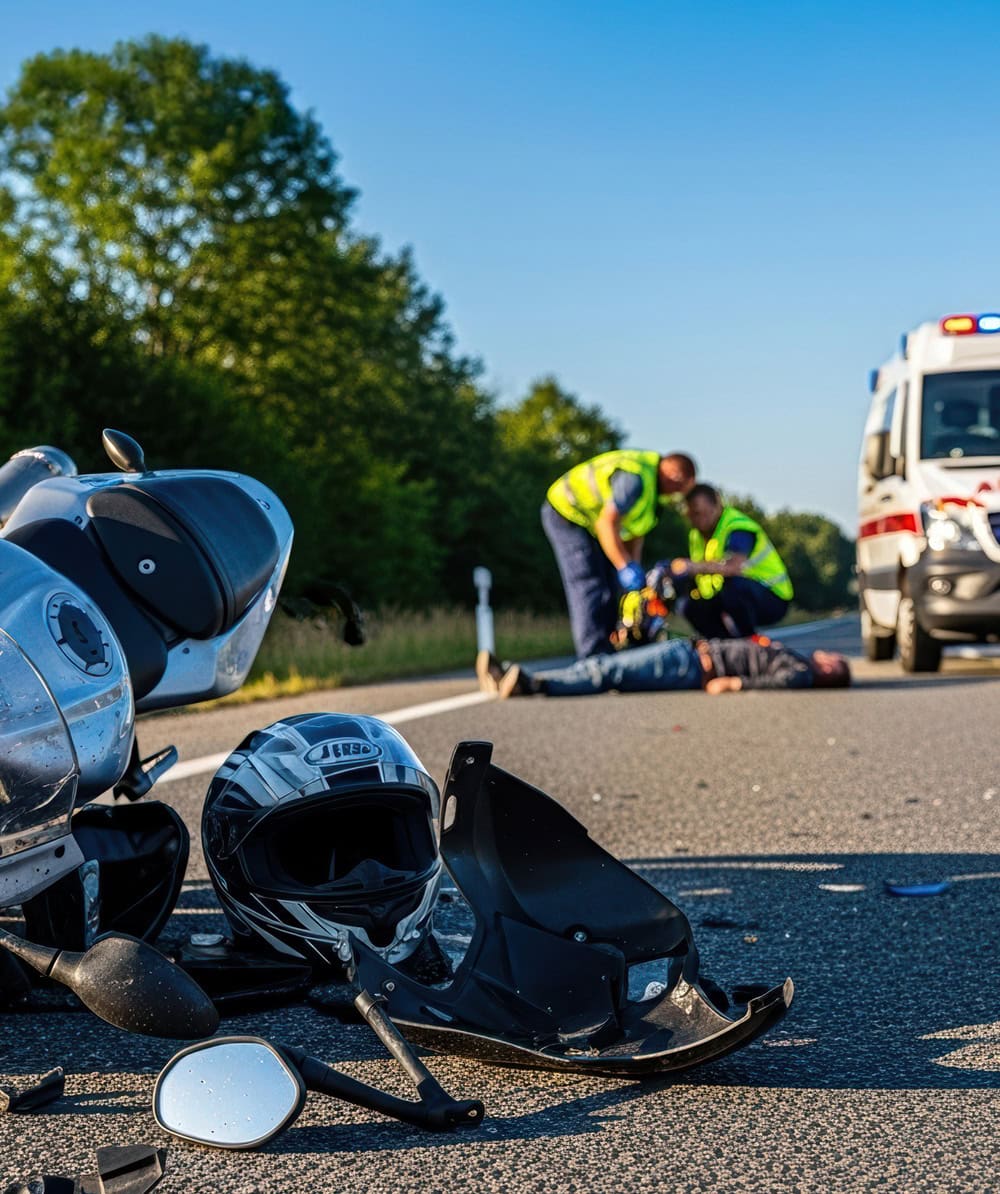
Motorcycle accidents don’t cause minor bumps and bruises. They cause life-changing injuries that turn families upside down.
Compensation Available for New Mexico Motorcycle Accident Victims
If you’ve been injured in a motorcycle accident due to someone else’s negligence, you may be entitled to various types of compensation.
Economic Damages
These are quantifiable financial losses, including:
- Medical expenses (past, current, and future)
- Lost wages and reduced earning capacity
- Property damage to your motorcycle and gear
- Rehabilitation and therapy costs
- Home modification expenses
- In-home care costs
Non-Economic Damages
These more subjective damages compensate for:
- Pain and suffering
- Emotional distress
- Loss of enjoyment of life
- Disfigurement and scarring from road rash
- Loss of consortium (impact on marital relationship)
Punitive Damages
In rare cases involving extreme recklessness or intentional misconduct, New Mexico courts may award punitive damages designed to punish the wrongdoer and deter similar behavior.
Wrongful Death Damages
When motorcycle accidents result in fatalities, surviving family members may recover compensation for funeral expenses, loss of financial support, loss of companionship, and the pain and suffering of their loved one before death.
How Keller & Keller Injury Lawyers Investigates New Mexico Motorcycle Accident Cases
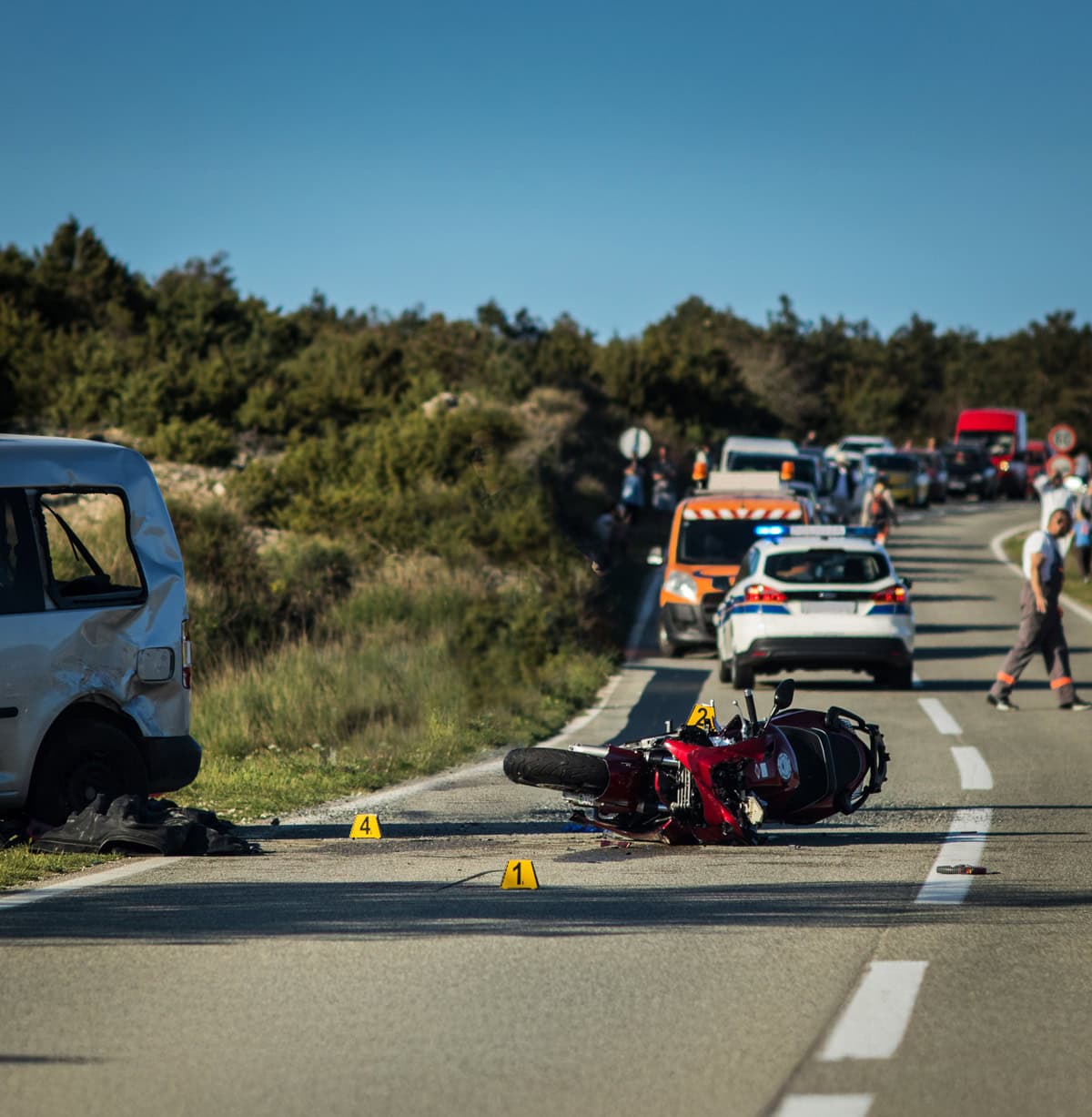
Our meticulous approach to evidence gathering builds the strongest possible foundation for your claim:
Setting the New Mexico Standard
Cutting-Edge Investigation Technology
While other law firms rely on outdated methods, Keller & Keller leverages cutting-edge technology to build stronger cases and win bigger settlements for our New Mexico motorcycle accident clients.
Professional drone documentation
Captures accident scenes from angles impossible with traditional methods, providing evidence of sight lines, road conditions, and motorcycle visibility factors.
Advanced voice-over-IP networks
Enables real-time collaboration between attorneys, investigators, and expert witnesses, ensuring no detail is overlooked.
Forensic data extraction
Our technicians examine motorcycle damage patterns, helmet impacts, and protective gear to reconstruct the sequence of events.
Cloud-based case management
Provides you 24/7 access to your case information and status updates
Rapid-response investigation
Allow us to conduct on-site evidence gathering within hours of an accident, crucial for preserving perishable evidence in motorcycle cases
Service Areas
New Mexico
Cities We Serve
What Sets Keller & Keller Injury Lawyers Apart
With so many law firms advertising their services, why choose Keller & Keller? The differences are clear.
Zero Fee Guarantee
We believe everyone deserves quality legal representation, regardless of their financial situation. That’s why we work on a contingency basis. You pay absolutely nothing unless and until we win your case. No upfront costs, no hidden fees, no financial risk to you.
* Clients may owe court costs if they lose





No Fee Until We Win!
Get Started TodayDon’t Take Our Word For It!
See what our clients have to say about their experience with Keller & Keller as their motorcycle accident lawyer.
View More Testimonials
Take Action Now
Your New Mexico Motorcycle Accident Claim Starts Here
Free Consultation
We’ll evaluate your case honestly and explain your options in plain English. We’ll come to you, whether you’re at home, in the hospital, or wherever is convenient.
We Fight
Our experienced team fights to investigate thoroughly, deal with insurance companies, and handle all the legal complexities while you focus on getting better.
You Recover
Focus on healing while we handle the rest. We’ll fight for you like we’d fight for our own family, because that’s exactly how we see you.
Zero Fee Guarantee
We believe everyone deserves quality legal representation, regardless of their financial situation. That’s why we work on a contingency basis. You pay absolutely nothing unless and until we win your case. No upfront costs, no hidden fees, no financial risk to you.
* Clients may owe court costs if they lose

The Keller Tradition:
Bringing Nearly a Century of Excellence to New Mexico
Frequently Asked Questions
Have Questions? We’re here to help.
Injured and not sure what to do next?
We’ll help guide you through everything you need to know
Albuquerque, NM Office
6301 Indian School Rd NE #920 Albuquerque, NM 87110
(505) 938-2300