

New Mexico Semi Truck Accident Lawyers
Keller & Keller Injury Lawyers’ Winning Approach
Free Case EvaluationInjured in a Semi Truck Accident?
Get started with a free case evaluation. No Fee Until We Win.
100% Free Evaluation
Provide a few details and our team will handle the rest.
"*" indicates required fields

“As a busy mom of three, I’m so grateful I didn’t have to face the legal battle alone. Thank you, Keller & Keller Injury Lawyers.”
Kelly


When you’ve been injured in a semi truck accident, you need more than just legal representation. You need a battle-tested sword and shield fighting for your rights.
Keller & Keller has been maximizing client settlements and delivering justice in New Mexico since 1936, with over 90 years of experience navigating complex commercial truck accident claims and over a billion dollars recovered for our clients. Our Albuquerque truck accident lawyers understand that suffering an injury in a collision with an 80,000-pound commercial vehicle can change your life in an instant. We offer a Zero Fee Guarantee, which means you pay absolutely nothing unless and until we win your case, no upfront costs, no hidden fees, no financial risk to you.
Why You Need a Semi Truck Lawyer After a Crash
Semi truck accidents aren’t just bigger car accidents. They’re entirely different legal battles requiring specialized knowledge and resources. The trucking industry operates under complex federal regulations overseen by the Federal Motor Carrier Safety Administration (FMCSA), creating layers of legal complexity that most people aren’t equipped to handle alone.

Navigating Complex Legal Claims

Understanding Insurance Company Tactics

Understanding Statute of Limitations
Navigating Complex
Legal Claims
Commercial truck drivers and trucking companies must comply with strict federal regulations, creating potential liability issues that don’t exist in typical car accidents. When you’re injured by a commercial truck, you’re not just facing an individual driver. You’re going up against well-funded corporations with experienced legal teams whose job is to minimize payouts.
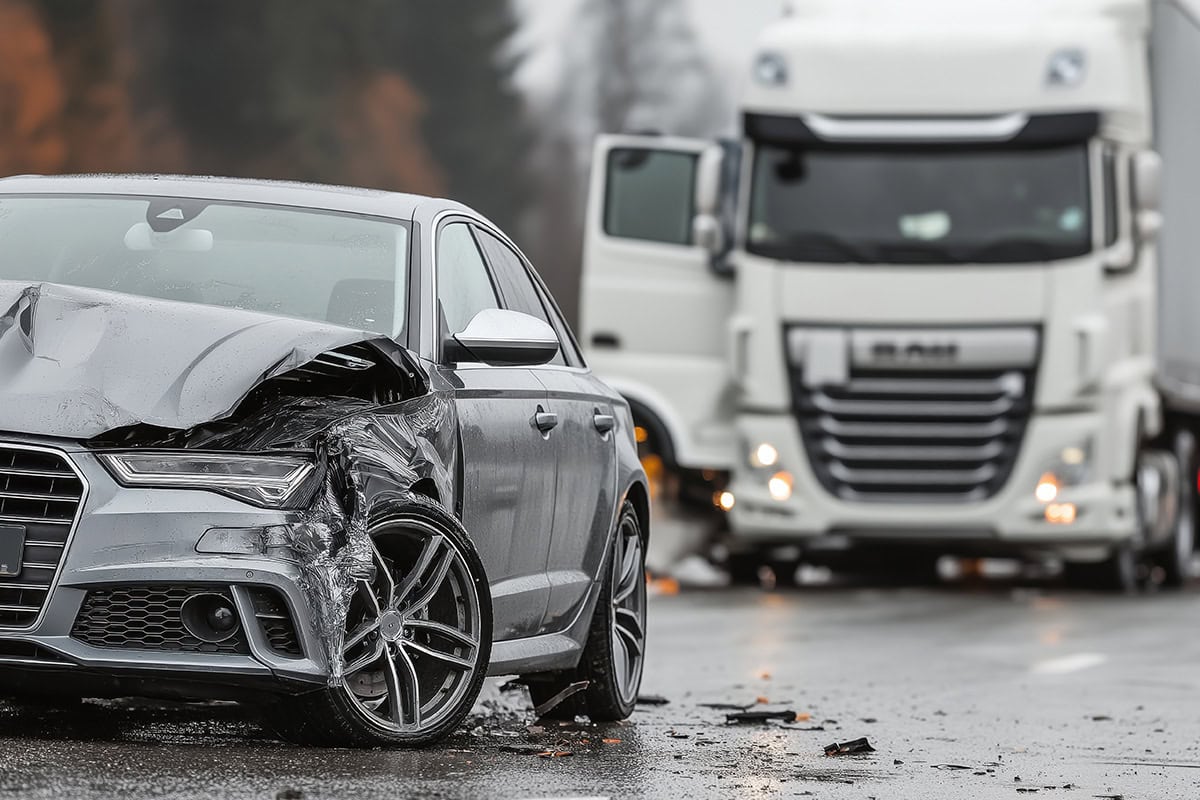
Understanding Insurance Company Tactics
Trucking companies typically carry insurance policies ranging from $750,000 to $5 million, far higher than standard auto insurance, meaning insurance companies actually fight harder to avoid paying fair compensation because they have more at stake. They rush to settle before you understand your full injuries, dispute clear liability, question injury severity, and delay claims hoping you’ll accept lowball offers or give up entirely.

Understanding Statute of Limitations
In New Mexico, you have three years from the date of your truck accident to file a personal injury claim. Missing these deadlines means forfeiting your right to compensation permanently. Additionally, crucial evidence disappears quickly, skid marks fade, surveillance footage gets deleted, and witness memories become less reliable.

What to Do After a Semi Truck Accident
The actions you take immediately after a truck accident in New Mexico can make or break your case.
See What Your Case Is WorthMove to a safe location away from traffic and check for injuries.
Immediately file an official police report, even for minor accidents.
See a doctor right away, as adrenaline can mask serious injuries.
Take photos & videos of injuries, vehicles, the scene, skid marks, road hazard, and collect witness information.
Collect contact and insurance details from all drivers and parties involved: drivers, passengers, and witnesses.
Notify your insurance company about the accident.
Save all medical bills, repair estimates, and accident-related documents.
Politely decline insurance adjuster requests for comment.
Refrain from posting your accident on social accounts.
Early legal representation helps preserve evidence, meet deadlines, and prevent costly mistakes while dealing with insurance companies.

The Keller & Keller Injury Lawyers Approach:
New Mexico Injury Lawyers Who Fight to Win
From the moment you contact us, you’ll notice the difference in our approach. Our client-first philosophy means we take the time to understand not just the details of your accident but how it has affected your life, your work, your family, and your future in New Mexico. We clearly communicate every step of the process in plain language you can understand, no confusing legal jargon. This approach has earned us countless 5-star reviews from real New Mexico clients who’ve experienced the Keller & Keller difference firsthand.
We understand that being injured in an accident is stressful enough without having to chase down your lawyer for updates. That’s why we’ve built our practice around transparent, consistent communication.
When you hire us, you’ll have direct access to the New Mexico-based attorney handling your case as well as a dedicated paralegal who monitors its daily status. We keep you informed throughout every stage of your claim, explaining what’s happening, what to expect next, and how it affects your case.
Our 90+ years of experience isn’t just about longevity. It’s about results. Our attorneys have successfully handled thousands of cases in New Mexico and recovered millions and millions of dollars for our clients. We’ve gone toe-to-toe with the biggest insurance companies and won. Our courtroom experience means we’re always prepared to take your case to trial if that’s what it takes to secure fair compensation. This willingness to fight, and our track record of success, often motivates insurance companies to offer better settlements to avoid facing us in court.
The Semi Truck Accident Claim Process with Keller & Keller Injury Lawyers
When you hire us, we don’t waste time. Our investigation starts immediately because evidence disappears fast.
Types of Semi Truck Accidents We Handle
We handle all types of truck accidents, and each one presents its own challenges.
A jackknife happens when a tractor-trailer folds at its hitch and the trailer swings around, often blocking multiple lanes. It is usually tied to sudden braking or taking a turn too fast. On I-40 or I-25, that sweeping trailer can leave nearby drivers with no open lane and almost no warning.
Why Does the Trailer Swing Around?
A tractor and trailer pivot at a single coupling, so they can move in different directions. If the trailer’s tires lose grip while the tractor is slowing, the back of the rig may start to overtake the front. The usual triggers are specific enough to investigate one at a time:
- A panic stop. Hard braking may be the last link in the chain. The better question is why the driver needed to brake that hard, which can lead back to speed, a phone or too little room ahead.
- A curve or ramp taken too fast. New Mexico drivers must control their speed as needed to avoid a collision, whatever the posted limit says (NMSA 1978 § 66-7-301).
- Brakes that don’t work evenly. Poorly adjusted or worn brakes may lock some wheels before others.
- A light or empty trailer. With less weight on its tires, a trailer may have less grip on a wet or icy surface.
Was This a Driving Mistake or a Maintenance Problem?
Often a jackknife looks like plain driver error until someone reads the shop records. Motor carriers must systematically inspect, repair and maintain the vehicles under their control. They must also keep those records for one year, and for six months after a vehicle leaves their control (49 CFR 396.3).
Those files may show worn brake parts, a repair put off for another trip, or the same problem written up more than once. The tractor and the trailer may belong to different companies, and an outside shop may have done the last brake job. Each of those relationships can change who is looked at. Our overview of the causes of New Mexico semi-truck crashes shows how often these questions overlap.
What the Truck’s Computer May Show
Trucks don’t record crash data the way cars do. The federal Event Data Recorder (EDR) rule covers light vehicles and doesn’t reach tractor-trailers (49 CFR Part 563). Crash-related information on a heavy truck is more likely to sit in its engine control module (ECM) and other onboard computers, which may log speed, braking and sudden deceleration.
What is stored varies by manufacturer and equipment, as our comparison of truck and car black boxes in a New Mexico crash case explains. A truck that goes back into service may lose that information, which is why a preservation letter for truck black box data is often an early step. Curved tire marks at the scene can then be compared with what the computer shows about the moment the rig began to fold.
An underride accident happens when a car slides under a truck trailer, either at the rear or from the side. These crashes are often fatal because the car can get trapped beneath the higher trailer. The trailer bed may pass over the hood and reach the windshield and the people behind it.
What Is a Rear Impact Guard Supposed to Do?
The steel bar hanging below the back of a trailer is meant to stop a car before it travels underneath. Trailers and semitrailers of 10,000 pounds gross vehicle weight rating or more, built on or after January 26, 1998, generally must carry a guard meeting Federal Motor Vehicle Safety Standard 223 (49 CFR 393.86). The bottom edge may sit no more than 22 inches above the ground. Older vehicles have a 30-inch standard, and exceptions include pole trailers and certain low chassis, special purpose and wheels-back vehicles.
The National Highway Traffic Safety Administration (NHTSA) upgraded these standards in 2022. New guards must now protect people in compact and subcompact cars striking a trailer’s rear at 35 mph, with compliance required from July 15, 2024. The date a trailer was built may therefore decide which standard applies. A missing certification label is no longer a federal violation by itself, since that marking requirement was rescinded in 2026, so attention belongs on the guard’s height, strength and condition.
What About the Side of a Trailer?
NHTSA published an advance notice of proposed rulemaking on side underride guards in 2023, and that notice doesn’t require anyone to install them. A side underride case therefore tends to focus on why the trailer was across the road in the first place. A tractor-trailer turning left must yield to oncoming vehicles close enough to be an immediate hazard (NMSA 1978 § 66-7-329). Other common settings include a truck backing into a driveway or pulling slowly across a dark rural highway.
At night, a trailer’s lights and reflective markings may be central. A driver may simply not recognize a long, dark trailer as a solid object in time.
“But Your Car Hit the Truck”
Expect to hear this argument, since the smaller vehicle often appears to have done the striking. New Mexico follows pure comparative fault, so a driver’s own share of blame reduces a recovery without barring it, whatever the percentage (Scott v. Rizzo, 1981-NMSC-021). A stopped truck with dirty lights, a bent guard or no warning devices can shift that comparison.
Responsibility may also reach past the driver:
- The carrier. Bent, rusted or badly repaired guards may show up in inspection and maintenance records.
- The trailer maker. If the guard’s design is in question, see our New Mexico product liability page.
- A prior repair shop. A guard that was cut, moved or welded may no longer perform as built.
The trailer itself is often the key exhibit, so its guard should be photographed and measured before anyone repairs it. Crush damage to the car and the height of the first contact point can help show how far the vehicle traveled underneath. People who survive may face the catastrophic injuries these truck crashes can cause. Families who lost someone in one of these crashes can read about New Mexico wrongful death claims.
A rollover happens when a truck tips onto its side or roof, usually because of improper cargo loading, speed or a mechanical failure. A semi’s high center of gravity makes these crashes especially dangerous. A falling rig can land on a car in the next lane, spill its load and shut down a highway.
How Can the Load Tip a Truck?
Freight stacked high or heavier on one side raises the point at which a truck wants to tip. If the load slides in a curve, the shift can arrive at the worst moment, with the rig already leaning. Tank trailers carry a related risk, because liquid can surge toward the outside of a turn.
Federal rules require commercial motor vehicles to be loaded and secured to prevent shifting that affects stability or maneuverability, as well as cargo leaking, spilling, blowing or falling (49 CFR 393.100). A rollover on a highway ramp may look like speeding, and speed may be part of it. The load, though, can explain why the same curve didn’t tip the last hundred trucks through it.
Who Touched the Cargo?
The person behind the wheel may never have seen the inside of a sealed trailer. That makes the paper trail for each load worth following, along with the roles below:
- The shipper or warehouse crew. Load plans, pallet records and photos may show how the freight was placed.
- The third-party loader. Some loads are handled by a separate company with its own procedures and training.
- The carrier. Scale tickets and bills of lading can show what the company knew about the weight it dispatched.
- The maintenance provider. Suspension and steering failures may point to skipped repairs, and truck tire blowouts in New Mexico can start a rollover on their own.
Our post on the causes of deadly New Mexico rollover crashes covers more of the common patterns. Inspecting the cargo itself matters too, because a wreck is often cleared fast and the load hauled away or sold.
When the Truck Is Carrying Fuel or Chemicals
A tanker rollover along US 285 or I-10 can add fire, fumes and spilled product to the crash. Placards help identify what was on board. Bulk packagings and vehicles containing hazardous materials generally must be placarded on each side and each end, with exceptions (49 CFR 172.504). For oilfield hauling, see our Permian Basin truck accident page.
Two more records can matter in these cases. A specification cargo tank with an overdue test or inspection generally may not be filled and offered for transport, or transported, until that test or inspection is completed (49 CFR 180.407). Insurance minimums are also higher for many hazardous loads, at $1,000,000 or $5,000,000 depending on the material, the quantity and the packaging (49 CFR 387.9). Any minimum says nothing about what a company actually carries.
A head-on collision with a semi-truck can be fatal for the people in the smaller vehicle. These crashes often occur when a fatigued driver crosses the center line, and a rig’s weight leaves a car very little protection. The legal questions usually center on how long that driver had been on the road and who kept them there.
How Long Can a Trucker Legally Drive?
Federal hours-of-service rules set the outer limits for property-carrying drivers (49 CFR 395.3). They generally reach commercial vehicles moving property or passengers in interstate commerce (49 CFR 390.3), and listed exceptions apply.
| Rule | General limit |
|---|---|
| Daily driving | 11 hours of driving after 10 consecutive hours off duty |
| Driving window | Driving must stop once 14 consecutive hours have passed since coming on duty |
| Break | A 30-minute interruption before driving past 8 hours of driving time |
| Weekly total | No driving after 60 on-duty hours in 7 days, or 70 in 8 days if the carrier runs every day |
Staying inside those numbers doesn’t end the inquiry. A driver may not operate while so impaired by fatigue or illness that driving is unsafe, and a carrier may not require or permit it (49 CFR 392.3). That second half matters, because it puts the company’s conduct in play as well as the driver’s.
Testing the Logbook Against Everything Else
Most carriers subject to these rules must use an electronic logging device (ELD) to record duty status, with listed exceptions, and generally keep those records and supporting documents for at least six months (49 CFR 395.8). The log alone may not settle anything. Fuel receipts, delivery appointments and dispatch messages can reveal time that never made it into the record. A gap between the log and those documents is often where the real timeline starts to appear.
Other records may explain a drift across the line:
- Post-crash testing. After a fatal crash, the employer generally must test a surviving driver for alcohol and controlled substances if the driver was performing safety-sensitive functions (49 CFR 382.303). Missing or late results can raise their own questions.
- Phone records. Texting and hand-held phone use are barred while driving a commercial vehicle, with an emergency exception (49 CFR 392.80, 392.82). Our post on distracted truckers on New Mexico highways covers that risk.
- The driver’s file. Carriers keep a qualification file for each driver during employment and for three years after, though some items may be removed sooner (49 CFR 391.51). Sleep apnea in truck drivers is one medical issue such a file may touch on.
When a Company’s Choices Are the Problem
Some delivery schedules can’t be met legally, and a dispatcher who knows that is making a decision. Punitive damages against a corporation generally need more than an employee’s mistake. Liability can come through a managerial agent, through authorizing or ratifying the conduct, or where employees’ conduct as a whole shows a culpable corporate mental state (Clay v. Ferrellgas, Inc., 1994-NMSC-080).
Those records can also show whether a fatigue problem was isolated or routine. Families who lost someone can turn to our wrongful death page.
A multi-vehicle pileup is a chain-reaction crash, and on New Mexico’s long highways it often follows a dust storm or a sudden change in the weather. Visibility drops, traffic slows unevenly, and vehicles start arriving faster than the ones ahead can clear. When a semi is in that line, its size can change the outcome for everyone around it.
What Changes When a Semi Is in the Line?
A loaded tractor-trailer needs far more road to stop than a car, and it can drive a line of smaller vehicles forward if it arrives at speed. That makes following distance the first thing to examine. New Mexico drivers may not follow more closely than is reasonable and prudent. Outside a business or residence district, a truck generally may not follow another truck within 300 feet, except when overtaking (NMSA 1978 § 66-7-318).
Trucks running close together on I-40 or I-10 may be a concern for that reason. Following too closely is also listed as a serious traffic violation for commercial driver’s license disqualification (49 CFR 383.51), so a driver’s earlier violations may be worth requesting. Our post on a deadly dust storm crash on I-10 in New Mexico shows how fast these events can grow.
If the Truck Company Blames Everyone Else
A carrier’s defense in a pileup may be that the crash started with someone else: a car that stopped in the lane, a driver who braked in the dust, an earlier wreck. Fault in New Mexico can be assigned to people who aren’t even in the lawsuit, and each defendant generally pays only its own share (NMSA 1978 § 41-3A-1). The longer that list of other names grows, the smaller the share a trucking company may be left paying.
One exception helps here. Joint and several liability still applies to those vicariously liable for one another, though only for the portion of liability attributed to them. Put simply, a carrier that answers for its driver’s conduct generally doesn’t get to treat that driver as a separate stranger. Our account of an I-40 pileup near Santa Rosa shows how these claims can develop.
Is There Enough Insurance for Everyone Hurt?
A truck policy is often the largest source of recovery in a pileup, and several families may be looking to it. The federal minimum for for-hire interstate carriers of nonhazardous property, with vehicles of 10,001 pounds or more, is $750,000 (49 CFR 387.9). That entry doesn’t cover every truck. It is a minimum, and it tells you nothing about what a given company has bought.
Identifying the right company takes some work, since the name on the door may not match the carrier whose authority the load moved under. Tractor and trailer may also be insured separately. Our guide to New Mexico truck accident settlements discusses how coverage affects a claim, and early requests for policies can show how much is available.
A semi-truck construction zone accident is a crash in a work area where lanes narrow, shift or suddenly stop. These cases often come with complex liability between construction companies and trucking firms. The trucking firm may blame the setup of the zone, while the contractor blames the driver who went through it.
Why Is a Work Zone So Hard on a Big Rig?
A trailer tracks inside the path of the tractor in a curve, so a lane shift that feels mild in a car can use up all the room a semi has. Concrete barriers remove the shoulder, leaving a car beside the trailer with nowhere to move. The other familiar danger is the back of the line, where a truck at highway speed comes upon traffic stopped for a closure.
Trucks are often part of the project too. Dump trucks and material haulers enter and leave through gaps in the barrier, usually at low speed in front of faster traffic. Large projects can bring heavy truck traffic, as the SunZia project shows, onto rural roads that see little of it otherwise.
Trucking Firm or Construction Company: Who Answers for What?
Each side tends to hold different records and different duties. Road users must obey signs, flaggers and other traffic control devices in these zones, and the authority closing or narrowing a road must post warnings (NMSA 1978 § 66-7-303.1). Beyond that, the questions usually divide this way:
- The trucking firm. Speed, following distance, and whether a delivery schedule pushed the driver through a known slowdown.
- The general contractor. Whether advance warning gave a heavy truck enough distance to slow, and whether the layout could handle truck traffic.
- The traffic control subcontractor. Whether signs, barrels and arrow boards were placed and maintained as planned.
- The hauling company. Who employed or directed a project truck’s driver, which isn’t always the name on the job sign.
One rule can matter when work has been hired out. A party who hires an independent contractor for work creating a peculiar risk of harm to others has a nondelegable duty, and may be directly liable if reasonable precautions aren’t taken (Saiz v. Belen School District, 1992-NMSC-018). In plain terms, that company may not be able to pass the danger to a passing motorist along with the contract. Whether road work qualifies is largely a legal question, and liability isn’t automatic.
Lining Up Two Sets of Records
These claims often turn on matching a truck’s data to the project’s paperwork. GPS history and what a truck’s electronic records can show may fix the speed and time of the crash, and the contractor’s daily logs may show what was standing at that hour.
A public road owner adds a separate track. Immunity is waived for negligent construction and later maintenance but not for a defect in plan or design (NMSA 1978 § 41-4-11), and written notice to a public body is generally due within 90 days. If the person hit was a road worker, see our New Mexico construction site accident page.
The Hard Truth
Semi Truck Accident Statistics That Demand Action
The numbers don’t lie, New Mexico has a serious truck accident problem, and here’s what demands immediate action.
Interstate 40 averaged 639 crashes annually between 2019-2021, many involving commercial trucks navigating the state’s challenging terrain and busy freight corridors. These major highways have become danger zones for families just trying to get home safely.
The economic impact of truck accidents ranges from $132-230 million annually across New Mexico, representing a significant burden on the state’s healthcare systems, infrastructure, and families affected by these devastating collisions.
The causes are preventable, which makes these tragedies even more infuriating: Driver fatigue causes 13% of crashes, brake problems affect 30% of trucks involved in accidents, plus speeding, improper cargo loading, and equipment failures that cost lives.
Leading Causes of New Mexico Semi Truck Accidents
Most truck accidents are preventable, which is what makes them so maddening. Understanding these causes helps us build stronger cases.
Semi Truck Accident Injuries We Represent
Truck accidents don’t cause fender-benders. They cause life-changing injuries that turn families upside down.

Compensation Available for New Mexico Semi Truck Accident Victims
If you’ve been injured in a semi truck accident due to someone else’s negligence, you may be entitled to various types of compensation.
Economic Damages
These are quantifiable financial losses, including:
- Medical expenses (past, current, and future)
- Lost wages and reduced earning capacity
- Property damage to your vehicle
- Rehabilitation and therapy costs
- Home modification expenses
- In-home care costs
Non-Economic Damages
These more subjective damages compensate for:
- Pain and suffering
- Emotional distress
- Loss of enjoyment of life
- Disfigurement and scarring
- Loss of consortium (impact on marital relationship)
Punitive Damages
In rare cases involving extreme recklessness or intentional misconduct, New Mexico courts may award punitive damages designed to punish the wrongdoer and deter similar behavior.
Wrongful Death Damages
When truck accidents result in fatalities, surviving family members may recover compensation for funeral expenses, loss of financial support, loss of companionship, and the pain and suffering of their loved one before death.
How Keller & Keller Injury Lawyers Investigates New Mexico Semi Truck Accident Cases
Our meticulous approach to evidence gathering builds the strongest possible foundation for your claim:

Setting the New Mexico Standard
Cutting-Edge Investigation Technology
While other law firms rely on outdated methods, Keller & Keller leverages cutting-edge technology to build stronger cases and win bigger settlements for our New Mexico semi truck accident clients.
Professional drone documentation
Capture accident scenes from angles impossible with traditional methods, revealing critical evidence like skid patterns, road defects, and sight line obstructions.
Advanced voice-over-IP networks
Enable real-time collaboration between our legal team, investigators, and expert witnesses, recording every detail.
Forensic data extraction
Retrieve critical pre-crash data that reveals precise speed, braking patterns, and steering inputs that often prove negligence.
Cloud-based case management
Provide real-time access to case developments, medical records, and insurance communications, 24/7.
Rapid-response investigation
Local experts mobilize to capture and preserve time-sensitive evidence throughout the scene of the accident.
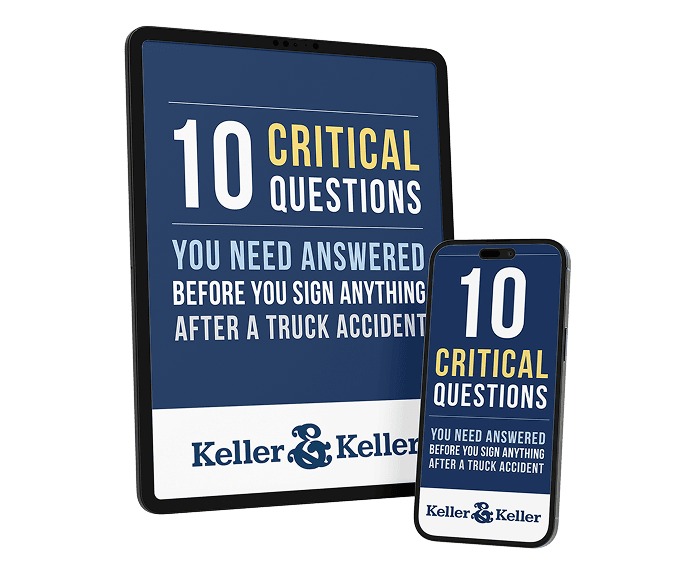
Free Guide
Get Our Free Semi Truck Accident Guide
10 Critical Questions You Need Answered Before You Sign Anything After a Truck Accident
Service Areas
New Mexico
Cities We Serve
What Sets Keller & Keller Injury Lawyers Apart
With so many law firms advertising their services, why choose Keller & Keller? The differences are clear.
Zero Fee Guarantee
We believe everyone deserves quality legal representation, regardless of their financial situation. That’s why we work on a contingency basis. You pay absolutely nothing unless and until we win your case. No upfront costs, no hidden fees, no financial risk to you.
* Clients may owe court costs if they lose




No Fee Until We Win!
Get Started TodayDon’t Take Our Word For It!
We’ve helped thousands of people fight for compensation after a car crash. Hear how Keller & Keller helped with their case.
View More Testimonials“I was so thankful for the time and effort they gave to my case”
Tal
Having a trusted advisor who has been through this thousands of times alleviated all of my concerns. I wouldn’t trust anyone else to get me the compensation I deserved. Grateful that I had Keller & Keller in my corner.
Take Action Now
Your Semi Truck Accident Claim Starts Here
Free Consultation
We’ll evaluate your case honestly and explain your options in plain English. We’ll come to you, whether you’re at home, in the hospital, or wherever is convenient.
We Fight
Our experienced team fights to investigate thoroughly, deal with insurance companies, and handle all the legal complexities while you focus on getting better.
You Recover
Focus on healing while we handle the rest. We’ll fight for you like we’d fight for our own family, because that’s exactly how we see you.
Zero Fee Guarantee
We believe everyone deserves quality legal representation, regardless of their financial situation. That’s why we work on a contingency basis. You pay absolutely nothing unless and until we win your case. No upfront costs, no hidden fees, no financial risk to you.
* Clients may owe court costs if they lose

The Keller Tradition:
Bringing Nearly a Century of Excellence to New Mexico
Frequently Asked Questions
Have Questions? We’re here to help.
Injured and not sure what to do next?
We’ll help guide you through everything you need to know
Albuquerque, NM Office
6301 Indian School Rd NE #920 Albuquerque, NM 87110
(505) 938-2300