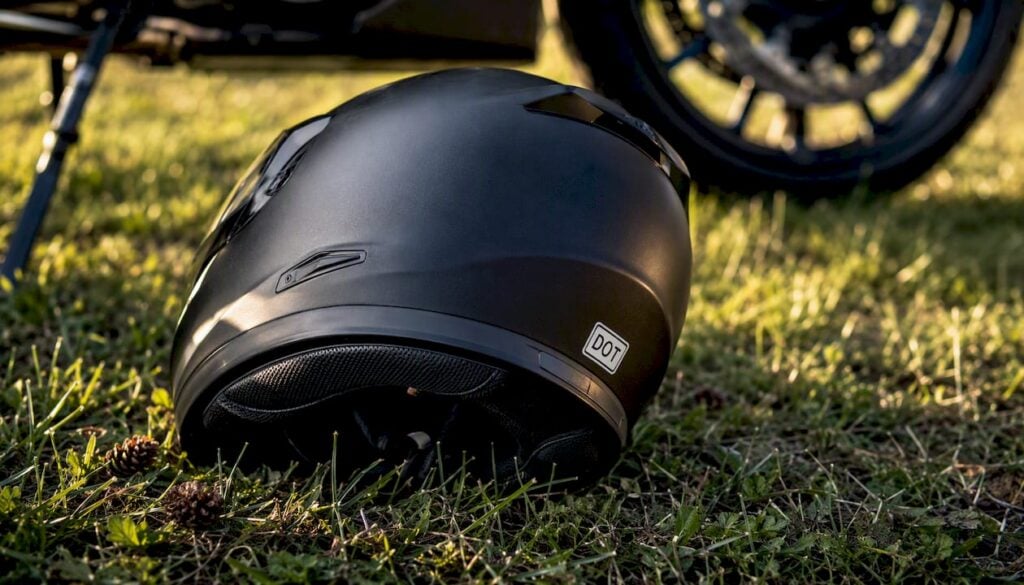
Under NMSA §66-7-356, New Mexico requires every person under 18 to wear an approved safety helmet when operating or riding as a passenger on a motorcycle. Adult riders are not required by state law to wear helmets. The New Mexico Motor Vehicle Division confirms this age-based rule in its public guidance, making New Mexico a partial helmet-law state rather than a universal one.
- Riders and passengers under 18: helmet required by law
- Riders and passengers 18 and older: no state helmet mandate
- Helmets must meet the standards the secretary specifies, which align with FMVSS No. 218
Table of Contents
- Who does the New Mexico motorcycle helmet law cover?
- What makes a helmet legal under New Mexico law?
- How does helmet use affect your crash claim in New Mexico?
- Other motorcycle requirements you need to know in New Mexico
- Key Takeaways
- A perspective on protecting riders’ rights in New Mexico
- How 2keller helps New Mexico motorcycle crash victims
- Useful sources
Who does the New Mexico motorcycle helmet law cover?
The age cutoff is the defining line. Any person under 18, whether operating the motorcycle or riding as a passenger, must wear a compliant helmet. A 16-year-old on a learner’s permit, a 17-year-old passenger on a friend’s bike, and a 15-year-old on an ATV all fall within the statute’s reach. An adult passenger on the same bike is not legally required to wear one, though doing so remains the safer choice.
Vehicle scope. The MVD’s helmet-law guidance extends the requirement to ATVs as well as motorcycles for riders under 18. Autocycles, which are three-wheeled vehicles with enclosed seating and a steering wheel, are treated differently under state law and are generally not subject to the same motorcycle helmet mandate.
Dealer and rental verification. When a dealer or rental agency leases or rents a motorcycle to a rider under 18, the New Mexico Administrative Code (18.019.0007) requires the business to verify that the minor holds a valid license or permit and that required safety equipment, including a compliant helmet, is present. Parents and guardians often overlook this duty, but it is a real compliance obligation for the business.
Pro Tip: If you are a parent arranging a rental for a minor, confirm in writing that the agency has verified your child’s permit and inspected the helmet before handing over the keys. That documentation can matter later if a dispute arises.
What makes a helmet legal under New Mexico law?
The controlling federal standard is FMVSS No. 218, the same specification the New Mexico Administrative Code adopts by reference. A helmet that meets FMVSS No. 218 will carry a DOT label on the back exterior and interior labeling showing the manufacturer’s name, model, size, and construction materials.
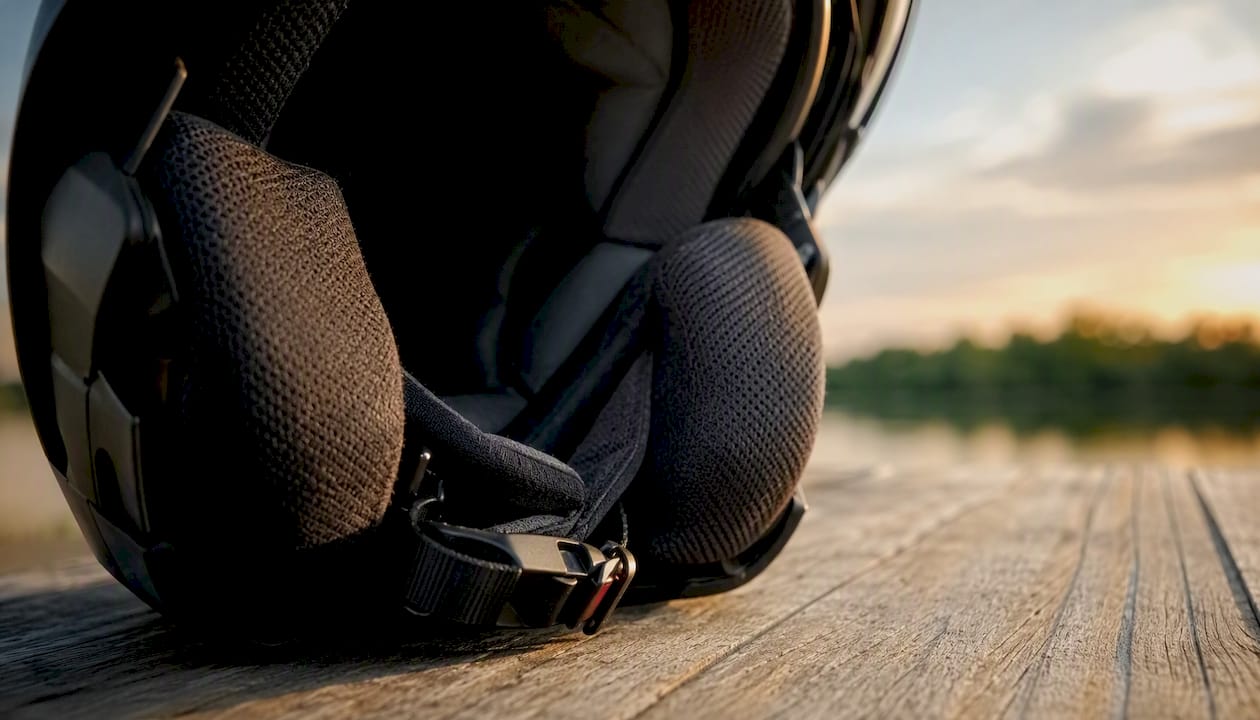
The DOT sticker alone is not a guarantee. NHTSA’s guidance on unsafe helmet identification explains that novelty helmets, sometimes sold at motorcycle shops or online, may carry counterfeit DOT stickers yet fail the actual impact-attenuation and penetration-resistance tests the standard requires. A compliant helmet typically weighs at least three pounds, has thick interior foam padding, and a sturdy chin strap with a solid buckle. Helmets that are very lightweight with minimal padding or flimsy straps do not meet compliance standards.
For a minor, an unapproved helmet does not satisfy the statute even if it covers the head. The compliance question is binary: the helmet either meets FMVSS No. 218 or it does not.
Pro Tip: Check the interior label, not just the exterior DOT sticker. A legitimate FMVSS-compliant helmet will have both, and the interior label will include a date of manufacture. Helmets older than five years may no longer meet current performance standards even if the label is genuine.
How does helmet use affect your crash claim in New Mexico?
NMSA §66-7-356(B) contains a protection that many riders do not know about: failure to wear a safety helmet as required by the statute does not constitute contributory negligence. In plain terms, if a minor is injured in a crash and was not wearing a helmet, the opposing party cannot use that fact alone to reduce the injured rider’s recovery on a contributory-negligence theory.
That statutory protection is meaningful, but it does not make helmet evidence irrelevant. Insurers often argue that the absence of a helmet worsened the severity of a head injury, framing the argument around causation rather than contributory negligence. The distinction matters. An insurer might concede that the rider was not at fault for the crash itself while still contending that the head injury would have been less severe with a helmet, and therefore that the damages attributable to the defendant should be reduced.
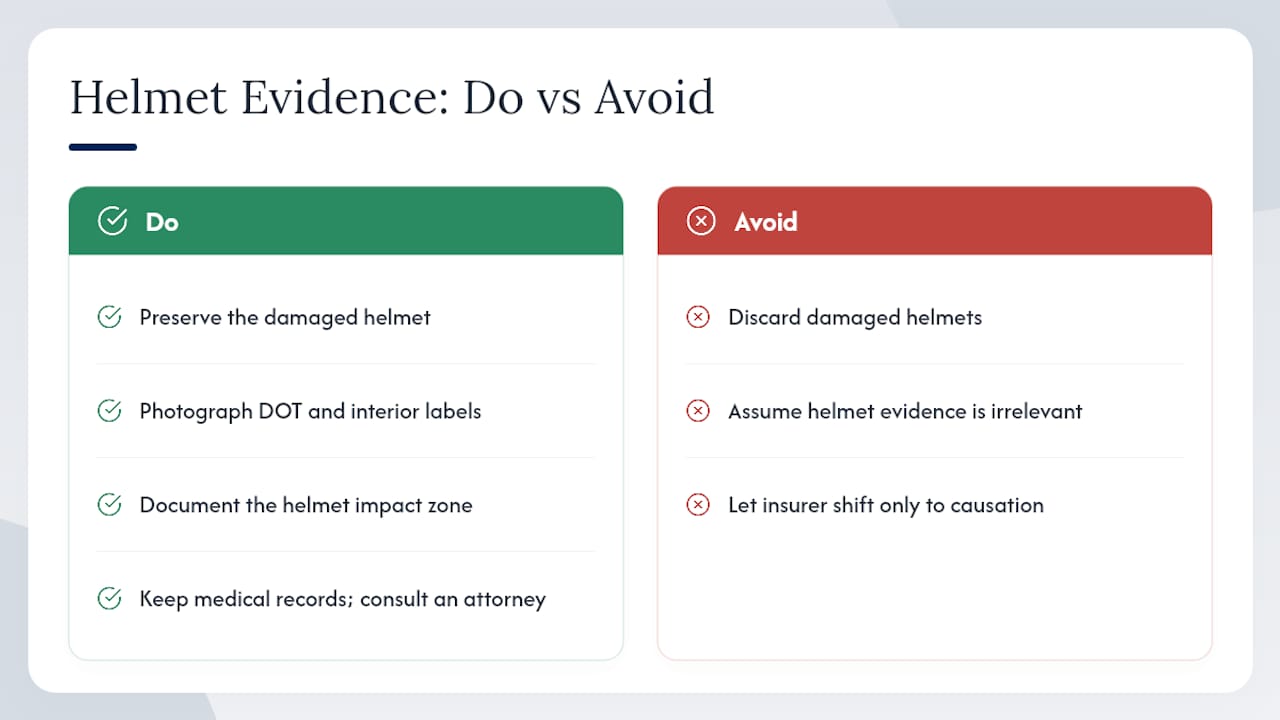
Countering that argument requires solid evidence. Preserve the helmet after a crash, photograph the DOT and interior labels before anything is cleaned or repaired, and document the impact zone. Medical records establishing the nature and mechanism of the injury are equally important. An attorney experienced in motorcycle accident claims can work with medical experts to isolate proximate cause and protect the full scope of recoverable damages.
Pro Tip: Never discard a damaged helmet after a crash. Even a helmet that looks destroyed is evidence. Its deformation pattern, label integrity, and construction can all be used by an expert to rebut insurer arguments about causation.
Other motorcycle requirements you need to know in New Mexico
The helmet rule is one piece of a broader set of New Mexico motorcycle regulations. Riders who focus only on the helmet question sometimes overlook requirements that carry their own enforcement and liability consequences.
Endorsements: W, Y, and Z
New Mexico requires a motorcycle endorsement on your driver’s license to operate legally. The endorsement type depends on engine displacement:
| Endorsement | Engine Displacement Authorized |
|---|---|
| Z | All motorcycles, no displacement limit |
Obtaining an endorsement requires either passing a road skills test or completing an approved course such as the MSF Basic Rider Course, which the MVD accepts as a road-test substitute for eligible applicants.
Insurance under the MFRA
The Mandatory Financial Responsibility Act applies to motorcycles. Riders must carry proof of insurance and present it on demand. Operating without coverage can result in registration suspension and reinstatement fees, and it significantly complicates any post-crash claim, particularly if the other party is uninsured. New Mexico’s uninsured motorist coverage rules are worth understanding before you ride.
Key Takeaways
New Mexico’s helmet law is age-based: riders and passengers under 18 must wear a DOT/FMVSS No. 218-compliant helmet, and failure to do so does not constitute contributory negligence under NMSA §66-7-356.
| Point | Details |
|---|---|
| Age-based mandate | Riders and passengers under 18 must wear an approved helmet; adults face no state mandate. |
| Required standard | Helmets must meet FMVSS No. 218, confirmed by DOT exterior and interior manufacturer labeling. |
| Contributory negligence protection | NMSA §66-7-356(B) bars using helmet nonuse as contributory negligence in a personal-injury claim. |
| Endorsement and insurance required | All riders need the correct W, Y, or Z endorsement and MFRA-compliant insurance regardless of age. |
| 2keller representation | 2keller handles New Mexico motorcycle crash claims on a contingency basis, with free initial consultations. |
A perspective on protecting riders’ rights in New Mexico
New Mexico’s partial helmet law reflects a deliberate legislative choice: protect minors while leaving adult riders free to decide for themselves. That balance makes sense as policy, but it creates a gap that insurers exploit aggressively after crashes. The statutory language in NMSA §66-7-356(B) blocking contributory-negligence arguments is genuinely protective, yet it does not prevent an insurer from reframing the same facts as a causation argument. That distinction, contributory negligence versus causation of specific damages, is where many unrepresented riders lose ground they should not lose.
The IIHS motorcycle helmet law table shows that New Mexico sits in the middle of the national spectrum, with states like Illinois, Iowa, and New Hampshire having no helmet law at all. That context matters because it shapes how insurers in those markets approach claims differently than in states with universal mandates. In New Mexico, the age-based rule means that adult riders who choose not to wear a helmet are making a legal choice, but they are not making a risk-free one. The absence of a legal requirement does not translate to the absence of evidentiary consequences when a head injury is at the center of a damages dispute.
The riders who fare best after a serious crash are the ones who preserved evidence, understood their statutory protections, and had counsel who could translate those protections into a coherent legal argument. That preparation starts before the crash, not after.
How 2keller helps New Mexico motorcycle crash victims
After a serious motorcycle crash, the legal and insurance process moves fast, and the decisions you make in the first days matter. 2keller represents injured riders and their families across New Mexico on a contingency basis, meaning there is no fee unless we recover compensation for you.

Our team handles crash investigation, evidence preservation, helmet-use disputes, insurance negotiation, and uninsured or underinsured motorist claims. When an insurer argues that a rider’s injuries were worsened by helmet nonuse, we work with medical experts to challenge that causation argument directly and protect the full value of your claim. If the case requires litigation, we take it there.
A free consultation costs you nothing. Bring your citation, photos, insurance card, medical records, and the helmet if it was involved. To explore your options with a New Mexico personal-injury attorney, review your legal options or contact 2keller directly to schedule your consultation.
Useful sources
The following primary and official sources were used in preparing this guide. Each link takes you directly to the relevant statute, agency page, or regulatory text.
- 2024 New Mexico Statutes Chapter 66 – Motor Vehicles Article 7 – Traffic Laws; Section 66-7-356 – Mandatory use of protective helmets.
- Helmet Law | Motor Vehicle Division NM – MVD New Mexico
- New Mexico Administrative Code — Title 18, 18.019.0007
- Chapter 2: Non-Commercial License | Motor Vehicle Division NM
- Chapter 11 – Mandatory Insurance | Motor Vehicle Division NM
- Motorcycle helmet laws table | IIHS
- Unsafe helmet identification | NHTSA
- New Mexico selected motorcycle laws (MVD PDF)
This article provides general legal information about New Mexico motorcycle helmet requirements and is not a substitute for advice from a licensed attorney. Laws and enforcement practices can change; confirm current requirements with the MVD or a qualified New Mexico attorney before relying on any specific provision.