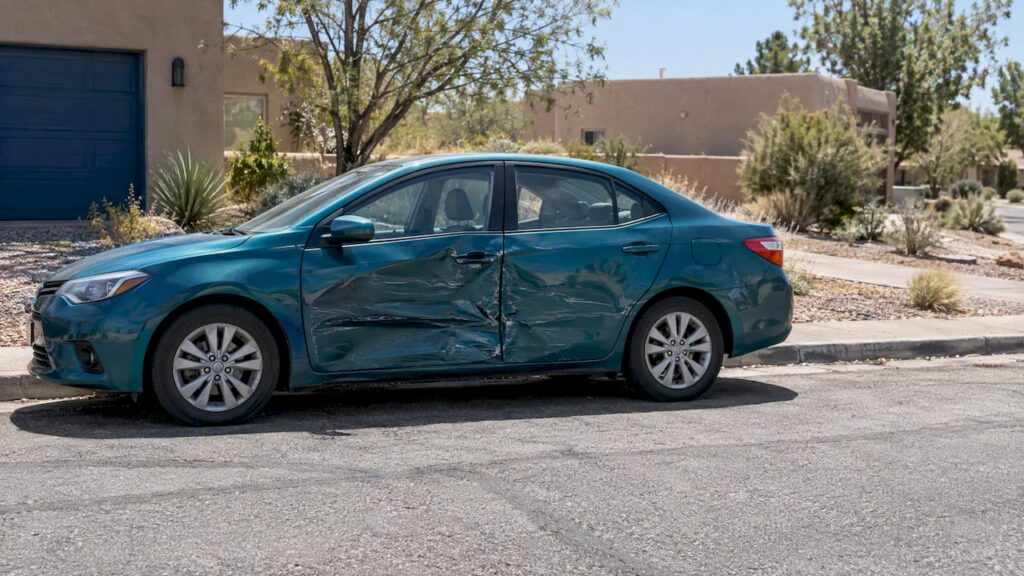
If a driver hit you in New Mexico and fled, you can still bring a claim. The usual route is your own uninsured motorist (UM) coverage, because New Mexico’s insurance regulator treats a hit-and-run driver as uninsured. The steps that protect that claim are the same ones every time: report the crash to police right away, notify your insurer quickly, preserve the evidence, and keep the filing deadlines in view. This guide walks through each step, the coverage that may pay, what compensation can include, and when it makes sense to bring in an attorney.
TL;DR
- Call police immediately and report the crash to your own insurer as soon as possible. New Mexico’s insurance regulator notes that some policies may require notice within 24 hours.
- When the driver is never found, UM coverage is typically the source of payment for injuries and property damage, so check your policy now.
- Leaving the scene of a crash with injury or death can be a felony in New Mexico, but a criminal case against the driver is separate from your civil claim.
- Most New Mexico motor-vehicle injury lawsuits carry a three-year filing deadline, and your policy’s notice terms can be much shorter.
- We offer free case evaluations and work on a contingency fee, so you pay no fee unless we win.
Table of Contents
- What counts as a hit and run in New Mexico
- The first hours: what to do after a hit and run
- Evidence that supports a hit-and-run injury claim
- How you get paid when the driver is never found
- The criminal side: what the driver faces
- What compensation can cover
- Deadlines that can end a claim
- Mistakes that weaken hit-and-run claims
- Our perspective: why these claims need a closer look
- How we can help
- FAQ
- Sources
What counts as a hit and run in New Mexico
A hit and run is a crash in which a driver involved in an accident leaves without stopping, giving information and, where needed, helping the injured. Under NMSA 1978 § 66-7-201, a driver who fails to stop at a crash involving injury or death commits a criminal offense. That covers the obvious case, a car that strikes you and speeds away, and quieter ones: a driver who clips a cyclist or pedestrian and keeps going, a parked-car strike with an injured passenger, or a driver who stops briefly and then leaves before anyone has their details.
For you as the injured person, the legal label matters less than two practical questions. Can the driver be identified? And if not, what coverage is available? Those two answers decide almost everything about how your claim moves forward.
The first hours: what to do after a hit and run
What you do in the first day shapes the claim for months. Your health comes first, and the rest follows.
- Get medical care. Call 911 if anyone is hurt. Adrenaline hides injuries, and a delay in treatment gives an insurer room to argue that your injuries came from something else.
- Call the police. New Mexico law requires that a crash involving injury, death, or property damage of $500 or more be reported immediately by the quickest means to the local police department, the county sheriff, or the nearest State Police office, as set out in NMSA § 66-7-206. If you are too hurt to call, ask a bystander to do it.
- Collect what you can about the fleeing vehicle. The Office of the Superintendent of Insurance (OSI) lists useful details: the year, make, model and plate number, witness names and contact information, the responding officer’s details and report number, the exact time, date and location, and photographs of the scene and vehicle damage. Even a partial plate or a color and bumper description helps.
- Notify your insurer. Report the crash as soon as possible. OSI cautions that some policies may require notice within 24 hours, so do not wait to see whether police find the driver.
- Keep a record from day one. Save the police report number, your medical paperwork, and every message with an insurer.
If you want a broader checklist for the minutes and days after any crash, our immediate steps after an accident resources cover it in more detail.
Evidence that supports a hit-and-run injury claim
When there is no other driver to interview, the surrounding evidence carries more weight. A checklist of records to gather after a car accident points to police reports; photographs of the scene, vehicles, damage and injuries; witness statements; surveillance, cell-phone and dashcam video; medical records and bills; proof of missed work; and correspondence with insurers along with notes of calls.
In a hit-and-run, a few of these deserve extra urgency:
- Video. Businesses, apartment complexes and homeowners often overwrite footage on a short cycle. Ask nearby properties soon, and tell the investigating officer which cameras you noticed.
- Paint and debris. Fragments of bumper, mirror glass or paint at the scene can help identify a vehicle. Photograph them before they are cleared.
- Your own vehicle. Do not repair it before it has been photographed and inspected. Damage patterns can show the height and angle of the striking vehicle.
- Witnesses. Get names and phone numbers while people are still at the scene. Memories fade quickly, and bystanders are hard to find later.
- A symptom journal. A short daily note on pain, sleep, missed activities and missed work gives a clearer picture than memory at settlement time.
We approach evidence the way an accident investigator would: what existed, where it is stored, and how soon it could disappear. In a case with no identified driver, that early work can be the difference between a claim that is easy for an insurer to dismiss and one it has to take seriously.
How you get paid when the driver is never found
The core rule for most victims is simple. OSI’s guidance says hit-and-run drivers are considered uninsured motorists, and uninsured motorist coverage can pay for injuries and property damage when the other driver is legally responsible but has no insurance. The same guidance describes UM as an optional add-on and states a $250 New Mexico UM property-damage deductible.
That means the first thing to find is your own declarations page. Look for uninsured and underinsured motorist lines, the limits for each person and each accident, and whether any coverage was rejected in writing. A plain-language overview of what uninsured motorist coverage pays for can help you read those lines before you speak with an adjuster.
What the adjuster will do
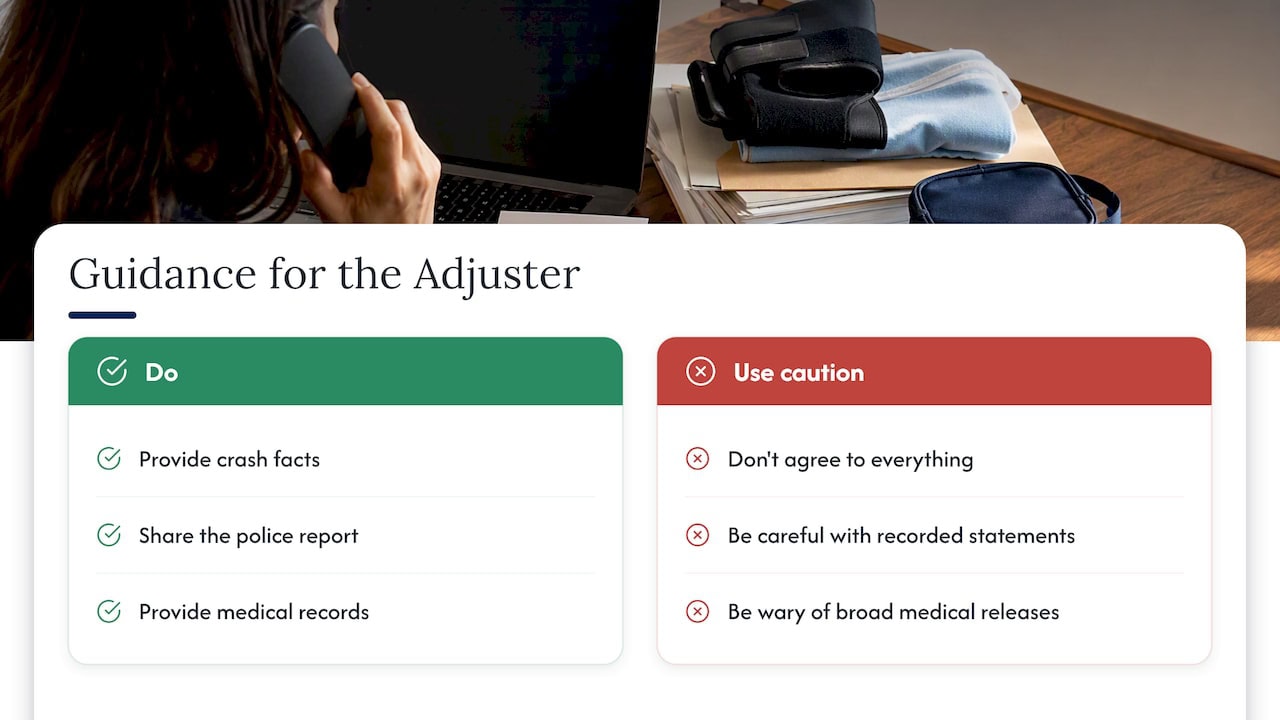
After you report the crash, your insurer assigns an adjuster to assess the damages and decide on payment, and OSI says policyholders should cooperate with that investigation. Cooperating does not mean agreeing to everything. You should provide the facts, the police report and medical records, and you should be careful with recorded statements and broad medical-release forms. Your insurer is paying under a contract, but it is still an insurer: it has its own interest in limiting what it pays, even when you are its customer.
When the driver is found
Sometimes police identify the driver days or weeks later. If that driver has liability insurance, the claim can proceed against that policy. If the limits fall short of your damages, underinsured motorist (UIM) coverage may fill part of the gap. We have written about how underinsured motorist claims work in New Mexico and about filing a UM claim step by step.
Recent changes to UM and UIM coverage
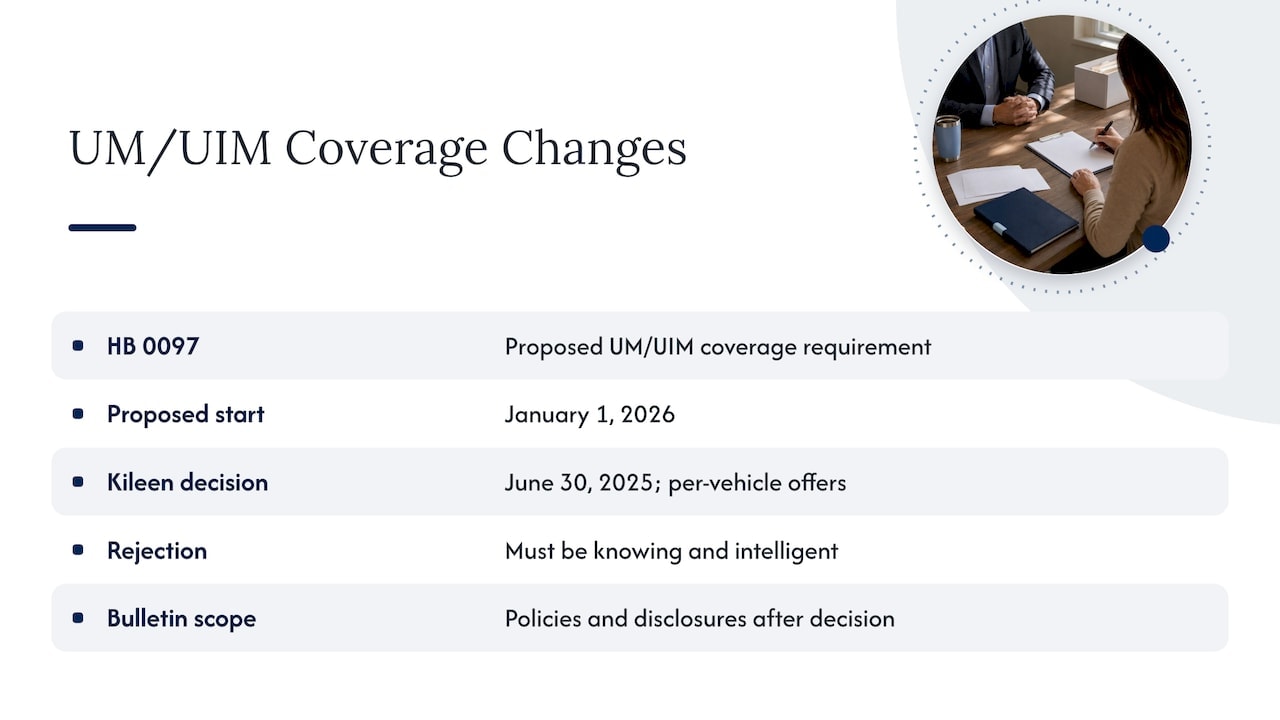
This area of New Mexico law has been moving. A bill introduced in the 2025 session, HB 0097, proposed requiring UM and UIM coverage on policies for vehicles registered or garaged in the state, effective January 1, 2026. Its summary described per-vehicle coverage selections and a signed form listing coverage levels and premiums. Whether a proposal became law is something to confirm on the legislature’s site rather than assume.
Separately, OSI’s Bulletin 2025-013 says the New Mexico Supreme Court’s June 30, 2025 Kileen decision requires insurers to offer UM/UIM coverage per vehicle and requires a knowing, intelligent rejection before coverage can be excluded. The bulletin concerns policies and disclosures issued after that decision. If you believe you rejected coverage on paper years ago, it is worth having the paperwork reviewed rather than accepting an insurer’s statement that you have none.
For background on why this coverage matters before a crash, see our article on carrying uninsured and underinsured coverage and our overview of New Mexico’s car accident insurance laws.
The criminal side: what the driver faces
Many people searching this topic want to know what happens to the driver who fled. Under NMSA § 66-7-201, failure to stop is a misdemeanor when the crash does not cause great bodily harm or death. It is a fourth-degree felony when it does, or a third-degree felony if the failure to stop is knowing, and a conviction revokes the driver’s license.
Two points matter for your claim:
- A criminal case is brought by the state, not by you. A prosecutor decides what to charge. Your civil claim for compensation runs on its own track, and you do not need a conviction to pursue it.
- Charges do not pay your bills. A conviction can carry penalties for the driver, but compensation for medical care, lost income and other losses comes through insurance or a civil claim.
If police do identify and charge a driver, keep the case number. It can help your attorney obtain records and track the driver’s insurance information.
What compensation can cover
A hit-and-run injury claim is built on your actual losses. These commonly include:
- Emergency care, hospital stays, surgery, therapy and medication
- Future medical needs, when a doctor supports them
- Lost wages and reduced earning capacity
- Pain, suffering and loss of enjoyment of life
- Vehicle repair or replacement
The limit is usually the amount of coverage available. If you carry UM coverage, the per-person and per-accident limits on your policy set the ceiling, which is why reading the declarations page early matters so much.
Wrongful death after a hit and run
When a hit-and-run crash kills someone, the family faces grief and a legal process at the same time. New Mexico’s wrongful death claims allow the estate to seek compensation for medical expenses, funeral costs, lost earnings, pain and suffering, and the value of the decedent’s life, as described in the court-approved jury instruction UJI 13-1830. Our page on wrongful death after a vehicle accident in New Mexico explains who can bring the claim and how the process unfolds.
Deadlines that can end a claim
Two kinds of deadlines apply, and families often confuse them.
| Deadline type | What it is | Where it comes from |
|---|---|---|
| Court filing deadline, injury | Generally three years from the accident date for most motor-vehicle injury lawsuits | NMSA § 37-1-8, as summarized by Nolo |
| Court filing deadline, wrongful death | Three years, with the claim accruing on the date of death | NMSA § 41-2-2 |
| Insurance notice | Often prompt notice, and some policies may require it within 24 hours | Your policy, and OSI guidance |
The notice terms in your policy are the ones people miss. A claim that is still well inside the three-year window can be damaged if the insurer was told months late. Read your policy’s notice language, and if you are unsure whether you are within it, speak with an attorney sooner rather than later. Exceptions and special rules can apply to particular defendants, such as government entities, so confirm your specific deadline before you rely on a general rule.
Mistakes that weaken hit-and-run claims
- Waiting to call the police. A late report makes it harder to tie your injuries to the crash and gives witnesses time to leave.
- Skipping treatment or leaving gaps. Insurers read gaps as evidence that you were not hurt badly.
- Giving a recorded statement without preparing. Casual phrases like “I’m fine” at the scene can be used later.
- Signing a quick settlement. An early offer may not account for future care.
- Assuming you have no coverage. Check the declarations page and the rejection paperwork before you accept that answer.
- Posting online. Social media posts about activities or the crash can be read out of context.
Our perspective: why these claims need a closer look
Hit-and-run claims are among the cases where a person can feel most alone. There is no other driver to blame in person, the police may have few leads, and the insurer on the other end of the phone is your own. We see people surprised that the company they paid for years can become cautious once a claim is filed.
Our approach is built around a few commitments. First, you should be able to reach the attorneys and paralegals working on your case, and you should hear from us consistently rather than only when something changes. Second, we have handled thousands of cases against large insurance companies, and we use that experience to anticipate how an adjuster will test a UM claim: the timing of treatment, the consistency of your account, and the strength of the evidence about what happened. Third, we are a family-run firm, and we try to treat each client as we would want our own family treated after a serious crash.
If you take one thing from this article, let it be this: do not decide your case is worthless because the driver drove away. Your coverage, your evidence and your deadlines are what matter, and those can be reviewed at no cost.
— Adam
How we can help
If you were hurt by a hit-and-run driver in Albuquerque or elsewhere in New Mexico, we offer a free case evaluation. We handle car accident, motorcycle, truck and wrongful death cases on a contingency fee, which means you pay no fee unless we win. We can review your policy, contact your insurer, and build the claim while you focus on recovery. You can start at 2keller.com, and you can read more about our hit-and-run work on our New Mexico hit-and-run accident claims page or our hit and run accidents in Albuquerque overview.
FAQ
What are the legal consequences of a hit and run in New Mexico?
Failure to stop is a misdemeanor when the crash does not cause great bodily harm or death. It is a fourth-degree felony when it does, or a third-degree felony if the failure is knowing, and a conviction revokes the driver’s license, according to NMSA § 66-7-201. Those penalties are imposed in the criminal case and are separate from your claim for compensation.
Can I file a claim if the hit-and-run driver is never found?
Yes. New Mexico’s insurance regulator says hit-and-run drivers are treated as uninsured motorists, so your own UM coverage may pay for injuries and property damage. Report the crash to police and to your insurer quickly, and review your policy for coverage limits.
What happens after a car accident that is not your fault?
You report the crash, get medical care, document the scene, and notify your insurer. If the other driver is identified and insured, the claim generally goes to that driver’s insurer. If not, your UM coverage may apply. Keep every record, and consider speaking with an attorney before accepting any settlement offer.
How long do I have to file a hit-and-run injury lawsuit in New Mexico?
Nolo’s New Mexico overview reports a three-year deadline for most motor-vehicle injury lawsuits, measured from the accident date. Wrongful death actions also have a three-year limit, measured from the date of death. Your insurance policy may require much faster notice, so report the crash right away.
Sources
- New Mexico OSI auto insurance guidance, April 2022
- NMSA § 66-7-201, accidents involving death or personal injuries
- NMSA § 66-7-206, immediate notice of accident
- NMSA § 41-2-2, limitation of wrongful death actions
- New Mexico OSI Bulletin 2025-013
- New Mexico HB 0097 (2025)
- New Mexico HB 0097 summary
- UJI 13-1830, New Mexico Supreme Court
- Nolo: records to gather after a car accident
- Nolo: New Mexico car accident statute of limitations
- What uninsured motorist coverage pays for
Recommended
- New Mexico Hit and Run Accidents – Auto Wrecks in Albuquerque – Keller & Keller Injury Lawyers
- New Mexico Hit and Run Accidents – Auto Wrecks in Albuquerque – Keller & Keller Injury Lawyers
- New Mexico Hit-and-Run Accident Claims: Driver Duties & a Gallup Case Result
- Albuquerque Hit and Run Accident Lawyer – Keller & Keller Injury Lawyers