Injury documentation after a crash is the systematic process of capturing and organizing all medical and evidentiary records that link your injuries directly to the accident. Without this foundation, insurance adjusters and courts have no verifiable basis for your claim. The steps you take in the first 24–48 hours after a collision carry more weight than anything you say months later. This guide walks you through exactly what to collect, how to record it, and how to keep it organized so your claim stands on solid ground.
What do you need to document injuries after a crash?
The strongest injury claims rest on five categories of evidence: medical records, a police report, photographs, witness statements, and an itemized expense log. Each one serves a distinct purpose, and missing any category gives insurers a reason to reduce or deny your payout.
Medical records are the backbone of your claim. Emergency room notes, imaging results such as X-rays and MRIs, and physician notes must explicitly state that your injuries are consistent with a motor vehicle accident. A record that only lists symptoms without connecting them to the crash gives an adjuster room to argue the injury existed before the collision.
Police reports carry official weight. If an officer responds to the scene, request the report number before you leave. Police reports typically take 5–14 days to become available online and may cost $5–$25 to obtain. Injury-related reports can take 7–21 days to process, so request yours as soon as the window opens.
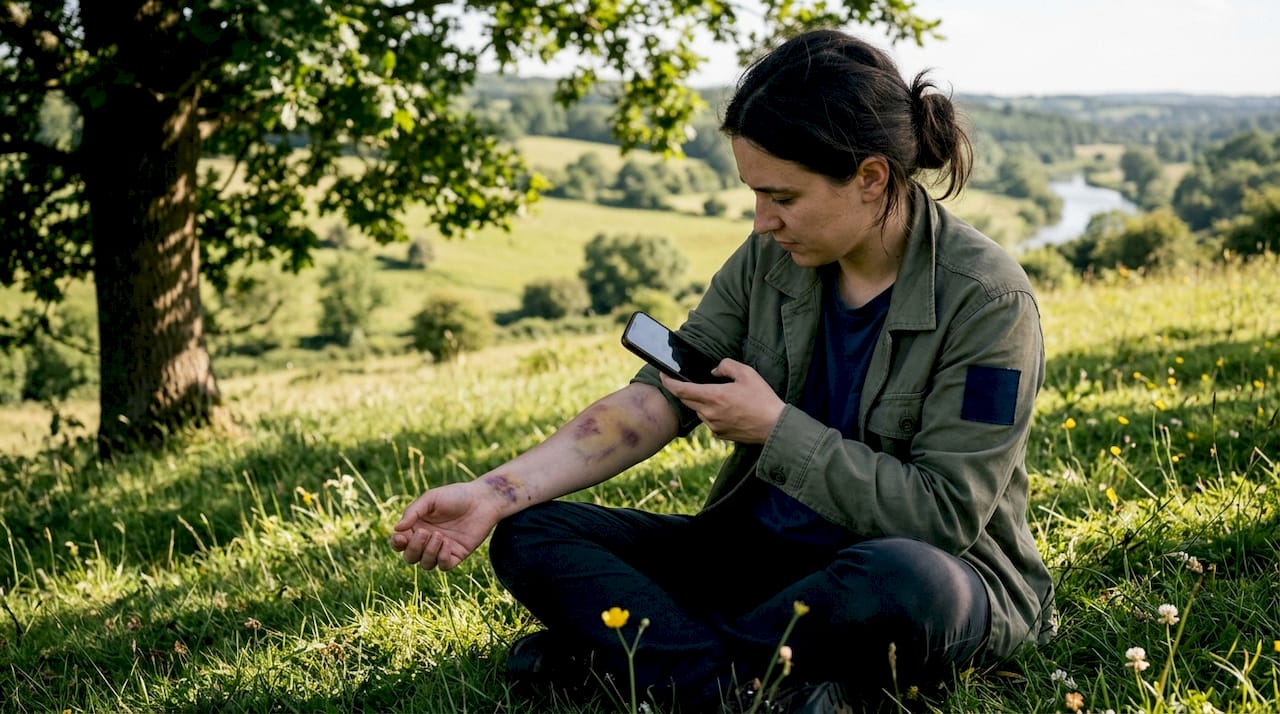
Photographs and video create a visual timeline that words cannot replicate. Take photos of your injuries immediately and continue photographing them throughout the healing process. Photo metadata, including timestamps and GPS coordinates, functions as evidence. Do not edit the originals. Email them to yourself or upload them to a secure cloud folder to preserve the metadata.
| Document type | Purpose | How to obtain |
|---|---|---|
| ER and physician notes | Links injuries to the crash | Request from hospital or provider portal |
| Imaging results (X-ray, MRI) | Confirms physical injury | Request from radiology department |
| Police report | Official crash record | State DMV or local police department website |
| Witness statements | Corroborates your account | Collect names and contact info at the scene |
| Itemized medical bills | Quantifies economic loss | Request from each provider and pharmacy |
| Receipts for related expenses | Supports full damages calculation | Save every paper and digital receipt |
Pro Tip: Collect witness names, phone numbers, and email addresses at the scene. A witness who saw the impact and your immediate reaction can corroborate injuries that are not yet visible.
How to build a chronological injury timeline and pain journal
A daily injury journal is one of the most persuasive tools you can maintain after a crash. Contemporaneous notes written within 24–48 hours carry more legal weight than testimony given months later, because judges recognize that memory fades and details shift. Courts consistently favor parties who present organized, chronological records over those who rely on oral recollection alone.
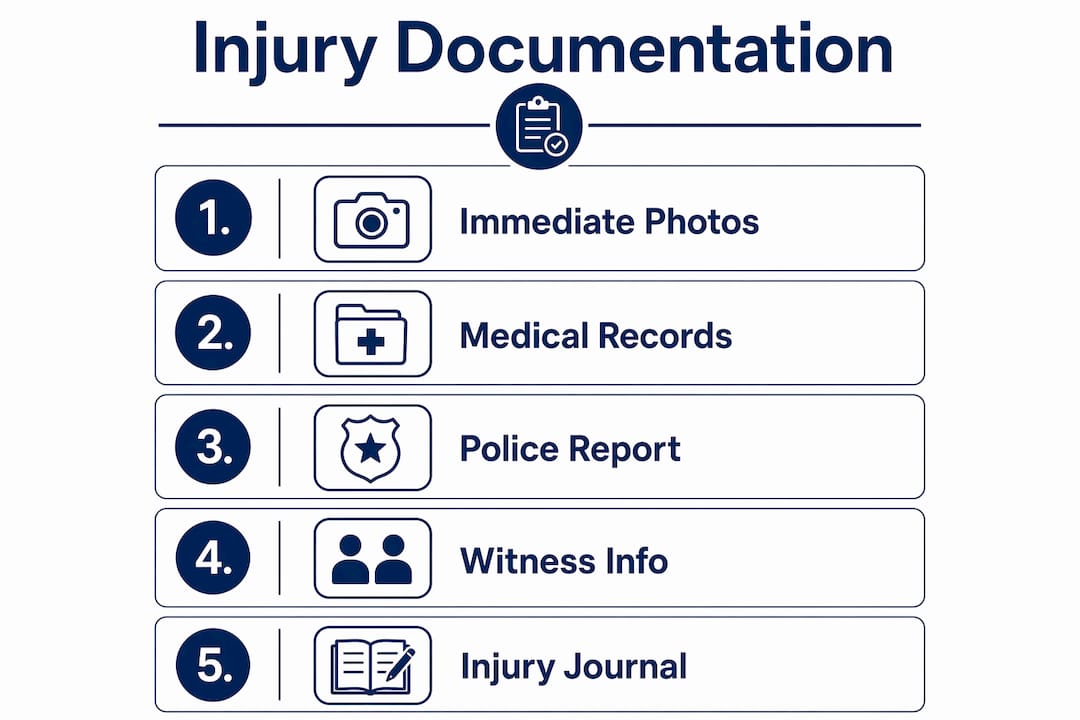
The OLDCARTS method gives your journal clinical structure. OLDCARTS stands for Onset, Location, Duration, Character, Aggravating and Relieving factors, Radiation, Timing, and Severity. Using OLDCARTS to describe pain is more persuasive to doctors and insurers than vague complaints like “my back hurts.” A journal entry might read: “Onset: day 3 post-crash. Location: lower lumbar, right side. Severity: 7 out of 10. Aggravating factor: sitting longer than 20 minutes. Relieving factor: ice pack for 15 minutes.”
Record these details every day, even on days when you feel slightly better. Improvement patterns matter as much as pain peaks. Note emotional impacts such as anxiety when driving, disrupted sleep, or inability to perform work tasks. These details support non-economic damages like pain and suffering.
- Record the date and time of every entry
- Note pain level on a 1–10 scale
- Describe how the injury limits specific daily activities (cooking, lifting, driving)
- Log every medication taken and its effect
- Note any new symptoms, even minor ones
Pro Tip: Set a daily phone alarm labeled “injury log” at the same time each evening. Voice memos work just as well as written entries and are equally admissible. Speak your entry aloud if writing is painful.
How to organize your injury documentation for maximum credibility
Organized files do not just make your life easier. They signal to adjusters and attorneys that your claim is serious and well-supported. Maintaining a folder or spreadsheet that logs dates, providers, treatments, and all related expenses is the standard practice recommended by personal injury attorneys.
Set up two parallel systems: one physical binder and one digital folder. The physical binder holds printed records, prescription receipts, and any paper correspondence from insurers. The digital folder mirrors it exactly, with subfolders for medical records, photos, bills, and communications.
Track every out-of-pocket expense related to your injury: hospital bills, medications, physical therapy, lost wages, transportation to appointments, and any home modifications you needed. An itemized expense log is what converts your suffering into a calculable dollar figure during settlement negotiations.
- Create subfolders: Medical Records, Photos, Bills and Receipts, Police Report, Correspondence
- Back up your digital folder to at least two locations (cloud storage and an external drive)
- Date-stamp every document when you receive it
- Log every phone call with insurers, including the representative’s name, date, and what was discussed
Pro Tip: Never sign any release or settlement agreement until you have accounted for all future medical costs. Initial insurer valuations routinely underestimate full losses. An independent appraisal or attorney review protects your claim’s true value.
Why prompt medical care is critical for your injury claim
Seeking medical attention within 24 hours after a crash is the single most important step you can take to protect your claim. Medical records must confirm that your injuries are consistent with a motor vehicle accident, not just report that pain exists. When you wait days or weeks to see a doctor, insurers argue the injury happened elsewhere or was pre-existing.
Different providers produce different types of documentation, and each one matters.
- Emergency room: Produces the first official medical record linking the crash to your injuries. Always go, even if you feel fine.
- Primary care physician: Documents ongoing symptoms and refers you to specialists. Creates a continuous treatment record.
- Specialists (orthopedic, neurologist): Provide expert opinions on injury severity and long-term prognosis.
- Physical therapists: Generate session notes that show functional limitations and recovery progress.
Delayed treatment is the most common reason insurers dispute injury claims. A gap of even a few days between the crash and your first medical visit gives adjusters grounds to argue your injuries are unrelated to the accident. Protect yourself by going to the ER or urgent care the same day, regardless of how you feel.
Pro Tip: Ask every provider to note in your records that your symptoms are “consistent with trauma from a motor vehicle accident.” That specific language closes the door on insurer arguments about pre-existing conditions.
What to do when police reports are delayed or missing
Police reports are not always available immediately, and sometimes officers do not respond to the scene at all. Knowing how to fill that gap keeps your claim intact.
- File a self-report with your state DMV. Most states require a self-report when police do not attend and property damage exceeds a threshold, typically $500–$2,500. When police do not attend the scene, filing a DMV self-report form is often legally required and creates an official record.
- Write a detailed personal statement the same day. Include the time, location, weather conditions, direction of travel, what you saw before impact, and what happened immediately after. Date and sign it.
- Photograph everything before leaving the scene. Capture all vehicle damage, road conditions, traffic signs, skid marks, and any visible injuries on yourself and others involved.
- Collect witness contact information. Names, phone numbers, and email addresses from anyone who saw the crash are critical when no official report exists.
- Supplement with medical records. If symptoms appear after you leave the scene, go to a doctor immediately. That medical record becomes your primary evidence of injury when no police report exists.
Pro Tip: Voice memos recorded at the scene, while details are fresh, carry real evidentiary value. Describe what you see and feel out loud. A timestamped audio file is far more credible than a written account produced days later.
Key Takeaways
Thorough injury documentation after a crash, started within 24 hours and maintained consistently, is the foundation of every successful insurance and legal claim.
| Point | Details |
|---|---|
| Seek care within 24 hours | Prompt medical visits create records that directly link injuries to the crash. |
| Use OLDCARTS for pain logs | Structured daily entries are more persuasive to insurers and courts than vague descriptions. |
| Preserve photo metadata | Never edit original injury or scene photos; timestamps and GPS data serve as evidence. |
| Organize in parallel systems | Maintain both a physical binder and a digital folder with consistent subfolders. |
| Never sign early releases | Initial insurer valuations routinely underestimate full losses; document all future costs first. |
What I’ve learned from watching claims succeed and fail
After years of working alongside personal injury attorneys, the pattern is clear: the cases that settle well are the ones where the injured person started documenting on day one and never stopped. The cases that struggle are the ones where the person waited to “see how they felt” before going to a doctor or taking photos.
Insurers are not adversaries in a dramatic sense, but they are businesses. Their adjusters are trained to find gaps in your documentation and use those gaps to reduce payouts. A claim with a consistent medical record, a daily pain journal, and a complete expense log leaves very little room for dispute. A claim built on memory alone leaves everything on the table.
The OLDCARTS method changed how I think about pain journals. Most people write “my neck hurt today.” That tells a doctor and an adjuster almost nothing. “Onset: day 5. Location: cervical spine, left side. Severity: 6 out of 10. Aggravating factor: turning head left while driving” tells a complete clinical story. That specificity is what moves claims forward.
One more thing: review your documentation with a qualified attorney before you talk to any adjuster. The personal injury attorneys at 2keller can review what you have, identify gaps, and advise you on what to gather before negotiations begin. That review costs you nothing and can protect thousands of dollars in claim value.
Adam
2keller is ready to help you build your injury claim
If you have been in a crash in Indiana, Michigan, or New Mexico, the team at 2keller knows exactly what documentation insurers scrutinize and what gaps they exploit. Our attorneys help you gather, organize, and present your medical records, expense logs, and evidence in a way that supports the full value of your claim.

Whether your case involves a straightforward fender-bender or a serious collision with lasting injuries, we review your documentation at no cost and advise you on next steps. You focus on recovering. We handle the legal complexity. Reach out to the personal injury attorneys at 2keller to get your claim on solid footing from the start.
FAQ
How soon should I document injuries after a crash?
Start documenting immediately at the scene and seek medical care within 24 hours. Records created the same day carry the strongest evidentiary weight with insurers and courts.
What if I don’t feel pain right away after the accident?
Go to the ER or urgent care anyway. Many injuries, including whiplash and soft tissue damage, appear hours or days after impact. A same-day medical visit creates a record that protects your claim even if symptoms develop later.
Can I use my phone photos as evidence of injury?
Yes. Photos taken on a smartphone preserve timestamp and GPS metadata, which serve as evidence. Do not edit the originals; email them to yourself immediately to create a dated backup.
What is the OLDCARTS method for injury documentation?
OLDCARTS stands for Onset, Location, Duration, Character, Aggravating and Relieving factors, Radiation, Timing, and Severity. Using this framework in your daily pain journal produces clinically structured entries that are more persuasive to doctors and insurance adjusters than general descriptions.
What should I do if the police never filed a report?
File a self-report with your state DMV, write a detailed personal statement dated the same day, and supplement with medical records and witness contact information. These steps create an official record even without a police report.