
Common car insurance claim mistakes are errors in the claims process that reduce or eliminate the compensation you deserve after an accident. These mistakes fall into predictable categories: delayed reporting, incomplete documentation, premature settlement acceptance, and misreading your own policy. Each one gives insurers a legal reason to deny or reduce your payout. The good news is that every one of these errors is preventable. This guide walks you through the most frequent auto claim errors, explains why they happen, and tells you exactly what to do instead.
1. Common car insurance claim mistakes start with delayed reporting
Reporting your accident too slowly is one of the fastest ways to lose a valid claim. Reporting windows typically range from 24 to 72 hours after the accident. Missing that window gives your insurer grounds to deny the claim outright, regardless of fault.
Delayed reports also raise red flags. Insurers interpret late notification as a sign that the accident was minor, that you sought outside repairs first, or that the details have changed. Any of those interpretations works against you.
- Call your insurer from the scene or within hours of leaving it.
- Report the accident even if you are unsure whether you will file a formal claim.
- Get a claim number and the name of the representative you spoke with.
- Note the exact date and time of your report.
Pro Tip: Set your insurer’s claims line as a contact in your phone before you ever need it. Searching for the number after an accident wastes time you do not have.
2. Providing incomplete or inaccurate information
Inaccurate details on a claim form can trigger a denial based on misrepresentation. Insurers may deny claims citing misrepresentation of even minor policy details, though many states require proof that the misstatement was material to the risk. That legal threshold matters, but fighting a denial costs time and money you could have avoided spending.
The most common documentation errors include:
- Failing to obtain a police report at the scene.
- Recording the wrong time, location, or direction of travel.
- Listing incorrect vehicle identification numbers or driver license details.
- Omitting witness names and contact information.
- Skipping photos of vehicle damage, road conditions, and traffic signals.
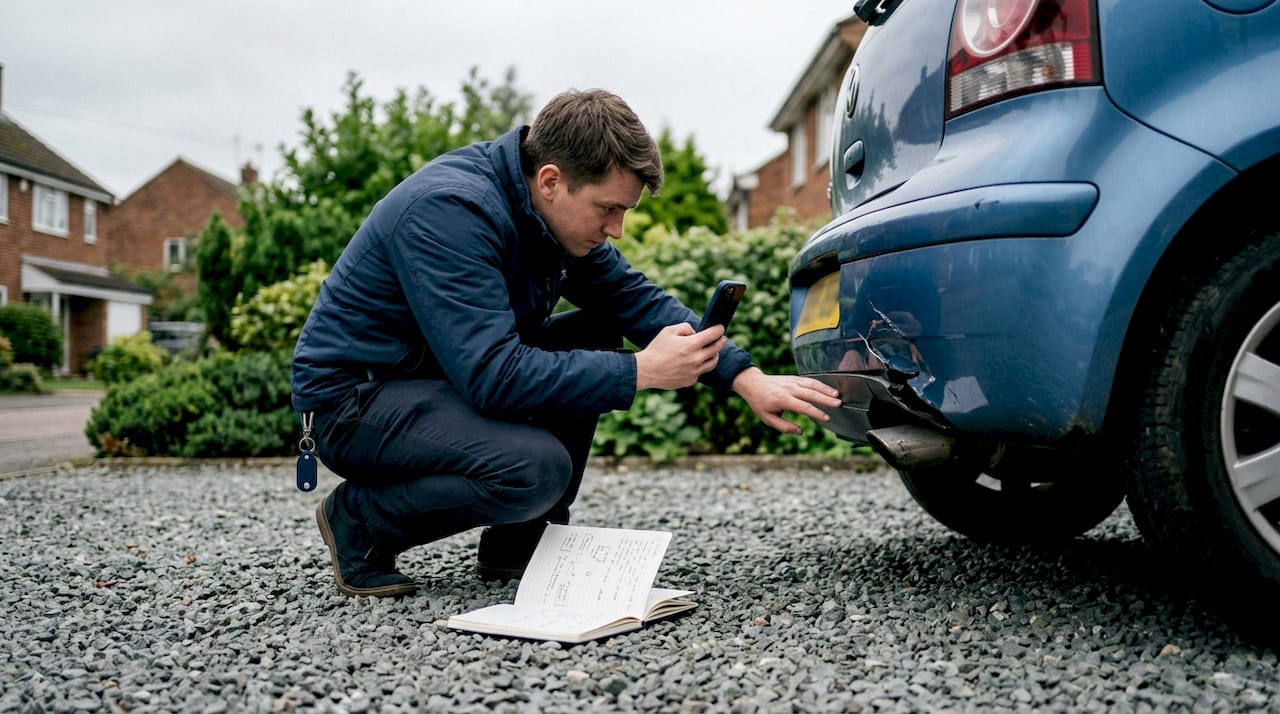
Thorough documentation is your strongest defense. Take photos from multiple angles, capture the license plates of all vehicles involved, and photograph any visible injuries. Medical records, repair estimates, and written witness statements all belong in a single organized folder.
Pro Tip: Use a free cloud storage folder on your phone to store all claim documents immediately. Emailing photos to yourself right after the accident creates a timestamped backup that is difficult to dispute.
3. Delaying medical attention after the accident
Skipping or postponing a medical evaluation is one of the most damaging car insurance claim errors you can make. Failure to seek immediate medical attention jeopardizes injury claims because there is no documented proof linking your injuries to the crash. Adrenaline masks pain in the hours after a collision, and some injuries, including whiplash, soft tissue damage, and concussions, appear days later.
Insurers look for a clear, unbroken chain from the accident date to your diagnosis. A gap of even a few days gives adjusters room to argue that your injury came from a different cause.
- See a doctor or visit an urgent care clinic the same day as the accident.
- Tell the treating physician exactly how the accident happened and what symptoms you feel.
- Keep every medical bill, prescription receipt, and follow-up appointment record.
- Request copies of all imaging results and physician notes.
Do not assume that because you feel fine, you are fine. A documented medical visit protects your claim even if no serious injury is found.
4. Accepting a quick settlement without legal review
Insurance companies have a financial incentive to close claims fast and cheap. Accepting initial settlement offers without review risks undercompensation because long-term medical costs and repair estimates often exceed what the first offer covers. Once you sign a release, you cannot reopen the claim.
“Legal counsel levels the playing field, enabling better negotiation and understanding of claim complexities. An attorney can identify damages you did not know you were entitled to, including lost wages, future medical expenses, and pain and suffering.”
The pressure to settle quickly is real. Adjusters may frame the first offer as the best you will get. That framing is a negotiating tactic, not a fact. Before signing anything, get a full accounting of your current and projected medical costs, a certified repair estimate, and an independent legal opinion on the offer’s fairness.
Legal review of your claim costs nothing upfront at most personal injury firms. The potential increase in compensation far outweighs the time it takes to consult an attorney.
5. Misunderstanding your policy coverage and exclusions
Many policyholders discover coverage gaps only after a claim is denied. Misunderstanding policy types and coverage details is a leading cause of surprise denials. Reading your policy’s declarations page and exclusions section before an accident happens is the only reliable way to avoid this.
The three core coverage types work differently:
| Coverage type | What it pays for | Common exclusion |
|---|---|---|
| Liability | Damage or injury you cause to others | Does not cover your own vehicle or injuries |
| Collision | Damage to your vehicle from a crash | Excludes unlisted drivers in some policies |
| Comprehensive | Non-collision damage (theft, weather, fire) | Excludes commercial use or vehicle modifications |
Deductibles add another layer of complexity. Filing a claim when repair costs fall below your deductible can trigger premium increases that last up to seven years, far outweighing any minor repair savings. If the damage is cosmetic and costs less than your deductible, paying out of pocket is often the better financial decision.
One frequently overlooked rule: policy changes do not apply retroactively. Increasing your coverage after an accident does not affect a claim already in progress. Your coverage at the moment of the accident is the coverage that applies.
6. Relying only on the initial repair estimate
The first repair estimate almost never reflects the full cost of restoring your vehicle. Initial repair estimates cover only visible damage; hidden structural damage becomes apparent only after a certified mechanic disassembles the affected area. Accepting the initial figure and closing the claim leaves you responsible for those additional costs.
Supplemental claims are standard practice in the auto repair industry. Damage found beyond the original estimate is typical, and reputable repair shops submit supplemental claims to your insurer as a routine part of the process. Choose a certified repair facility rather than the cheapest option your insurer suggests.
Ask the shop to document all findings in writing before authorizing any repairs. That written record supports a supplemental claim if additional damage surfaces during the repair process.
7. Missing the appeal deadline after a denial
A denied claim is not a final answer. Most insurance providers require formal appeals within 30 to 60 days of written denial. Missing that window forfeits your right to contest the decision through the insurer’s internal process.
Insurers must provide clear factual and legal bases for claim rejections. Failure to do so may constitute bad faith, which carries legal consequences in most states. If your denial letter is vague or cites reasons that do not match your policy language, that is a signal worth pursuing with an attorney.
Keep every piece of written communication from your insurer in a dedicated folder. The denial letter, the policy language it references, and your original claim documentation form the foundation of any appeal.
Key Takeaways
Avoiding car insurance claim errors requires prompt action, thorough documentation, and a clear understanding of your policy before you ever need to file.
| Point | Details |
|---|---|
| Report immediately | Notify your insurer within 24–72 hours to prevent automatic denial. |
| Document everything | Collect photos, police reports, witness contacts, and medical records at the scene. |
| Seek medical care the same day | A same-day medical visit creates the documented link between the accident and your injuries. |
| Never accept the first offer | Initial settlements rarely cover long-term medical costs; get legal review before signing. |
| Know your policy before an accident | Read your declarations page and exclusions now, not after a claim is denied. |
What I’ve learned from watching people lose winnable claims
The mistakes I see most often are not the dramatic ones. They are quiet errors made in the first 48 hours after an accident, when people are shaken, in pain, and focused on getting home safely. Those hours are exactly when the claim is won or lost.
The detail that surprises most people: insurers track the timeline of every action you take. When you reported the accident, when you saw a doctor, when you got an estimate. A gap in that timeline is not neutral. Adjusters are trained to interpret gaps as evidence that the claim is inflated or fabricated. You do not have to be dishonest to have your claim treated as suspicious. You just have to be slow.
The other pattern I see is people treating their insurer as a neutral party. Your insurer is not your advocate. Their adjuster’s job is to close your claim at the lowest defensible number. That is not cynicism; it is how the business model works. Knowing that changes how you approach every conversation and every document you sign.
My honest advice: treat your claim like a legal case from minute one, because it is one. Keep records, get professional opinions, and do not sign anything until you understand exactly what rights you are giving up.
— Adam
How 2keller helps you avoid costly claim mistakes

Car accident claims involve deadlines, documentation requirements, and negotiating tactics that most people encounter for the first time at the worst possible moment. 2keller is a personal injury law firm serving clients in Indiana, Michigan, and New Mexico, and our attorneys handle car accident claims every day.
We review your claim, identify errors before they become denials, and negotiate directly with insurers on your behalf. If your claim has already been denied, we can evaluate whether the denial was legally justified and pursue an appeal. Most consultations cost nothing upfront. If you were in an accident and want to know where your claim stands, speak with our team before you sign anything.
FAQ
How long do I have to report a car accident to my insurer?
Most insurers require notification within 24 to 72 hours of the accident. Missing this window is a common reason for claim denial.
Can I appeal a denied car insurance claim?
Yes. Most insurers require appeals within 30 to 60 days of written denial. Missing that deadline forfeits your right to contest the decision.
What happens if I accept a settlement too quickly?
Once you sign a release, the claim is closed permanently. Initial offers rarely account for long-term medical costs or hidden vehicle damage, so legal review before signing is critical.
Does filing a small claim affect my premiums?
Filing a claim when repair costs fall below your deductible can trigger premium increases lasting up to seven years. Paying minor repairs out of pocket is often the smarter financial choice.
What should I do if my injuries appeared days after the accident?
See a doctor immediately and tell them the accident date. Medical records that document the connection between the crash and your delayed symptoms are still valid for a claim, but the sooner you establish that link in writing, the stronger your case.