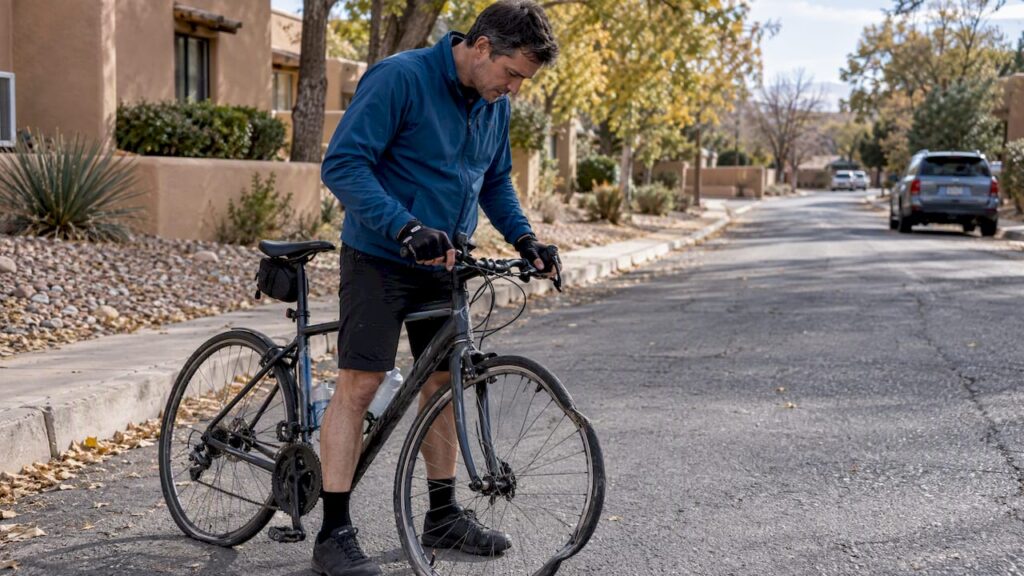
If you were injured in a bicycle accident in New Mexico, you can pursue compensation from the driver or party at fault, and the most important steps happen in the first hours and days afterward. Get medical attention immediately, preserve evidence from the scene, and request a free consultation with a New Mexico personal injury attorney. State law gives bicyclists many of the same rights as drivers, but comparative negligence rules and a three-year filing deadline shape how much you can recover and how quickly you need to act.
TL;DR:
- Seek medical care promptly, call police, photograph the scene and damaged gear, and collect witness details before footage disappears or memories fade.
- New Mexico reduces compensation by your fault share but allows recovery even if you were mostly responsible; file an injury suit within three years.
- Your UM/UIM policy may apply if the driver lacks adequate insurance; New Mexico insurers must offer coverage, but drivers may reject it in writing.
- Do not give an early recorded statement or sign a release before your prognosis is clear, because insurers may use either to limit payment.
Table of Contents
- Step-by-step: what to do right after a bicycle accident in New Mexico
- New Mexico laws that matter to bicyclists
- Comparative negligence and statute of limitations in New Mexico
- Insurance claims in New Mexico: insurer tactics and UM/UIM coverage
- Injuries and damages: what counts and how claims are valued
- How a New Mexico personal injury lawyer helps your claim
- Practical perspective from the firm’s experience
- Free case evaluation and how to start your claim
- FAQ
- Sources
- Authoritative statutes, official pages, and safety data
Step-by-step: what to do right after a bicycle accident in New Mexico
What you do in the hours and days following a crash often determines whether your claim succeeds. Insurance adjusters look for gaps in medical treatment, inconsistent statements, and missing documentation, so acting deliberately from the start protects both your health and your legal position.
- Get medical care right away, even if your injuries seem minor. Soft-tissue injuries and concussions often don’t show symptoms until days later, and a documented visit ties your injuries to the crash date.
- Call the police and request an official accident report. Get the responding officer’s name and badge number, since the report becomes a foundational piece of evidence in your claim.
- Photograph everything, including vehicle damage, your bicycle, road conditions, skid marks, traffic signals, and your visible injuries. Save any dashcam or nearby security footage before it gets overwritten.
- Collect witness names and contact information on the spot, because witnesses are often hard to locate once they’ve left the scene.
- Be careful what you say to insurance companies. A recorded statement given too early, before you understand the full extent of your injuries, can be used against you later.
Document damage to your bike and gear before you repair or replace anything, and once an insurer contacts you, it’s reasonable to direct that communication to your attorney rather than negotiating on your own.
Pro Tip: Save your clothing and helmet exactly as they were at the time of the crash. Damage patterns on gear can corroborate how the collision happened.
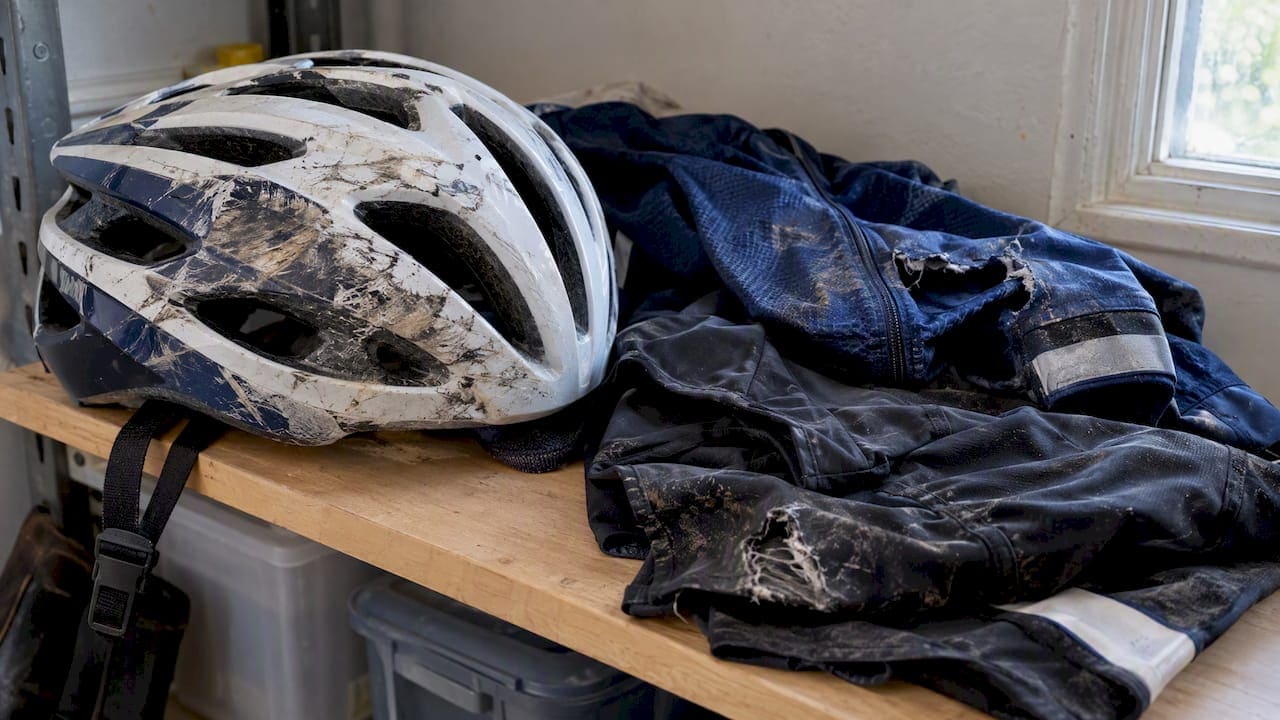
Preserving evidence early gives your attorney leverage in settlement negotiations later, since insurers tend to discount claims that lack contemporaneous documentation.
New Mexico laws that matter to bicyclists
Under New Mexico’s SB73, which took effect July 1, 2025, and the underlying motor vehicle code, bicyclists riding on New Mexico roadways hold the same rights and duties as drivers of motor vehicles, with a little equipment and operational exceptions specific to bikes. This matters directly for your claim because it means a driver who violates traffic law against a cyclist, the same way they would against another car, can be found negligent using the same legal standards.
SB73 made several changes that affect how liability gets assessed at intersections:
- Clarified how bicyclists must stop at signals and stop signs, treating the intersection conduct similarly to that expected of a motor vehicle driver.
- Addressed yield requirements at intersections where a bicyclist is proceeding through or turning.
- Specified circumstances under which a bicyclist may proceed after stopping, language that insurers and attorneys now reference closely in fault disputes.
Because these statutory duties run both ways, insurance adjusters and defense attorneys frequently scrutinize whether the cyclist followed every rule of the road before accepting that the driver was fully at fault. That’s one reason precise statutory language matters so much in these cases: a cyclist who rolled through a stop sign, even briefly, can see their compensation reduced even when the driver caused the collision.
Local guidance, such as Albuquerque’s bicycle rules of the road, adds practical detail to the state statute, covering lane positioning, signaling, and sidewalk riding rules that often come up in fault disputes within city limits.
Comparative negligence and statute of limitations in New Mexico
New Mexico follows a pure comparative negligence rule, which means your compensation gets reduced by your percentage of fault, but you can still recover damages even if you were mostly responsible for the crash. If a jury finds you 20% at fault for failing to use a bike lane, for example, your total award drops by 20%. If you were 60% at fault, you’d still recover the remaining 40%, a structure that differs from states that cut off recovery entirely once a claimant crosses the 50% fault mark.
Filing deadlines matter just as much as fault percentages:
- New Mexico law sets a three-year statute of limitations for personal injury claims under NMSA §37-1-8, meaning you generally must file suit within three years of the accident date.
- Minors benefit from tolling under NMSA §37-1-10, and the Court of Appeals’ analysis in Gomez v. Chavarria walks through how that one-year extension interacts with the underlying three-year period.
- Missing the deadline typically bars your claim entirely, regardless of how strong the underlying facts are.
Contacting an attorney early preserves your options. An attorney can evaluate whether tolling applies to your situation, gather evidence before it disappears, and respond effectively if an insurer raises a statute-of-limitations defense to avoid paying.
Insurance claims in New Mexico: insurer tactics and UM/UIM coverage
Once a crash report exists, you’ll typically need to notify both the at-fault driver’s insurer and, in some cases, your own insurer if uninsured or underinsured motorist coverage applies. The New Mexico Motor Vehicle Division’s insurance guidance outlines the coverage requirements drivers carry and how those policies interact with claims from other road users, including cyclists.
Insurers handle bicycle accident claims the same way they handle any liability claim, which means some common tactics show up repeatedly:
- Offering a quick, low settlement before you know the full scope of your medical needs.
- Requesting a recorded statement early, often phrased as routine, to lock in details that can later be used to minimize your claim.
- Asking you to sign a broad release in exchange for a check that doesn’t account for future treatment.
Uninsured and underinsured motorist coverage becomes relevant when the driver who hit you carries no insurance or insufficient limits to cover your damages. In those cases, you file a claim against your own UM/UIM policy, and New Mexico law requires insurers to offer this coverage, though drivers can reject it in writing.
Pro Tip: Never sign a release or accept a settlement offer until you understand your full prognosis, including whether you’ll need future surgery, therapy, or long-term care.
When an insurer stalls, lowballs, or denies a valid claim, escalating to a formal demand letter, and eventually a lawsuit if the deadline requires it, often prompts a more serious response than continued phone calls.
Injuries and damages: what counts and how claims are valued
Bicycle accidents tend to produce more severe injuries than many other vehicle collisions because cyclists have little physical protection. Common injuries include fractures, traumatic brain injuries, road rash and lacerations, spinal injuries, and soft-tissue damage that can require months of physical therapy. National safety data from NHTSA documents these crash patterns and underscores why injury severity for cyclists tends to run higher than for occupants protected by a vehicle frame.
Compensation in a New Mexico bicycle accident claim typically falls into these categories:
- Past and future medical expenses, including emergency care, surgery, imaging, and ongoing rehabilitation.
- Lost wages and diminished earning capacity, when injuries keep you out of work temporarily or permanently.
- Pain and suffering, which accounts for physical pain and the emotional toll of recovery.
- Property damage, covering your bicycle, helmet, and other gear destroyed in the crash.
Permanent impairment and catastrophic care needs, such as long-term nursing support or home modifications, are among the factors that most significantly raise a claim’s value, since they require detailed medical and financial documentation to prove. Thorough records, including imaging, physician notes, wage statements, and sometimes expert testimony on future care costs, give your attorney the foundation needed to negotiate from strength rather than accept an early lowball offer.
How a New Mexico personal injury lawyer helps your claim
Handling a bicycle accident claim involves more moving parts than most people expect, from gathering evidence to filing suit before a deadline passes. Here’s what an attorney typically does on your behalf:
- Investigates the crash, pulling the official police report, visiting the scene when necessary, and retaining accident reconstruction or medical experts when liability or injury causation is disputed.
- Preserves evidence that might otherwise disappear, including surveillance footage, vehicle data, and witness statements.
- Builds a demand package that documents your medical treatment, lost income, and pain and suffering to present a complete picture to the insurer.
- Negotiates directly with insurance adjusters, who often respond differently to an attorney than to an unrepresented claimant.
- Files suit before the statute of limitations runs, if a fair settlement doesn’t materialize through negotiation.
These cases are often handled on a contingency fee basis, which means you pay nothing upfront and owe no attorney’s fee unless compensation is recovered for you. A free consultation may give you a chance to walk through what happened, ask questions, and understand your options before deciding how to move forward. If you reach out, expect an initial intake call where we gather the basic facts, followed by a request for documentation like your medical records and the police report, and from there a realistic sense of how your case is likely to proceed.
Practical perspective from the firm’s experience
The claimants who struggle most are often the ones who delay medical care, post about the crash on social media before their claim resolves, or accept a quick settlement before knowing their full prognosis. Insurers comb through social posts looking for anything that contradicts a stated injury.
Early imaging, contemporaneous medical records, and witness statements gathered within days of the crash tend to carry the most weight in insurer decisions, far more than records assembled months later. A typical case we see starts with an ER visit, moves through weeks of physical therapy, and resolves once the treating physician confirms the claimant has reached maximum medical improvement, at which point we can accurately value the claim.
— Adam
Free case evaluation and how to start your claim
A free case evaluation is often offered for anyone injured in a New Mexico bicycle accident, and typically you pay nothing unless a case is won. This contingency arrangement allows for experienced legal guidance without worrying about upfront legal fees while facing medical bills and lost income.

Before your consultation, it helps to gather what you have: photos from the scene, your medical records so far, the police accident report if one was filed, and contact information for any witnesses. During the call, we’ll walk through what happened, review the evidence you’ve collected, and explain what your claim might look like given New Mexico’s comparative negligence and filing deadline rules.
Reach out through our firm’s website to schedule your free consultation, and if your injuries involve long-term disability, we can also speak with you about Social Security Disability options alongside your injury claim. After you contact us, expect a prompt response and a clear next step rather than a long wait.
This article is general information, not a substitute for advice from a qualified lawyer. Consult a qualified legal professional about your own circumstances before acting on anything here.
FAQ
How much compensation will I get for a bike accident?
Compensation depends on your medical expenses, lost wages, property damage, and the severity of your injuries, along with your percentage of fault under New Mexico’s comparative negligence rule. There’s no fixed amount, since every claim is valued individually based on documented losses and long-term care needs.
What is the hardest injury to prove?
Soft-tissue injuries and mild traumatic brain injuries tend to be the hardest to prove because they often don’t show up clearly on imaging and symptoms can be subjective. Early medical documentation and consistent follow-up treatment are critical to establishing these injuries are real and connected to the crash.
Are bicycle accidents covered by insurance?
Yes, the at-fault driver’s auto insurance typically covers a bicyclist’s injuries and damages, and if that driver is uninsured or underinsured, your own uninsured/underinsured motorist coverage may apply instead. New Mexico’s Motor Vehicle Division requires insurers to offer UM/UIM coverage, though drivers may decline it in writing.
What is the statute of limitations for bodily injury claims in New Mexico?
New Mexico generally requires personal injury lawsuits to be filed within three years of the accident date under NMSA §37-1-8. Minors receive a tolling extension under a related statute, so the deadline can run differently depending on the claimant’s age at the time of the crash.
Sources
- SB0073 — Final Enrolled Version (New Mexico Legislature, 2025)
- Gomez v. Chavarria, Court of Appeals of New Mexico (opinion PDF)
- New Mexico Motor Vehicle Division — Insurance
- NHTSA — Bicycle safety
Authoritative statutes, official pages, and safety data
Readers who want to review the primary legal text behind this guide can consult the sources below directly. These include the enacted statutory language, appellate case law, and official state and federal data referenced throughout this article.