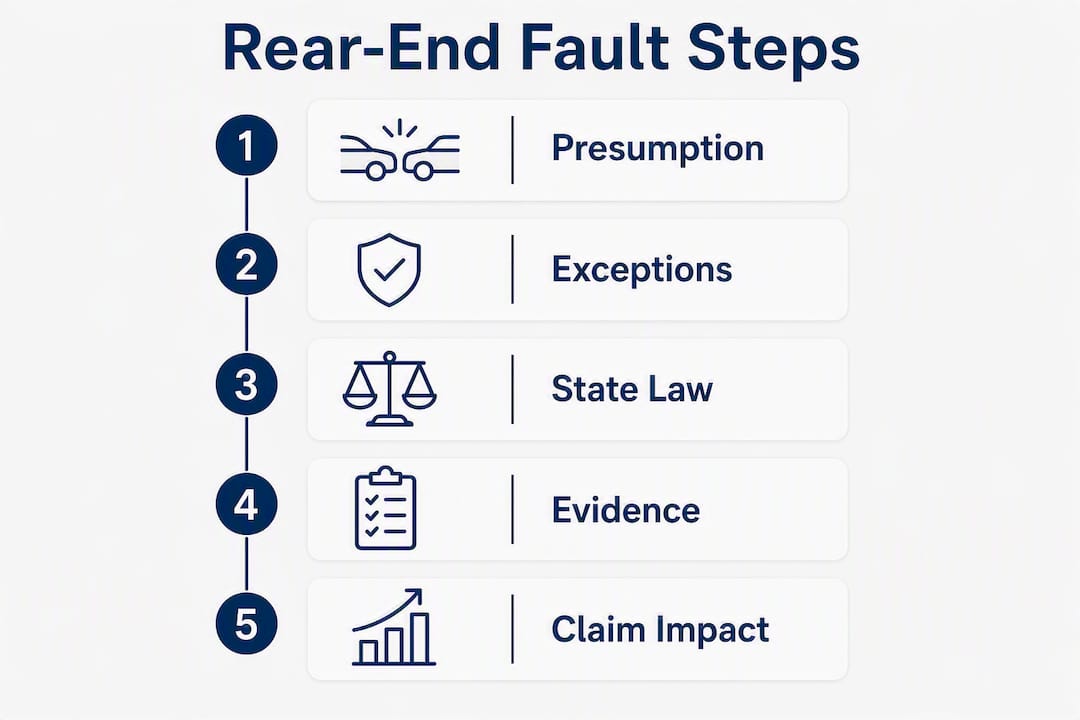
The rear driver is usually presumed at fault in a rear-end crash, but that presumption is rebuttable with the right evidence. According to NHTSA estimates cited by Nolo, rear-end collisions make up roughly 30% of crashes involving moving vehicles, according to NHTSA estimates cited by Nolo, making this one of the most common fault disputes in American personal injury law. If you were rear-ended, or if you rear-ended someone else, your outcome depends less on the presumption itself and more on what evidence exists and which state’s negligence rules apply.
Here is the short version before we go deeper:
- Sudden reversal: If the lead driver backed into you, fault shifts to them.
- Brake-checking: Intentional hard braking to intimidate a following driver can make the front driver liable.
- Defective brake lights: A rear driver cannot reasonably stop for a hazard they cannot see.
- Unsafe lane cut-in: A driver who merges and immediately stops gives the car behind no reaction time.
- Mechanical failure: Documented brake failure in the rear vehicle can reduce or eliminate fault.
- Chain-reaction pileups: The driver who started the chain, not necessarily the last to collide, may bear primary liability.
Understanding which exception applies to your situation, and how to document it, is what separates a disputed claim from a resolved one.
Table of Contents
- Why the rear driver is usually presumed at fault
- When a rear-end crash may not be your fault
- How state law affects fault and recovery
- What evidence helps rebut the presumption
- What to do right after a rear-end collision
- How fault findings affect your insurance claim
- How to contest a fault determination
- What NHTSA data and state law say about rear-end crashes
- Key Takeaways
- How attorneys realistically evaluate rear-end cases
- Injured in a rear-end crash? 2keller can help protect your recovery
- Authoritative sources and where to find state-specific rules
Why the rear driver is usually presumed at fault
Every driver on the road has a legal duty to maintain a safe following distance and to stop before striking the vehicle ahead. This duty, sometimes called the “assured clear distance” rule, is codified in traffic statutes across all fifty states. When a rear-end collision occurs, the physical fact that one vehicle struck another from behind is treated as an initial inference that the rear driver failed that duty.
Insurers and police officers assign rear-driver fault for several routine reasons:
- Following too closely: Tailgating leaves insufficient stopping distance, especially at highway speeds.
- Distracted driving: Phone use, eating, or adjusting controls delays reaction time.
- Excessive speed: Higher speeds extend stopping distances beyond what the gap between vehicles allows.
- Failure to account for conditions: Rain, ice, or heavy traffic demand greater following distance.
- Impaired driving: Alcohol or drug impairment slows perception and response.
A police report that assigns fault to the rear driver carries real weight with insurers, but it is not a legal verdict. Adjusters rely heavily on police reports to set initial liability positions, and officers write reports based on what they observe at the scene, not on a full evidentiary investigation. Courts and juries are not bound by those conclusions. That distinction matters practically: a police report that blames you does not end your case, and a report that favors you does not guarantee a settlement.
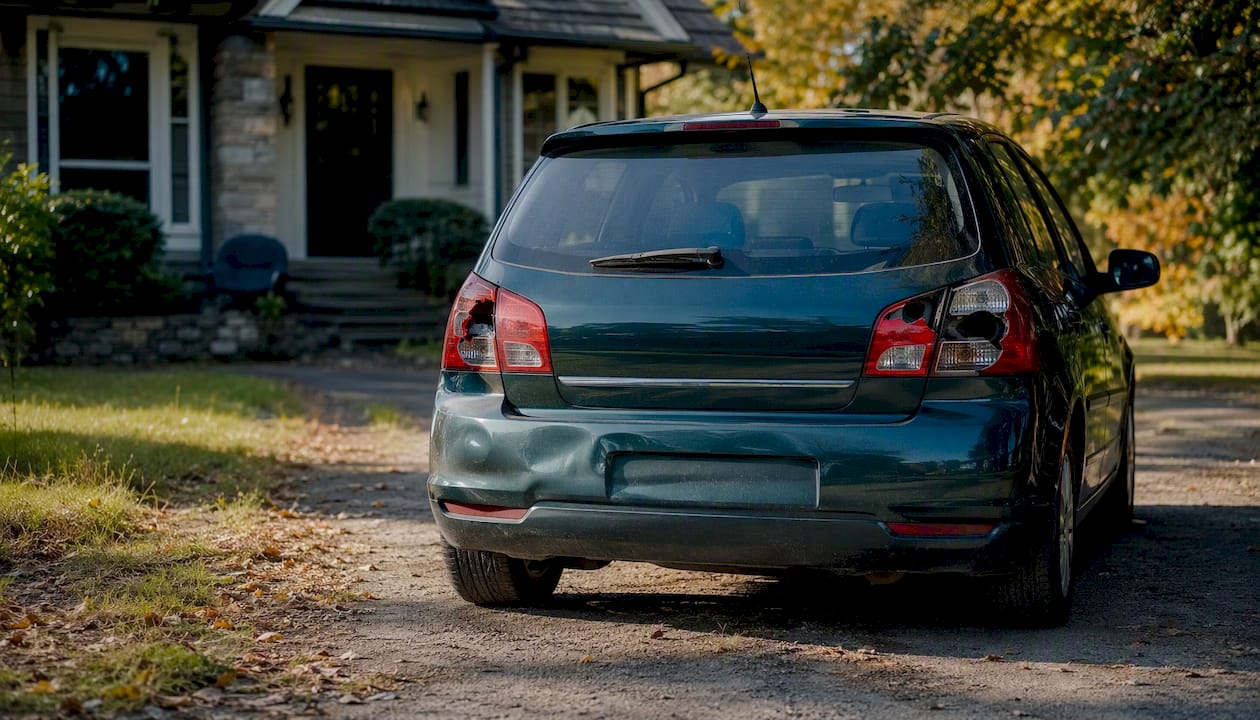
When a rear-end crash may not be your fault
The presumption of rear-driver fault is a starting point, not a final answer. Several well-recognized exceptions can shift liability fully or partially to the lead driver. Each one requires specific evidence to support it.
1. Sudden reversal (vehicle backing)
A driver who shifts into reverse on a roadway or in a parking lot and strikes an approaching vehicle bears fault for that collision. If you were moving forward and a car backed into your path, dashcam footage or a witness who saw the reverse lights is your strongest evidence.
2. Brake-checking
Brake-checking occurs when a driver intentionally brakes hard to intimidate or punish a following driver. Courts in multiple states have found lead drivers liable when this conduct is proven. Dashcam video showing no traffic hazard ahead of the lead vehicle, combined with a sudden and extreme deceleration, is the clearest way to document it.
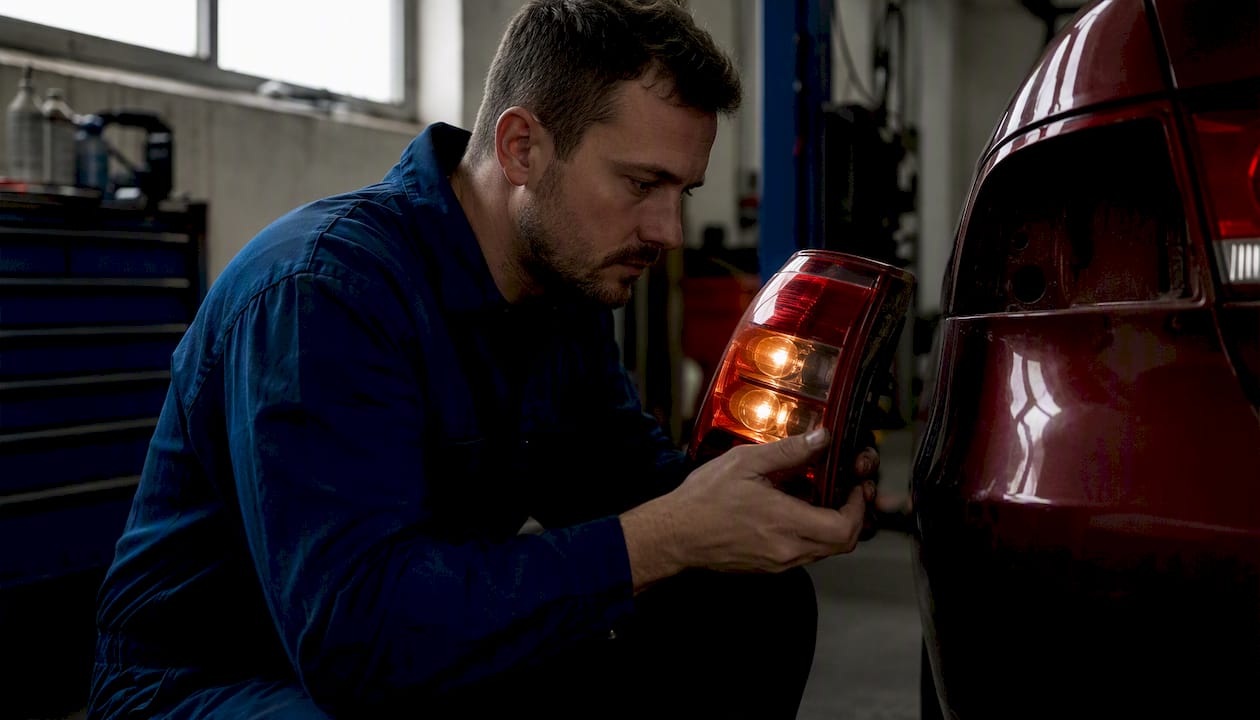
3. Defective or missing brake lights
A rear driver cannot react to a stop they cannot see. If the lead vehicle’s brake lights were burned out or malfunctioning, that defect can shift fault. Vehicle inspection records, photos of the light assembly taken at the scene, and a mechanic’s written report all support this exception.
Pro Tip: Photograph the rear of the lead vehicle immediately after the crash, before either car is moved. A burned-out brake light bulb is easy to replace, and that evidence disappears quickly.
4. Sudden and unexplained stop in flowing traffic
Stopping abruptly in the middle of a highway without a traffic or road hazard ahead can constitute negligence by the lead driver. This is different from normal traffic slowdowns. Evidence here includes witness statements, traffic camera footage, and any available dashcam recording showing traffic conditions ahead of the lead vehicle.
5. Unsafe lane change followed by an immediate stop
When a driver cuts into a lane and brakes immediately, the following driver has no reasonable reaction time. Police reports sometimes capture this through skid marks and vehicle positions. Witness accounts and any available surveillance footage are critical.
6. Mechanical failure (brake failure)
If your vehicle’s brakes failed due to a manufacturing defect or a recent negligent repair, liability may shift to the vehicle manufacturer or the repair shop. This requires documented maintenance records, a post-crash mechanical inspection, and potentially an expert opinion on the failure’s cause.
7. Being pushed into the lead vehicle (chain-reaction pileup)
In a multi-vehicle pileup, the middle vehicle is often struck from behind and pushed forward into the car ahead. That driver did not choose to collide; they were physically forced into it. Accident reconstruction specialists are frequently necessary in these cases because the sequence of impacts determines who bears primary fault.
Pro Tip: In a chain-reaction crash, note the position of every vehicle before anyone moves. Photograph all four sides of each car involved. The pattern of damage across multiple vehicles is what reconstruction experts use to establish impact sequence.
8. Obstruction in the roadway
A vehicle forced to stop suddenly because of debris, an animal, or a road hazard may not be liable for the collision that follows, particularly if the stop was unavoidable. Photographs of the obstruction taken immediately after the crash, before it is cleared, are the only reliable way to document this.
How state law affects fault and recovery
Knowing who caused the crash is only part of the equation. Whether you can recover compensation, and how much, depends on your state’s negligence system. There are four main frameworks in use across the United States.
Pure comparative negligence allows a plaintiff to recover damages even if they are 99% at fault. Their award is simply reduced by their percentage of fault. Florida, California, and New York follow this rule. A driver who is 70% at fault for a rear-end collision in a pure comparative state can still recover 30% of their damages.
Modified comparative negligence (50% bar) permits recovery only if the plaintiff’s fault is less than 50%. At exactly 50%, recovery is barred in some states. Indiana follows a modified comparative fault system, and Indiana’s comparative fault law sets the bar at 51%: a plaintiff who is 51% or more at fault cannot recover.
Modified comparative negligence (51% bar) works the same way but bars recovery at 51% or more. Texas and Michigan use this version.
Contributory negligence is the strictest rule. In states like North Carolina, Virginia, Maryland, and Washington D.C., any fault on the plaintiff’s part, even 1%, completely bars recovery. This makes fault disputes far more consequential in those jurisdictions.
No-fault insurance states add another layer. In states like Michigan and New Jersey, your own Personal Injury Protection (PIP) coverage pays your medical bills and lost wages regardless of fault, up to policy limits. You can only step outside the no-fault system and sue the at-fault driver if your injuries meet a defined threshold of severity. For a deeper look at how these systems interact, comparative vs. contributory negligence explains the practical differences for injury claimants.
| Negligence System | Recovery Threshold | Effect on Rear-End Claims |
|---|---|---|
| Pure comparative | Any fault level | Award reduced by plaintiff’s fault percentage |
| Modified comparative (50% bar) | Plaintiff must be less than 50% at fault | Bars recovery at 50% or more |
| Modified comparative (51% bar) | Plaintiff must be less than 51% at fault | Bars recovery at 51% or more |
| Contributory negligence | Plaintiff must have no fault | Any fault bars all recovery |
Justia’s legal resources provide state-by-state summaries of which negligence system applies, and the New Mexico car accident liability guide covers how these rules play out for drivers in that state specifically.
What evidence helps rebut the presumption
Evidence is what converts a legal theory into a recoverable claim. The following types are most influential in rear-end fault disputes, roughly in order of persuasive weight.
- Dashcam footage: Records vehicle positions, speeds, brake-light status, and driver behavior in real time. It is the single most objective source of evidence in most cases.
- Traffic and surveillance camera footage: Red-light cameras, parking lot cameras, and nearby business security systems often capture crashes from angles dashcams miss.
- Witness statements: Independent witnesses with no stake in the outcome carry significant credibility with adjusters and juries alike.
- Police report: Documents the officer’s observations, citations issued, and initial fault assessment.
- Photos of vehicle positions and damage: Taken before vehicles are moved, these establish the physical relationship between cars and the severity of impact.
- Skid marks and road debris: Skid mark length and direction help reconstruct speed and braking behavior.
- Event Data Recorder (EDR) data: The EDR, sometimes called a black box, records speed, throttle position, brake application, and seatbelt status in the seconds before a crash. This data can confirm or contradict witness accounts and adjuster assumptions. For Michigan drivers, EDR evidence in car accident claims explains how to obtain and use this data.
- Vehicle maintenance and inspection records: Relevant when mechanical failure is claimed as a defense.
- Medical records: Document the nature and timing of injuries, which supports causation arguments when the other side disputes whether the crash caused your harm.
Preservation steps matter as much as the evidence itself. At the scene, photograph everything before moving vehicles. Get the names and phone numbers of every witness. Check for visible cameras on nearby buildings and note their locations. Within 24 hours, back up any dashcam footage to a separate device; most dashcams loop and overwrite old files automatically. Within a few days, formally request that the other driver’s insurer preserve their vehicle’s EDR data, or have your attorney send a spoliation letter. Once a vehicle is repaired or scrapped, that data is gone.
Pro Tip: Dashcam files are fragile. The moment you are safely off the road, remove the SD card or connect the camera to a laptop and copy the files. Do not rely on the camera’s internal loop protection — it is not designed to hold footage indefinitely. An evidence preservation checklist can walk you through every step.
For Indiana-specific guidance on supporting evidence in a car accident claim, 2keller’s resource library covers what documentation carries the most weight with Indiana adjusters and courts.
What to do right after a rear-end collision
The first hour after a crash shapes the entire claim. Here is a prioritized sequence.
- Move to safety and check for injuries. If the vehicles are drivable and you are not seriously hurt, move to the shoulder. Call 911 immediately if anyone is injured.
- Call the police. Even for minor crashes, a police report creates an official record. In many states, you are legally required to report collisions above a certain damage threshold.
- Do not admit fault. At the scene, say only what is factually necessary. “I’m okay” is fine. “I didn’t see you stop” is not.
- Photograph everything before vehicles move. Capture vehicle positions, all four sides of both cars, skid marks, road conditions, traffic signs, and any visible damage.
- Get witness contact information. Names and phone numbers. Do not rely on the police report to capture everyone who saw the crash.
- Check for surveillance cameras. Look at nearby businesses, traffic signals, and parking structures. Note their locations so you or your attorney can request footage quickly.
- Exchange insurance and contact information. Driver’s license, insurance card, license plate, and phone number for every driver involved.
- Preserve your dashcam footage. Copy the file immediately; do not wait.
- Seek medical attention, even for minor symptoms. Whiplash and soft-tissue injuries often do not produce full symptoms for 24–72 hours. Mayo Clinic notes that whiplash symptoms can be delayed, which is exactly why gaps in medical treatment create problems in injury claims.
- Request a copy of the police report. Most departments make reports available within a few days. Get it before you speak with any adjuster.
Within 24–72 hours: Notify your own insurer of the crash. Do not give a recorded statement to the other driver’s insurer without consulting an attorney first. If your injuries are more than minor, contact a personal injury attorney before accepting any settlement offer.
How fault findings affect your insurance claim
Insurers do not determine fault in a vacuum. They rely on the rear-driver presumption as a default, then look for reasons to maintain it. Understanding their tactics helps you respond effectively.
Common adjuster approaches in rear-end claims include:
- Anchoring to the presumption: The initial offer assumes the rear driver is fully at fault and the lead driver’s damages are fully compensable, without independent investigation.
- Requesting recorded statements early: A recorded statement taken before you have reviewed evidence or consulted an attorney can lock you into a version of events that hurts your claim.
- Minimizing medical causation: Adjusters frequently argue that injuries were pre-existing or that the impact was too minor to cause the claimed harm.
- Social media monitoring: Posts showing physical activity after a crash are used to challenge injury severity.
- Low early settlement offers: Initial offers are almost always below the claim’s actual value, particularly before medical treatment is complete.
For uninsured or underinsured motorist (UM/UIM) claims, fault still matters. If the at-fault driver has no insurance or insufficient coverage, your own UM/UIM policy steps in, but your insurer will still evaluate fault before paying. New Mexico drivers dealing with this situation can find state-specific guidance on uninsured motorist coverage claims.
A typical low-complexity rear-end claim moves through three phases. In the first 30–90 days, the police report is obtained, liability is assessed, and an initial offer is extended. Between 90 days and medical stabilization, treatment continues and the insurer monitors the case. Once treatment is complete, a demand package is submitted with all medical records, bills, and lost wage documentation, and negotiations begin in earnest. If the parties cannot agree, litigation or alternative dispute resolution follows.
How to contest a fault determination
If an insurer has assigned you fault you believe is incorrect, you can dispute it. Here is a practical sequence.
- Gather all available evidence before responding to the insurer’s determination. Review the police report for factual errors and note any inaccuracies in writing.
- Obtain independent photos and measurements of the scene if you have not already. Skid mark lengths, sight lines, and traffic control device positions can all support your version of events.
- Request EDR data from both vehicles through your attorney or directly from the insurer. Send a written preservation demand immediately to prevent data loss.
- Collect witness affidavits. A signed statement from an independent witness carries more weight than an adjuster’s summary of a phone call.
- Consider an accident reconstruction specialist when the crash involves disputed speeds, a chain-reaction sequence, or conflicting physical evidence. Reconstruction experts combine scene photos, damage alignment, skid marks, and vehicle dynamics to recreate the impact sequence, and their reports are frequently decisive in multi-car pileups.
- Send a formal demand letter if the insurer persists in misallocating fault after you have submitted your evidence. The letter should identify the specific errors in their determination and attach supporting documentation.
- Consult a personal injury attorney when medical damages are significant, fault percentages are genuinely disputed, or the crash involves multiple vehicles. An attorney can send a spoliation letter, retain experts, and negotiate from a position the insurer takes seriously.
For smaller property-damage disputes with no significant injury, a direct negotiation with the adjuster or a small claims filing may resolve the matter without legal representation. The threshold for involving an attorney shifts when injuries require ongoing treatment, when the insurer denies the claim outright, or when fault allocation would reduce your recovery below what your medical bills require.
Expect the dispute process to take 30–90 days for straightforward cases and six months to two years for contested multi-vehicle or serious-injury claims.
What NHTSA data and state law say about rear-end crashes
NHTSA’s risky driving data consistently identifies rear-end collisions as one of the most frequent crash types on American roads. The agency’s estimates, cited by Nolo, put rear-end crashes at roughly 30% of all moving-vehicle collisions. That frequency is part of why the fault presumption exists: statistically, the rear driver is responsible in the large majority of these crashes. But frequency is not universality, and the presumption was designed to be rebutted.
State law shapes how that rebuttal plays out in practice:
- Indiana follows modified comparative fault with a 51% bar. A rear driver found 40% at fault still recovers 60% of damages. The Indiana comparative fault framework is more forgiving than contributory negligence states but still requires that fault stay below 51%.
- New Mexico — follows pure comparative negligence, meaning partial fault never bars recovery entirely.
To find your state’s specific rule, the Justia legal resource maintains state-by-state negligence summaries. Your state’s vehicle code, available through your state legislature’s website, contains the specific following-distance and assured-clear-distance statutes that underpin the rear-driver presumption. A police report determines the initial fault position; a court determines the final one.
Key Takeaways
The rear driver is presumed at fault in a rear-end collision, but that presumption is rebuttable, and your state’s negligence system determines how much your own fault percentage affects your recovery.
| Point | Details |
|---|---|
| Presumption is rebuttable | Brake-checking, defective lights, sudden reversal, and chain-reaction pileups can all shift fault away from the rear driver. |
| Preserve evidence immediately | Dashcam files, witness contacts, and EDR data must be secured within hours; delay causes permanent loss. |
| State law controls recovery | Pure comparative states allow partial recovery at any fault level; contributory negligence states bar all recovery if you share any fault. |
| Partial fault rarely bars recovery | In most U.S. states, sharing some fault reduces your award but does not eliminate it. |
| 2keller handles disputed claims | 2keller represents injured drivers in Indiana, Michigan, and New Mexico on a contingency basis, with free consultations and no fee unless the case resolves in your favor. |
How attorneys realistically evaluate rear-end cases
Most rear-end claims that reach an attorney’s desk look straightforward on the surface. A police report says the rear driver is at fault, the lead driver has injuries, and the insurer has made an offer. The real work begins when those three things do not align.
What changes a case’s trajectory is objective evidence. A police report is an opinion formed at the scene under time pressure. Video footage, EDR data, and independent witness statements are facts. When those facts contradict the adjuster’s initial liability position, the insurer’s exposure changes, and so does the settlement value. Clients are often surprised to learn that partial fault, in most states, does not end their claim. A driver who is found 30% responsible for a rear-end collision in Indiana or New Mexico still has a viable claim for the remaining 70% of their damages.
Contingency-fee representation means you do not pay attorney fees unless and until the case resolves in your favor. For most rear-end injury clients, that arrangement removes the financial barrier to getting proper legal advice early, which is exactly when it matters most. Cases that are well-documented from the first day consistently resolve faster and at higher values than those where evidence was lost or statements were given prematurely.
Injured in a rear-end crash? 2keller can help protect your recovery
If you are dealing with a disputed fault determination, a denied claim, or injuries that are more serious than the other driver’s insurer wants to acknowledge, 2keller’s personal injury attorneys in Indiana, Michigan, and New Mexico work on a contingency basis. You pay nothing unless we win or settle your case.

Before your free consultation, gather what you have: the police report, photos from the scene, any dashcam or surveillance footage, medical records and bills, repair estimates, witness contact information, and any correspondence from the insurer. You do not need everything, but the more you bring, the more productive the first conversation will be.
Contact 2keller when you are facing serious injuries, a disputed fault percentage, a claim denial, a multi-vehicle crash, or any situation where you suspect brake-checking or other intentional conduct. Our team handles the insurer negotiations, the evidence preservation demands, and the expert coordination so you can focus on recovery. See how 2keller compares to other personal injury firms and reach out for a free, no-obligation consultation.
This article provides general legal information, not legal advice. Laws vary by state and individual circumstances. Consult a qualified personal injury attorney for guidance specific to your situation.
Authoritative sources and where to find state-specific rules
The following resources are reliable starting points for verifying the legal rules discussed in this article.
- NHTSA Risky Driving: The National Highway Traffic Safety Administration’s data on crash types and contributing factors, including rear-end collision frequency.
- Justia Negligence Resources: State-by-state summaries of comparative and contributory negligence rules, with links to primary statutes.
- Nolo: Rear-End Accident Fault: Plain-language explanation of the fault presumption and common exceptions, with NHTSA citation.
- Mayo Clinic: Whiplash: Clinical overview of whiplash symptoms, including delayed onset, relevant to injury documentation.
- Pure Comparative Negligence Guide: Explains how pure comparative negligence affects recovery amounts in states that follow that rule.
To find your state’s specific following-distance statute, search your state legislature’s website for the vehicle code or traffic code. Most states publish their statutes online and allow free text searches. For contributory versus comparative negligence, Justia’s state law pages list the controlling statute and leading cases for each jurisdiction. When the stakes are significant, a local personal injury attorney can confirm which rule applies to your specific facts and county.