
Car accident liability is the legal obligation to compensate others for losses caused by your negligent driving. When a crash happens in New Mexico, liability determines who pays for medical bills, vehicle repairs, lost wages, and other damages. Getting car accident liability explained correctly from the start protects your rights and shapes every decision you make afterward. The four legal elements that establish liability are duty of care, breach of duty, causation, and damages. Miss any one of them, and a claim fails. At 2keller, we work with accident victims across New Mexico to build the evidence needed to prove each element and recover full compensation.
What are the essential legal elements to prove liability in a car accident?
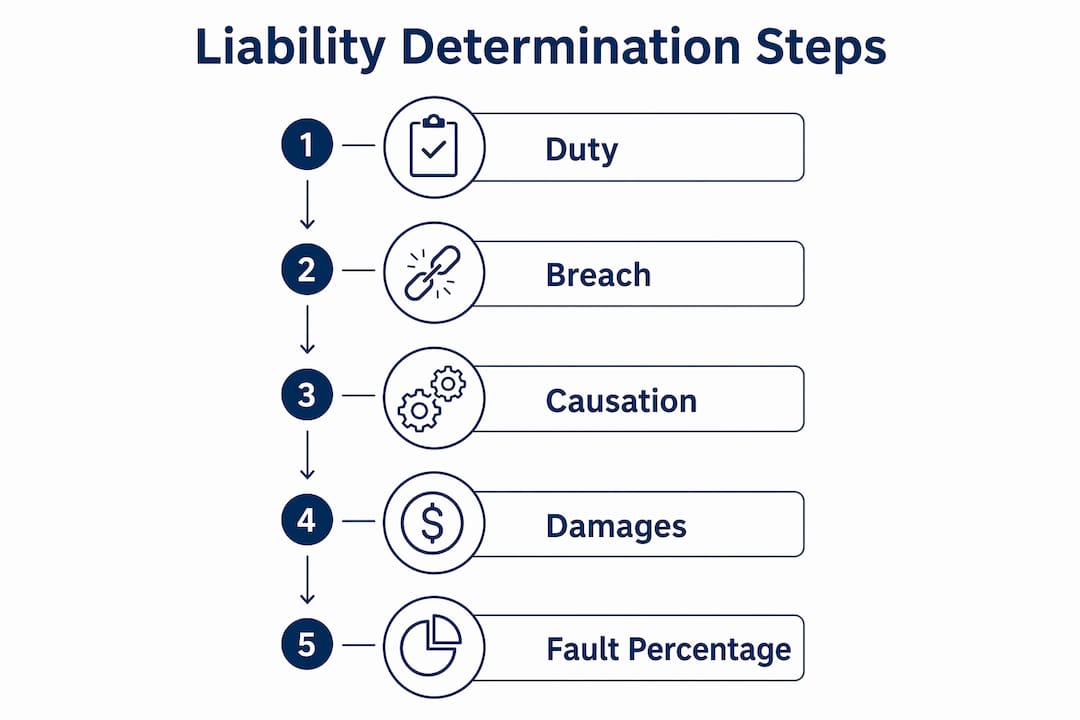
Liability requires proving four elements: duty of care, breach of duty, causation, and damages. Failure to prove any single element typically results in a denied claim. That is why understanding each one matters before you speak with an insurer or file a lawsuit.
Here is what each element means in practice:
- Duty of care. Every driver in New Mexico owes a legal duty to operate their vehicle safely and follow traffic laws. This duty exists automatically the moment you get behind the wheel.
- Breach of duty. A breach occurs when a driver fails to meet that standard. Common examples include speeding, running a red light, texting while driving, or following too closely.
- Causation. The breach must have directly caused the accident and the injuries that followed. A driver who ran a stop sign but whose action had no connection to your injuries has not caused your harm in the legal sense.
- Damages. You must show actual, measurable losses. Medical bills, vehicle repair costs, lost income, and pain and suffering all qualify. Without documented losses, there is no claim.
Evidence ties these elements together. Police reports, photographs, medical records, and witness statements each support a different part of the liability argument. Learning how to prove negligence in a structured way gives you a clear advantage when dealing with insurers or opposing counsel.
How is fault determined in New Mexico car accidents?
New Mexico follows a pure comparative negligence rule. Under this system, fault is assigned as a percentage to each party involved, and your financial recovery is reduced by your share of the fault. If a jury awards $50,000 and finds you 20% at fault, you recover $40,000. That reduction is direct and automatic.
This matters because even a partially at-fault driver can still recover compensation in New Mexico. States with contributory negligence rules bar recovery entirely if you share any fault. New Mexico’s pure comparative system is more forgiving, but insurers still use your fault percentage to reduce their payout.
The table below shows how fault percentages affect a $50,000 award under New Mexico’s comparative negligence rule:
| Claimant’s fault | Reduction | Net recovery |
|---|---|---|
| 0% | $0 | $50,000 |
| 20% | $10,000 | $40,000 |
| 50% | $25,000 | $25,000 |
| 75% | $37,500 | $12,500 |
Insurance adjusters determine fault by reviewing driver statements, police reports, physical evidence, video footage, and applicable traffic laws. They do not base liability on who filed first. Fault is objective, tied to evidence and law. New Mexico’s comparative fault rules also apply to comparative fault cases across multiple parties, which is common in multi-vehicle crashes.
What makes rear-end collision liability unique?
Rear-end collisions carry a rebuttable presumption against the rear driver. The law assumes the driver who struck from behind failed to maintain a safe following distance. That presumption is not automatic guilt, but it shifts the burden of proof. The rear driver must produce evidence to overcome it.
Several exceptions can shift liability to the lead driver:
- Sudden stop defense. If the lead driver braked abruptly on a clear highway without any hazard, that stop may be considered unreasonable. The sudden stop defense applies only when the stop was both unexpected and unjustified under the circumstances.
- Brake checking. Intentionally braking to intimidate a following driver is a recognized form of driver misconduct. Evidence of this behavior can shift partial or full liability to the lead driver.
- Defective brake lights. A rear driver who could not see that the lead vehicle was stopping has a viable defense if the brake lights were non-functional.
Event Data Recorders (EDR) capture pre-crash data including speed, braking force, throttle position, steering input, and seatbelt use. EDR data frequently decides disputed liability cases, overriding inconsistent witness or police statements when collected promptly. Dashcam footage serves a similar purpose and is often easier to access.
The presumption of negligence in rear-end crashes sets a burden of proof that documented driver misconduct or unexpected events can overcome. Multi-vehicle rear-end pileups add complexity because fault may be shared across several drivers.
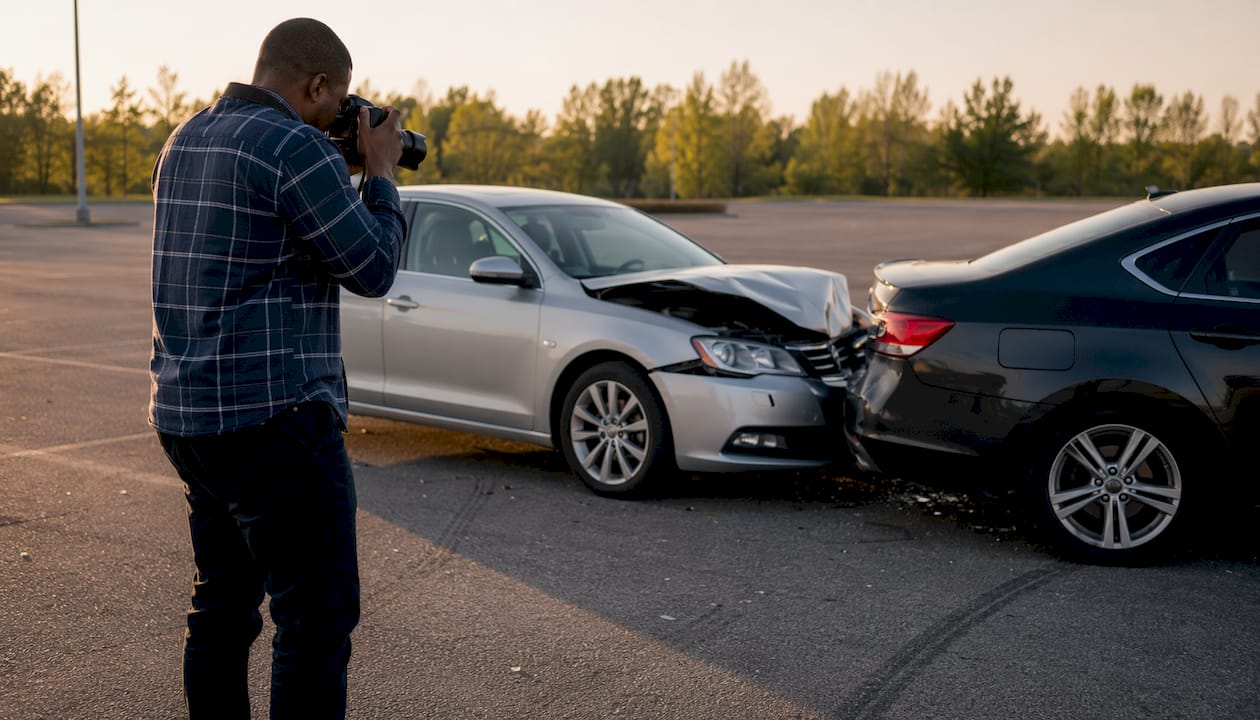
Pro Tip: Photograph the damage patterns on all vehicles at the scene. The location and angle of impact marks often confirm or contradict driver accounts, and this evidence disappears once vehicles are repaired.
What are the financial and legal implications beyond insurance coverage?
Insurance coverage has limits. When a liability judgment exceeds those limits, the at-fault driver becomes personally responsible for the remaining balance. Personal liability can exceed insurance limits, and creditors have legal tools to collect what is owed.
Those tools include:
- Wage garnishment. A court can order a portion of your paycheck withheld until the debt is paid.
- Property liens. Creditors can place a lien on your home or other real estate, blocking sale or refinancing until the lien is satisfied.
- Asset seizure. In some cases, non-exempt assets can be seized to satisfy a judgment.
- Umbrella insurance policies. These extend liability coverage beyond standard auto policy limits and are one of the most cost-effective ways to protect personal assets.
- Underinsured motorist coverage. This protects you when the at-fault driver’s policy cannot cover your full losses.
Owner liability adds another layer of exposure. If you lend your vehicle to someone who causes an accident, you may share liability under New Mexico’s negligent entrustment doctrine. Employers face similar risk when employees cause crashes while on the job.
“Liability judgments exceeding insurance coverage expose drivers to personal financial risks including wage garnishment and property liens. Most drivers significantly underestimate this exposure until they face a judgment that their policy cannot cover.”
Gross negligence, such as driving under the influence, can also trigger punitive damages. Punitive awards are designed to punish, not just compensate, and they can multiply the total financial exposure well beyond the original claim value.
What steps should you take after an accident to protect your rights?
The actions you take in the hours and days after a crash directly affect your liability position. Moving quickly and deliberately protects your claim.
- Notify your insurer promptly. Delays in notifying your insurer can result in denial of coverage for medical payments, repairs, or rental benefits. Report the accident the same day if possible.
- Collect scene evidence. Photograph all vehicles, road conditions, traffic signs, skid marks, and injuries. Get the names and contact information of all witnesses before they leave.
- Obtain the police report. Request a copy as soon as it is available. The report documents the officer’s observations and any citations issued, both of which carry weight in fault determination.
- Document your injuries. Seek medical care immediately, even if symptoms seem minor. Some injuries, such as whiplash or concussion, develop over hours or days. Medical records that begin on the day of the crash are far more credible than those created a week later.
- Consult an attorney before giving recorded statements. Drivers are not legally obligated to give recorded statements to the other party’s insurer. Adjusters use open-ended questions to elicit admissions or minimize injury reports. Get legal advice first.
Pro Tip: Never admit fault at the scene, even casually. A simple “I’m sorry” can be recorded and used as an admission of liability in later proceedings.
Key Takeaways
Car accident liability in New Mexico is determined by proving four legal elements: duty, breach, causation, and damages, with fault percentages directly reducing financial recovery under the state’s pure comparative negligence rule.
| Point | Details |
|---|---|
| Four elements of liability | Duty, breach, causation, and damages must all be proven or a claim is denied. |
| Comparative negligence in New Mexico | Fault is assigned as a percentage; your recovery is reduced by your share of fault. |
| Rear-end presumption | The rear driver is presumed at fault but can challenge this with EDR data, dashcam footage, or brake-checking evidence. |
| Personal financial exposure | Judgments exceeding policy limits can lead to wage garnishment, property liens, or asset seizure. |
| Post-accident steps | Notify your insurer the same day, preserve evidence, and consult an attorney before giving recorded statements. |
What I’ve learned about liability that most drivers find out too late
After years of working on car accident cases across New Mexico, the pattern I see most often is not complicated. Drivers assume that being rear-ended automatically means the other driver pays everything. That assumption costs people real money.
The rebuttable presumption against the rear driver is exactly that: rebuttable. I have seen cases where a lead driver’s brake-checking behavior shifted significant fault back onto them, and I have seen cases where a rear driver’s EDR data showed they were traveling well above the speed limit, which reduced the other party’s recovery under comparative negligence. Neither outcome was obvious at the scene.
The second thing most drivers underestimate is personal financial exposure. A standard auto policy with $50,000 in liability coverage sounds like enough until a jury awards $200,000. That $150,000 gap becomes your personal debt. Umbrella policies exist precisely for this scenario, and they are far less expensive than most people expect.
Insurance adjusters work methodically and without emotion. They are not adversaries, but they are not your advocates either. The most effective thing you can do is match their methodical approach with your own: document everything, say nothing you have not thought through, and get professional guidance before the claim hardens into a position that is difficult to change.
— Adam
How 2keller supports drivers navigating liability claims
Liability disputes are rarely simple, and the financial stakes in New Mexico car accident cases can be significant. 2keller works with accident victims to gather the evidence, interpret the law, and build claims that hold up under scrutiny.

One of the most common ways people lose value in a legitimate claim is through avoidable mistakes in the insurance process. The guide on car insurance claim mistakes covers the specific errors that adjusters look for and how to avoid them. Whether your case involves a straightforward rear-end collision or a complex multi-party dispute, 2keller provides the legal support to protect your rights and pursue the compensation you deserve. Reach out to our team to discuss your situation.
FAQ
What does car accident liability mean?
Car accident liability is the legal responsibility to pay for damages caused by negligent driving. It is established by proving duty of care, breach, causation, and measurable damages.
Who is liable in a rear-end collision in New Mexico?
The rear driver is presumed liable under New Mexico law, but that presumption can be challenged with evidence such as EDR data, dashcam footage, or proof of brake checking by the lead driver.
How does comparative negligence affect my car accident claim?
New Mexico’s pure comparative negligence rule reduces your recovery by your percentage of fault. If you are 30% at fault on a $100,000 award, you recover $70,000.
Can a judgment exceed my car insurance coverage?
Yes. When a court judgment exceeds your policy limits, you are personally responsible for the remaining balance. Creditors can pursue wage garnishment, property liens, or asset seizure to collect.
Should I give a recorded statement to the other driver’s insurer?
No. You are not legally required to give a recorded statement to the other party’s insurer. Doing so without legal advice can result in admissions that reduce or eliminate your recovery.