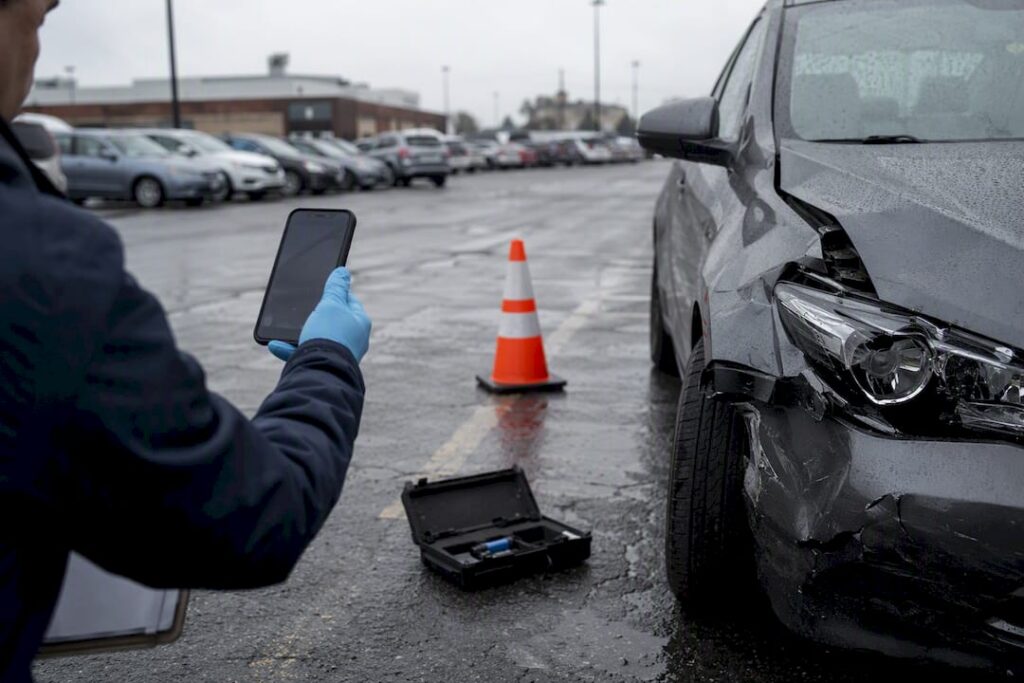
A car property damage claim is your formal demand for repair or replacement costs, and in most U.S. crashes, the at-fault driver’s liability insurer should pay. If the other driver is uninsured or fault is disputed, your own collision or uninsured motorist coverage steps in instead. Protect the claim immediately with these steps:
- Document the scene: photos of both vehicles, damage, plates, and VIN.
- Preserve evidence: get names, insurance information, and a police report if one is warranted.
- Report promptly to the relevant insurer and save your claim number and adjuster’s contact information.
TL;DR:
- Filing quickly with comprehensive photos, police reports, and witness contacts maximizes evidence and improves negotiation outcomes.
- First-party claims offer faster resolution but require paying a deductible, whereas third-party claims involve longer waits but no upfront cost.
- Independent appraisals often better estimate diminished value than insurer formulas, strengthening your bargaining position.
- Always delay signing a release until repairs are complete and the vehicle has been driven, to avoid losing the chance to claim hidden damages.
- Seek legal help if liability is contested, claims are denied, or complex lien or underinsured issues arise to improve settlement chances.
Table of Contents
- What Does a Car Property Damage Claim Cover?
- First-Party or Third-Party Claim: Which Should You File?
- Steps to Take at the Scene and in the First 24 Hours
- How Insurers Calculate ACV and Total Loss
- How to File Your Claim, Step by Step
- When Should You Bring in an Attorney?
- Negotiating Your Settlement Without Signing Away Your Rights
- Editorial Take: What Actually Moves the Needle on These Claims
- Get Help With Your Property Damage Claim
- Key Takeaways
- Sources
What Does a Car Property Damage Claim Cover?
A property damage claim is designed to make you financially whole for the vehicle and belongings damaged in the crash, not just the obvious dent in your bumper. Most policies and liability payouts include:
- Vehicle repair costs or, if the car is totaled, its actual cash value (ACV)
- Rental car reimbursement or alternative transportation while your car is out of service
- Towing and storage fees racked up after the accident
- Personal property damaged inside the vehicle, often subject to a policy cap
- Your deductible, if you’re filing first-party, which reduces your payout unless you later recover it through subrogation
Read your policy’s declarations page before assuming everything is covered. Some insurers cap personal property reimbursement at a few hundred dollars, and rental coverage often isn’t automatic unless you added it.
First-Party or Third-Party Claim: Which Should You File?
Every car property damage claim runs through one of two tracks, and picking the right one affects your timeline, your deductible, and who pays while things get sorted out.
A first-party claim goes through your own collision or uninsured motorist coverage. Use it when fault is unclear, the at-fault driver is uninsured, or you want your car repaired fast without waiting on another company’s investigation. You’ll likely pay your deductible upfront.
A third-party claim goes against the at-fault driver’s liability insurer. No deductible applies, but the insurer investigates fault first, which can slow things down.
- First-party claims typically move faster because your own insurer controls the process.
- Your insurer can later pursue subrogation, recovering your deductible from the at-fault party’s insurer once liability is confirmed.
- Rental coverage during a pending claim depends on whether you carry that endorsement or whether the at-fault insurer accepts liability early.
Steps to Take at the Scene and in the First 24 Hours
Evidence fades fast. Vehicles get towed, memories blur, and comparable used-car listings that support your valuation disappear from the market within weeks. Move quickly through these steps:
- Call 911 if anyone is hurt or if the damage looks significant enough to warrant a police report.
- Photograph everything: both vehicles from multiple angles, license plates, VINs, skid marks, and the surrounding scene.
- Collect names, phone numbers, insurance details, and driver’s license numbers from every driver involved, plus contact information for witnesses.
- Save every receipt, towing invoices, storage fees, and any repair estimate you receive.
- Report the crash to your insurer and, if a third party is at fault, to their insurer too. Write down your claim number and your adjuster’s direct line.
Quick documentation isn’t just a formality; it materially strengthens your negotiating position later, since gathering photos, reports, and estimates before evidence degrades tends to improve outcomes. Our car accident evidence checklist walks through what to capture in more detail.
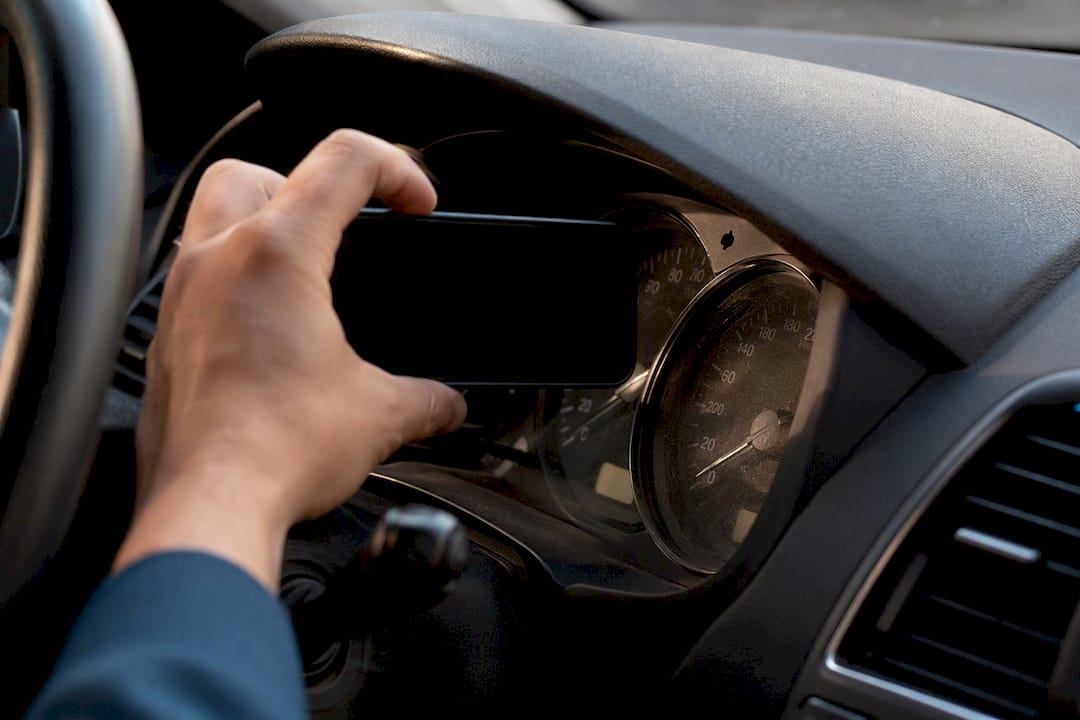
Pro Tip: Photograph your odometer and the interior condition of your car before repairs start. Insurers sometimes challenge mileage or pre-loss condition when calculating ACV, and a dated photo shuts that argument down.
How Insurers Calculate ACV and Total Loss
Insurers determine actual cash value using your car’s age, mileage, and pre-accident condition compared against similar vehicles for sale in your area. When repair costs approach or exceed that value, most insurers declare the car a total loss rather than pay for repairs. If you still owe money on the car, the insurer pays your lienholder first, then sends you any remaining balance.
- ACV is not the price you paid for the car. It’s what a comparable vehicle sells for today, and it drops fast with mileage and age.
- Total-loss thresholds vary by insurer and state, generally somewhere between 70% and total repair cost exceeding value.
- A diminished value claim covers the resale value your car loses simply from having been in an accident, even after a quality repair. Most states allow these claims against the at-fault driver’s insurer, though eligibility and evidence standards vary widely.
Insurers often lean on the 17c formula to estimate diminished value, but that formula tends to undercount the real loss. An independent appraisal and comparable local sales listings give you a stronger basis for a counteroffer. Our guide on car appraisals after an accident explains when paying for one is worth it.
How to File Your Claim, Step by Step
Filing follows a fairly predictable sequence, whether you’re going through your own insurer or the at-fault driver’s.
- File through the insurer’s app, phone line, or online portal, whichever gets you a human fastest.
- Upload photos, the police report number, and any witness contacts first, since adjusters often triage based on what’s already attached.
- Expect either a photo-based virtual inspection or an in-person appraisal. Photo-based reviews often return a decision within days; in-person inspections can take a week or more depending on adjuster availability.
- Review the repair estimate carefully. In many states, you have the right to choose your own repair shop rather than the insurer’s preferred vendor.
- Once you receive a settlement offer, read the property damage release closely before signing; it typically closes the door on future claims tied to that damage.
- Most states set a statute of limitations of two to three years for property damage lawsuits, though the exact window depends on your state.
- File promptly even if you plan to negotiate; missing the filing deadline can forfeit your right to sue entirely, regardless of how strong your claim is.
When Should You Bring in an Attorney?
Most straightforward property damage claims resolve without a lawyer. But certain situations tend to bog down or produce lowball outcomes without legal pressure:
- The at-fault insurer disputes liability or blames you partially for the crash
- Your total-loss valuation or diminished-value claim comes back far below comparable market listings
- The at-fault driver is uninsured or underinsured and your own carrier is slow to respond
- Your car has a complicated loan payoff or lienholder dispute complicating the settlement
A property damage attorney can send a demand letter backed by independent valuations, negotiate directly with the insurer’s legal department, and file suit if the deadline is approaching with no fair offer on the table. Our page on the benefits of hiring an accident attorney breaks down what representation typically changes in outcome.
Pro Tip: If an adjuster’s “final offer” arrives less than a week after you filed, that’s rarely actually final. It’s an opening number designed to see if you’ll accept it without pushback.

Negotiating Your Settlement Without Signing Away Your Rights
Initial settlement offers tend to run low because adjusters often start from proprietary internal formulas rather than your car’s true market position. Adjusters frequently present that first number as though it’s non-negotiable; it usually isn’t, particularly once you present independent repair estimates and comparable listings.
Strengthen your counteroffer with:
- Comparable local listings for the same year, make, model, and mileage
- An independent appraisal, especially for diminished-value disputes
- Full itemized repair invoices, not just a rough shop estimate
Push back by asking for a written, itemized breakdown of the offer and a specific explanation of how ACV was calculated. If the adjuster doesn’t budge, ask to escalate to a supervisor. If the offer still seems unreasonable, you can file a complaint with your state insurance department, pursue small-claims court for lower-value disputes, or bring in an attorney for larger ones. Our breakdown of dealing with an insurance adjuster covers scripts for these conversations, and our guide to settling a property damage claim walks through when an offer is actually fair.
Editorial Take: What Actually Moves the Needle on These Claims
Most guides on this topic treat documentation and negotiation tactics as equally important. They’re not. Documentation gathered in the first 48 hours determines the ceiling of what you can recover; everything after that is just fighting to reach that ceiling. An adjuster can’t dispute a diminished-value claim backed by dated photos, comparable listings, and an independent appraisal nearly as effectively as one supported by vague recollection three weeks later.
The overlooked mistake isn’t lowballing, it’s rushing to sign a release before repairs are finished and the car has been driven. Hidden damage surfaces after a test drive that a pre-repair inspection missed, and a signed release usually closes that door permanently. Wait until the car has logged real miles post-repair before you sign anything final.
If I had to prioritize one action for readers here: get the independent appraisal before you accept a total-loss or diminished-value number, not after you’ve already countered once. It changes the entire negotiating posture from reactive to informed.
— Adam
Get Help With Your Property Damage Claim
You don’t have to fight an insurance company’s formula alone. 2keller has spent years pushing back on lowball ACV numbers and denied diminished-value claims for drivers across Indiana, Michigan, and New Mexico, and we only get paid if you do, with a free consultation and no upfront fee.

If your claim involves a disputed total loss, a denied diminished-value request, or an at-fault driver without enough coverage, that’s exactly where legal pressure tends to change outcomes fastest. We handle the demand letters, the independent valuations, and the escalation to a supervisor or lawsuit when an insurer won’t move off an unfair number. If your situation looks similar to the alternatives many drivers search for, reach out for a free case review before you sign any settlement release.
Key Takeaways
Filing a car property damage claim successfully depends on fast documentation, correctly identifying the first-party or third-party path, and independent valuation evidence before you settle.
| Point | Details |
|---|---|
| Document within hours | Photos, police reports, and witness contacts lose value fast as evidence and comparable listings disappear. |
| Choose the right claim path | First-party coverage moves faster but costs a deductible; third-party avoids one but waits on fault investigation. |
| Get an independent appraisal | 17c-style insurer formulas often undercount diminished value, so outside appraisals strengthen your counteroffer. |
| Never sign early | A property damage release closes future claims, so wait until repairs are done and the car has been driven. |
| Bring in 2keller when stakes rise | 2keller helps with disputed valuations, denied diminished-value claims, and uninsured at-fault drivers on contingency. |
Sources
- What Is a Property Damage Claim? | WalletHub
- What is diminished value? | Insurance Information Institute (Triple-I)
- What happens if my car is totaled? | GEICO
- What Is a Diminished Value Claim? | Experian
This article is general information, not a substitute for advice from a qualified lawyer. Consult a qualified legal professional about your own circumstances before acting on anything here.