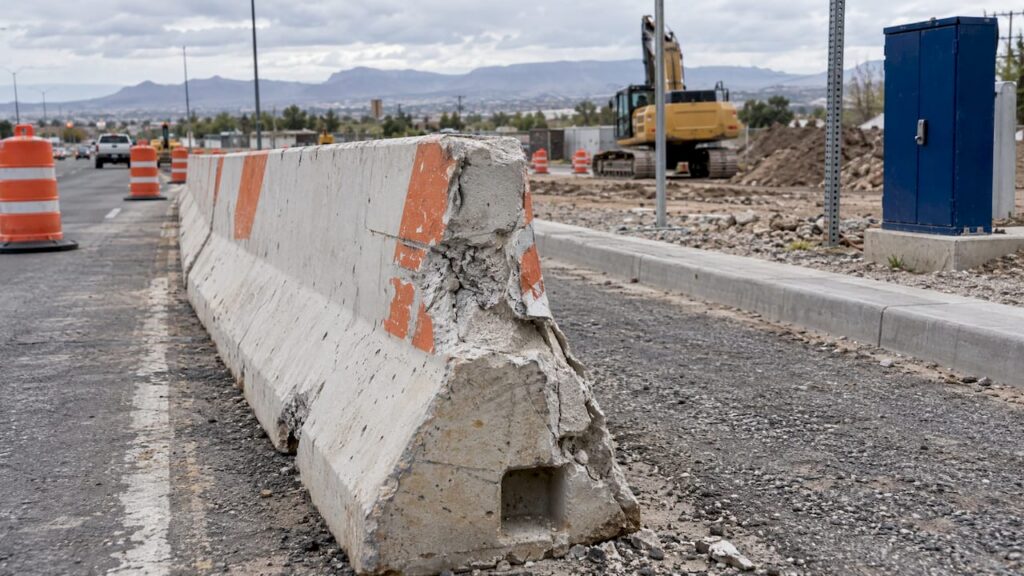
If you were hurt, or lost a family member, in a construction accident in New Mexico, you may have more than one path to compensation. Workers’ compensation is only one of them. When a negligent contractor, equipment maker, property owner or driver contributed to the injury, a separate personal injury or wrongful death claim may be available. The general deadline for those claims is three years, and claims involving a government entity can follow stricter rules, so the first step is to understand your options early.
TL;DR
- Construction injuries can lead to workers’ compensation, a third-party injury claim, or a wrongful death claim, depending on who caused the harm and who the injured person was.
- New Mexico courts apply a three-year limitations period to personal injury and wrongful death, but claims against government entities involve additional notice rules, so do not wait.
- New Mexico divides fault by percentage among everyone responsible, including the injured person, so the evidence about each party’s role matters.
- Photos, reports, equipment records and medical documentation gathered early make a claim easier to prove.
- We offer a free case evaluation and work on a contingency fee, so you owe no fee unless we win.
Table of Contents
- What counts as a construction accident claim in New Mexico
- Workers’ compensation or a third-party claim?
- Who can be held responsible
- Construction zone crashes in Albuquerque
- What compensation may be available
- Deadlines you should know
- Steps to take after a construction accident
- Our perspective
- Talk to a New Mexico construction accident attorney
- FAQ
- Sources
What counts as a construction accident claim in New Mexico
A construction accident claim is a request for compensation after someone is injured or killed because of unsafe conditions, defective equipment or careless conduct at or near a construction site. The injured person is not always a worker. Drivers, passengers, motorcyclists, cyclists and pedestrians are hurt in and around work zones every year, and each of them may have a claim against the party that created the hazard.
Common situations include:
- Falls from scaffolding, ladders, roofs or unprotected edges.
- Struck-by incidents involving vehicles, falling tools or materials, or moving equipment.
- Work zone crashes on highways and city streets, including rear-end collisions at lane closures and crashes caused by poor signage or traffic control.
- Equipment failures, such as defective lifts, saws, harnesses or heavy machinery.
- Trench collapses, electrocutions and excavation incidents.
Vehicles are a major danger in work zones. The U.S. Bureau of Labor Statistics reported that 46 percent of fatal occupational injuries at road work zones from 2011 to 2015 were caused by pedestrian-vehicular incidents, with dump trucks and automobiles the vehicles most often involved. That is national data, but it describes the same kind of hazard that road crews and drivers face on New Mexico highways and Albuquerque streets.
We have written about this locally. Our article on why New Mexico construction zones are dangerous for drivers explains the conditions that make these crashes more likely, and our write-up of a fatal construction zone accident on U.S. 550 shows how a single crash can raise questions about traffic control and responsibility.
Workers’ compensation or a third-party claim?
The right claim depends on your relationship to the job site.
If you are a construction worker
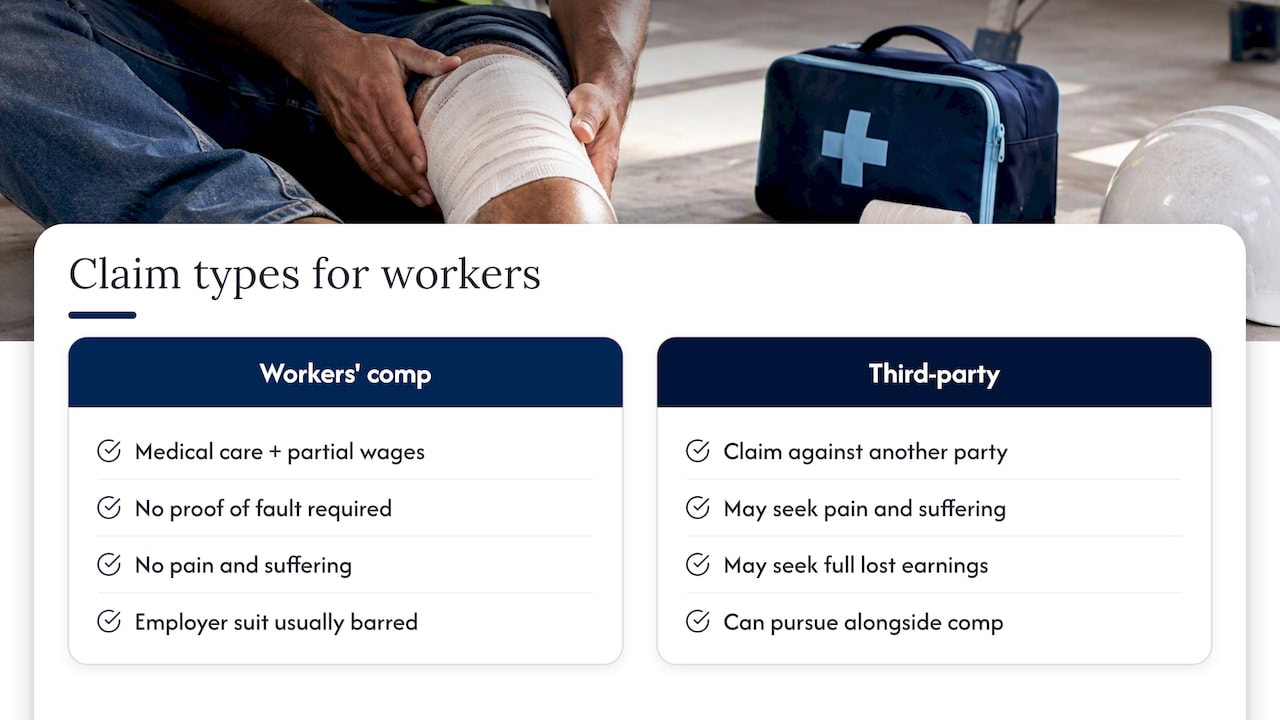
New Mexico requires coverage from construction employers. According to the New Mexico Workers’ Compensation Administration, employers whose activities require a license under the Construction Industries Licensing Act must carry workers’ compensation coverage regardless of how many employees they have. So most injured construction workers start with a workers’ compensation claim, which generally pays for medical care and part of lost wages without requiring you to prove fault.
That system is limited by design. Workers’ compensation generally does not pay for pain and suffering, and in most cases it prevents an ordinary negligence lawsuit against your own employer. But your employer is often not the only company on a construction site. A general contractor, a different subcontractor, an equipment manufacturer, a property owner or a negligent driver may also have contributed to what happened. A claim against one of those parties is called a third-party claim, and it can seek damages that workers’ compensation does not cover, including pain and suffering and full lost earnings. Our page on third-party claims after a construction accident in New Mexico walks through how these claims work alongside a workers’ compensation case.
Two practical points. First, you can usually pursue workers’ compensation benefits and investigate a third-party claim at the same time. Second, the workers’ compensation insurer may have a right to be repaid from a third-party recovery, so the structure of a settlement should be planned with that in mind.
If you are a driver, passenger, cyclist or pedestrian
If you were not working on the site, workers’ compensation is generally not part of your case. Your claim is an ordinary personal injury claim against whoever was negligent, which could be a contractor with a poorly marked lane closure, a driver who ignored a flagger, or a company that left debris or an open trench in a public space. If you were in a crash near a work zone, our guide to New Mexico auto accident claims covers the rules that apply to collisions generally.
If you are a family member of someone who died
When a construction accident is fatal, a wrongful death claim may be available in addition to any workers’ compensation death benefits. The deadline and the rules about who may bring the claim are covered in our page on the New Mexico wrongful death statute and who may sue.
Who can be held responsible
Construction sites involve many companies working at once, which is why responsibility is rarely simple. Potentially liable parties include:
- General contractors, who control the overall site and its safety planning.
- Subcontractors, whose crews or equipment created a hazard for others.
- Property owners and developers, who may be responsible for unsafe premises.
- Equipment manufacturers, sellers and suppliers, when a defect or inadequate warning contributed to the injury.
- Drivers and trucking companies delivering materials or passing through the work zone.
- Government entities, when a public road, a public project or highway maintenance is involved.
Equipment cases show how far liability can reach. In Fernandez v. Ford Motor Co., the New Mexico Court of Appeals addressed claims against the owner and the manufacturer of construction equipment over the adequacy of its reverse alarm system, which shows that responsibility can extend beyond the immediate employer. If a defective product played a role in your injury, our product liability practice evaluates those claims.
How New Mexico divides fault
New Mexico does not make one defendant pay for everything when several people share blame. Under NMSA 1978 § 41-3A-1, joint and several liability is abolished in comparative fault cases, so each defendant generally pays in proportion to its own share of fault. The statute has exceptions, including for intentional conduct, vicarious liability, defective products and sound public policy. Fault is measured against everyone to whom it is attributed, including the plaintiff and parties who are not in the lawsuit.
This has two consequences for you. Your own conduct will be examined, and the defense will look for anything it can assign to you. And leaving a responsible company out of the case can leave money on the table, because a jury may assign fault to a party that you never sued.
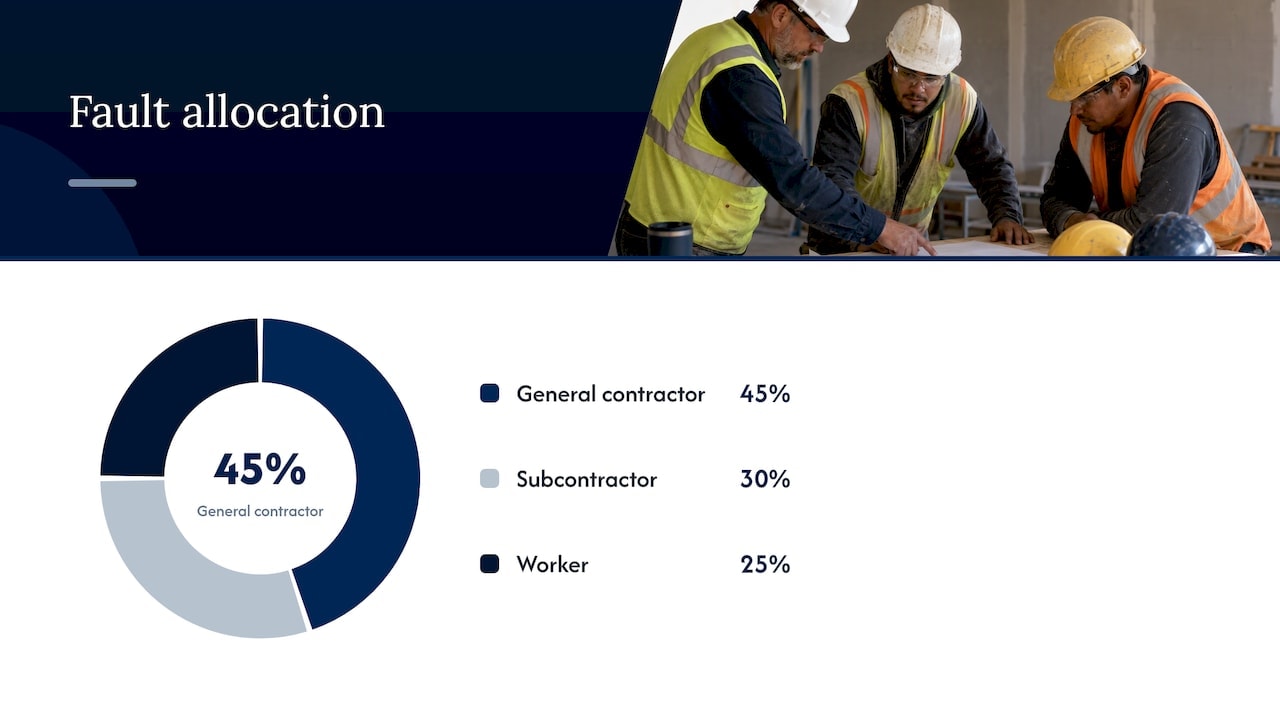
A New Mexico case shows the pattern. In Saenz v. Ranack Constructors, a jury allocated 45 percent of the fault to the general contractor, 30 percent to the subcontractor that employed the worker, and 25 percent to the worker, who had not been using a safety device when he fell. The same case is a reminder that procedure matters: the plaintiffs lost their appeal on the jury confusion issue because they did not object before the jury was discharged.
Being partly at fault does not necessarily end a claim in New Mexico. Our page on New Mexico comparative negligence explains how a claimant who shares blame can still recover.
Construction zone crashes in Albuquerque
Albuquerque drivers deal with lane shifts, narrowed shoulders and reduced speeds around road and utility projects on interstates and city arterials. A crash in one of these zones can involve several possible causes at once: a driver who was speeding or distracted, a contractor whose barriers or signs did not meet the traffic control plan, a truck pulling in or out of the site, or a road design that left too little room for error.
Because of that, a work zone crash investigation usually asks more questions than an ordinary two-car collision:
- Was there a traffic control plan, and did the contractor follow it?
- Were signs, cones, barriers, lighting and flaggers placed as planned and visible at the time of the crash?
- Did a construction vehicle, delivery truck or piece of equipment enter the roadway?
- Who owns or maintains the road, and did a public agency have responsibility for its condition?
The last question matters a great deal. Claims against a government entity fall under the New Mexico Tort Claims Act, which provides immunity with exceptions. In Folz v. State, the New Mexico Supreme Court described how immunity does not apply to highway maintenance, and how liability is capped at $500,000 for all claims from a single occurrence under the version of the law then in force. Because the Act has been amended since 1990, confirm the current limits with an attorney. Notice requirements for government claims can be much shorter than the general deadline, so we recommend speaking with a lawyer quickly. Our overview of the New Mexico Tort Claims Act explains what to expect.
When a delivery truck or heavy construction vehicle is part of the crash, the investigation can also include driver logs, maintenance records and the vehicle’s electronic data, which can be lost if it is not preserved quickly.
What compensation may be available
Damages in a construction accident claim depend on the facts, the injuries and the parties involved. In a third-party injury claim, they can include:
- Past and future medical expenses, including rehabilitation and long-term care.
- Lost wages and reduced ability to earn income.
- Pain, suffering and loss of enjoyment of life.
- In a wrongful death claim, losses suffered by the family, such as lost income and support, and the loss of companionship.
No article can promise a figure, and we will not. What the courts say about review of jury awards, however, is useful. In Morga v. FedEx Ground Package System, the Court of Appeals upheld a jury verdict of more than $165 million in compensatory damages from a 2011 automobile accident, and explained that it defers to the jury and trial court unless an award is so grossly out of proportion to the injury that it shocks the conscience. That case involved a catastrophic injury and a commercial truck, and it should not be read as typical. It does show that New Mexico juries can fully account for severe, lifelong harm when the evidence supports it.
Deadlines you should know
New Mexico courts have held that the general limitations period for personal injury and wrongful death is three years, under NMSA 1978 §§ 37-1-8 and 41-2-2. Three years sounds generous, but it passes quickly when you are recovering, and evidence does not wait that long. Our page on the three-year wrongful death deadline and our article on the statute of limitations after a motorcycle accident explain how the clock works in related situations.
There are shorter or different timelines to watch:
- Government entities. Claims under the Tort Claims Act require formal notice, and the time to give it is far shorter than three years.
- Workers’ compensation reporting. According to the WCA Employer Guidebook, an employer or insurer must electronically file a First Report of Injury or Illness within 10 days when an alleged work injury causes more than seven days of lost work. Tell your employer about your injury right away so the process starts on time.
- Home defects. If a claim involves a defective home rather than an injury, New Mexico’s Right to Repair Act generally requires the purchaser to give the seller notice of the defect before filing suit, with limited exceptions for immediate threats to life or safety.
Because the rules differ by defendant and by type of claim, the safe approach is to have an attorney identify every deadline in your case in the first conversation.
Steps to take after a construction accident
What you do in the first days can shape the strength of your claim. A practical order of steps:
- Get medical care immediately. Follow every treatment recommendation and keep every record.
- Report the injury. If you were working, notify your employer in writing. If you were in a crash, call the police and request a report.
- Document the scene. Photograph or video the hazard, signs, barriers, equipment, vehicles and your injuries, if you are able to do so safely or someone can help you.
- Collect names. Get contact information for witnesses, the contractors on site, and any driver involved.
- Preserve evidence. Keep damaged clothing, gear and devices. Do not repair or discard equipment or a vehicle until it has been examined.
- Be careful with insurers. Do not give a recorded statement or sign a release before you understand your rights. Adjusters work to limit what their companies pay.
- Speak with a personal injury attorney. A lawyer can send preservation letters, identify every responsible party and coordinate a third-party claim with any workers’ compensation benefits.
Avoid posting about the accident or your recovery on social media. Defense teams review those posts.
Our perspective
Construction claims are where we see the gap between what people assume and what the law allows. Injured workers are often told that workers’ compensation is their only option. Families of drivers hurt near a work zone are sometimes told it was simply an accident. In our experience, there is frequently another party whose decisions put the person in harm’s way, and finding that party takes careful investigation.
We approach these cases as a family-run firm that believes communication is part of the service. You should know what is happening in your case, and you should be able to reach your attorney and paralegal when you have a question. Our team has handled thousands of cases against large insurance companies, and we use that experience to build claims on evidence: scene documentation, equipment and vehicle data, records and expert analysis.
We also believe nobody should have to choose between paying a lawyer and paying medical bills. That is why we offer a free case evaluation and work on a contingency fee. If we do not win, you owe us no fee.
Adam
Talk to a New Mexico construction accident attorney
If you or someone in your family was hurt in a construction accident in Albuquerque or elsewhere in New Mexico, we can review what happened, explain which claims may apply and identify the deadlines in your case. The evaluation is free, and our representation is based on a contingency fee, so you pay no fee unless we win.

You can start with a free case evaluation at 2keller.com. We handle car and truck crashes, wrongful death and many other injury claims, and we can help you sort out how those claims fit together with workers’ compensation.
FAQ
Can I sue if I was hurt on a construction site and already receive workers’ compensation?
Often, yes, if someone other than your employer contributed to the injury. A negligent subcontractor, a property owner or an equipment manufacturer can face a third-party claim, which may cover losses that workers’ compensation does not, such as pain and suffering. The compensation insurer may seek repayment from a recovery, so the claims should be coordinated.
How long do I have to file a construction accident claim in New Mexico?
New Mexico courts apply a three-year limitations period to personal injury and wrongful death claims. Claims against government entities and workers’ compensation reports involve shorter notice periods. Because the right deadline depends on who is responsible, ask an attorney to confirm it as soon as possible.
What if I was partly at fault for the accident?
Shared fault does not automatically bar a claim in New Mexico. Fault is divided by percentage among everyone responsible, and each defendant generally pays its own share. The details are explained on our page about comparative negligence in New Mexico.
Can a driver injured in a work zone crash bring a claim?
Yes. A driver, passenger, motorcyclist or pedestrian who is injured near a construction site may have a claim against a contractor, a driver, an equipment company or, in some cases, a public agency. The facts about signage, traffic control and road maintenance often decide who is responsible.
How much does it cost to hire 2keller?
The case evaluation is free. We represent injured people on a contingency fee, which means our fee is a percentage of a settlement or award and is owed only if we win or settle your case.
Sources
- Fatal injuries at road work zones, U.S. Bureau of Labor Statistics
- Frequently Asked Questions, New Mexico Workers’ Compensation Administration
- Employer Guidebook, New Mexico Workers’ Compensation Administration
- NMSA 1978 § 41-3A-1: Several liability
- Fernandez v. Ford Motor Co., 1994-NMCA-127
- Saenz v. Ranack Constructors, New Mexico Administrative Office of the Courts
- Folz v. State, 1990-NMSC-075
- Morga v. FedEx Ground Package System, Inc.
- Terry v. New Mexico State Highway Commission, 1982-NMSC-047
- New Mexico Right to Repair Act, SB 50 (2023)