
There is no standard amount for an Albuquerque motorcycle settlement. The figure depends on how badly you were hurt, how clearly the other driver was at fault, how much insurance is available, and how well your claim is documented before anyone negotiates. Any website that quotes a single “average” is guessing. What we can do is show you what drives the number, what can shrink it, and what you can do now to protect it.
We are Keller & Keller, a family-run personal injury firm that represents injured people in New Mexico, Indiana and Michigan. This guide reflects how we look at motorcycle claims in Albuquerque.
TL;DR
- No fixed or average settlement exists. Value depends on medical costs, lost income, pain and suffering, fault, and the insurance coverage that is actually available.
- New Mexico gives you three years to file a personal injury claim, but evidence and insurer deadlines move much faster.
- Not wearing a helmet is legal for riders 18 and older in New Mexico, but insurers may still try to use it against you.
- Do not give a recorded statement or sign a release before you understand the full cost of your injuries.
- Our case evaluation is free, and we collect a fee only if we win your case.
Table of Contents
- Why motorcycle settlements are hard to predict
- What a settlement is made of
- Seven factors that move the number
- Fault, helmets and the arguments insurers make
- A hypothetical example
- Deadlines you cannot miss
- Steps to protect your claim
- Our perspective on motorcycle settlements
- How a settlement is reached
- Working with us
- FAQ
- Sources
Why motorcycle settlements are hard to predict
A motorcycle crash rarely produces a minor injury. A rider has no frame, airbag or seat belt, so the body absorbs the impact. Federal data shows how large the gap is: in 2024 the motorcyclist fatality rate per 100 million vehicle miles traveled was 28.00, far above the rate for car occupants (1.05). Survivors often face fractures, road rash, spinal injuries, traumatic brain injuries and amputations.
Those injuries produce long treatment histories, and a settlement has to account for all of it. Two riders hit by the same kind of driver can end up with very different outcomes because their medical needs, income, insurance coverage and evidence differ. That is why we avoid promising numbers, and why you should be wary of anyone who does.
What a settlement is made of
A motorcycle settlement is a sum meant to compensate you for specific losses. Those losses fall into two groups.
Economic damages
These have receipts, bills and pay stubs behind them:
- Ambulance, emergency room, surgery, hospital stays and imaging
- Physical therapy, medication and follow-up specialist care
- Future medical needs, such as additional surgeries, assistive devices or home modifications
- Lost wages and reduced ability to earn income if you cannot return to your previous work
- Motorcycle repair or replacement, helmet and riding gear
Non-economic damages
These are real losses without a bill attached: physical pain, scarring, anxiety after the crash, loss of the ability to ride or to do ordinary things with your family. Insurers tend to value them with internal formulas, which is one reason a thoroughly documented claim matters. A treatment record that shows how your daily life changed gives these damages a factual footing.
Wrongful death
If a rider dies, the claim changes. In New Mexico, the claim is brought through a court-appointed personal representative on behalf of the statutory beneficiaries, and attempting to handle it without formal appointment can lead to procedural dismissal. Our article on a New Mexico motorcycle wrongful death claim explains who can recover and what damages are available. For context on how often these crashes happen locally, see our review of fatal motorcycle crashes in Albuquerque.
Seven factors that move the number
| Factor | Why it matters |
|---|---|
| Severity and permanence of injury | Surgery, long recovery and lasting limits raise the claim far more than a quick full recovery |
| Quality of medical documentation | Gaps in treatment give insurers a reason to argue the injury was minor or unrelated |
| Clarity of fault | Video, witnesses, police reports and vehicle data make blame harder to dispute |
| Insurance limits | The at-fault driver’s coverage often sets a practical ceiling unless other sources exist |
| Your own share of fault | Insurers may argue you were speeding, lane splitting or following too closely to reduce what they pay |
| Lost income | A rider who cannot return to a physical job has a larger claim than one who returns in weeks |
| Timing | Settling before you know your future medical needs can leave you paying out of pocket later |
Insurance limits are often the real ceiling
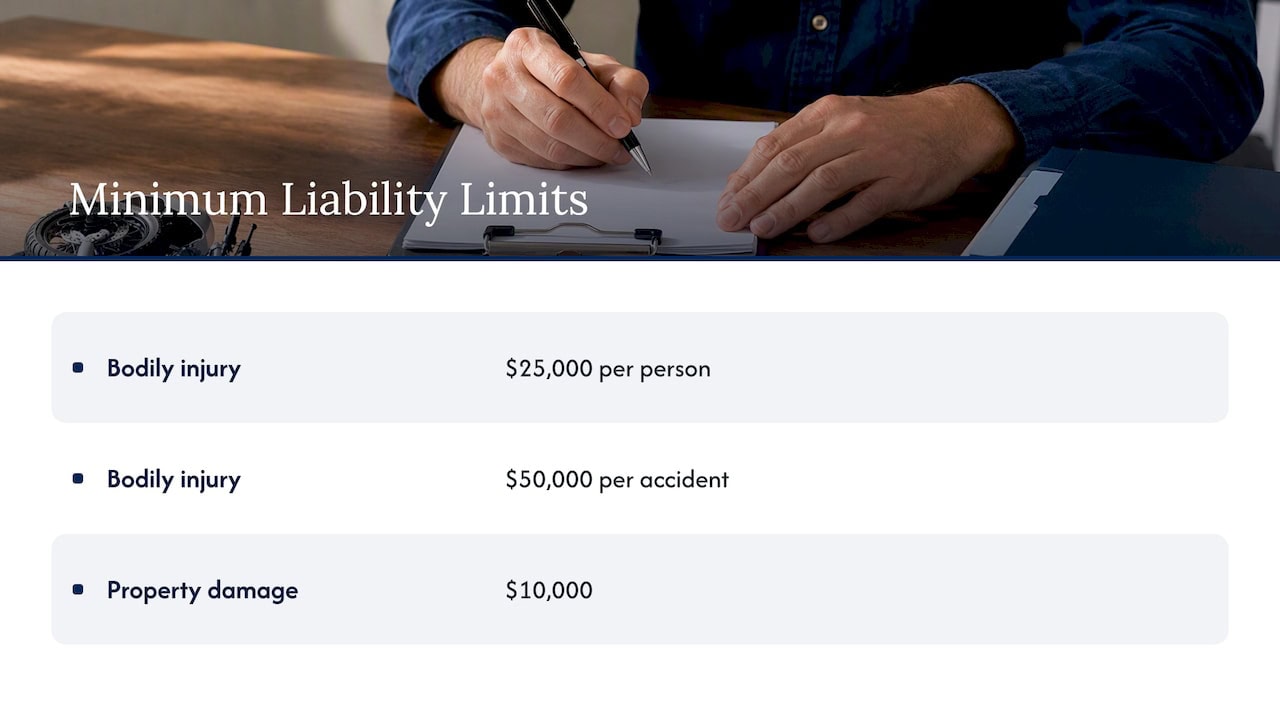
Many claims are limited by the coverage on the other side. New Mexico drivers must carry at least 25/50/10 in liability coverage: $25,000 per person for bodily injury, $50,000 per accident, and $10,000 for property damage. A serious motorcycle injury can exceed $25,000 within days of hospitalization.
That is why we look beyond the at-fault driver’s policy from the first week. Depending on the facts, other sources can include your own uninsured or underinsured motorist coverage, a commercial policy if the driver was working, or a separate responsible party such as a vehicle owner, an employer, or a business or agency that created a dangerous road condition.
When an insurer refuses to be reasonable
Insurers owe a duty of good faith to their own policyholders. New Mexico’s civil jury instruction states that an insurer that fails to give fair consideration to settlement within policy limits acts in bad faith when a judgment above those limits is likely. Lowball offers and slow-walked investigations can carry real consequences for the insurer. We keep that in mind in every negotiation, and we document every offer and every response.
Fault, helmets and the arguments insurers make
Motorcycle riders face bias that car drivers do not. Adjusters often start from an assumption that the rider was reckless. Expect these arguments.
“You were not wearing a helmet.” New Mexico law requires helmets only for riders and passengers under 18. Adults are not legally required to wear one. Even so, an insurer may claim a head injury would have been less severe. Whether that argument has any force depends on the injury and the medical evidence. Our guide to the New Mexico motorcycle helmet law covers what riders should know.
“You were speeding.” Without proof, this is speculation. With a crash reconstruction, skid marks, vehicle damage and any available data from the vehicles involved, it can be tested and often answered.
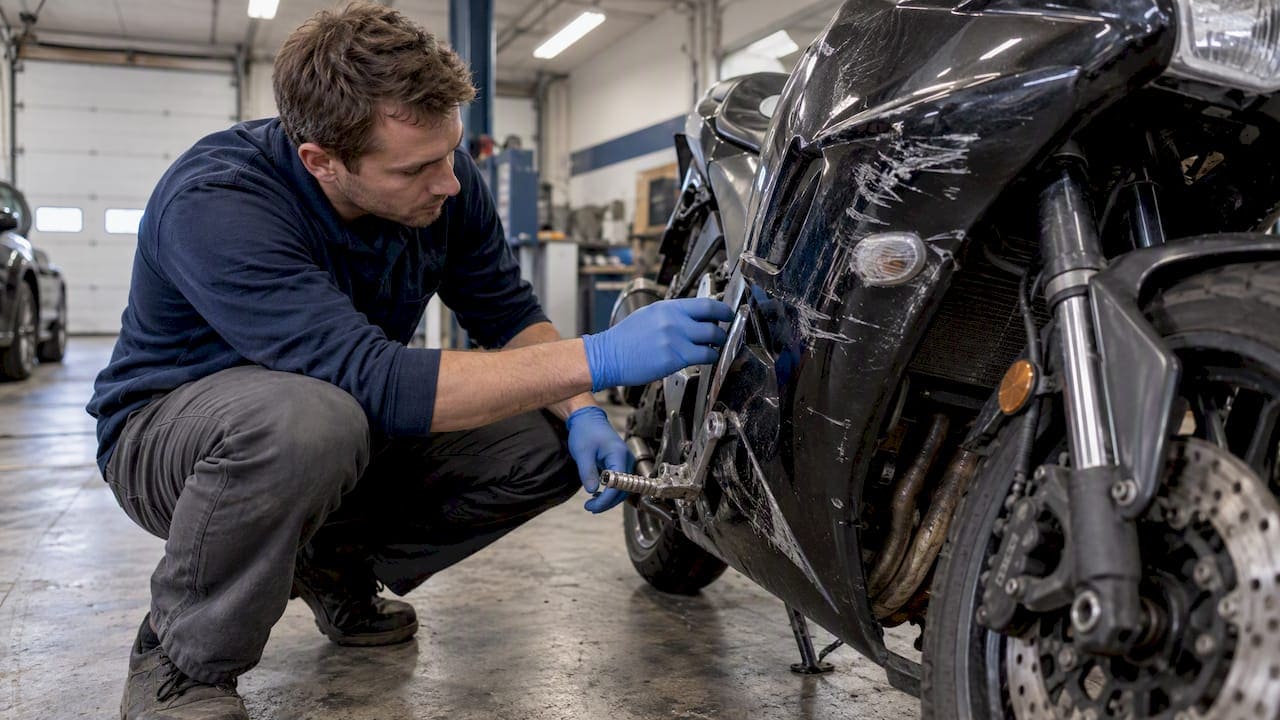
“We did not see you.” This is the most common explanation drivers give after turning left across a rider’s path or changing lanes into one. It is an admission that the driver did not look properly, not a defense.
If an insurer assigns you part of the blame, that can reduce what you recover. This is why you should not accept an early fault determination as final. Evidence gathered in the first days often changes the picture.
A hypothetical example
The following is an illustration, not a real case and not a prediction.
A rider is hit by a driver who turns left across traffic on Central Avenue. The rider has a broken femur, needs surgery and misses five months of work. The driver carries minimum limits. In this kind of case, the work is not simply to total the medical bills. We would look at whether the rider’s own underinsured motorist coverage applies, whether the driver was working at the time, whether a surgeon expects future procedures, and whether the rider’s pay stubs and employer records support the lost income. A claim built on only the initial hospital bills may settle for a fraction of what a fully documented claim supports.
Deadlines you cannot miss
The general rule is that personal injury claims in New Mexico must be filed within three years under NMSA 1978, Section 37-1-8. In some cases where the injury or its cause was not immediately apparent, a discovery rule may affect when that clock starts. Do not count on an exception.
Different rules can apply if a government entity is involved, for example if a road defect or a city vehicle played a role. Those claims can carry much shorter notice requirements, so raise the issue with an attorney immediately. We explain the timeline in more detail in our post on the New Mexico motorcycle accident statute of limitations.
A practical deadline is often sooner than the legal one. Surveillance video is overwritten, witnesses move, and a damaged motorcycle may be repaired or sold. Preserve what you can.
Steps to protect your claim
- Get medical care immediately and follow through. Adrenaline hides injuries. Attend every appointment and tell providers about every symptom, including headaches and numbness.
- Call 911 and make sure a police report is filed. The report records the other driver’s details and the initial account of what happened.
- Photograph everything. Take pictures of the scene, vehicles, road, skid marks, your injuries, your helmet and your gear. Get names and numbers of witnesses.
- Keep your gear and motorcycle as they are. Damaged equipment is evidence. Do not repair or sell the bike until it has been inspected.
- Be careful with insurers. You must notify your own insurer, but you do not have to give the other driver’s insurer a recorded statement. Do not guess about speeds or distances.
- Do not sign a release or accept a quick check. A release usually ends the claim permanently, including for medical needs that appear later.
- Keep a simple journal. Note pain levels, missed work, activities you can no longer do and costs you pay out of pocket.
- Speak with a lawyer early. Early involvement helps preserve evidence and keeps you from making statements that are later used against you.
We maintain a collection of guidance on the immediate steps after an accident if you want more detail.
Our perspective on motorcycle settlements
We have handled thousands of cases against large insurance companies, and a few patterns repeat in motorcycle claims.
First, the first offer is rarely a reflection of the claim’s value. It reflects what the insurer hopes you will accept while you are in pain, behind on bills and unsure of your future. A rider who is still in treatment cannot know what the case is worth, and neither can the adjuster honestly claim to.
Second, the strongest claims are built before negotiation starts. That means gathering medical records, speaking with treating physicians about future care, documenting lost income, and identifying every insurance policy that may apply. We would rather spend months on that work than hurry into a number we cannot support.
Third, clients should not feel left in the dark. Our philosophy is client-first and family-run, and that means you have direct access to your attorney and paralegals throughout the case, with plain explanations of where things stand and why we recommend a particular step.
Finally, settling is a decision that belongs to you. Our role is to give you an honest assessment of the offer, the risks of going to trial and the realistic alternatives, and then to carry out your decision.
— Adam
How a settlement is reached
Most motorcycle claims follow a recognizable path, though every case differs.
- Treatment and investigation. The medical picture needs to be reasonably clear before value can be assessed. Meanwhile evidence is gathered and insurers are put on notice.
- Demand. Once your recovery is understood, we send a demand package that documents injuries, bills, income loss and fault.
- Negotiation. Insurers respond with offers. Some are reasonable, and many are not. We push back with evidence.
- Lawsuit if needed. If negotiations fail, filing suit puts the claim before a court and often changes the insurer’s posture.
- Resolution. The case settles or goes to a judge or jury.
What happens to the money
A settlement is not simply paid out to you in full. Attorney fees, case costs and medical bills are resolved from the proceeds. Providers who treated you under a letter of protection expect payment from the recovery, and New Mexico’s bar has addressed the need to notify providers promptly and to adjust medical bills in proportion to fees. A careful lawyer handles this properly, and you should ask any firm how it will. Health insurers or government programs that paid for your care may also assert repayment rights, which can be negotiated in many situations.
Working with us
We represent injured riders and families in New Mexico on a contingency basis: you pay no fee unless we win your case. The initial case evaluation is free. We will review what happened, explain your options honestly, and tell you if we think you do not need a lawyer. If you were injured on a motorcycle in Albuquerque or elsewhere in New Mexico, you can start with a free case evaluation. Our broader overview of motorcycle accidents and injuries in New Mexico is a useful next read.
FAQ
How much are most motorcycle accident settlements?
There is no reliable average, because values depend on injuries, fault, lost income and available insurance. Small claims with brief treatment settle for much less than cases involving surgery or permanent impairment. Be skeptical of any site that promises a typical figure.
What is the time limit for a personal injury case in New Mexico?
The general limit is three years from the date of the injury, with limited exceptions. Claims involving government entities can have much shorter notice deadlines. Speak with an attorney as soon as you can so that a deadline does not decide your case.
Are motorcycle helmets required in New Mexico?
Only for riders and passengers under 18, according to the state Motor Vehicle Division. Adults are not required to wear one, though wearing one is strongly recommended. An insurer may still argue that the lack of a helmet worsened your injury, so tell your lawyer if this applies.
Should I accept the insurance company’s first offer?
Not before you know the full extent of your injuries and have had the offer reviewed. Early offers often come before future treatment is known, and accepting usually ends your claim for good. A free consultation can tell you whether the number is reasonable.
Sources
- Gerke v. Romero, New Mexico Court of Appeals
- Motorcycles: 2024 Data, Traffic Safety Facts, NHTSA
- Chapter 2: Non-Commercial License, New Mexico Motor Vehicle Division
- UJI-Civil 13-1704, New Mexico Supreme Court
- New Mexico Wrongful Death Statute: Deadlines and Damages, LegalClarity
- New Mexico Car Insurance Laws, The Zebra
- State Bar of New Mexico Bar Bulletin, November 11, 2020