An Indiana negligent security claim is a premises liability case against a property owner or operator whose failure to take reasonable safety precautions made a foreseeable crime possible. You do not have to sue the attacker to bring one. You have to show that the property owed you a duty, that it fell short of that duty, and that the shortfall caused your injuries. Indiana courts apply this standard strictly, so the facts you preserve in the first days matter a great deal.
We are Keller & Keller, and we handle negligent security cases in Indiana. This guide explains the legal test, the evidence that carries these cases and the steps to take after an assault on someone else’s property.
TL;DR
- A negligent security claim is a type of premises liability claim: the property owner is accused of failing to prevent a foreseeable crime, not of committing it.
- Indiana courts treat foreseeability as part of the duty question, decided by a judge as a matter of law, so strong facts about prior incidents and the property’s condition are essential.
- The property must also have had control over the area where you were hurt.
- Personal injury and wrongful death deadlines in Indiana are generally two years, so early action protects your claim.
- Call 911, document the scene, see a doctor and speak with an attorney before giving any recorded statement.
Table of Contents
- What a Negligent Security Claim Is Under Indiana Law
- What You Must Prove
- How Indiana Courts Decide Foreseeability
- Who May Be Held Responsible
- Evidence That Builds a Negligent Security Case
- What to Do After an Assault on Someone Else’s Property
- Deadlines for Injury and Wrongful Death
- Our Perspective
- Talk to a Team That Handles These Cases
- FAQ
- Sources
What a Negligent Security Claim Is Under Indiana Law
Negligent security sits inside premises liability. Property owners and operators must take reasonable care to keep visitors safe from dangers they know about or should know about. A crime committed by a third party is one such danger when the property’s history or condition made it predictable.
The Indiana Supreme Court adopted a totality-of-the-circumstances approach in Delta Tau Delta v. Johnson. A law review survey of Indiana tort law describes the test as looking at the nature, condition and location of the land, along with prior similar incidents. Those factors still shape how we investigate a case, even though the court later refined where they fit in the analysis, as explained below.
Typical settings include:
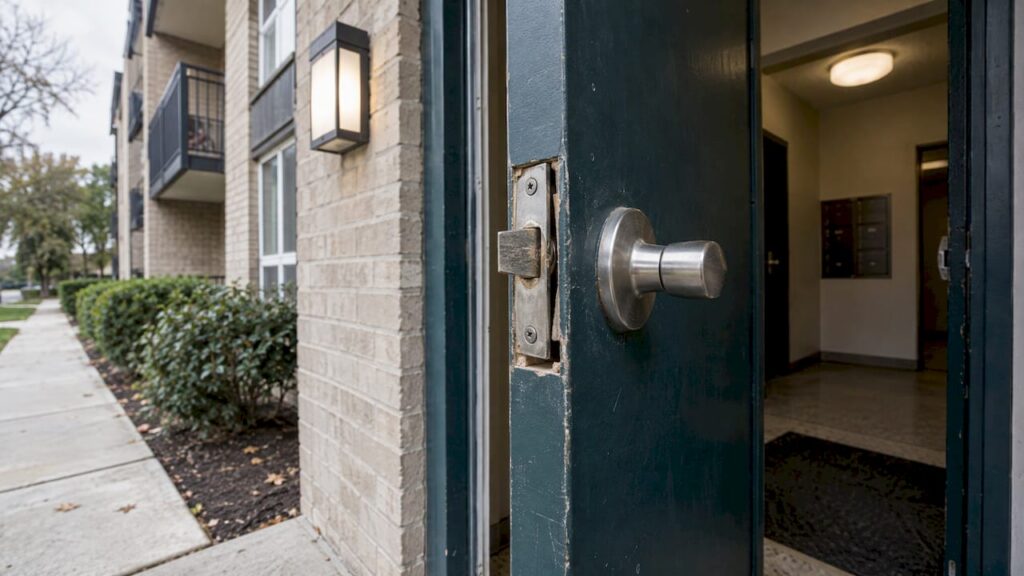
- Apartment complexes with broken gates, door locks or lighting
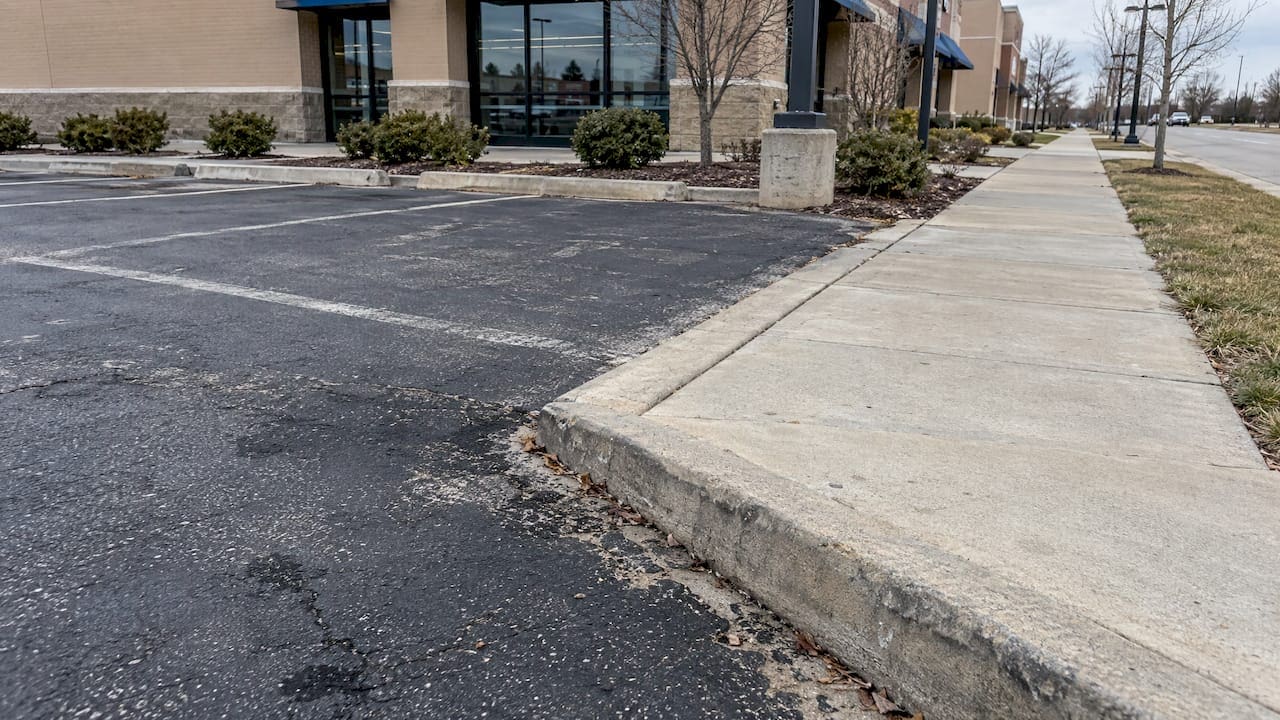
- Parking lots and parking garages
- Hotels and motels
- Bars, nightclubs and event venues
- Retail stores and shopping centers
- Convenience stores and gas stations open late at night
Our own pages on inadequate security and premises liability and on Indiana negligent security lawyers cover these settings in more detail.
What You Must Prove
A negligent security claim is a negligence claim, so it has the three standard elements. The Indiana Supreme Court restated them in King v. Northeast Security, Inc.: a duty owed by the defendant, a breach of that duty by conduct below the applicable standard of care, and a compensable injury proximately caused by the breach.
In a security case, each element looks like this:
- Duty. The property owed you protection because of your status on the land (usually a customer, tenant or guest) and because the crime was foreseeable.
- Breach. The security the property provided, or failed to provide, was not reasonable for the known risk.
- Causation. The missing or defective measure was a real cause of your injury, not just a background circumstance.
- Damages. You suffered losses such as medical bills, lost income and pain and suffering.
Causation is where many cases are won or lost. If a lock was broken, we need to show the attacker used that unsecured entrance. If lighting was out, we need to show that the darkness mattered to what happened.
How Indiana Courts Decide Foreseeability
Foreseeability is the heart of the case, and Indiana’s rules are demanding.
Foreseeability is part of duty
In 2016, the Indiana Supreme Court decided Goodwin v. Yeakle’s Sports Bar and Grill, Inc. The court held that a shooting inside a neighborhood bar was not foreseeable as a matter of law and stated that landowners are not insurers of their invitees’ safety. It also explained that whether a duty exists is a question of law for the court, and that the court looks at the broad type of plaintiff and harm involved, without regard to the facts of the actual occurrence.
The court also noted a conflict in its earlier opinions. As summarized by the Indiana Lawyer, it concluded that totality-of-the-circumstances tests are ill-suited to deciding foreseeability in the context of duty.
What this means for you: a judge may decide early whether the property owed a duty at all. A case built only on the fact that the crime was terrible will not survive that question. The case has to show why this type of harm was foreseeable at this type of property.
Prior incidents and the property’s history
Prior criminal activity is often the strongest evidence of foreseeability. A retail law compendium reports that in Indiana a single prior criminal event, even one more than a year before the assault, has been found sufficient to support foreseeability, and that the earlier event need not be the same kind of crime.
We look for:
- Police calls for service and incident reports at the address
- Prior complaints from tenants or customers
- Internal incident logs and emails
- Insurance or security-consultant recommendations the owner received
- Local news coverage of earlier crimes there
Control of the premises
The same compendium notes that a critical element is that the injury happened on the defendant’s property or in an area under its control. Foreseeability alone is not enough where the defendant had no opportunity to supervise or control the assailant. If you were hurt on a public sidewalk or a neighboring lot, the analysis changes, and we examine who actually controlled that space.
What the property did to protect people
The compendium also says a defendant may avoid liability by showing it took sufficient precautions, such as security guards or operable locks that would have prevented the attack. So we compare what the property did on paper with what was actually functioning on the day of your injury. A camera system that was installed but not working, or a guard schedule that was not followed, can matter as much as having no security at all.

Who May Be Held Responsible
You do not need to identify, find or sue the person who committed the crime. The claim is about the property’s conduct. Depending on the facts, responsible parties may include:
- The property owner
- A landlord or property management company
- A business operator or tenant that controlled the area
- A contracted security company, if its performance fell short of the standard of care (the King decision involved a security company)
Ownership and control are often split across several companies, and each may blame another. Identifying every entity with a duty early, before records are lost, is a core part of our investigation.
Indiana also reduces or bars recovery based on the injured person’s own share of fault. Our article on Indiana’s comparative fault law explains how defendants use this, and why careful documentation of what you were doing at the time protects you.
Evidence That Builds a Negligent Security Case
Evidence tends to disappear quickly. Video is overwritten, witnesses move and repairs erase proof of defects. These are the categories we work to secure:
| Element | Evidence that helps |
|---|---|
| Foreseeability | Police reports for the address, prior complaints, incident logs, news reports |
| Inadequate security | Photos of broken locks, gates or lighting, camera placement, guard schedules, security policies |
| Control of the premises | Deeds, leases, management contracts, security contracts, site plans |
| Causation | Surveillance footage, witness statements, 911 recordings, the attacker’s point of entry |
| Damages | Medical records, bills, wage records, treatment plans, statements from family |
Two practical points stand out. First, a written request to preserve video and records should go to the property early, because retention periods can be short. Second, your photographs of the scene, taken soon after, can capture conditions that are repaired within days.
The broader rule that notice decides most Indiana premises cases applies here too. Our page on how notice decides Indiana premises liability cases walks through what a property knew and when.
What to Do After an Assault on Someone Else’s Property
- Get safe and call 911. A police report creates an official record of the time, place and circumstances.
- Get medical care. Treatment protects your health and documents your injuries. Mention every symptom, including those that seem minor.
- Document the scene. Photograph lighting, locks, gates, cameras, signs and the entry point. Note the property’s name and address.
- Collect names. Get witness contact details and the names of any staff or security guards you spoke with.
- Report the incident to management in writing if you can, and keep a copy.
- Avoid recorded statements to insurers until you have spoken with an attorney. Adjusters work for the property’s insurer, not for you.
- Keep records. Save medical bills, pay stubs, receipts and a short daily journal of pain and limits on your life.
- Speak with an attorney quickly. Deadlines and evidence loss both work against waiting.
Deadlines for Injury and Wrongful Death
Indiana’s general limit for personal injury suits is two years, and wrongful death claims are also generally subject to a two-year period. Missing the deadline can end the claim entirely, no matter how strong the facts are. Exceptions are narrow and fact-specific, so do not rely on them. If a loved one died, our page on Indiana’s two-year clock for wrongful death and survival claims explains how the two types of claim differ.
Damages in a wrongful death case can include medical expenses, funeral costs and the lost earnings of the person who died. An attorney can tell you which categories apply to your situation.
Our Perspective
Negligent security cases are won on preparation. The law in Indiana asks hard questions about foreseeability, and a property’s insurer knows it. We have handled thousands of cases against large insurance companies, and we approach these claims the way we approach every serious injury case: investigate early, gather the property’s own records, and build the story of what the owner knew and failed to do.
Our family-run firm puts the client first. You will have direct access to your attorneys and paralegals, and we keep communication transparent and consistent, because families dealing with a violent incident should not have to chase updates.
We also take these cases on a contingency fee. There is no fee unless we win, and the case evaluation is free.
Adam
Talk to a Team That Handles These Cases
If you or someone you love was hurt in an attack that better security might have prevented, we can review what happened and explain your options. We offer a free case evaluation, and we only collect a fee if we win your case.

Start with our free case evaluation at 2keller.com and bring whatever you have: the police report, photos, medical records and the property’s name.
FAQ
Do I have to know who attacked me to bring a negligent security claim?
No. The claim targets the property owner or operator for failing to provide reasonable security, not the attacker. Police may or may not identify the person, and your case can move forward either way, though the facts about the attack still matter as evidence.
Can I bring a claim if the attack happened in an apartment complex?
Yes, apartment complexes are a common setting. The question is whether the owner or manager controlled the area, knew or should have known of similar crime, and failed to maintain reasonable measures such as working locks, gates and lighting.
Is a property liable every time a crime happens on its grounds?
No. Indiana courts state that landowners are not insurers of visitors’ safety, and a judge decides as a matter of law whether the crime was foreseeable. That is why evidence of prior incidents and documented security failures is so important.
How much does it cost to hire Keller & Keller for a negligent security case?
The case evaluation is free, and we work on a contingency fee. You pay no fee unless we win your case.
Sources
- Recent Developments in Indiana Tort Law, Indiana Law Review
- Nicholas S. King v. Northeast Security, Inc. (Indiana Supreme Court, 2003)
- Indiana Supreme Court decision 27S02-1510-CT-627 (2016)
- DTCI: Premises liability for foreseeability of third-party harm, Indiana Lawyer
- Retail Compendium of Law, Indiana