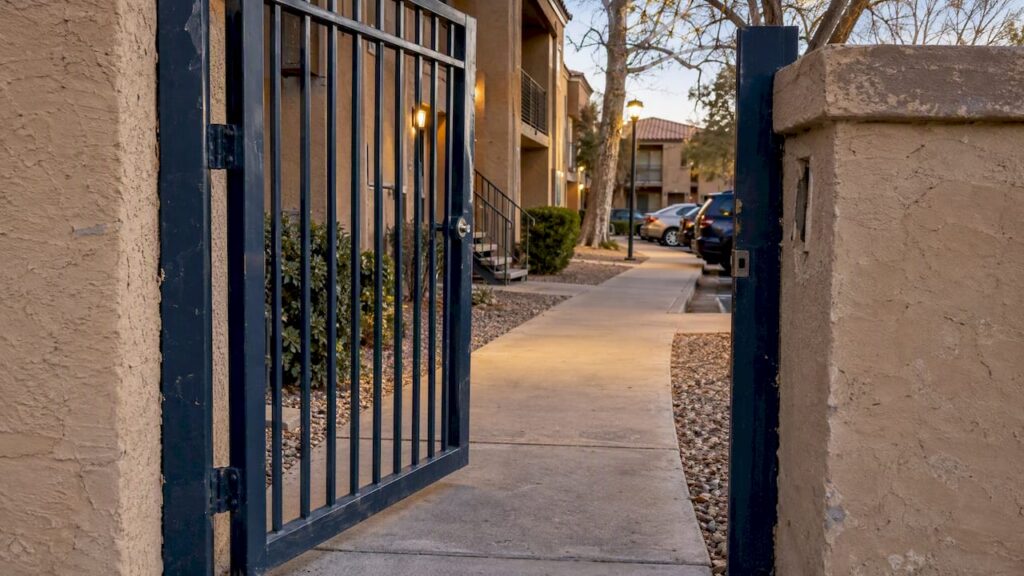
Yes, you can bring a civil claim after an apartment shooting in New Mexico when the owner’s failure to provide reasonable security made the attack foreseeable and was a proximate cause of your injury. New Mexico’s firearm injury death rate is 26.6 per 100,000, and under Reichert v. Atler a jury can split fault between the owner and the shooter. Insurance exclusions can limit what you collect, so we explain both below.
TL;DR:
- A targeted shooting alone does not establish foreseeability; prior similar crimes, nearby patterns, known threats, ignored complaints, or broken gates and lights can show notice.
- Send a written preservation request promptly because apartment surveillance systems may overwrite footage within days or weeks; also save maintenance records, complaints, and witness details.
- Under Reichert v. Atler, jurors can assign fault to both the owner and shooter, reducing the owner’s share; investigate managers and security contractors too.
- The 2025 Edwin Wilson decision confirms assault or inadequate security exclusions can defeat coverage and the insurer’s duty to defend; review the full policy early.
Table of Contents
- How negligent security and premises liability work in New Mexico
- What you must prove, and the evidence behind each element
- Why comparative fault under Reichert v. Atler changes recovery
- Insurance exclusions and what appellate decisions show
- Immediate steps after an apartment shooting
- How a negligent security claim moves forward
- What compensation you may recover
- Where property managers and landlords share liability
- Precedent cases and what they teach
- How we can help and how to get a free case evaluation
- Our approach to negligent security claims in New Mexico
- FAQ
- Sources
How negligent security and premises liability work in New Mexico
A property owner who rents homes to residents and welcomes their guests owes them a duty of reasonable care. In New Mexico, that duty reaches foreseeable criminal acts by third parties, not only hazards like a broken stair. The question is never whether the owner could have stopped every crime. It is whether a reasonable owner, knowing what this owner knew or should have known, would have done more.
Foreseeability is where most of these cases are won or lost. Legal commentary describes it as the pivotal factor, and juries weigh it using the specific facts of each property. Evidence that tends to matter includes:
- Prior crimes on the property, especially similar violent incidents
- Patterns of crime in the immediate surrounding area
- Known threats against a resident or guest
- Tenant complaints about security that management ignored or answered slowly
- Missing or broken safety features, such as gates, lighting and locks
Courts do not treat every shooting as foreseeable. In Romero v. Giant Stop-N-Go of New Mexico, the court of appeals underlined that a deliberate, targeted shooting is not automatically something an owner should have anticipated. Judges look for prior similar incidents or patterns that would put a reasonable owner on notice.
A criminal case against the shooter is a separate matter. A conviction, an acquittal or no charges at all does not decide your civil claim, which asks only whether the owner’s failures were a proximate cause of the harm.
What you must prove, and the evidence behind each element
A negligent security claim may involve questions of duty, breach, foreseeability, proximate cause and damages. The issues and required proof depend on the case.
Duty. Your status on the property matters. Property owners in New Mexico must exercise reasonable care to protect residents and visitors from foreseeable harm. Your lease, a guest registration or a witness who saw you enter lawfully can establish it.
Breach. This is the security gap itself: a gate that never latched, burned-out walkway lights, doors with broken locks, no response to repeated complaints, or careless screening of tenants with violent histories.
Proximate cause. It is not enough to show the security was poor. Appellate opinions, including Western Investments v. Urena from Texas, stress that the owner’s acts or omissions must be a substantial factor in causing the injury. The evidence has to connect the gap to the shooting, such as an attacker who entered through the broken gate.
Evidence worth gathering or asking an attorney to preserve:
- Police reports and incident logs for the property
- Maintenance and repair records for locks, gates and lighting
- Prior written complaints from tenants and management’s replies
- Surveillance footage, before it is overwritten
- Witness statements with names and contact details
- Texts, e-mails and letters exchanged with management
Pro Tip: Ask for a written preservation request to the property owner as early as possible, because camera systems often overwrite footage within days or weeks.
Why comparative fault under Reichert v. Atler changes recovery
New Mexico does not let a landlord escape simply because someone else pulled the trigger. In Reichert v. Atler, the state’s high court held that a premises owner’s negligent failure to protect against foreseeable harm may be compared with the fault of an intentional third-party wrongdoer. A jury then assigns each a percentage.
A premises owner’s negligent failure to protect patrons from foreseeable harm may be compared to a third party intentional tortfeasor so that fault can be apportioned under New Mexico law.
That rule cuts both ways. It keeps owners accountable, yet a jury that assigns most of the fault to the shooter will shrink the owner’s share of your award. Practitioner commentary notes that apportionment can materially reduce recoveries and create collection problems when the assailant is insolvent or cannot be found. A large judgment against someone with no assets pays nothing.
Our strategy follows from that. We build a record that shows how much responsibility the owner carried, and we look for other collectible defendants, such as a separate management company or security contractor. You can read more about how the rules work in our overview of New Mexico comparative negligence.
Insurance exclusions and what appellate decisions show
Winning at trial and collecting are different problems. Some policies may contain exclusions for assault, battery or failure to provide adequate security. Insurers may rely on such language to dispute coverage or the duty to defend.
Courts take that language seriously. In August 2025, the New Mexico Court of Appeals decided Edwin Wilson v. Cincinnati Specialty Underwriters Insurance Company, which shows that policy wording excluding assault or inadequate security can defeat both coverage and the duty to defend.
The court of appeals found that exclusion language for assault or failure to provide adequate security can remove coverage and the insurer’s duty to defend.
This is why early legal help matters. A lawyer can review the policy and assess possible options, including:
- Obtain and read the actual policy, not a summary
- Identify other insured parties, such as management companies or contractors
- Evaluate whether the insurer handled the claim in good faith
- Explore options if the insurer denies coverage
Immediate steps after an apartment shooting
Early evidence can matter in a case. If you or a family member was hurt, work through this list as soon as you safely can.
- Get medical care and keep every record. Save discharge papers, bills and follow-up instructions. Gaps in treatment are easy for insurers to question.
- Report to law enforcement. Request the incident report number and a copy of the report.
- Preserve evidence. Take photos of the scene, entry points, lighting and locks. Save texts and e-mails with management, and list witnesses.
- Document prior safety complaints. Collect written notices to management and any replies. They support foreseeability.
- Record earlier incidents. Write down dates and details of other crimes you know about at the property.
- Contact a New Mexico negligent security lawyer promptly. Deadlines apply, and evidence disappears quickly.
Pro Tip: Do not give a recorded statement to the property owner’s insurer before you have spoken with a lawyer.
Families dealing with a death can also read our explanation of wrongful death claims in New Mexico, and our immediate steps after an accident page covers the early decisions in more detail.
How a negligent security claim moves forward
Most apartment shooting cases follow a similar path. It starts with an investigation: we gather police records, the property’s crime history, maintenance logs and any footage, and we send preservation letters so nothing is destroyed.
Next comes the policy search. Because of the exclusions discussed above, we look at the owner’s insurance early, along with every entity that might share responsibility, including owners, managers and security vendors.
If the evidence supports it, a complaint is filed in New Mexico court, and the case moves into discovery. Both sides exchange documents and take sworn testimony from managers, maintenance staff and witnesses. Experts, such as security professionals, may explain what a reasonable owner would have done.
Many cases settle after discovery clarifies the owner’s exposure. Others go to a jury, which decides foreseeability and fault percentages under Reichert. Throughout, we keep you informed and explain what each stage means for timing and value. Our New Mexico negligent security practice page describes how we handle these claims from start to finish.
What compensation you may recover
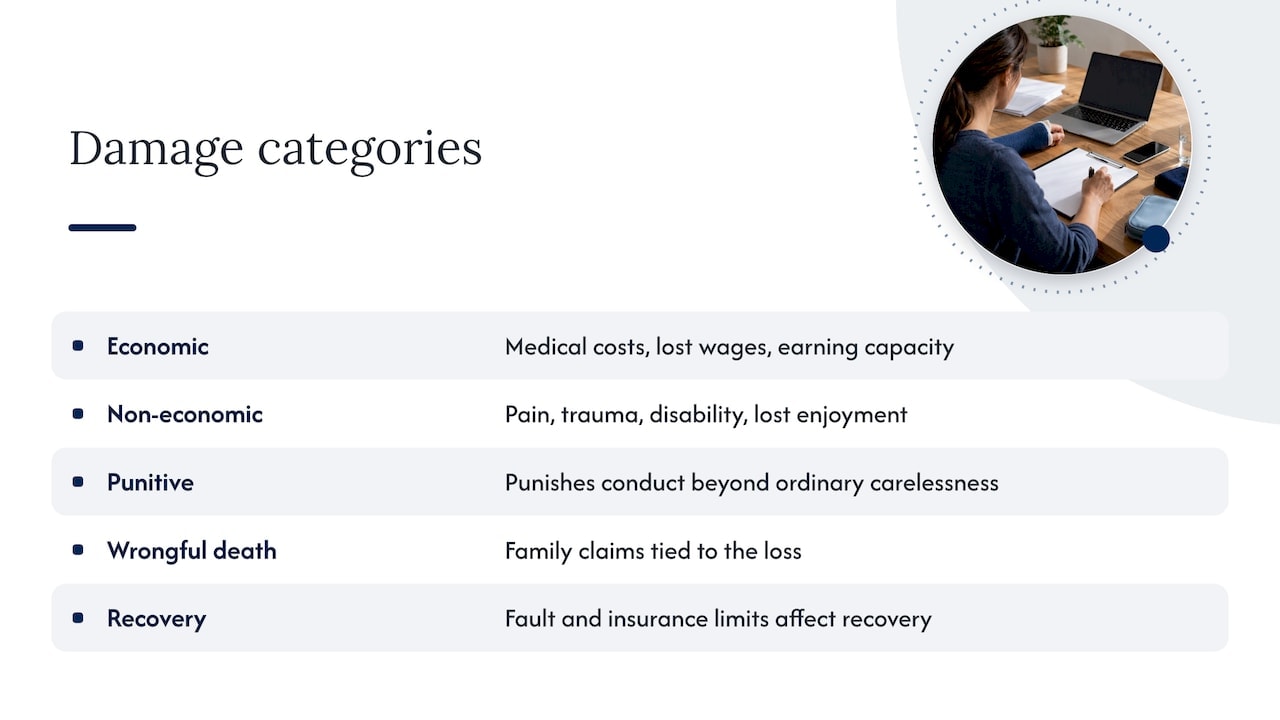
Damages in an apartment shooting case fall into three groups.
Economic damages cover losses with a dollar figure: emergency care, surgery, rehabilitation, medication, future medical needs, lost wages and reduced earning capacity when injuries limit your work.
Non-economic damages address harm that bills cannot capture: physical pain, emotional trauma, fear, lasting disability and the loss of ordinary enjoyment of life. A shooting can cause emotional harm, and the effects may continue after physical wounds heal.
Punitive damages are different. They are meant to punish, not to compensate, and they are reserved for conduct that goes well beyond ordinary carelessness, such as an owner who knew of repeated violent incidents and deliberately did nothing. Whether punitive damages are available depends on the facts and applicable law.
In a wrongful death case, family members may pursue claims tied to the loss of the person who died. Whatever the category, the comparative fault percentage described earlier affects the amount, and insurance limits affect what can actually be collected. That is why we evaluate damages and coverage together from the start.
Where property managers and landlords share liability
Liability does not always stop with the building’s owner. In many apartment complexes, a separate property management company controls daily operations: hiring staff, responding to complaints, authorizing repairs and deciding whether to install cameras or fix a gate.
A party that controls security may have responsibilities related to keeping the premises reasonably safe, depending on the facts and applicable law. If a manager received a written complaint about a broken entry gate and let it sit for months, that failure may be a breach in its own right. Owners may also be responsible for what their managers do on their behalf.
Other parties, including contracted security companies, may be relevant depending on their role and the facts. Naming every responsible party matters for two reasons. It helps a jury see the full picture of failed safeguards, and it widens the pool of insurance and assets available, which matters when the shooter cannot pay and an exclusion blocks one policy. Management contracts, lease terms and internal emails often show who held responsibility, so we request them early.
Precedent cases and what they teach
New Mexico case law gives a useful, if mixed, picture. Reichert v. Atler is the anchor: it confirmed that a negligent premises owner’s share of fault can be compared with an intentional wrongdoer’s, so owners cannot simply point at the shooter.
Romero v. Giant Stop-N-Go of New Mexico shows the limit. A targeted shooting is not automatically foreseeable; the court considers whether prior similar incidents or patterns put the owner on notice. Edwin Wilson v. Cincinnati Specialty Underwriters adds the insurance lesson: a policy’s assault or security exclusions can end coverage even when the underlying claim is strong.
Cases from other states reinforce the method, even where they do not control New Mexico law. The Razoumovitch v. 726 Hudson Ave. decision from California reflects the same case-by-case look at duty, foreseeability and causation. Outcomes depend heavily on facts, which is why we do not predict results from headlines.
How we can help and how to get a free case evaluation
If you were hurt in an apartment shooting in New Mexico, our team at 2keller is built for this kind of claim. We investigate the property, send preservation letters, work with security and other experts, prepare filings, negotiate with insurers and take cases to trial when a fair settlement is not offered.

You pay nothing upfront. Our fee comes only if we win or settle, and your case evaluation is free. To make the first conversation productive, bring:
- Police reports and the incident number
- Medical records and bills
- Texts, emails and letters with property management
- Photos of the scene and the names of any witnesses
Time limits apply to civil claims, and evidence is easiest to save early. Contact us for a free case evaluation so we can protect your rights while the facts are fresh.
Our approach to negligent security claims in New Mexico
We approach these cases with the belief that early evidence decides more than most people expect. A claim usually begins with a family in crisis and a property that left warning signs unaddressed. What we do first is stabilize the record: secure footage, collect complaints and read the policy before anyone can say it was lost.
A shooter’s guilt does not by itself resolve whether a property owner may be liable in a civil claim. The civil question is whether the owner did what a reasonable owner would have done, and answering it takes careful, patient proof. You do not have to carry that alone, and the first conversation costs nothing.
— Adam
This article is general information, not a substitute for advice from a qualified lawyer. Consult a qualified legal professional about your own circumstances before acting on anything here.
FAQ
How long do I have to file an apartment shooting claim in New Mexico?
New Mexico sets deadlines for civil injury claims, and missing one can end your case. The exact period depends on the type of claim and the parties involved, so speak with a lawyer promptly rather than waiting. You can also review how timing works in our guide to New Mexico claim restrictions and limitations.
Can I sue if the shooter was a stranger?
Yes. The claim against the owner depends on whether its security failures made the crime foreseeable and contributed to your injury, not on who the shooter was. Under Reichert v. Atler, a jury can assign fault to both the owner and the shooter.
What if the shooter cannot pay a judgment?
An absent or insolvent shooter is a common collection problem, which is why we look for other responsible parties and available insurance. Owners, managers and security vendors may share fault. Policy exclusions can limit coverage, so we read the policy early.
Does a criminal conviction decide my civil case?
No. A criminal case asks whether the shooter committed a crime, while your civil claim asks whether the property owner’s failures were a proximate cause of the harm. The two cases run separately and have different standards.
Sources
- New Mexico | Stats of the States | CDC
- Digitalrepository
- Court of Appeals of New Mexico Filed 8/6/2025 8:15 AM