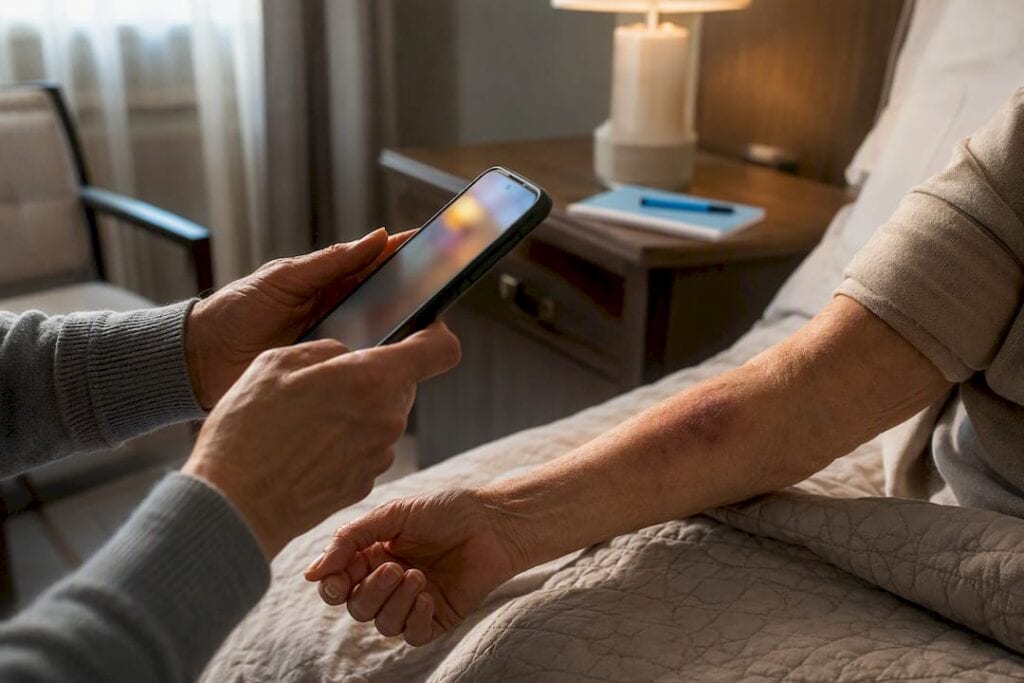
The clearest warning signs of nursing home abuse fall into five categories: physical injuries, neglect, emotional or behavioral changes, financial exploitation, and sexual abuse. If your loved one has severe unexplained injuries or appears to be in immediate danger, call 911 or local law enforcement now, before doing anything else. Use the checklist below for every future visit and phone call.
TL;DR:
- Bruises on the face, torso, or upper arms, especially in clusters or patterned shapes, are strong indicators of physical abuse.
- Stage 4 bedsores, dehydration, or soiled clothing signal neglect and require urgent medical attention and reporting.
- Sudden withdrawal, fear of staff, or reluctance to speak openly suggest emotional abuse or coercion, warranting careful observation.
- Unexplained financial changes, missing valuables, or new individuals managing finances often point to exploitation requiring immediate investigation.
- Physical signs of sexual abuse include unexplained bruising or bleeding in genital areas, combined with behavioral signs like sudden fear or shame.
Table of Contents
- Nursing Home Abuse Signs: A Quick Reference Checklist
- Physical Abuse: Injury Patterns That Don’t Add Up
- Neglect Signs: Preventable Conditions That Signal Systemic Failure
- Emotional and Behavioral Signs of Coercion or Fear
- Financial Exploitation: Warning Signs in Money and Property
- Sexual Abuse: Signs That Require Immediate Action
- How to Report Nursing Home Abuse: Who to Call First
- Documenting Evidence: What to Record, Photograph, and Keep
- When to Seek Legal Help for Nursing Home Abuse
- A Note From Our Team on Acting Quickly
- Get Legal Help After Suspected Nursing Home Abuse
- Where to Learn More or Report Abuse Right Now
- Sources
Nursing Home Abuse Signs: A Quick Reference Checklist
Keep this list on your phone for facility visits and phone calls with staff.
- Physical: Unexplained bruises, fractures, burns, or wounds in different healing stages.
- Neglect: Bedsores, dehydration, weight loss, soiled clothing or bedding, unsafe room temperature.
- Behavioral: Withdrawal, fear around specific staff, sudden agitation, reluctance to talk when others are nearby.
- Financial: Missing belongings, unpaid bills despite adequate funds, unfamiliar names added to accounts.
- Sexual: Unexplained genital bruising, torn undergarments, sudden fear of a specific caregiver.
Treat open wounds, Stage 4 bedsores, suspected sexual assault, or signs of physical restraint as emergencies. Call 911 first. For anything less urgent but still concerning, your first call should go to Adult Protective Services or the long-term care ombudsman, not the facility.
Physical Abuse: Injury Patterns That Don’t Add Up
A single bruise rarely tells you much. A pattern does. Watch for bruising on the face, torso, or inner arms, since these areas are unusual sites for accidental falls. Rope or strap marks on wrists or ankles, patterned bruising that mirrors an object’s shape, unexplained burns, and broken eyeglasses all point toward physical red flags of elder abuse rather than routine mishaps.
Pay close attention to injuries in multiple stages of healing at once. That combination usually means repeated trauma over time, not one isolated fall. Broken bones that recur, or that don’t match the explanation given by staff, deserve the same scrutiny.
- Bruises clustered on the face, neck, torso, or upper arms
- Rope, strap, or restraint marks on wrists or ankles
- Burns, especially in unusual shapes or locations
- Broken eyeglasses, hearing aids, or dentures
- Wounds healing at visibly different rates
- Lab results suggesting medication overdose or under-dosing
If you notice any of these, request an independent medical exam rather than relying solely on the facility’s own records.
Neglect Signs: Preventable Conditions That Signal Systemic Failure
Neglect is abuse by omission. It shows up as conditions that basic care would have prevented, and the Department of Justice specifically flags Stage 4 bedsores, severe malnutrition, and dehydration as red flags rather than unfortunate outcomes of aging.
Look beyond the resident’s body to the room itself. Filthy sheets, a persistent odor, a broken call button, or a lack of glasses and dentures the resident actually needs all suggest the same underlying problem: nobody is checking in consistently.
- Stage 3 or 4 bedsores, especially on the tailbone, heels, or hips
- Noticeable weight loss or signs of dehydration
- Untreated infections or wounds
- Poor hygiene, including soiled clothing left unchanged
- Rooms that are unsafely hot, cold, or unsanitary
- Missing assistive devices the resident depends on
A Stage 4 bedsore or visible dehydration warrants same-day medical attention and a report, not a wait-and-see approach.
Emotional and Behavioral Signs of Coercion or Fear
Physical evidence isn’t always present, and forensic nurses note that many abuse cases are identified through behavior patterns rather than visible injuries. Sudden withdrawal, a new reluctance to speak when staff are in the room, unexplained anxiety, or a personality shift from talkative to silent are all worth taking seriously.
Isolation is a common tactic. If staff routinely intervene during visits, discourage privacy, or seem to control the conversation, that’s a signal in itself.
- Withdrawal from activities or people the resident used to enjoy
- Visible fear or flinching around a particular staff member
- Reluctance to speak freely when staff are present
- Sudden depression, anxiety, or agitation with no medical explanation
Pro Tip: Ask to speak with your loved one alone, even briefly. If staff resist or hover, that resistance itself is worth documenting.
Financial Exploitation: Warning Signs in Money and Property
Financial abuse often moves faster than families notice. The DOJ’s red flag guidance lists sudden, unexplained bank withdrawals, missing jewelry or cash, and unpaid bills despite adequate resources as core indicators.
Watch for new names appearing on financial documents, or for a resident who seems fearful or evasive when finances come up.
- Unexplained withdrawals or new account activity
- Bills going unpaid despite sufficient funds
- Missing valuables, jewelry, or personal property
- New individuals suddenly involved in financial decisions
- Staff or visitors restricting access to mail or paperwork
If you suspect exploitation, pull recent bank statements, contact the bank directly, and ask about a temporary hold or fraud alert while you investigate further.
Sexual Abuse: Signs That Require Immediate Action
Sexual abuse in nursing homes frequently goes unreported because residents may be unable or afraid to describe what happened. Unexplained bruising in the genital or breast area, unexpected sexually transmitted infections, torn or bloodied clothing, and unexplained bleeding are physical indicators that demand urgent attention.
Behaviorally, watch for extreme withdrawal, sudden fear of a specific caregiver, or unusual shame that wasn’t there before.
- Unexplained genital or breast bruising or bleeding
- New STIs with no other explanation
- Torn, stained, or missing undergarments
- Sudden fear or avoidance of a specific staff member
If you suspect sexual assault, call 911 immediately. Do not let the resident bathe or change clothing before a medical exam, since that exam preserves evidence a criminal case may later depend on.
How to Report Nursing Home Abuse: Who to Call First
Escalation order matters, and moving in the wrong sequence can cost you evidence.
- Call 911 or local law enforcement immediately for severe injuries, sexual assault, or any situation where the resident is in active danger.
- Contact Adult Protective Services for non-emergency concerns like neglect, financial exploitation, or ongoing emotional abuse.
- Reach out to your state’s long-term care ombudsman, who advocates directly for residents and can walk you through the complaint process.
- File a complaint with your state health department, which can trigger a formal facility inspection.
- Notify the facility administrator last in severe cases, not first.
That last point matters more than it sounds. Experts recommend contacting authorities before notifying the facility in serious cases, because alerting staff too early gives a bad actor time to alter records or move a resident before investigators arrive.
Documenting Evidence: What to Record, Photograph, and Keep
A well-kept record often determines whether an investigation or a legal claim succeeds. AARP’s caregiving guidance recommends logging dates, times, and direct observations as soon as you notice something wrong, not days later when memory fades.
- Record dates, times, staff names, and exact quotes when possible
- Photograph injuries and living conditions with visible timestamps
- Note behavior changes alongside physical findings
- Preserve medical records, medication logs, and billing statements
- Keep bank statements and admission paperwork with originals secured
Pro Tip: Store digital copies of photos and documents in a separate cloud account or email them to yourself immediately. If originals go missing later, you’ll still have a dated backup.
When to Seek Legal Help for Nursing Home Abuse
Not every concern needs an attorney, but certain situations call for one without delay: severe or repeated neglect, sexual assault, catastrophic injury, an unexplained death, or significant financial exploitation.
A personal injury attorney handling nursing home abuse cases typically works to preserve evidence before it disappears, arranges independent medical exams, coordinates with investigators, and pursues a civil claim for compensation on the family’s behalf.
- Repeated injuries the facility can’t adequately explain
- A sudden or unexplained death, including from untreated sepsis
- Sexual assault or suspected sexual abuse
- Substantial financial losses tied to facility staff or contacts
Most firms, including 2keller, offer free consultations and work on contingency, meaning the family owes nothing unless the case results in a settlement or award.
A Note From Our Team on Acting Quickly
We’ve reviewed enough nursing home cases across Indiana, Michigan, and New Mexico to know that hesitation costs families evidence they never get back. Records disappear, bruises heal, and memories fade fast once a facility knows it’s being watched.
If something feels wrong, trust that instinct. Secure your loved one’s safety first, document what you see, and reach out for help evaluating what happened before too much time passes.
— Adam
Get Legal Help After Suspected Nursing Home Abuse
Some law firms handle nursing home abuse and neglect cases on contingency, meaning clients pay nothing unless the case is won, and free consultations may be available.

If you’ve spotted any of the warning signs covered here, whether it’s an unexplained injury, a sudden financial change, or a resident who seems afraid to talk, the next step is a conversation with someone who handles these cases regularly. Our team can help you understand what compensation might look like, including how liens factor into a settlement, and what evidence will strengthen your case. Reach out for a free consultation with 2keller to find out where you stand.
Where to Learn More or Report Abuse Right Now
- DOJ Elder Justice red flags
- NIA guide to spotting elder abuse
- AARP caregiver abuse guidance
- Find your long-term care ombudsman
This article is general information, not a substitute for advice from a qualified doctor. Consult a qualified healthcare professional about your own circumstances before acting on anything here.
Sources
- Red Flags of Elder Abuse – Department of Justice
- Spotting signs of elder abuse – National Institute on Aging
- How caregivers can spot elder abuse and neglect – AARP
- Reporting abuse in long-term care facilities – Illinois Department on Aging