
The settlement negotiation process is a structured, voluntary dialogue where an injured party and a defendant work toward a mutually agreeable resolution to a personal injury claim without going to court. This process is the standard path for most civil disputes. 66% of civil lawsuits in the U.S. resolve through negotiated settlements rather than trial verdicts. That figure reflects a clear preference: most parties choose the certainty of a negotiated agreement over the unpredictability of a jury. Understanding how this process works gives you a real advantage when advocating for fair compensation.

What are the key steps in the settlement negotiation process?
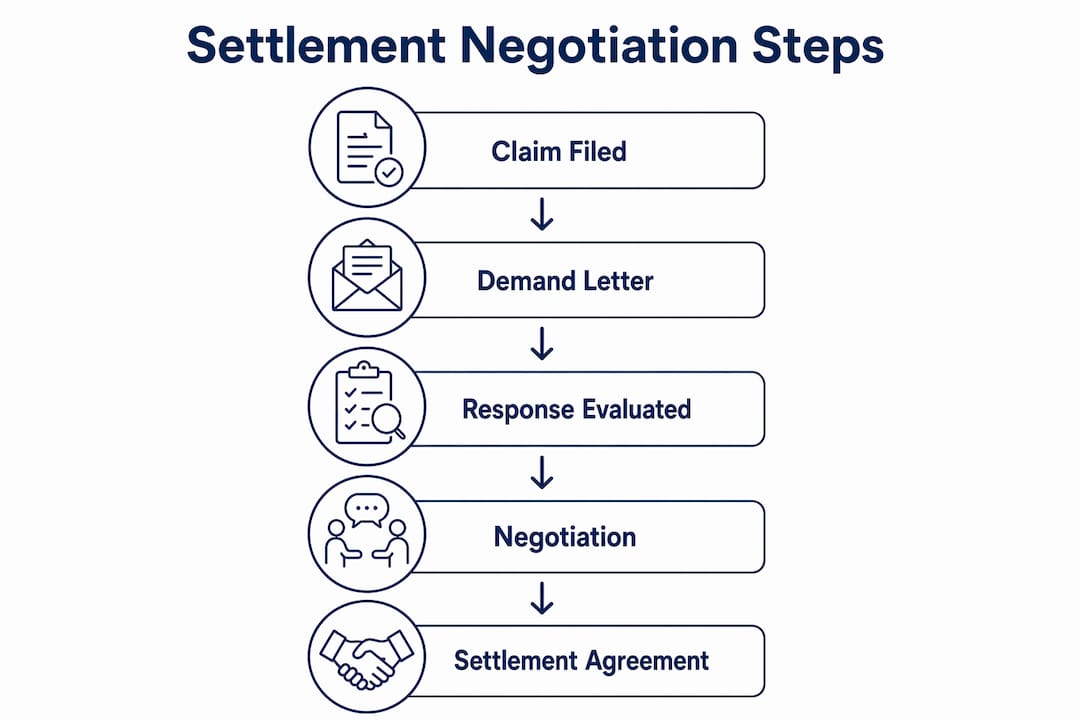
The settlement negotiation process follows a recognizable sequence, even though each case has its own facts and timeline. Knowing these steps helps you stay oriented and prepared at every stage.
-
Send the demand letter. Your attorney drafts a formal demand letter to the insurance company or defendant. This document states your injuries, the evidence supporting your claim, and the compensation amount you are requesting. The demand letter opens the negotiation and sets the initial anchor point.
-
Exchange offers and counteroffers. The opposing party responds with a counteroffer, typically lower than your demand. You and your attorney evaluate it, then respond with a revised figure. This back-and-forth continues until both sides approach a number they can accept.
-
Share evidence and documentation. Medical records, bills, wage statements, accident reports, and expert opinions all support your position. Strong documentation limits the other side’s ability to dispute the value of your claim.
-
Consider mediation if talks stall. A neutral third party, called a mediator, can facilitate discussion when direct negotiation breaks down. Mediation is not binding, but it often moves parties toward agreement by reframing the issues and reducing tension.
-
Draft and sign the settlement agreement. Once both sides agree on a number, the terms go into a written contract. A verbal agreement is not legally sufficient. The written document must include payment details, timelines, and a release clause that ends your right to sue over the same incident.
Pro Tip: Ask your attorney to confirm the settlement timeline in writing before you sign anything. Knowing when the check arrives and what deductions apply prevents surprises at the end.
How does settlement negotiation work in personal injury cases?
Personal injury settlement negotiation is driven by a precise evaluation of damages. Every number on the table connects to a specific loss you have suffered.
- Medical costs. Past and future treatment expenses form the foundation of your claim. Bills, treatment plans, and physician statements all document this category.
- Lost wages. If your injury kept you from working, your employer records and tax returns establish this loss. Future earning capacity matters too, especially for serious injuries.
- Pain and suffering. This category is harder to quantify, but courts and insurers use established formulas. Your documented experience of physical pain and emotional distress supports a higher figure.
- Setting your walk-away point. Experts recommend calculating a minimum acceptable settlement by totaling your quantifiable costs and adding a buffer of 10–15% to protect your negotiating flexibility. Going below that number means accepting less than your actual losses.
- Leveraging case strengths. Clear liability, strong medical evidence, and credible witnesses all increase your leverage. The other side knows what a jury might award, and that knowledge shapes their offers.
The certainty factor drives most settlements. Both parties prefer a controlled outcome over the risk of a verdict that neither side can predict. Skilled legal representation matters here because an experienced attorney reads the opposing side’s signals and knows when an offer is genuinely close to their ceiling.
Pro Tip: Never accept the first offer. Insurance adjusters open low because they expect negotiation. Your attorney’s job is to move that number toward your documented losses.
What legal and practical nuances should you know during negotiations?
Several legal realities can affect your outcome if you are not watching for them. These are not minor details. They can determine whether your settlement holds up and how much money you actually receive.
- The statute of limitations keeps running. Negotiating does not pause your filing deadline. If talks drag on and the deadline passes, you may lose your right to sue entirely. Track your state’s deadline and file a protective lawsuit if negotiations are taking too long.
- Your net recovery will be lower than the gross settlement. Final settlement checks are reduced by medical liens, attorney fees, and sometimes taxes. A $100,000 settlement can net significantly less after these deductions. Plan for this reality from the start.
- Written agreements are non-negotiable. Every term must appear in the signed contract, including payment schedules and the scope of the release clause. A release that is too broad can waive claims you did not intend to give up.
- Positions vs. interests. Harvard Business School research shows that focusing on underlying interests rather than fixed positions creates more value for both sides. Your position might be “$150,000.” Your interest is covering your medical bills and replacing lost income. Understanding that distinction opens up creative solutions.
- Mediation and arbitration serve different purposes. Mediation is voluntary and non-binding. Arbitration, which you can learn more about through dispute resolution resources, produces a binding decision. Know which process you are entering before you agree to it.
“Settlement provides legal certainty over trial risk. Parties who negotiate retain control over the outcome. Those who go to trial hand that control to a jury.”, LegalClarity
Understanding lump sum vs. structured payments also matters at this stage. A lump sum pays everything at once. A structured settlement delivers payments over time. Each option has tax and financial planning implications worth discussing with your attorney before you sign.
What are effective tips for negotiating a fair personal injury settlement?
Preparation separates claimants who settle well from those who accept whatever the insurer offers. These steps give you a concrete framework.
-
Gather every document before you make a demand. Medical records, bills, photos, police reports, and witness statements all belong in your file. A demand letter backed by complete documentation is harder to dispute.
-
Set two numbers before you start. Your walk-away number is the minimum you will accept. Your stretch goal is the optimistic upper bound. A stretch goal carries roughly a 10% probability of success, but it anchors the negotiation higher and gives you room to concede without losing ground.
-
Use conditional offers to protect your claim. Experienced attorneys frame concessions conditionally. For example: “We will accept a lower figure if the defendant agrees to cover all future medical costs related to this injury.” Conditional offers protect your claim value while showing good faith.
-
Keep the tone professional throughout. Emotional reactions rarely improve offers. A measured, factual tone signals that you are prepared and serious, which tends to move the other side toward reasonable figures.
-
Know when litigation is the better path. Some cases are worth more at trial than any offer on the table. If the insurer refuses to negotiate in good faith, filing a lawsuit is not a failure. It is a strategic decision. Understanding how long a claim takes to settle helps you set realistic expectations before you decide.
Pro Tip: Avoid common insurance claim errors that weaken your position before negotiations even begin. Reviewing frequent claim mistakes can protect the value of your case from the start.
Key Takeaways
The settlement negotiation process is a structured, evidence-driven dialogue that resolves most personal injury claims without trial, but only when you enter it prepared, informed, and represented by skilled counsel.
| Point | Details |
|---|---|
| Settlements dominate civil cases | 66% of civil lawsuits resolve through negotiated agreements rather than trial verdicts. |
| Set a walk-away number first | Add a 10–15% buffer above your total quantifiable costs before entering any negotiation. |
| Written agreements are required | Verbal settlements are not enforceable; every term must appear in a signed written contract. |
| Deadlines keep running | The statute of limitations does not pause during negotiations; track your filing deadline carefully. |
| Net recovery differs from gross | Medical liens, attorney fees, and taxes reduce what you actually receive from a settlement. |
What I’ve learned from watching settlements go wrong
Watching clients navigate this process over the years, one pattern stands out: the people who struggle most are those who treat negotiation as a single conversation rather than a structured process. They accept the first real offer because it feels like progress. They sign agreements without reading the release clause. They forget that the check they receive will be smaller than the number they agreed to.
The most effective claimants I have seen treat every step as preparation for the next one. They document everything before making a demand. They set a walk-away number and hold it. They ask their attorney to explain every deduction before the final agreement is signed. They also understand that walking away from a bad offer is not losing. It is negotiating correctly.
The other thing worth saying directly: legal representation is not optional if you want a fair outcome. Insurance adjusters negotiate claims every day. Most claimants do it once. That experience gap is real, and it shows up in settlement amounts. Having an attorney who knows what to look for before hiring counsel is the single most reliable way to close that gap.
Settlement is not a concession. It is a tool. Used well, it gets you fair compensation faster and with less risk than a trial. Used poorly, it leaves money on the table and closes the door on future claims.
Adam
How 2keller supports your personal injury settlement
2keller is a multi-state personal injury law firm serving clients in Indiana, Michigan, and New Mexico. The attorneys at 2keller handle settlement negotiations directly with insurance companies, building demand packages, tracking deadlines, and pushing back when initial offers fall short of what clients have actually lost.

If you are facing a personal injury claim and want to understand what a fair settlement looks like for your situation, 2keller offers consultations to review your case and explain your options. The firm’s commitment to personal injury clients means you get honest guidance on whether to settle or pursue litigation. Visit 2keller.com to connect with an attorney who negotiates these cases every day.
FAQ
What is the settlement negotiation process in personal injury law?
The settlement negotiation process is a voluntary, structured exchange between an injured party and a defendant or insurer to reach a written agreement that resolves a personal injury claim without going to trial. It typically involves a demand letter, counteroffers, evidence review, and a signed settlement contract.
How long does the settlement negotiation process take?
Settlement timelines vary widely depending on injury severity, liability clarity, and how quickly both sides exchange offers. Some cases resolve in weeks; others take months or longer, especially when medical treatment is ongoing.
Does negotiating a settlement stop the statute of limitations?
No. The statute of limitations continues running during negotiations. You must track your filing deadline and file a lawsuit if talks extend too close to that date.
What should a settlement agreement include?
A valid settlement agreement must be in writing and include the agreed payment amount, payment schedule, and a release clause specifying which claims you are giving up. A verbal agreement is not enforceable.
Will I receive the full settlement amount?
The amount you receive is typically less than the negotiated figure. Medical liens, attorney fees, and applicable taxes reduce the final payout. Ask your attorney for a net recovery estimate before you agree to any settlement figure.
Recommended
- How Long Will My Indiana Personal Injury Claim Take to Settle? – Keller & Keller
- Keller & Keller’s Pledge to Our Personal Injury Clients – Keller & Keller
- Indiana Motorcycle Injury Claim Settlement Timelines – Keller & Keller
- Difference Between Lump Sum and Structured Settlement After an Indiana Auto Accident – Keller & Keller