
A serious injury claim is a legal action seeking compensation for injuries that cause permanent, life-altering, or substantially debilitating harm. These claims exist because standard insurance payouts rarely cover the true cost of catastrophic injuries. If you’ve suffered a traumatic brain injury, spinal cord damage, amputation, or severe burns in an accident, you may qualify to pursue compensation that goes far beyond basic insurance limits. Understanding what is a serious injury claim, and whether your injury meets the legal threshold, is the first step toward protecting your financial future and long-term care needs.
What is a serious injury claim and why does it matter?
A serious injury claim is defined by legal thresholds that separate ordinary injuries from those with permanent or life-changing consequences. Statutes like New York Insurance Law § 5102(d) specify qualifying criteria including permanent loss of bodily function, significant disfigurement, bone fractures, and death. These thresholds exist to distinguish claims that warrant full tort access from those resolved through no-fault insurance systems.
The financial stakes are significant. Serious injury compensation covers general damages for pain and suffering, plus special damages for financial losses such as lifelong care, lost earnings, and home adaptations. Without meeting the serious injury threshold, you may be limited to no-fault benefits that fall far short of your actual losses. That gap can be financially devastating for anyone facing years of rehabilitation or permanent disability.

The legal term used in personal injury law is “serious injury threshold.” The informal phrase “serious injury claim” describes the same concept in plain language. Both terms refer to the same legal process, and you’ll encounter both when researching your rights.
What qualifies for a serious injury claim?
The legal criteria for qualifying injuries vary by state, but most jurisdictions recognize two types of thresholds: verbal thresholds and monetary thresholds. New York’s 90/180 rule and Florida’s permanent injury standards are two well-known examples of how states define eligibility differently. A verbal threshold requires proof that the injury meets a specific descriptive standard, such as “permanent consequential limitation.” A monetary threshold simply requires that medical expenses exceed a set dollar amount.
Common serious injury examples that typically qualify include:
- Traumatic brain injury (TBI): Cognitive impairment, memory loss, or personality changes that affect daily function
- Spinal cord injury: Partial or complete paralysis, loss of sensation, or chronic pain
- Amputation: Loss of a limb or digit with permanent functional impact
- Severe burns: Third-degree burns covering significant body surface area, often requiring skin grafts
- Severe fractures: Compound or comminuted fractures requiring surgical repair
- Significant disfigurement: Permanent scarring visible on the face or body
- Wrongful death: Fatal injuries that give surviving family members the right to file a claim
Psychological injuries are also recognized as serious injuries for compensation purposes. Severe post-traumatic stress disorder, anxiety disorders, and depression that significantly disrupt daily life qualify when supported by specialized medical documentation. This is an area many injured people overlook entirely.
Pro Tip: Keep a daily journal from the day of your accident. Record your pain levels, activities you cannot perform, and emotional struggles. Courts require evidence of disruption to daily life, and a consistent personal record strengthens your claim for non-economic damages.
How is serious injury compensation calculated?
Compensation in serious injury claims falls into two broad categories: general damages and special damages. General damages cover non-economic losses such as pain, suffering, emotional distress, and loss of enjoyment of life. Special damages cover quantifiable financial losses including medical bills, rehabilitation costs, lost wages, and future care expenses.
The size of a settlement depends heavily on injury severity, the claimant’s age and earning capacity, and the projected cost of lifelong care. Settlements for catastrophic injuries can reach into the millions, with structured settlements providing indexed lifetime payments rather than a single lump sum. A structured settlement protects claimants from spending a large award too quickly while ensuring funds remain available for ongoing care.
Non-economic damages like pain and suffering must be proven through detailed medical documentation and expert testimony. Courts do not accept arbitrary numbers. They require evidence of physical harm, psychological impact, and documented disruption to the claimant’s daily routine.
Key factors that influence the final compensation amount include:
- Severity and permanence of the physical injury
- Lost earning capacity, both current and future
- Cost of rehabilitation, including physical therapy and occupational therapy
- Lifelong care needs, such as home nursing or assisted living
- Psychological impact, documented by mental health professionals
- Liability clarity, meaning how clearly the other party is at fault
You can learn more about how courts assess general and special damages in serious accident cases to better understand what your claim may be worth.
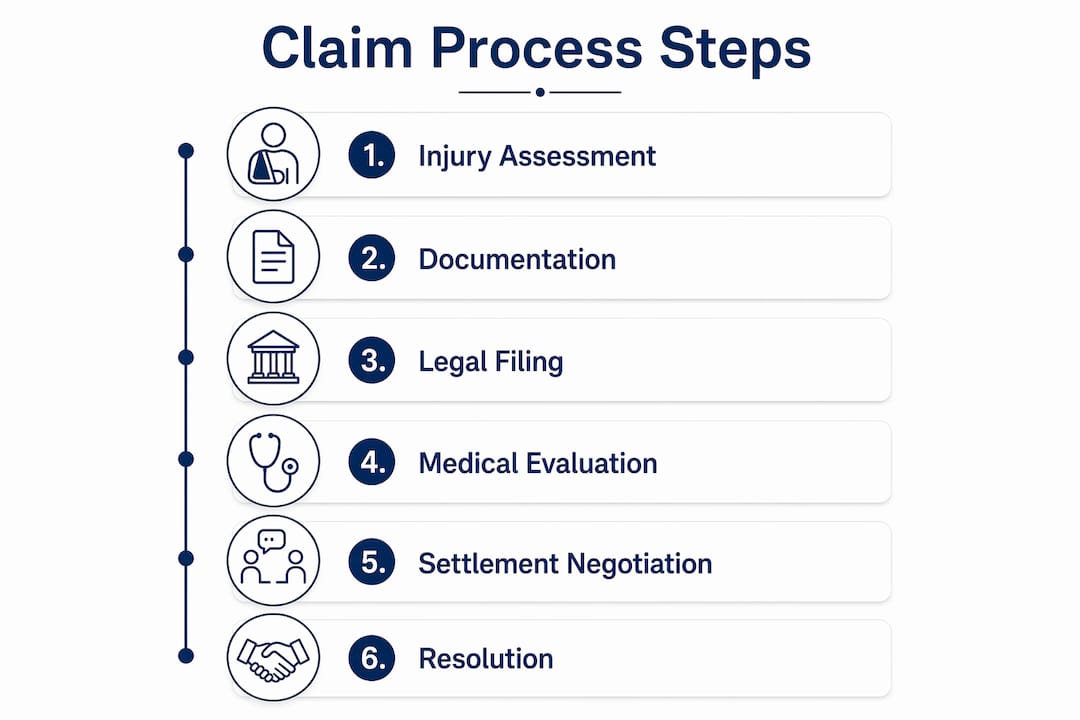
How to file a serious injury claim: the process step by step
Filing a serious injury claim follows a clear sequence, and the decisions you make in the first days after an accident directly affect your outcome. Failure to preserve evidence promptly can irreversibly weaken a claim’s value and legitimacy. Acting fast is not just advisable. It is necessary.
- Seek immediate medical attention. Your medical records form the foundation of your claim. Gaps in treatment give insurers grounds to argue your injuries were not serious.
- Document the accident scene. Photograph the location, vehicle damage, road conditions, and any visible injuries. Collect witness names and contact information.
- Preserve all evidence. Save clothing, damaged property, and any physical items from the accident. Understand that spoliation of evidence can create legal complications that harm your case.
- Consult a personal injury attorney early. Early legal consultation improves your chances of a meaningful settlement and ensures you meet all filing deadlines.
- Understand your state’s statute of limitations. Most states allow two to three years from the date of injury to file a lawsuit, but some deadlines are shorter. Missing this window ends your right to sue.
- Gather expert testimony. Medical experts, vocational specialists, and life care planners all contribute to proving the full extent of your losses.
- Negotiate or litigate. Most serious injury claims settle before trial, but your attorney must be prepared to take the case to court if the insurer’s offer is inadequate.
Pro Tip: Never give a recorded statement to the opposing insurer without your attorney present. Adjusters are trained to ask questions that minimize your claim. A single poorly worded answer can significantly reduce your compensation.
The elements of a strong car accident claim in Indiana, for example, illustrate how legal thresholds and evidence standards work together to determine claim eligibility and value.
Rehabilitation, interim payments, and long-term care
The serious injury claim process often takes months or years to resolve. During that time, injured people still need medical care, rehabilitation, and financial support. Interim payments provide critical financial support during this period, funding rehabilitation, home adaptations, and ongoing care before a final settlement is reached.
Courts often order interim payments after liability is established. These payments prevent a damaging outcome: claimants accepting low early settlements simply because they cannot afford to wait. Interim payments can prevent premature settlements by giving claimants the financial resources to pursue full rehabilitation and allow their condition to stabilize before valuing the claim.
Key elements of long-term care planning in serious injury claims include:
- Physiatrist involvement: A physiatrist specializes in physical medicine and rehabilitation. Their assessment of your long-term functional needs carries significant weight in claim valuation.
- Case management: A case manager coordinates your medical care, rehabilitation schedule, and specialist referrals, ensuring nothing falls through the gaps.
- Home adaptations: Wheelchair ramps, stair lifts, and bathroom modifications are compensable costs when your injury requires them.
- Psychological support: Counseling and psychiatric care are legitimate claim components, not optional extras.
Understanding the role of a physiatrist in injury claims is particularly valuable for anyone facing long-term rehabilitation. Their expert documentation directly supports both your care plan and your compensation claim.
Key Takeaways
A serious injury claim succeeds when it combines clear legal threshold evidence, thorough documentation, and expert medical testimony to prove both economic and non-economic losses.
| Point | Details |
|---|---|
| Legal thresholds determine eligibility | Your injury must meet state-specific verbal or monetary standards to qualify for a serious injury claim. |
| Documentation drives compensation | Medical records, expert testimony, and a personal injury journal directly determine the value of non-economic damages. |
| Interim payments protect your claim | Requesting interim payments prevents financial pressure from forcing a premature, low-value settlement. |
| Rehabilitation costs are compensable | Physiatrist assessments, case management, and home adaptations are all recoverable as part of your claim. |
| Act quickly to preserve rights | Evidence degrades and statutes of limitations expire. Early legal consultation protects your claim’s full value. |
Why I think most people underestimate what a serious injury claim actually involves
After years of working with accident victims, the most common mistake I see is treating a serious injury claim like a routine insurance dispute. People assume the insurer will fairly assess their losses and offer a reasonable number. That rarely happens.
The second mistake is underestimating the evidence burden for non-economic damages. Pain and suffering are not self-evident. Courts require proof. That means consistent medical treatment, specialist evaluations, psychological assessments, and a documented record of how your life has changed. Victims who skip appointments or delay treatment hand the defense a ready-made argument that their injuries were not serious.
What I find most important to communicate is this: the goal of a serious injury claim is not just money. It is restoring your quality of life as fully as possible through rehabilitation, care, and financial stability. Viewing the claim through that lens changes how you build it. You stop thinking about a quick settlement and start thinking about what you actually need to recover.
The claimants who achieve the best outcomes are those who document everything, consult an attorney early, and resist the pressure to settle before their condition has stabilized. Patience, combined with thorough preparation, produces results that a rushed claim never will.
— Adam
2keller is ready to help with your serious injury claim
Navigating a serious injury claim while recovering from a life-altering accident is genuinely difficult. 2keller works with accident victims across Indiana, Michigan, and New Mexico to build claims that reflect the full scope of their losses, from immediate medical costs to lifelong care needs.

One area where 2keller’s approach stands out is the integration of physiatrist expertise into claim preparation. Understanding how a physiatrist strengthens your claim can make a measurable difference in both your rehabilitation plan and your compensation outcome. If you’ve suffered a serious injury and want to understand what your claim is worth, speaking with 2keller’s team is a practical first step toward clarity and fair recovery.
FAQ
What is a serious injury claim?
A serious injury claim is a legal action seeking compensation for injuries that meet a state-defined threshold of severity, such as permanent loss of function, significant disfigurement, or death. These claims allow injured people to pursue damages beyond standard insurance limits.
What injuries qualify for a serious injury claim?
Qualifying injuries typically include traumatic brain injury, spinal cord injury, amputation, severe burns, significant fractures, and permanent disfigurement. Psychological injuries like severe PTSD also qualify when supported by documented medical evidence.
How long does a serious injury claim take?
Most serious injury claims take one to three years to resolve, depending on injury complexity, liability disputes, and whether the case goes to trial. Interim payments can provide financial support during this period.
How is serious injury compensation calculated?
Compensation combines general damages for pain, suffering, and loss of enjoyment of life with special damages covering medical bills, lost earnings, rehabilitation, and future care costs. The severity of the injury and the claimant’s long-term care needs are the primary drivers of settlement value.
What is the statute of limitations for a serious injury claim?
Most states set a two to three year deadline from the date of injury to file a lawsuit, though some deadlines are shorter for specific claim types or defendants. Missing this deadline permanently eliminates your right to sue.